Experimental Study Of Anti-Sports Fatigue Effect Mechanisms Of Cistanche Deserticola
Dec 04, 2021
Contact : emily.li@wecistanche.com
YANG Hong-xin1, YANG Yong2, YAN Xiao-hong1 (1.Department of Cytobiology, Inner Mongolia Medical College, Hohhot 010059, China;2.Department of Oncology, Hospital of Inner Mongolia Autonomous Region, Huhhot 010017, China)
Abstract: Objective To study the effect of cistanche deserticola on lactate dehydrogenase (LDH) isoenzyme, glycogen and nitric oxide synthase 3 (NOS3) of liver in the mice burden swimming and explore relevant molecular mechanisms of anti-sports fatigue. Methods The mice were devided into the normal control group, the sport control group and the cistanche deserticola experimental group. Each mice of the ormal control group and the sport control group was given saline 0.2 mL per day. Each mice of the cistanche deserticola experimental group was given water decoction of cistanche deserticola 0.2 mL (3 g/kg) per day. The administrations were for 15 days. The burden swimming for 90 minutes was carried out on the mice of the sport control group and the cistanche deserticola experimental group at 1 hour after the last administration. Livers of the mice were removed after 10 hours of swimming. One part of liver was fixed in the neutral formalin liquid to prepare the paraffin sections and the others was used for measurement of LDH activity. The structure of the liver was observed by staining of HE and the liver glycogen were measured by staining of glycogen. NOS3 was examined by S-P immunohistochemical method. Results The liver structure of the sport control group was injured seriously, the isoenzyme of LDH4 and LDH5 were higher, the liver glycogen were poor, NOS3 was decreased compared with the normal control group (P <0.05). The liver structure of the cistanche deserticola experimental group was good, LDH5 isoenzyme was low, the glycogen was rich and expression of NOS3 was upregulated compared with the sport control group (P <0.05). Conclusions Cistanche deserticola could decrease LDH5, protect the liver of the mice burden swimming and accelerate glycogen accumulation by increasing expression of NOS3 to protect liver and improving physical capacity recovery.
Key words:cistanche deserticola;liver glycogen;nitric oxide synthase 3;mice.

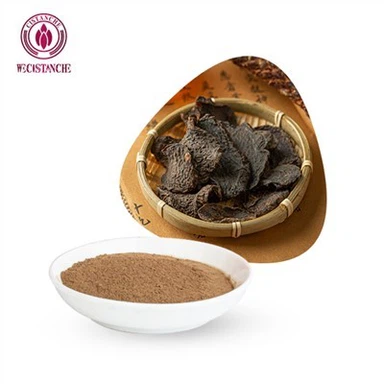
Cistanche picture
Cistanche, also known as Dayun, is a two-year parasitic herb of the Ledanaceae. It has dry fleshy stems with scales. It is mainly produced in sandy soils and semi-sandy grasslands in Inner Mongolia, Gansu, Xinjiang, Qinghai and other places. Inner Mongolia Cistanche has the best quality among all producing areas. Cistanche is sweet, salty and warm in nature. It enters the kidneys and large intestine meridian. Its main functions are to nourish the kidneys and strengthen yang, nourish the essence and blood, and moisturize the intestines. It is often used to treat impotence, infertility, weak waist and knees, weakness of muscles and bones, dry intestines and constipation. This study aims to observe the effects of Cistanche on load-bearing swimming mice liver lactate dehydrogenase (LDH), liver glycogen and nitric oxide synthase 3 (NOS3) through a load-bearing swimming test in mice, and to explore its protective mechanism on the liver. Therefore, it can provide a theoretical basis for the in-depth research, development and utilization of Cistanche in sports health food.
1 Experimental materials
1.1 Animals
30 male Kunming rats, clean grade, body weight (20±0.5) g, provided by the Animal Center of Inner Mongolia University.
1.2 Medications
Cistanche deserticola Y.C.Ma,produced in Ejina Banner, Inner Mongolia and has been identified. According to the original medicinal material: water = 100 g: 400 mL, first soak for 30 min, heat and boil, and then decoct on warm fire for 30 min. Pour out the liquid medicine and re-decoct at the ratio of 100 g: 200 mL. The two decoctions were mixed together and filtered with two layers of gauze, and then concentrated to the equivalent of 1 g of the original medicinal material per milliliter of water decoction stock solution, stored in a refrigerator at 4 ℃.
1.3 Reagents and instruments
NOS3 polyclonal antibody was purchased from Wuhan Boster Bioengineering Co., Ltd. The S-P kit was purchased from Fujian Maixin Reagent Company. Lactate dehydrogenase isoenzyme kit was purchased from Inner Mongolia Tongri Reagent Company (exclusively owned by Nissan). Nanjing JD-80 color image analyzer. American UVP gel image analysis system.
2 Experimental method
2.1 Grouping and Dosing
Kunming mice were randomly divided into normal control group, exercise control group, and Cistanche experimental group, with 10 mice in each group. The normal control group and the exercise control group were given normal saline once a day, 0.2 mL/time; the Cistanche experimental group was given cistanche decoction (take 3 mL of the original water decoction and add water to 10 mL). Once a day, 0.2 mL/time, daily dosage is 3 g/kg, and 15 days in a row. One hour after the last dosing, the mice in the exercise control group and the Cistanche experiment group were loaded with a 1 g lead weight on their tails, and they were placed in a pool of 50 cm high, 50 cm long, and 35 cm wide to swim under the temperature (30±0.5)℃ , Observe the mice constantly, if they are found to stop swimming, use a wooden stick to stimulate their movement for 90 minutes. After exercise, eat a normal diet, rest for 10 hours and then euthanize the mice with normal control group mice. Take out the liver, fix a part with 10% neutral formaldehyde, and make it 4 µm thick after dehydration, transparency, wax immersion, and embedding. Use HE staining method to observe the liver tissue structure of each group. The other part was washed with normal saline and stored frozen at -20 ℃, and thawed at room temperature during measurement. Soak dry with filter paper and weigh, then prepare liver homogenate with normal saline, centrifuge at 3 500 r/min for 15 min. Take the supernatant and measure the lactate dehydrogenase isoenzyme activity by electrophoresis.
2.2 Determination of lactate dehydrogenase activity
Using polyacrylamide gel electrophoresis, the isoenzymes of LDH are separated according to their electrophoretic mobility differences. The separation gel concentration of the sample is 7%, pH 8.9, and the concentration of concentrated gel is 4%, pH 6.8. 10 µL the sample is mixed with 1 drop of glycerol and bromophenol blue indicator. The electrode buffer is Tris-glycine (pH 8.7), start to stabilize the voltage at 100-150 V, add to 200-250 V after 30 min, and electrophoresis for 4 h. After electrophoresis, it was stained with the Lactate Dehydrogenase Isoenzyme Kit, and stained at 37 ℃ for 30 min, showing a blue lactate dehydrogenase isoenzyme band, then rinsed with water, fixed with glacial acetic acid. Finally, use UVP gel image analysis system for data analysis.
2.3 Glycogen staining
4 µm thick serial sections are routinely deparaffinized to water. put in 1% periodic acid solution at 37 ℃ for 15 minutes. rinsed with running water. put in Schiff solution for 60 min. rinsed with running water, dehydrated with gradient ethanol, transparent xylene, and mounted with neutral gum. Then observe the staining results under the microscope.
2.4 Immunohistochemical staining
The slices are routinely deparaffinized to water, and the antigen is repaired with citrate buffer microwave. Act with solution A for 10 minutes to remove endogenous peroxidase, and block with solution B (diluted goat serum) for 10 minutes. Add the primary antibody in a humidified box at 4 ℃ overnight, and wash with pH 7.4 PBS solution for 5 min×3 times on the second day. Then add biotin-labeled C solution (secondary antibody working solution) and incubate for 10 min, wash with PBS solution for 5 min×3 times. Add horseradish peroxidase labeled D solution and incubate for 10 min, wash with PBS solution for 5 min×3 times. Finally, it was developed in DAB solution for 5 min, washed with tap water, HE counterstained, dehydrated with gradient ethanol, transparent with xylene, and mounted with neutral gum. Observe under a light microscope after mounting the film. In each batch of experiments, phosphate buffered saline (PBS) was used as a negative control instead of the primary antibody.
2.5 Analysis of Nitric Oxide Synthase 3 Expression
Preliminary observation by visual semi-quantitative method under light microscope, NOS3 positive product is dark brown or brown. The positive product is located in the cytoplasm of hepatocytes or endothelial cells between hepatocytes, and the blue background is negative. Then use the color image analysis system to measure the gray value of the positive reactant. Under a 40x objective lens, the parameters of 4 fields of view are randomly measured for each film and the average value is taken. This parameter is used to reflect the change of NOS3 staining intensity.
2.6 Statistical methods
All data are expressed as x-±s, and SPSS11.0 statistical software package is used for t-test, and P<0.05 is considered as significant difference.
3 Results
3.1 Observation of tissue structure under optical microscope
The structure of liver lobules in the normal group is clear, the cell cords are arranged neatly, the liver sinusoids are normal, the liver cells have no obvious lesions, and the nuclear structure is clear. The normal tissue structure of the exercise control group disappeared, the lobule boundaries were unclear, and the cell cord was disordered, most of the liver sinusoids disappeared, and extensive vacuolar degeneration of hepatocytes is manifested by increased cell volume. The cytoplasm is loose, lightly stained, even clear and transparent, and some liver cells show a typical balloon change, with a small amount of focal or punctate necrosis. The liver cells of the Cistanche experimental group were mildly turbid, but they were arranged regularly. There were no obvious vacuoles and looseness in the cells, the cell cords were arranged neatly, and the nucleus structure was clear.
3.2 Effects on the activity of liver lactate dehydrogenase isoenzymes in mice under load exercise (see Table 1)

3.3 Observation of liver glycogen staining under optical microscope
Although the content of glycogen in the normal control group is not high, there are glycogen in each liver cell, the distribution is uniform, and there is no vacuole phenomenon. The exercise control group had less glycogen, scattered in the liver cells, and vacuoles appeared in some areas; the Cistanche experimental group was rich in glycogen, but gathered a lot on one side of the cell.
3.4 Observation of the expression of nitric oxide synthase 3 by optical microscope and quantitative image analysis
There is a strong positive expression in the cytoplasm of hepatocytes in the normal control group, which is diffusely distributed, especially in binuclear cells, and positive expression in endothelial cells. The expression in the cytoplasm of hepatocytes and endothelial cells in the exercise control group was weakened. Cistanche experimental group had positive expression in the cytoplasm of hepatocytes, and strong positive expression in endothelial cells. The analysis results of the color image analyzer are shown in Table 2.

4 Discussion
Human body movement needs energy, and the body also needs energy in the process of metabolism Cell metabolism directly uses energy from the decomposition of adenosine triphospate (ATP), and the energy required for the synthesis of ATP is ultimately mainly provided by the catabolism of sugar. Studies have shown that after strenuous exercise, the body will produce a large amount of H+, free radicals, lactic acid and other substances that affect the normal metabolism of cells. At the same time, the lack of glucose in the cells leads to exercise fatigue and cell damage. The results of this study show that liver tissue structure damage is very serious after a lot of exercise, and it also affects cell anabolism, such as the reduction of liver glycogen synthesis. Mice taking Cistanche can be observed to reduce liver damage after a lot of exercise, mainly due to the reduction of LDH5, and the liver glycogen content is significantly higher than that of the exercise control group, Suggesting that Cistanche may achieve liver protection and maintain normal physiology by reducing LDH5 function. From the results of glycogen staining, the glycogen content of the Cistanche experimental group is higher than that of the normal control group. Does Cistanche increase liver glycogen reserves before exercise or accelerate glycogen synthesis under stress after exercise? No conclusion can be drawn because there is no control group that does not exercise Cistanche in the experiment. It has yet to be confirmed in the next step, but the protective effect of Cistanche on the liver and the promotion of glycogen synthesis after a lot of exercise are obvious.
NO is a small molecule substance that has been highly valued by the sports community in recent years. NOS is the main rate-limiting factor for NO production. It has been confirmed that NOS has 3 types of isoenzymes. NOS1 is called neuronal nitric oxide synthase. It exists in neuronal cells, skeletal muscle cells, etc., and is mainly involved in neurodevelopment, neurosecretion, learning and memory processes. NOS2 is an inducible nitric oxide synthase, mainly found in smooth muscle cells, macrophages, and lymphocytes. Once this enzyme is induced, it can continue to synthesize NO until the substrate is exhausted or the cell dies. It is currently believed to be involved in cell damage; NOS3 is an endothelial nitric oxide synthase, which is mainly distributed in endothelial cells and hepatocytes. The produced NO is mainly involved in physiological functions. The results of this study show that the expression of NOS3 in endothelial cells and hepatocytes is weakened after a lot of exercise, and the resulting NO is reduced, so that blood vessels cannot be effectively expanded, blood flow is reduced, and the raw materials for synthetic glycogen cannot be transported to liver cells, so glycogen synthesis is reduced.

Cistanche anti-fatigue function
Cistanche can upregulate the expression of NOS3 in endothelial cells and liver cells. Expand blood vessels reactively. Increase blood flow, accelerate the ability to transport glycogen synthesis raw materials. Accelerate glycogen synthesis, and maintain the body at a normal physiological metabolic level. Therefore, reducing LDH5 to protect the liver and up-regulating the expression of NOS3 to promote lactic acid gluconeogenesis may be an important mechanism for Cistanche to protect the liver and promote physical recovery. This research provides scientific experimental basis for the further development and utilization of Cistanche in the field of sports medicine, and also lays the foundation for the development and purification of Cistanche's effect substances.
Artical from: "Experimental Study of Anti-Sports Fatigue Effect Mechanisms of Cistanche Deserticola " by YANG Hong-xin1, etc.
-----Chinese Journal of Information on TCM Apr.2008 Vol.15 No.4