Enhancement Of Phenylethanoid Glycosides Biosynthesis in Cell Cultures Of Cistanche Deserticola By Osmotic Stress
Mar 11, 2022
Contact: joanna.jia@wecistanche.com / WhatsApp: 008618081934791
Chun-Zhao Liu. Xi-Yu Cheng
Abstract The effect of osmotic stress on cell growth and phenylethanoid glycosides (PeGs) biosynthesis was investigated in cell suspension cultures of Cistanche deserticola Y. C. Ma, a desert medicinal plant grown in the west region of China. Various initial sucrose concentrations significantly affected cell growth and PeGs biosynthesis in the suspension cultures, and the highest dry weight and PeGs accumulation reached 15.9 g l–1-DW and 20.7 mg g–1-DW respectively at the initial osmotic stress of 300 mOsm kg–1 where the sucrose concentration was 175.3 mM. Stoichiometric analysis with different combinations of sucrose and non-metabolic sugar (mannitol) or non-sugar osmotic agents (PEG and NaCl) revealed that osmotic stress itself was an important factor for enhancing PeGs biosynthesis in cell suspension cultures of Cistanche deserticola. The maximum PeGs contents of 26.9 and 23.8 mg g–1-DW were obtained after 21 days at the combinations of 87.6 mM sucrose with 164.7 mM mannitol (303 mOsm kg–1) or 20 mM PEG respectively, which was higher than that of C. deserticola cell cultures grown under an initial sucrose concentration of 175.3 mM after 30 days. The stimulated PeGs accumulation in the cell suspension cultures was correlated to the increase of phenylalanine ammonium lyase (PAL) activity induced by osmotic stress.
Keywords Cistanche deserticola, Desert medicinal plant, Phenylethanoid glycosides, Osmotic stress, Phenylalanine ammonia-lyase

Cistanche tubulosa has many effects, click here to know more
Introduction
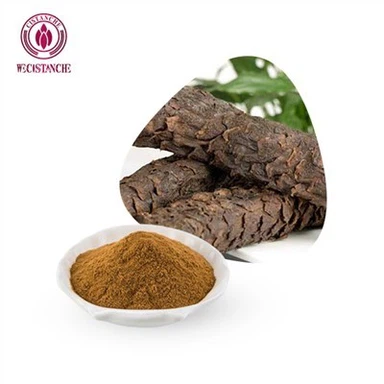
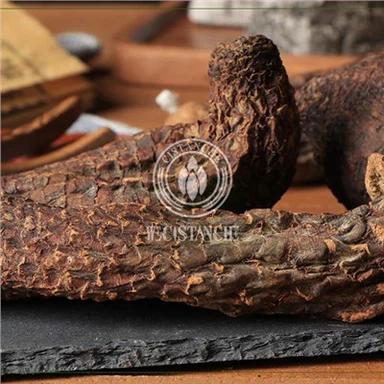
Cistanche deserticola Y. C. Ma, a precious Chinese herb, parasitizes the roots of Haloxylon ammodendrun and grows in desert areas of west China. Phenylethanoid glycosides (PeGs), the main bioactive components isolated from C. deserticola, have marked activities in scavenging free radicals, enhancing immunity, improving sexual function, etc. (Zong et al. 1996; Lu 1998; Wang et al. 2001). Due to uncontrolled exploitation and utilization of Cistanche deserticola, the natural resource of Cistanche deserticola was on the edge of exhaustion. In view of these problems, PeGs production by cell suspension cultures of C. deserticola has been considered as a promising alternative to solve the shortage of Cistanche deserticola plant materials (Lu and Mei 2003; Ouyang et al. 2003; Cheng et al. 2005a).
Osmotic stress is an important factor affecting plant growth, development, morphogenesis, and the formation of secondary metabolites. Enhanced production of secondary metabolites from in vitro tissue cultures under optimal osmotic stress has been reported in a few medicinal plant species (Kim et al. 2001; Wang et al. 1999; Wu et al. 2005). Sucrose is a usual osmotic stress agent used in these cases, and also serves as a vital carbon and energy source. Therefore, it is very difficult to separate the effect of osmotic stress and the nutritional role of sugars as carbon sources. An increase of initial osmotic stress with nonmetabolic mannitol, sorbitol, and PEG also improved paclitaxel accumulation in Taxus Chinensis cell cultures, saponin and polysaccharide accumulation in Panax notoginseng cell cultures, and eleutherosides accumulation in Eleutherococcus sessiliflorus embryogenic cultures (Zhang et al. 1995; Kim et al. 2001; Shohael et al. 2006). Their results indicated that the effects of carbohydrate concentration and osmotic stress were different according to plant species and secondary metabolites.
The objective of the current study is focused on the osmotic effects of sucrose, mannitol, PEG, and NaCl on cell growth and PeGs biosynthesis in Cistanche deserticola cell suspension cultures. PAL activity in the suspension cultures was investigated under different combinations of initial osmotic agents, and the possible mechanism on improved PeGs accumulation by increasing osmotic stress is discussed.

Materials and methods
Plant materials and callus induction
Seeds of Cistanche deserticola Y. C. Ma were collected from desert areas in the Xinjiang province of China and stored in 4C before use. Botanical identity was confirmed by comparison to reference standards at the Institute of Botany, Chinese Academy of Sciences, P. R. China. Seeds were surface sterilized by dipping in 70% ethanol for 30 s, then immersed in a 20% aqueous solution of 5.4% sodium hypochlorite in water for 20 min, followed by three rinses with sterile distilled water. Calli were induced from the surface-sterilized seeds of Cistanche deserticola on MS (Murashige and Skoog 1962) medium supplemented with 1.0 mg l–1 naphthaleneacetic acid (NAA), 2.0 mg l–1 6-benzyl adenine (6-BA), 0.25 mg l–1 2, 4-dichlorophenoxyacetic acid (2, 4-D), 6 g l–1 agar (PhytoTechnology LaboratoriesTM, Product ID: A181) and 30 g l–1 sucrose for 60 days in a growth cabinet in darkness at 25C. The callus cultures induced from the seed explants were subsequently subcultured to the above solid medium at an interval of 30 days (Cheng et al. 2005a).
Establishment and maintenance of cell suspension cultures
The suspension callus cultures (3.0 g fresh weight) which were filtered through a 1,000 lm mesh screen and retained on a 200 lm mesh screen were subcultured into a 500-ml Erlenmeyer flask containing 100 ml of the above liquid medium on a rotary shaker at 110 rpm at 25C in darkness at a subculture interval of 18 days. The medium pH was adjusted to 5.8 with 1 M NaOH or 1 M HCl before autoclaving. The suspension callus cultures subcultured after ten times were used as inoculum for the following experimental flask culture. All flask experiments were carried out in 250 ml Erlenmeyer flasks containing 50 ml liquid medium with 30 g l–1 sucrose and inoculated with 1.5 g fresh weight of 18-day-old cell suspension cultures. These Erlenmeyer flasks were incubated on a rotary shaker (110 rpm) at 25C in darkness.
Osmotic stress experiment
To investigate the effect of initial sucrose concentration on cell growth and PeGs accumulation, Cistanche deserticola suspension cultures were cultivated in MS medium with 87.6, 175.3, and 262.9 mM sucrose. For osmotic stress conditions, Cistanche deserticola suspension cultures were incubated in MS medium containing 87.6 mM sucrose combined with 164.7 mM mannitol. Other osmotic agents (PEG 4,000 and NaCl) were added in the equivalent of the osmolarity of 87.6 mM sucrose. The osmotic equivalent concentrations of osmotic agents were experimentally determined as PEG 4,000 of 20 mM and NaCl of 50 mM, respectively. Triplicate flasks were used in all experiments and all values were the means of triplicate flasks ± SD.
Analysis
Cistanche deserticola cultured cells under various osmotic stress were observed by Nikon AFX-DX light microscope (Nikon, Japan) under 400· magnifications. The osmolarity of the culture medium was measured with a vapor pressure osmometer (Fiske One-Ten Osmometer, MA, USA). For fresh weight (FW) determination, the Cistanche deserticola cells were gently pressed on filter paper to remove excess water and weighed. Subsequently, the cells were dried in an oven at 60C for 24 h and the dry weight (DW) was recorded. The residual sugar concentration was determined by using phenol and concentrated sulfuric acid, using glucose as a standard (Dubois et al. 1956).
PeGs were extracted from the dried cells with methanol for 15 min at 60C in an ultrasonic water bath (KQ2200, Shanghai Cany Precision Instrument Co., Ltd, China) with a frequency of 40 kHz and a power of 100 W. The filtrate was concentrated and the residue dissolved in distilled water and then passed through a macro reticular resin column (AB-8, chemical product of Nankai University, Tianjin, China). The methanol eluate was collected and the total PeGs content was assayed at 333 nm by using echinacoside as a standard (Du and Liu 1993a; Du et al. 1993b).
Cell viability was estimated by reduction of 2, 3, 5-triphenyl tetrazolium chloride (TTC) (Steponkus and Lanphear 1967). The viability index is defined as the absorbance measured per gram of fresh tissue. The determination of PAL activity was based on the method of Koukol and Conn (1961). One unit of the PAL activity (U) is defined as the amount of absorbance variation of 0.01.

Results and discussion
Effect of initial sucrose concentration on cell growth and PeGs biosynthesis in cell suspension cultures of Cistanche deserticola. The response of Cistanche deserticola cell suspension cultures to initial sucrose concentration between 87.6 and 262.9 mM was tested. As shown in Fig. 1, the cells grew and accumulated PeGs fast at a low initial sucrose concentration of 87.6 mm, and the cell growth and PeGs accumulation were suppressed obviously at a high initial sucrose concentration of 262.9 mM. The ratio of fresh weight to dry weight decreased when initial sucrose concentration increased from87.6 from 262.9 mM (data not shown). The maximum dry weight of 15.9 g l–1 and PeGs content of 20.7 mg g–1-DW were obtained on day 30 at an initial sucrose concentration of 175.3 mM of which osmolarity was about 300 mOsm kg–1. Under microscopic observation, cell walls were separated from their cytoplasm at the highest osmotic stress of 388 mOsm kg–1 where an initial sucrose concentration was 262.9 mM (Fig. 2), and the highest osmotic stress might disturb the metabolism of cells and result in severe growth suppression and decline of PeGs biosynthesis. A similar phenomenon was also observed in suspension cultures of T. Chinensis suspension cell cultures, and the optimal sucrose concentration for paclitaxel production was 175.3 mM (Kim et al. 2001). However, an initial sucrose concentration of 204.5 mM was beneficial to the growth of E. sessiliflorus cell cultures. A higher sucrose concentration of 262.9 mM enhanced biosynthesis of eleutherosides, phenol, and flavonoids in the Eleutherococcus cultures (Shohael et al. 2006). It is clear that the initial sucrose concentration is important to the growth and secondary metabolites accumulation of plant cell cultures and its effect is related to a specific cell line.


Effect of different osmotic agents on cell growth and PeGs biosynthesis in cell suspension cultures of C. deserticola
To understand the osmotic role of metabolic sucrose and other non-metabolic chemical substrates on PeGs biosynthesis in cell suspension cultures of Cistanche deserticola, a series of experiments were performed using sucrose combined with the nonmetabolic osmotic agents (mannitol, PEG, and NaCl). In these experiments, 164.7 mM mannitol, 20 mM PEG, and 50 mM NaCl were added to the medium containing 87.6 mM sucrose and made the initial osmolarity around 300 mOsm kg–1, which was an equivalent osmotic condition comparable to the medium with 175.3 mM sucrose.
As shown in Fig. 3a, b, the addition of mannitol (non-metabolic sugar osmotic agent) and PEG (non-permeable osmotic agent) slightly inhibited cell growth rate but significantly enhanced PeGs biosynthesis in Cistanche deserticola cell suspension cultures. The maximum PeGs contents of 26.9 and 23.8 mg g–1-DW were obtained, respectively, on day 21 when the cells were grown in the combinations of 87.6 mM sucrose with either 164.7 mM mannitol (303 mOsm kg–1) or 20 mM PEG (299 mOsm kg–1). The PeGs amounts were higher than that of Cistanche deserticola cell cultures grown in MS liquid medium with an initial sucrose concentration of 175.3 mM on day 30. Sugar was consumed gradually in the time course of Cistanche deserticola cell culture, and then the sugar-induced osmotic stress dropped down accordingly (Fig. 3c, d). Osmotic stress of the liquid medium with an initial sucrose concentration of 175.3 mM dropped from 280 to 110 mOsm kg–1 when PeGs in the cell cultures began to accumulate on day 9 and reached their maximum on day 30 (data not shown). Non-metabolic osmotic agents (mannitol and PEG) were not consumed in the course of the cell culture, allowing osmotic stress of liquid medium to be maintained between 200 and 280 mOsm kg–1, an osmotic pressure favorable for PeGs biosynthesis. These results showed that osmotic stress itself played an important role in the enhancement of PeGs biosynthesis in the Cistanche deserticola cell cultures.
The addition of NaCl was reported to improve indole alkaloids and saponin biosynthesis respectively in cell cultures of Catharanthus roseus and Panax ginseng (Smith et al. 1987; Wu et al. 2005), but the treatment of NaCl suppressed the cell growth of T. Chinensis while showing no difference in palitaxel biosynthesis (Kim et al. 2001). Therefore, a detailed investigation is necessary for each case. The addition of an osmotic equivalent of 50 mM NaCl suppressed cell growth and PeGs biosynthesis. This result might be due to the permeable nature of NaCl which is not beneficial to the cell cultures of this desert plant species which can tolerate drought stress very well.


Fig. 3 Effect of the combinations of sucrose and other non-metabolic osmotic agents on cell growth (a), PeGs accumulation (b), sugar consumption (c), and osmotic stress change (d) in the course of C. deserticola cell culture. Values are means of triplicate flasks ± SD
Effect of different osmotic agents on cell viability and PAL activity in cell suspension cultures of Cistanche deserticola
In our previous studies (Cheng et al. 2005b, 2006), elicitor addition dramatically stimulated PeGs biosynthesis in Cistanche deserticola cell cultures, and the stimulation was correlated with increased activity of PAL, the first key enzyme in PeGs biosynthesis (Hahlbrock and Grisebach 1979). As shown in Fig. 4, the addition of non-metabolic 164.7 mM mannitol or 20 mM PEG into MS liquid medium containing 87.6 mM sucrose slightly decreased cell viability, but significantly enhanced PAL activity which was higher than that induced by an initial sucrose concentration of 175.3 mM. The enhanced PeGs accumulation in Cistanche deserticola cell suspension cultures was related to the increase of PAL activity stimulated by osmotic stress itself. An initial sucrose concentration of 175.3 mM in MS liquid medium caused a decrease in cell viability in 15 days and inhibited PAL activity in 21 days. After a period of sugar consumption by the growing Cistanche deserticola cell cultures, both cell viability and PAL activity of the cultured cells increased and reached their maxima on day 24 and day 30, respectively. Enhanced PAL activity by osmotic stress was also observed to improve saponin biosynthesis in P. ginseng cell cultures and alkaloid accumulation in C. roseus cultured cells (Godoy-Hernandez et al. 2000; Wu et al. 2005). However, the addition of permeable NaCl into MS liquid medium containing 87.6 mM sucrose decreased cell viability and inhibited PAL activity during the whole culture period. As a result, both cell growth and PeGs biosynthesis were obviously suppressed.


Fig. 4 Variation of cell viability (a) and PAL activity (b) in C. deserticola cell cultures under different osmotic stress in the course of Cistanche deserticola cell culture. Values are means of triplicate flasks ± SD
Cistanche deserticola is a desert species and investigation of a desert species in vitro cell cultures presented new challenges and opportunities for understanding plant physiology and ecological adaptations. In this study, we developed a system with the potential to study an osmotic stress-mediated signal transduction biosynthesis pathway, and the system provided the basis for large-scale production of PeGs using the Cistanche deserticola cell cultures through a new osmotic stress-regulated strategy.

Acknowledgments
The authors acknowledge the financial support from the Innovation Research Program of the Chinese Academy of Sciences.
From: ' Enhancement of phenylethanoid glycosides biosynthesis in cell cultures of Cistanche deserticola by osmotic stress' by Chun-Zhao Liu. Xi-Yu Cheng
---Plant Cell Rep (2008) 27:357–362 DOI 10.1007/s00299-007-0443-3
References
Cheng XY, Wei T, Guo B, Ni W, Liu CZ (2005a) Cistanche deserticola cell suspension cultures: Phenylethanoid glycosides biosynthesis and antioxidant activity. Process Biochem 40:3119–3124
Cheng XY, Guo B, Zhou HY, Ni W, Liu CZ (2005b) Repeated elicitation enhances phenylethanoid glycosides accumulation in cell suspension cultures of Cistanche deserticola. Biochem Eng J 24:203–207
Cheng XY, Zhou HY, Cui X, Ni W, Liu CZ (2006) Improvement of phenylethanoid glycosides biosynthesis in Cistanche deserticola cell suspension cultures by chitosan elicitor. J Biotech 121:253–260
Du NS, Liu JL (1993a) Determination of phenylethanoid glycosides in Cistanche deserticola by macro reticular resin spectrophotometry. Nat Prod Res Dev 5:30–33
Du NS, Wang H, Yi YH (1993b) Isolation and identification of phenylethanoid glycosides from Cistanche deserticola. Nat Prod Res Dev 5:5–8
Dubois M, Gilles KA, Hamilton JK (1956) Colorimetric methods for the determination of sugar and related substances. Anal Chem 28:350–357
Godoy-Hernandez GC, Vazquez-Flota FA, Loyola-Vargas VM (2000) The exposure to trans-cinnamic acid of osmotically stressed Catharanthus roseus cells cultured in a 14-l bioreactor increases alkaloid accumulation. Biotechnol Lett 22:921–925
Hahlbrock K, Grisebach H (1979) Enzymic controls in the biosynthesis of ligin and flavonoids. Ann Rev Plant Physiol 30:105–130
Kim SI, Choi HK, Kim JH (2001) Effect of osmotic pressure on paclitaxel production in suspension cell cultures of Taxus Chinensis. Enzyme Microb Tech 28:202–209
Koukol J, Conn EE (1961) The metabolism of aromatic and properties of the phenylalanine deaminase of Hordeum vulgare. J Biol Chem 236:2692–2698
Lu MC (1998) Studies on the sedative effect of Cistanche deserticola. J Ethnopharmacol 59:161–165
Lu CT, Mei XG (2003) Improvement of phenylethanoid glycosides production by a fungal elicitor in cell suspension culture of Cistanche deserticola. Biotechnol Lett 25:1437–1439
Murashige T, Skoog F (1962) A revised medium for rapid growth and bioassays with tobacco tissue cultures. Plant Physiol 15:473–497
Ouyang J, Wang XD, Zhao B, Yuan XF, Wang YC (2003) Effect of rare earth elements on the growth of Cistanche deserticola cells and the production of phenylethanoid glycosides. J Biotechnol 102:129–134
Shohael AM, Hakrabarty D, Ali MB, Yu KW, Hahn EJ, Lee HL, Paek KY (2006) Enhancement of eleutherosides production in embryogenic cultures of Eleutherococcus sessiliflorus in response to sucrose-induced osmotic stress. Process Biochem 41:512–518
Smith JL, Smart NJ, Kurd WGW, Misawa M (1987) The use of organic and inorganic compounds to increase the accumulation of indole alkaloids in Catharanthus roseus (L.) Don cell suspension cultures. J Exp Bot 38:1507–1511
Steponkus PL, Lanphear FO (1967) Refinement of the triphenyl tetrazolium chloride method of determining cold injury. Plant Physiol 42:1423–1426Wang HQ, Wu JT, Zhong JJ (1999) Significant improvement of taxane production in suspension cultures of Taxus Chinensis by sucrose feeding strategy. Process Biochem 35:479–483
Wang XW, Jiang XY, Wu LY, Wang XF (2001) Scavenging effect of glycosides of Cistanche deserticola on free radicals and its protection against OH-induced DNA damage in vitro. Chin Pharm J 36:29–31
Wu JY, Wong K, Ho KP, Zhou LG (2005) Enhancement of saponin production in Panax ginseng cell culture by osmotic stress and nutrient feeding. Enzyme Microb Technol 36:133–138
Zhang YH, Zhong JJ, Yu JT (1995) Effect of osmotic pressure on cell growth and production of Ginseng saponin and polysaccharide in suspension cultures of Panax Notoginseng. Biotechnol Lett 17:1347–1350
Zong GZ, He W, Wu GL, Chen LH (1996) Comparisons between Cistanche deserticola Y. C. Ma and Cistanche tubulosa (Scheak) Wight some pharmacological activities. Tradit Chin Med J 21:436–438