Cistanche Can Improve The Learning And Memory Of The Patients Who Suffered From Kidney Yang Deficiency
Mar 11, 2022
Effects of Cistanchis Glycosides on the Learning and Memory of Kidney Yang Deficiency Mice
Contact: joanna.jia@wecistanche.com / WhatsApp: 008618081934791
Gao Cong, Wang Chuan-she, Wu Guan-Zhong, Tu Peng-Fei
(1 .Modern Research Center for Traditional Chinese Medicine , Health Science Center , Peking University ,Beijing 100083 , China ; 2 .Department of Pharmacology , China Pharmaceutical University , Nanjing 210009 , China)
Abstract
Objectives: To observe the effects of cistanche glycosides on the learning and memory of mice with kidney yang deficiency induced by hydrocortisone.
Methods :Cistanchis glycosides were administrated consecutively for 30 days, and hydrocortisone was given between the 11th and 18th days(except the control) to simulate kidney yang deficiency model . The general conditions of mice and their death rate were recorded . Step down test was utilized to evaluate the learning and memory ability of mice.
Results :1 Cistanchis glycosides relieved symptoms such as less activity ,piloerection , less food and drink consumption , tremor induced by hydrocortisone in mice , and the death rate decreased as well . 2 Cistanchis glycosides prolonged the mice latent period of step down and decreased mistake times within 5min .
Conclusions :Cistanchis glycosides could improve the learning and memory of kidney yang deficiency mice induced by hydrocortisone , and could also reduce the death rate of these mice.
Keywords: Cistanchis glycosides; Kidney Yang Deficiency; Learning and memory
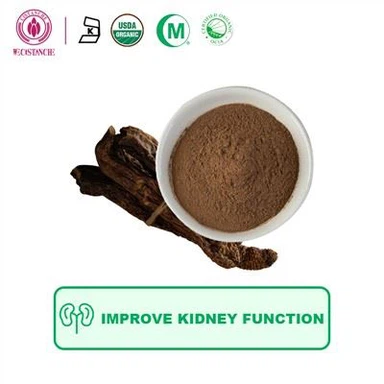
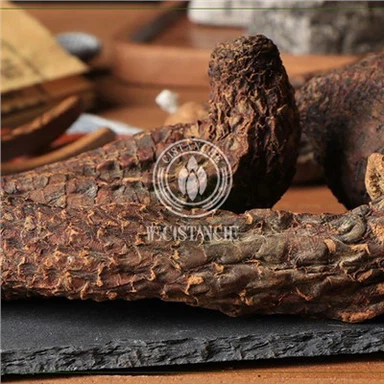
The aging of the population has made finding safe and effective drugs for the prevention and treatment of Alzheimer's disease a hot spot in drug research. In recent years, traditional Chinese medicine has made great progress in the treatment of Alzheimer's disease with the method of invigorating the kidney and marrow as well as the heart and spleen. The traditional Chinese medicine Cistanche was first published in the "Shennong Ben Cao Jing", which has the effects of nourishing kidney yang, nourishing essence and blood, and moisturizing the intestines. It is now widely used in the treatment of senile dementia, impotence, habitual constipation, and other diseases [1, 2]. Studies have shown that it has the effects of anti-dementia, anti-oxidation, anti-hypoxia, anti-radiation, and immune function enhancement. The main component is phenylethanoid glycosides [3-6]. Cistanche glycosides are extracted and refined from the dried fleshy stems of Cistanche and contain 90.7% phenethyl alcohol glycosides, of which the main component is echinacoside 44.3%. This article studied the effects of the total glycosides of cistanche on the learning and memory impairment in mice with kidney-yang deficiency caused by hydrocortisone and provided a basis for its development as a nootropic and new drug for the prevention and treatment of Alzheimer's disease.

acteoside in cistanche have good effects on kidney
1. Materials and methods
1.1 Animals
120 healthy Kunming mice, weighing 18g to 22g, are half male and half, provided by the Animal Center of China Pharmaceutical University. The certificate number is Su Dong (Quality) 97004.
1.2 Drugs and reagents
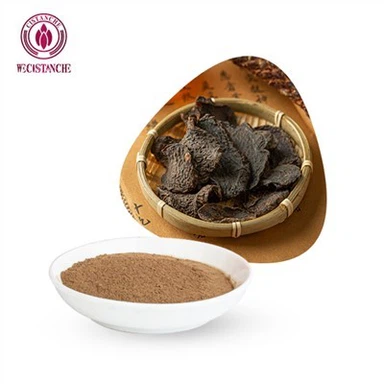
The extracts of Cistanche and Cistanche, containing 90.7% of phenethyl alcohol glycosides and 44.3% of echinacoside, dark brown powder, provided by the Chemistry Laboratory of the Modern Research Center of Traditional Chinese Medicine, Peking University, batch number 980601. Jinkui Shenqi Pills are produced by Henan Wanxi Pharmaceutical Factory, and the batch number is 980607. Hydrocortisone injection is produced by Yangzhou Pharmaceutical Factory, the batch number is 980301. The aforementioned medicines were prepared with distilled water to make the concentration required for the experiment.
1.3 Apparatus
The WX-Z mouse platform is produced by the Institute of Materia Medica, Chinese Academy of Medical Sciences.

cistanche can prevent kidney infection
1.4 Method
1.4.1 Grouping and administration
The mice were randomly divided into normal control group (abbreviated as a normal group), model control group (abbreviated as a model group), positive control group (abbreviated as a positive group, Jinkuishenqi Pill 1.5g kg) according to body weight, and high-dose cistanche total glycosides Group (referred to as a high-dose group, 400 mg kg), medium-dose group (200 mg kg), low-dose group (100 mg kg), each group has 20 animals, half male and half male. Oral administration, 0.2ml 10g body weight, normal group, and model group were given an equal volume of distilled water, once a day, continuous administration for 30 days. From the 11th day of the experiment, except for the normal group, each group was given 1 mg hydrocortisone intragastrically for 8 consecutive days.
1.4.2 General observation
During the experiment, the general status and death of each group of mice were observed and recorded daily, and 8 days after hydrocortisone administration (the 19th day of the experiment) and 10 days after the hydrocortisone was discontinued (the 30th day of the experiment), respectively Calculate the mortality of each group of mice in the two stages.
1.4.3 Platform training and testing [7]
On the 19th day of the experiment, the mice were put into the reaction box of the platform to adapt to the environment for 3 minutes, and then immediately energized with 36V alternating current. After the mice were shocked, most of the mice jumped onto the platform To avoid the electric shock, the mouse jumped from the platform and received the electric shock and then jumped back to the platform and trained for 5 minutes. Test after 24h, put the mouse on the platform, and record the time of the mouse jumping off the platform for the first time (as the incubation period) and the number of errors within 5 minutes. The test was performed again on the 30th day of the experiment, and the incubation period of each animal and the number of errors within 5 minutes were recorded.
1.5 Statistical processing
The results of the incubation period and the number of errors within 5 minutes are expressed as (x ± s), and the data is statistically processed by the t-test for comparison between groups. For animal mortality, the simplified direct probability method is used for statistical processing.
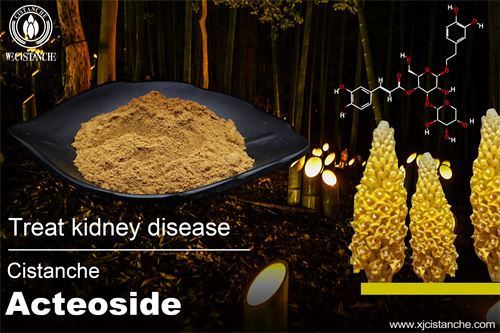
cistanche can treat kidney disease improve renal function
2. Results
2.1 The general status and mortality improvement effect of hydrocortisone-induced yang-deficiency model mice.
After 8 days of intragastric administration of hydrocortisone, the mice in the model group showed obvious lack of movement, vertical hair, less food, less drinking, tremor, etc. Yang deficiency symptoms and some animals died, the mortality rate reached 42.1%. The aforementioned symptoms of the positive group (Jinkuishenqi Pill 1500mg kg) and the total glycosides of Bossica cistanche were significantly improved, and the number of animal deaths was reduced. Compared with the model group, there was a significant difference, indicating that the total glycosides of Bossica cistanche and Jinkui Shenqi were significantly different. Both pills can significantly improve the general condition of mice with yang deficiency caused by hydrocortisone and can reduce the mortality of mice (Table 1).
Table 1 Effects of Cistanche Glycosides on the Mortality of Hydrocortisone Yang Deficiency Model Mice (x ±s)

Note: Compared with the model group: *P <0.05; a The number in brackets refers to the number of deaths from electric shock
2.2 Improvement of learning and memory impairment in mice with yang deficiency caused by hydrocortisone
After 8 days of hydrocortisone administration in the model group, compared with the normal group, the incubation period of the platform test was significantly shortened and the number of errors increased significantly, indicating that the model mice had learning and memory dysfunction. After 8 days of hydrocortisone administration in the positive group and the total glycosides of cistanche, the incubation period of the platform test was significantly prolonged and the number of errors was significantly reduced compared with the model group. Cortisone-induced learning and memory dysfunction in mice (Table 2).
After 10 days of stopping hydrocortisone in the model group, the latency and the number of errors in the platform jump test recovered significantly, which was not significantly different from that of the normal group. After stopping hydrocortisone and continuing the administration for 10 days in the positive group and the total glycosides of cistanche, the latency of the platform test and the number of errors still improved to a certain extent compared with the model group, but there was no statistical difference.
Table 2 Effects of Cistanche Glycosides on Learning and Memory Function of Hydrocortisone Yang Deficiency Model Mice (x ±s)

Note: Compared with the model group: *P <0.05, **P <0.0
3 Discussion
Learning and memory are the advanced functions of the brain and are the elements that constitute intelligence. Learning and memory impairment is a symptom shared by a variety of encephalopathy, with a high incidence and various causes, such as childhood hyperactivity, adolescent chorea, cerebral lobe atrophy, neurasthenia, senile cerebrovascular sclerosis, and blood supply to the brain Deficiency, dementia, etc. Modern medical research has proved that learning and memory disorders are closely related to neurological synaptic transmission disorders in the brain and metabolic abnormalities such as neurotransmitters, brain substances, and energy. Traditional Chinese medicine believes that there are two types of causes of intellectual impairment, of which empirical evidence accounts for a minority, and most of them are deficiency syndromes, especially heart, kidney, and spleen deficiency. Clinical and experimental studies have shown that many Chinese medicines and prescriptions with tonic effects can improve learning and memory dysfunction to a certain extent [8]. According to the physiological and biochemical basis of learning and memory, chemicals such as M-choline receptor blockers, central nervous system inhibitors, brain protein synthesis inhibitors, brain hypoxia-causing agents are often used to cause various memory impairment models [7]. Cerebral ischemia, electric shock, stress, and other methods can also cause learning and memory impairment. In addition, Chinese medicine has shown various degrees of learning and memory dysfunction in various animal models of "deficiency syndrome", such as Qi deficiency, blood deficiency, Yin deficiency, and Yang deficiency, especially the spleen deficiency and kidney deficiency models, which are more suitable for the study of tonic drugs. [ 9]. In this experiment, in addition to the typical appearance of yang deficiency, mice were given hydrocortisone for 8 days in this experiment also showed obvious learning and memory dysfunction, which further confirmed that the yang deficiency model mice can be used as a learning and memory dysfunction model.
Cistanche is a traditional replenishing and aphrodisiac. It has the effects of nourishing the kidneys, filling the essence, and moisturizing the intestines. It is called the essential medicine for nourishing the essence and blood and nourishing the kidneys. It can treat symptoms such as fatigue, forgetfulness, hearing loss, and enuresis caused by kidney deficiency. Has a good effect. Zhu Zhiming and others analyzed the drug composition of 46 compound prescriptions for the treatment of senile dementia published in relevant magazines from 1990 to 1999 and found that Cistanche is one of the commonly used drugs [1]. Animal experiments have also confirmed that Cistanche has anti-dementia effects [10]. In this experiment, the total glycosides of cistanche can significantly improve the learning and memory dysfunction of the kidney-yang deficiency model mice caused by hydrocortisone, further confirming that cistanche has nootropic effects, and indicating that the total glycosides of cistanche may be the traditional Chinese medicine cistanche for nourishing the kidney. Lean active ingredient.

cistanche can tonify kidney
References
[1] Zhu Zhiming, Zhou Yongsheng, Ouyang Jianhong. Analysis of 46 compound drugs for the treatment of senile dementia [J]. Hunan Journal of Traditional Chinese Medicine, 2001, 17(1): 60-61.
[2] Yu-Fang. Research progress in the clinical application of Cistanche cistanche [J]. Inner Mongolia Medical Journal, 2003, 35(6):535-536.
[3] Liang Minghua, Sun Peiyi, Cao Yi. Effects of Cistanche Glycosides on Lipid Peroxidation in Rabbits with Hemorrhagic Shock Reperfusion Injury[ J]. Chinese Microcirculation, 2000, 4(4):230-231.
[4] Zhang Xiaoying, Wang Xiaowen, Wang Xuefei, et al. The protective effect of the total glycosides of cistanche on the immune function of mice injured by 60CoY rays [J]. Chinese Herbal Medicine, 2001, 32(2):139-142.
[5] Wu Liya Yiming, Wang Xiaowen, Zaoranmu Niyazi. The protective effect of cistanche glycosides on cerebral hypoxia in mice[ J]. Journal of Xinjiang Medical University, 2003, 26(6):561-562.
[6] Muteliefu Gulinuer, Liu Mingju, Lu Jingf en.Effect of Cistanoside Compounds on Oxidative Stress and Immunity[ J] .Journal of Chinese Pharmaceutical Sciences, 2001, 10(3):157-160.
[7] Zhang Jungian. Modern pharmacological experiment methodology [M]. Beijing: Beijing Medical University and Peking Union Medical College United Press, 1998.1020-1021, 1029-1031.
[8] Yan Xiaoqing, Wang Huixin, Wang Jinghong. Research progress on the effects of traditional Chinese medicine and its compound on the learning and memory of experimental animals [J]. Journal of Shaanxi College of Traditional Chinese Medicine, 2002, 25(6): 62-64.
[9] Chen Qisheng. Research Methodology of Traditional Chinese Medicine Pharmacology [M]. Beijing: People's Medical Publishing House, 1993.738-740.
[10] Sato Zhou, He. Pharmacological research of Cistanche [J]. Pharmaceutical Journal (Japanese), 1985, 105 (12): 1131-1135.
Received Date: 2005-07-14
About the author: Gao Cong (1967-), male, lecturer, engaged in neuropharmacology research.