Essential Knowledge Of Traditional Chinese Medicine: Cistanche
Feb 26, 2025
In the desert, herdsmen ,their eyes scanning every inch of the desert meticulously. With great care, they use shovels to uncover the sand, revealing the milky - white, scaly Cistanche. Then, they dig to the root by hand and harvest the entire plant. In winter, large numbers of Haloxylon ammodendron stand tall in the grasslands of Urad Rear Banner. Cistanche is inoculated at their roots. The artificial cultivation of Cistanche on Haloxylon ammodendron not only increases the supply of Cistanche but also improves the ecosystem and boosts the income of herdsmen.

Cistanche is a medicine that nourishes the life - gate, replenishes kidney qi, and nourishes essence and blood. It is a mild tonic, warm but not hot, tonifying but not harsh, warming but not dry, and lubricating but not causing diarrhea. Thus, it is named "Congrong" (meaning gentle and unhurried). "Yanyi of Materia Medica" in the Song Dynasty pointed out that a small dose of Cistanche may not be effective, while "Compendium of Materia Medica" in the Ming Dynasty cited "Weisheng Zongwei" to prove its definite efficacy, which has also been clinically verified.
Cistanche is the fleshy stem of the plant Cistanche in the Orobanchaceae family. Some books record that it should be harvested on the fifth day of the fifth lunar month. However, by May, it may be too old for use, so it is usually harvested in March. Westerners often use it as food. They scrape off the scales, wash it thoroughly with wine, cut it thinly, and make a soup with mutton. Nowadays, Cistanche can generally be dug in April of the Gregorian calendar (March of the lunar calendar). The larger ones are harvested while the smaller ones are left. The inflorescence or the top part of Cistanche is removed, and it is dried on the beach or the roof. As it dries, its color changes from yellow - white to brownish - black, and this is called "Tian Dayun" (sweet Cistanche). The Cistanche harvested in autumn has a high water content and is not easy to dry. So, the large and plump ones are immersed in a salt lake. When used, the salt is washed off, and this is called "Yan Dayun" (salted Cistanche).
Cistanche was listed as a top - grade tonic for deficiency in "Shennong's Classic of Materia Medica" and was classified as one of the "Nine Great Chinese Celestial Herbs" in "Daozang" of the Tang Dynasty. It tastes sweet and salty, is warm in nature, and pertains to the kidney and large intestine meridians. It can tonify kidney yang, replenish essence and marrow, nourish blood and moisten dryness, improve complexion, and prolong life. It is mainly used for symptoms such as kidney yang deficiency, weakness and soreness in the lower back and knees, lack of strength in the tendons and bones, deficiency of essence and blood, impotence, infertility, and dry constipation of the intestines. It is a precious Chinese medicinal herb and is known as the "Desert Ginseng".
Cistanche is one of the frequently used tonic herbs in prescriptions for tonifying kidney yang in past dynasties, indicating its strong kidney - tonifying function. In traditional Chinese medicine theory, the kidney stores essence, governs the bones and generates marrow, and is the root of congenital constitution, being the source of physical strength. Long - term exercise and excessive fatigue can lead to the consumption of yang qi (decrease in blood testosterone), which is the main factor causing a decline in physical performance and an extended recovery period. Cistanche can prevent and treat the decrease in blood testosterone caused by exercise, promote the secretion of pituitary gonadotropins, accelerate fatigue recovery, and improve exercise ability. In addition, Cistanche contains a large number of tonic components such as amino acids and minerals, which can effectively improve the motility of male sperm.

Any medicine for tonifying the kidney must also have an impact on the heart. Only when the heart obtains the essence of the kidney can it avoid problems like withering. Cistanche can not only tonify the essence of the kidney but also the qi of the heart. It has multiple pharmacological activities, such as protecting ischemic myocardium, lowering blood lipids, preventing atherosclerosis and thrombosis, reducing peripheral vascular resistance, and lowering blood pressure.
Cistanche and Constipation: A Gentle and Effective Remedy
One of the most common concerns among patients is constipation. In modern medicine, constipation is often caused by a combination of factors. An unbalanced diet lacking in dietary fiber, a sedentary lifestyle, stress, and certain medications can all lead to this uncomfortable condition. The discomfort of constipation, including abdominal pain, bloating, and a feeling of incomplete evacuation, can significantly affect one's quality of life. It can also have a negative impact on overall health, affecting digestion, nutrient absorption, and even mental well - being.

Cistanche offers a natural and gentle solution for constipation. It contains dietary fiber and other substances that play a crucial role in promoting healthy digestion. The dietary fiber in Cistanche can absorb water in the intestines, increasing the volume of feces and making them softer. This is especially important for those who struggle with hard and dry stools. When feces become softer, they are easier to pass through the intestines, reducing the pain and discomfort associated with constipation.
Moreover, Cistanche can stimulate intestinal peristalsis. It promotes the rhythmic contractions of the intestinal muscles, which helps move feces along the digestive tract. This gentle stimulation is different from the harsh effects of some chemical laxatives. Chemical laxatives may cause sudden and strong bowel movements, often accompanied by abdominal cramps and potential electrolyte imbalances. In contrast, Cistanche acts gently, providing a more comfortable and sustainable way to relieve constipation without the risk of these harsh side effects. It is especially suitable for the elderly, those with sensitive digestive systems, or those who have had long - term problems with constipation.
Clinical studies have shown that Cistanche can effectively improve the symptoms of constipation. In a research involving a group of patients with chronic constipation, those who took Cistanche - based supplements for a certain period experienced a significant increase in the frequency of bowel movements and a decrease in the difficulty of defecation. Their overall quality of life was also improved as the discomfort of constipation was alleviated.
For people with weak constitutions and constipation, purgation is not advisable. Using three to four qian (about 10 - 13 grams) of washed Cistanche can have a miraculous effect in relieving constipation. For the elderly and the weak with insufficient essence and blood, and new mothers with depleted qi and blood, which lead to dryness in the intestines and constipation (this is called "deficiency - type constipation"), adding Cistanche to Siwu Decoction can moisten the intestines. The decoction of Cistanche has an obvious laxative effect. It can improve intestinal peristalsis, inhibit the water absorption of the large intestine, and shorten the defecation time. It is highly effective for senile habitual constipation, constipation due to physical weakness, and postpartum constipation.

In clinical compatibility, Achyranthes bidentata and Cistanche are often used together. They can be used to treat liver and kidney deficiency, bone atrophy, and weak tendons. They have an excellent effect on nourishing essence and relieving discomfort. "Yanyi of Materia Medica" in the Song Dynasty mentioned that Achyranthes bidentata is most suitable for soaking in wine with Cistanche, and they have a good effect on tonifying the kidney. In addition, Cynomorium songaricum and Cistanche are also often paired. The combination of these two herbs enhances the function of tonifying the liver and kidney, warming yang, and relieving constipation, which is very suitable for elderly diabetic patients with yang - deficiency - type constipation.
Nowadays, Cistanche can be processed into granules. First, it is cut into slices 2 - 4 mm thick, then blanched in 90 - degree hot water for one minute to inactivate enzymes and prevent glycosides from being decomposed by hydrolytic enzymes. After air - drying for 30 minutes, it is dried at 60 degrees Celsius. Then, it is decocted, and after passing the quality inspection, it is quantitatively extracted. Through processes such as low - temperature concentration, rapid drying, and dry granulation, it is refined into single - herb formula granules. Granules are convenient to take and carry.
Common small prescriptions are as follows:
Cistanche Wine: Soak 200g of Cistanche in 3 kg of white wine. Drink it after 15 days.
Cistanche - Lycium barbarum Wine: Soak 200g of Cistanche, 100g of Cynomorium songaricum, 30g of Gastrodia elata, and 50g of Lycium barbarum in 3 kg of white wine. Drink it after 15 days.
Cistanche - Cuscuta chinensis Wine: Soak 30g of Cistanche and 20g of Cuscuta chinensis in 500g of white wine and drink it.
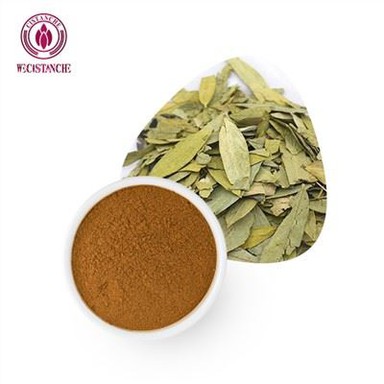
Cistanche is oblate - cylindrical, slightly curved. Its surface is brownish - black or gray - brown, densely covered with fleshy scaly leaves arranged in a tiled pattern. The tips of the scales are usually broken. It is heavy, hard, slightly flexible, and not easy to break. The cross - section is brownish - black, with light - brown dot - shaped vascular bundles arranged in a wavy ring pattern. It has a faint smell and tastes sweet with a slight bitterness. The best - quality Cistanche is thick and has dense scales.
In the market, Cistanche is generally divided into soft small - sized, medium - sized, and hard large - sized varieties. The price varies greatly depending on the quality. Cistanche parasitizes on the roots of Haloxylon ammodendron, and the main production area is Alxa in Inner Mongolia. After drying, it is very soft due to its high polysaccharide content and is abbreviated as "Ruan Dayun" or "You Congrong" (oily Cistanche). Tubular Cistanche parasitizes on the roots of Tamarix ramosissima, and the main production area is Hotan in Xinjiang. After drying, it is very hard and is called "Ying Dayun". It is mainly used for export.
Wild plants are an important part of nature, a crucial foundation for human survival and development, and play an irreplaceable role in maintaining the balance of the ecosystem. Cistanche was listed as a national second - class protected wild plant in 1999. Illegal logging, purchasing, transporting, and processing of state - protected plants and their products are illegal and criminal acts. The report of the 20th National Congress of the Communist Party of China emphasizes that respecting, conforming to, and protecting nature are inherent requirements for building a modern socialist country in all respects.
Beyond Constipation: Other Potential Benefits and Considerations
In addition to its effectiveness in relieving constipation, Cistanche has many other potential benefits. Modern medical research has found that Cistanche contains various bioactive substances such as phenylethanoid glycosides, polysaccharides, and alkaloids. These components endow Cistanche with antioxidant, anti - inflammatory, and immune - regulating properties.
Antioxidants in Cistanche can scavenge free radicals in the body. Free radicals are unstable molecules that can cause damage to cells and contribute to the aging process and various diseases. By neutralizing these free radicals, Cistanche helps protect cells from oxidative stress, which is beneficial for maintaining overall health and potentially reducing the risk of chronic diseases such as heart disease and cancer.
Cistanche also shows potential in regulating the endocrine system. It may help balance hormones in the body. For men, it can improve sexual function by enhancing libido and sperm quality. For women, it may relieve symptoms related to hormonal imbalances, such as menstrual irregularities.

However, like any herbal supplement, Cistanche should be used with caution. It may interact with certain medications. For example, if you are taking blood - thinners or medications for high blood pressure, it is important to consult a healthcare professional before using Cistanche. Also, people with certain health conditions, such as kidney problems or diabetes, should seek medical advice before incorporating Cistanche into their diet.
In conclusion, Cistanche is a remarkable herb with a long - standing history and great potential in modern health applications. Whether you are dealing with constipation, aiming to boost your immune system, or seeking natural anti - aging solutions, Cistanche could be a valuable addition to your health routine. But always remember to prioritize your health and make informed decisions. If you have any questions or concerns, don't hesitate to consult a healthcare provider. By understanding the properties and proper usage of Cistanche, we can better harness its power to improve our well - being and enjoy a healthier life.