Experience in Using Jiaoyao To Treat Ischemic Stroke Ⅱ
Feb 19, 2025
1.4 Pinellia - Atractylodes - Gastrodia: Resolving Phlegm, Suppressing Wind, and Relieving Dizziness
The classic text Heart Methods of Danxi states, "Without phlegm, there is no dizziness." Similarly, Plain Questions: The Essential Theories of the Five Movements and Six Climates asserts, "All wind-induced dizziness belongs to the liver." Ischemic stroke-related dizziness is often linked to liver and spleen dysfunction. Poor dietary habits impair spleen function, leading to the accumulation of phlegm-dampness. Emotional stress disrupts liver qi's regulatory function or exacerbates preexisting liver-kidney yin deficiency, which can trigger internal wind. Liver and spleen dysfunctions result in the formation of internal wind and phlegm-dampness, which obstruct the meridians, disrupt qi and blood flow, and disturb the brain, leading to dizziness. This is categorized as "wind-phlegm obstructing the meridians."
Clinically, this manifests as dizziness, headache, facial asymmetry, excessive phlegm, chest tightness, a greasy white tongue coating, and a wiry, slippery pulse. The herbal combination of Pinellia (Banxia), Atractylodes (Baizhu), and Gastrodia (Tianma) is commonly used, inspired by the Pinellia, Atractylodes, and Gastrodia Decoction. Modern studies have shown that this decoction effectively inhibits inflammatory responses in stroke patients, reduces neuronal damage, improves blood rheology, and enhances neurological function. It has also been shown to protect against ischemia-reperfusion injury in animal models.
Pinellia: Warm and pungent, it dries dampness and resolves phlegm, which is essential for addressing phlegm-induced dizziness.
Gastrodia: A key herb for resolving "wind-phlegm," it is highly effective for treating dizziness, limb spasms, numbness, and paralysis.
Atractylodes: Sweet, warm, and bitter, it strengthens the spleen, dries dampness, and harmonizes with Pinellia to enhance phlegm resolution.

High-Quality Cistanche Extract Pills
The combination of these three herbs addresses both the root cause (spleen dysfunction) and manifestation (wind-phlegm) of dizziness. For patients with heat symptoms and constipation, raw Atractylodes (30 g) may be used to enhance its effects. Clinically, 10 g each of Pinellia, Atractylodes, and Gastrodia are commonly prescribed, along with adjuncts such as Arisaema (Danshen), Salvia (Danshen), Cyperus (Xiangfu), and small doses of Rhubarb (Dahuang) to create a formula that resolves phlegm, suppresses wind, and relieves dizziness. Rhubarb must be used cautiously in ischemic stroke patients with underlying deficiencies to avoid overstimulation.

1.5 Angelica - Ligusticum - Gueldenstaedtia: Promoting Blood Circulation and Removing Stasis
Ischemic stroke patients often exhibit symptoms such as unilateral limb weakness and restricted movement, which are attributed to blood stasis obstructing the vessels. Blood stasis prevents the generation of new blood, leading to blood deficiency and insufficient nourishment of the muscles and meridians. This is categorized as "stasis with deficiency."
The combination of Angelica (Danggui), Ligusticum (Chuanxiong), and Gueldenstaedtia (Guijianyu) is frequently employed to nourish the blood, promote circulation, and remove stasis.
Angelica: Sweet and warming, it nourishes and moves blood, addressing both deficiency and stasis. It is described as "a holy herb for the blood" in classical texts.
Ligusticum: Pungent and warming, it invigorates blood and qi, relieves pain, and unblocks stagnation. It is especially effective in promoting circulation to the extremities and improving vessel health.
Gueldenstaedtia: Known for its ability to resolve blood stasis, clear heat, and detoxify, it complements the warming nature of Angelica and Ligusticum, preventing heat generation from prolonged stasis.
The combination synergistically nourishes and activates blood while resolving stasis, ensuring that the meridians are nourished and unobstructed. Clinically, common dosages include 15 g of Angelica, 10 g of Ligusticum, and 10 g of Gueldenstaedtia. These are often paired with Astragalus (Huangqi) and Goji Berry (Gouqizi) to enhance blood production or with Achyranthes (Niuxi) and Dipsacus (Xuduan) to promote circulation and relieve pain. For cold limbs, Asarum (Xixin) and White Peony Root (Baishao) are added to warm the channels and nourish the blood.

1.6 Bupleurum - Gardenia - St. John's Wort: Relieving Depression and Soothing the Mind
Emotional disturbances, such as depression, anxiety, irritability, and insomnia, are common in ischemic stroke patients. These symptoms often arise from stagnation of qi in the heart and liver, leading to dysregulated qi and blood flow. Chronic stagnation can generate fire, stasis, and phlegm, which disturb the mind.
The herbal combination of Bupleurum (Chaihu), Gardenia (Zhizi), and St. John's Wort (Guanye Jinsitao) is used to soothe the liver, relieve depression, and calm the mind:
Bupleurum: Promotes the smooth flow of liver qi, resolves stagnation, and elevates clear yang.
Gardenia: Bitter and cooling, it clears heat, alleviates irritability, and resolves internal fire.
St. John's Wort: Modern research has demonstrated its antidepressant, anti-inflammatory, and sedative properties. It is a cost-effective alternative to conventional antidepressants and is widely used for the treatment of depression.
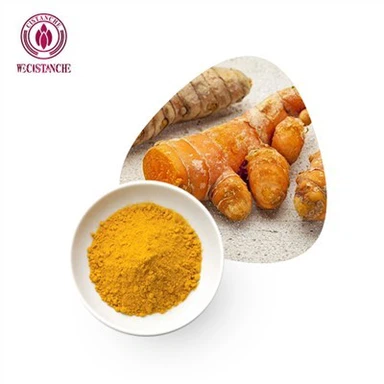
The combination addresses qi, blood, and heat imbalances, making it effective for emotional symptoms in stroke patients. Common dosages include 10 g each of Bupleurum and Gardenia, and 15 g of St. John's Wort. Adjuncts such as Floating Wheat (Fuxiaomai) and Albizia Flower (Hehuanhua) enhance the liver-soothing and depression-relieving effects. For severe insomnia, Polygala Root (Yuanzhi) and Polygonum Vine (Shouwuteng) are added to calm the heart and promote sleep. If forgetfulness or heaviness of the head is present, the formula may be combined with the "Warm Gallbladder Decoction" and Turmeric (Yujin) to clear heat, resolve phlegm, and improve cognitive function.

2. Conclusion
Herbal combinations, or "Jiao Yao," act as a bridge between individual herbs and complex prescriptions. They play a central or auxiliary role in treatment by enhancing efficacy and reducing toxicity. They involve sophisticated synergies rather than simple addition of ingredients. Through clinical experience and modern research, Jiao Yao combinations for ischemic stroke align with pathophysiological mechanisms, offering tailored, flexible, and evidence-based treatments for complex conditions.