Experimental Study On The Anti-fatigue And Anti-radiation Experiments Of Soft Capsules With Cistanche As The Main Raw Material
Mar 10, 2022
Contact: Audrey Hu Whatsapp/hp: 0086 13880143964 Email: audrey.hu@wecistanche.com
Abstract:
Objective To explore the anti-fatigue and anti-radiation effects of soft capsules made of Bossica cistanche, Acanthopanax senticosus, and Jujube as the main raw materials. Methods: Three experimental groups were established, and mice were intragastrically administered with soft capsules of 0.18, 0.36, and 1.08 g/kg·bw each day, and a blank control group was set up. The measurement was performed after continuous intragastric administration for 30 days. The mice’s weight-bearing swimming time, liver glycogen content, post-exercise serum urea level, area under the blood lactic acid curve and other indicators were used to determine their anti-fatigue effects; the mice were given the above doses by gavage every day, and a radiation control group was set up at the same time. After continuous gavage for 21 days, different exposure doses were selected for different indicators, and each group was irradiated with the same dose of 7 rays once, and samples were continued after the irradiation. Peripheral blood white blood cell count was performed before, on the 3rd and 14th day after irradiation, bone marrow nucleated cell count and bone marrow cell micronucleus test were performed on the 3rd day after irradiation, the serum superoxide dismutase (SOD) activity was measured on the 7th day, and the serum superoxide dismutase (SOD) activity was measured on the 14th day. Serum hemolysin to determine its anti-radiation effect. Results 0, 36 and 1.08g/kg·bw doses can prolong the weight-bearing swimming time of mice, 1.08; g/kg·bw doses can significantly reduce the serum urea level of mice after exercise, and significantly reduce the blood lactic acid of mice Area under the curve; the number of peripheral blood leukocytes in the middle and high-dose groups on the 3rd and 14th day after irradiation with 3GY dose was significantly higher than that of the radiation model control group; on the 3rd day, the number of bone marrow nucleated cells of mice in the high-dose group was significantly higher than that of the control In the group, the micronucleus rate of bone marrow cells was significantly lower than that of the control group. On the 7th day after irradiation with the 6GY dose, the serum superoxide dismutase (SOD) activity of mice in the high-dose group was significantly higher than that of the control group. The difference is statistically significant (P <0.05 or P <0.01). Conclusion: The soft capsules with Cistanche, Acanthopanax senticosus, and Jujube as the main raw materials have anti-fatigue and anti-radiation effects.
Key words: Cistanche; Acanthopanax senticosus; Jujube; Anti-fatigue; Anti-radiation

Cistanche deserticola has many effects, click here to know more
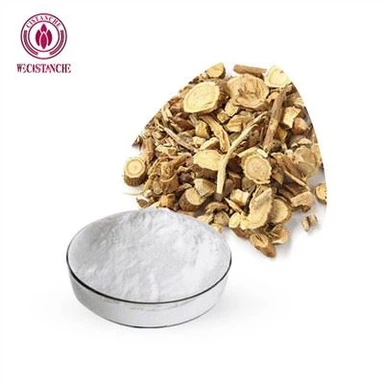
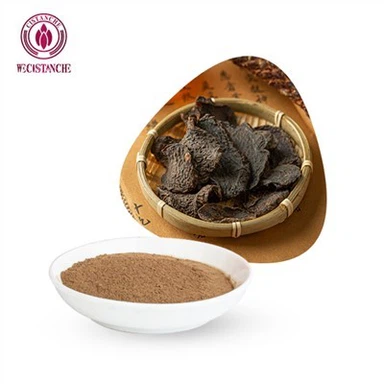
Cistanche is a fleshy stem with scaly leaves of Cistanche cistanche, one of the precious Chinese herbal medicines with a wide range of uses. . Studies have shown that it has the functions of enhancing the body's immune function, promoting memory, improving intelligence, regulating the nervous system, enhancing sexual function, anti-aging, laxative, and anti-radiation. Acanthopanax senticosus, also known as Acanthopanax senticosus and Acanthopanax senticosus, is the root and rhizome of the Acanthopanax senticosus plant of the Araliaceae family. Scholars at home and abroad have verified that it contains a variety of active ingredients and can enhance the body's non-specific defenses through extensive research and experiments. Ability, with immune regulation, anti-tumor, anti-aging, anti-radiation damage, and anti-fatigue effects. Jujube is the mature fruit of the Rhamnus jujube. It is called the five ancient fruits of China together with peach, plum, millet, and apricot. Studies have found that it has immune stimulation, anti-oxidation, anti-aging, anti-tumor, anti-mutation, anti-I Type allergy, and anti-fatigue effects. This product is made into soft capsules with Cistanche, Acanthopanax senticosus, and Jujube as the main raw materials. We conducted animal experiments on its comprehensive anti-fatigue and anti-radiation effects.

Cistanche
1. Material and methods
1.1 Test substance
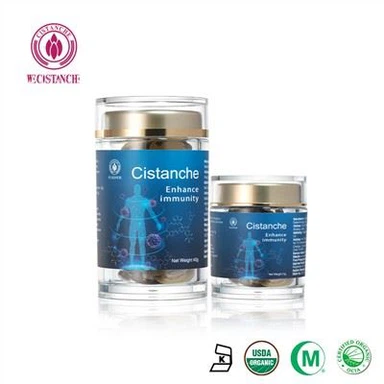
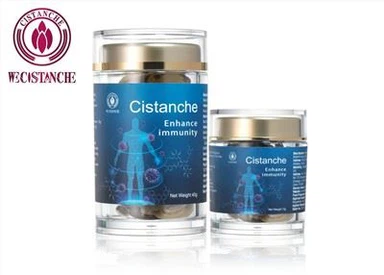
Provided by a company, the soft capsule, 1.08g/cap, is mainly made of Cistanche, Acanthopanax senticosus, jujube, and other raw materials through scientific processing. The recommended dose for human oral administration is 0.036 g/kg·bw. Take the contents of the capsule for the experiment. The results of our laboratory's toxicological test showed that the acute oral administration of this soft capsule to male and female Kunming mice was greater than 21500 ms/kg·bw, and it was non-toxic. Three genetic toxicity tests (Ames test, mouse bone marrow polychromatic erythrocyte micronucleus test, mouse sperm deformity test) were all negative. Feeding for 30 days did not produce obvious toxic and side effects on the observation indexes of rats.
1.2. Experimental animals
There are 200 clean Kunming female mice and 160 male mice weighing 18-22g, provided by Dongchuang Laboratory Animal Technical Service Department, Kaifu District, Changsha City, and the experimental animal production license number is SCXK (Xiang) 2006-0001. During the experiment, the experimental environment temperature was 22-24°C, and the humidity was 52%-58%. The experimental environment is a barrier system. The experimental animal license number is SYXK (Xiang) ZOO3—0002.
1.3 Dose setting and test substance giving method
The low, medium and high doses are 0.18, 0.36, and 1.08g/kg·bw (respectively equivalent to 5, 10, and 30 times the recommended human dose). Take the contents of the soft capsules and add edible vegetable oil to the required concentration. The control group was given an equal volume of edible vegetable oil, and the gavage was given once a day with a volume of 0.1ml/10g·bw. In the anti-fatigue experiment, continuous gastric gavage for 30 days, and the anti-radiation experiment for 21 days after continuous gastric gavage began to measure various observation indexes.
1.4 Main instruments and reagents
The serum urea test kit was provided by Shanghai Fosun Long March Medical Science Co., Ltd.; the blood lactic acid test kit was provided by the British company RANDOX; the glycogen test kit was provided by Nanjing Jiancheng Bioengineering Research Institute.
1.5 Method and Observation Index Measurement
200 clean-level Kunming female mice were divided into groups I, II, III, IV, and V5. Peripheral blood white blood cell count test, bone marrow nucleated cell count test, mouse bone marrow cell micronucleus test, and blood superoxide were performed respectively. Dismutase (sOD) activity test and serum hemolysin test. Each large group adds animals, and each large group is randomly divided into radiation model control group, low-, medium-, and high-dose groups, with 10 animals in each group. After 21 days of continuous gavage, the dose group and the radiation model control group were irradiated with the same dose of 7-ray whole body once, and different doses were selected according to different indicators. After irradiation, gavage was continued until the end of each experiment.
1.5.1 Peripheral blood white blood cell count experiment
Both the dose group and the radiation model control group were given a 3Cy dose of 7 rays once. The tail tip blood 20 was collected before irradiation, 3 days after irradiation, and 14 days after irradiation, and added to 0.38 ml of 1% hydrochloric acid. After mixing, the total number of white blood cells was counted.
1.5.2 Experiment on the number of bone marrow nucleated cells
Both the dose group and the radiation model control group were irradiated the whole body with 7 rays at a dose of 3 Gy. On the 3rd day after irradiation, the mice were killed by cervical dislocation, the femurs were stripped, and all the bone marrow cells in the femurs were washed out with Hank’s solution. Count under the mirror. Calculate the number of nucleated cells per ml of bone marrow cells.
1.5.3 Mouse bone marrow
The cell micronucleus test dose group and the radiation model control group were all irradiated the whole body with 7 rays at a dose of 3Gy. On the 3rd day after irradiation, the mice were sacrificed by cervical dislocation, the sternum was removed, the bone marrow fluid was squeezed out and mixed with calf serum, routine smears, fixed with methanol, Giemsa staining, washed with distilled water, and dried. Under an optical microscope, each animal counted the number of micronuclei in 1,000 polychromatic erythrocytes.
1.5.4 Serum superoxide dismutase (SOD) activity test
Both the dose group and the radiation model control group were irradiated the whole body with 7 rays at a dose of 6 Gy. On the 7th day after the irradiation, the eyeballs were removed, blood was collected, centrifuged, and the serum was taken. The serum superoxide dismutase (so/)) the activity was determined according to the kit instructions.
1.5.5 Serum hemolysin test
Both the dose group and the radiation model control group were irradiated with the whole body at a dose of 2Gy with 7 rays once. Within 20 days after irradiation, the serum half hemolysis value (Rico) was measured. Each mouse was immunized by intraperitoneal injection of 2% (v/v, prepared with physiological saline) packed volume of RBC 0.2ml. After 5 days, the eyeballs were removed and the blood was collected in a centrifuge tube, centrifuged at 20,000 rpm for 10 minutes, and the serum was collected. Determine the half hemolysis value (HC50). 1.6 Anti-fatigue experiment 160 clean-grade Kunming male mice were divided into 4 groups I, Ⅱ, Ⅲ, iV, 40 animals in each group, and the weight-bearing swimming test, serum urea, blood lactic acid, and liver glycogen were measured. . Each large group was randomly divided into a control group, a low-dose group, a medium-dose group, and a high-dose group, with 10 animals in each group.
1.6.1 Weight-bearing swimming test
After giving the test substance for 30 minutes for the last time, the mice were placed in a swimming box to swim. The water depth was about 30era and the water temperature was 2^5°C ±1. O~C, the root of the rat tail is loaded with 5% of the bodyweight of the lead skin. The time from the start of swimming to the death of the mice was recorded as the weight-bearing swimming time (s).
1.6.2 Determination of serum urea
After giving the test substance for 30 minutes for the last time, the mice swim unloaded for 90 minutes in the water at a temperature of 30~C, and after a rest of 60 minutes, the eyeballs are drawn to collect blood. After standing at 4~C for 3 hours, centrifugation at 2000 rpm/min for 15 minutes, the serum was collected and the serum urea was determined with a fully automatic biochemical analyzer.
1.6.3 Determination of liver glycogen
Anthrone method: 30 minutes after the last administration of the test substance to the mice, the animals were sacrificed, and 100 mg of liver and liver were taken, and the liver glycogen was determined according to the kit instructions.
1.6.4 Determination of blood lactic acid
After 30 minutes of the last administration of the test substance, blood was collected from the medial canthal venous plexus for 20 and then swimming in water at a temperature of 30~C without weight for 10 minutes, and then stopped. Blood was collected at 0 and 20 minutes after exercise, respectively. Under the area.
1.7 Experimental data processing
Use Spss software for statistical analysis.

2 results
2.1 The influence of the test substance on the weight of mice
In the anti-radiation experiment, the mice gained normal weight before irradiation, and the mice in each group decreased after irradiation. In the anti-fatigue experiment, the weight of mice in each dose group was compared with the control group during the experiment, and the difference was not statistically significant (P>0.05).
2.2 The effect on the white blood cell count of peripheral blood in mice
See Table 1. The white blood cell count in the control group of the radiation model on the 3rd day after irradiation was compared with that before the irradiation. The difference was statistically significant (P<0.01), indicating that the radiation damage model was established. On the 3rd day after irradiation, the white blood cell counts of the medium and high dose groups and the medium-dose group on the 14th day were significantly higher than those of the radiation model control group, and the difference was statistically significant (P <0.05 or P <0.01).

2.3 Effect on the number of nucleated cells in the bone marrow of mice and the micronucleus rate of bone marrow cells in mice
See Table 2. On the 3rd day after irradiation, the number of bone marrow nucleated cells in the high-dose group was significantly higher than that in the control group, and the micronucleus rate of bone marrow cells in the high-dose group was significantly lower than that of the control group. The difference was statistically significant (P<0. 05).

2.4 Effect on mouse serum superoxide dismutase (SOD) activity and mouse half hemolysis value (HC50)
On the 7th day after irradiation, the serum superoxide dismutase (so/) activity of mice in the high-dose group was significantly higher than that in the control group, and the difference was statistically significant (P<0.05). On the 14th day after irradiation, the half hemolysis value (He50) of the mice in each dose group was compared with the control group, and the difference was not statistically significant (P>0.05).
2.5 The influence of the contents of the test substance on the weight-bearing swimming time, serum urea, and liver glycogen reserves of mice
The weight-bearing swimming time of mice in the middle and high dose groups was longer than that in the control group, and the difference was statistically significant (P<0.05). The serum urea of mice in the high-dose group was lower than that in the control group (P <0.05). The liver glycogen reserves of mice in each dose group were compared with those in the control group, and the difference was not statistically significant (P>0.05)

3 Discussion
After ionizing radiation acts on the body, it can directly act on DNA, proteins, and enzymes, causing ionization and breaking of chemical bonds, denaturing molecules, and destroying cell structure; it can also act on water molecules in the body to ionize and excite water molecules, resulting in a large amount of The free radicals with strong oxidizing properties indirectly cause tissue cell degeneration and necrosis, causing metabolic disorders, and causing regulatory dysfunctions in the immune, nervous and endocrine systems_4J. The total number of white blood cells in the peripheral blood, the number of nucleated cells in the bone marrow, the micronucleus rate of mouse bone marrow polychromatic erythrocytes, the activity of superoxide dismutase (SoD) in the blood, and the serum hemolysin are all sensitive indicators that reflect radiation damage to the body. The results of this study showed that after a certain dose of 7-rays were irradiated to the whole body of mice, the rate of micronucleus of bone marrow polychromatic erythrocytes in the radiation model control group mice was significantly increased, peripheral blood white blood cell count, bone marrow nucleated cells, SOD activity and serum hemolysis In the test group, the peripheral blood white blood cell count, the number of bone marrow nucleated cells, and the serum superoxide dismutase (SOD) activity of the test group mice were significantly higher than those of the radiation model control group; the bone marrow cell micronucleus rate was significantly lower than the control group Group; it shows that the tested soft capsule has certain anti-radiation damage effect. This time, it was observed that the serum hemolysin in the test substance group had a tendency to increase, but there was no significant difference compared with the radiation model control group. It may be that the test sample was given for not long enough. In the anti-fatigue experimental study, the weight-bearing swimming time of the test group mice was significantly longer than that of the column photo group, and the serum urea level and the area under the blood lactic acid curve of the mice after exercise were significantly lower than those of the control group, indicating that the tested soft capsules have anti-fatigue effects.

The soft capsules with Cistanche, Acanthopanax senticosus, and Jujube extract as the main components have significant anti-radiation damage and relieve physical fatigue. This is mainly because they contain a variety of active ingredients, each of which plays a different role. The main active ingredients of Cistanche are cistanche glycosides, echinacosides, cimicifuga glycosides, cistanche polysaccharides, D-mannitol, and so on. Experiments show that l1.5.6], the total glycosides of cistanche have a strong protective effect on the function of T lymphocytes in mice injured by radiation. Glycosides enhance the function of the hypothalamus-pituitary-adrenal axis, promote the release of related hormones in the body, and help improve body functions. Cistanche cistanche polysaccharides play a significant role in promoting the growth of immune organs, the phagocytic ability of the phagocyte system, and the humoral and cellular immune functions. Cistanche polysaccharide and D-mannitol have the effects of delaying aging, activating superoxide dismutase, and reducing lipofuscin accumulation in the body. Cistanche can adjust the ultrastructure of liver cells, promote protein synthesis, and antagonize the protein breakdown caused by weight-bearing exercise, so the serum urea nitrogen is significantly reduced. The main components of Acanthopanax senticosus are glycosides, polysaccharides and oligosaccharides, trace elements, and amino acids. Studies have confirmed that _2J, Acanthopanax senticosus polysaccharides, and glycosides can significantly improve the ability of cells to induce interferon, and are ideal immune enhancers. They can promote the functions of T cells, B cells, NK cells, and macrophages. It can also promote the production of interleukin, interferon, tumor necrosis factor, and other cytokines. The anti-fatigue mechanism of Acanthopanax senticosus may be to stimulate the secretion of certain hormones, enhance the body's oxygen uptake capacity during exercise, and change the body's energy supply effect. Energy metabolism is changed from muscle glycogen to fat, thereby saving muscle glycogen and effectively delaying exercise fatigue Produce _8J. Jujube contains acids, glycosides, alkaloids, flavonoids, proteins, amino acids, vitamins, and so on. Studies have shown that jujube polysaccharide has obvious anti-complement activity, can promote the proliferation of mouse spleen cells, can promote the spontaneous proliferation response of mouse spleen cells and the reaction of mixed lymphocyte culture, and it is believed that it has an effect on unactivated mouse spleen cells. Promote proliferation; Jujube crude polysaccharides, neutral polysaccharides, acidic polysaccharides all promote lymphocyte proliferation, can significantly improve the phagocytic function of mouse abdominal cavity cells, promote hemolysin and hemolytic plaques, promote lymphocyte transformation and increase peripheral blood lymphocytes break down. Jujube polysaccharide has the effect of scavenging free radicals, so it has the effect of anti-lipid peroxidation.
The results of this study show that the scientific processing of Cistanche, Acanthopanax senticosus, and jujube into soft capsules have a good effect on relieving physical fatigue, enhancing body resistance, and preventing or reducing the harm of radiation to human health. This article provides a scientific basis for the research and development of natural health foods that can relieve physical fatigue and protect against radiation damage.

References :
[1] Li Qingdao, Yang Laixiu. Research progress on the pharmacological effects of Cistanche [J]. Inner Mongolia Traditional Chinese Medicine, 2001, 4:35.
[2] Wang Zhirui, Lin Jingming, Zhang Zhongyi, etc. Research progress on chemical constituents and pharmacology of Acanthopanax senticosus [J]. Chinese Medicinal Materials, 2003, 26(8): 603~605.
[3] Miao Mingsan, Sun Limin. Modern research on jujube [J]. Henan Traditional Chinese Medicine, 2O03, 26(3): 59-60.
[4] Zhang Chunsheng, Peng Shanzhuo. The role of antioxidants in radiation protection [J]. Chinese Journal of Industrial Medicine, 2003, 16: 222-224.
[5] Chen Shaoshu, He Shenghu, Cao Xiaozhen, etc. Gansu Animal Husbandry and Veterinary Medicine, 2005, 3 (total 182): 41-43.
[6] Liu Fuxiang, Xu Min, Wang Jian, etc. The pharmacological research and prospect of Cistanche [J]. Anhui Agricultural Science Bulletin, 2006, 12(13): 92~93.
[7] Yang Chunhua, Liu Gang, Zhang Chongxi, etc. Research progress of Acanthopanax senticosus. Ginseng Research, 2004, 1: 17-20.
[8] Pan Xiang, Xu Feng. The progress of experimental research on the anti-fatigue function of Acanthopanax senticosus [J]. Laboratory Animal Science and Management, 2005, 22(2): 39-41.
[9] Ministry of Health "Technical Specifications for Health Food Inspection and Evaluation>Es]. (2O03 edition)