Exploring The Legend Of Desert Symbiosis: The Life Bond Between Cistanche Deserticola And Red Willow
May 21, 2025
Mysterious companions in the desert
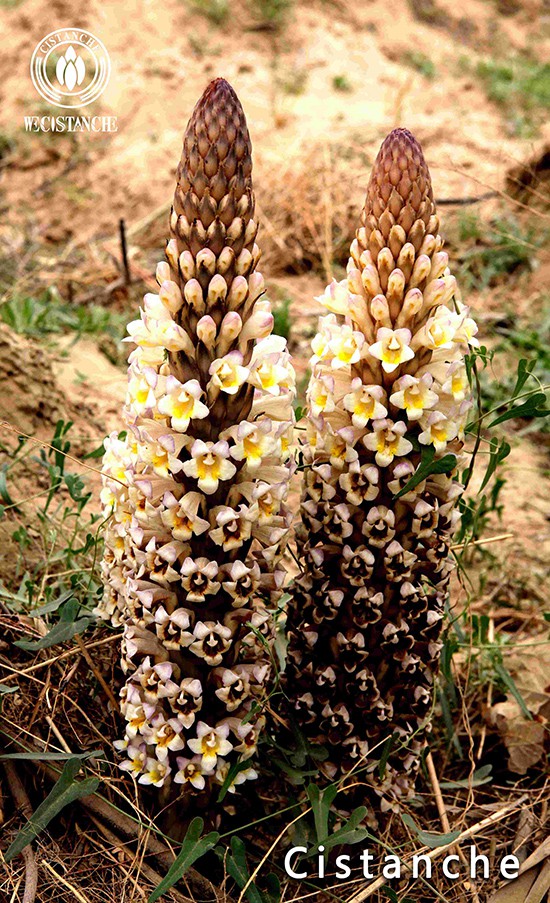
Chinese herb cistanche
Survival is an extremely difficult challenge in the vast and boundless desert world filled with yellow sand. Most plants find it difficult to survive here, however, there is a peculiar combination that tenaciously reproduces here, which is the Cistanche deserticola and the red willow. This magical duo, one is a parasitic "desert ginseng" underground, and the other is a tough shrub rooted in the desert. They are interdependent and work together to compose the miracle of life in the desert. This symbiotic phenomenon is not only a masterpiece of nature but also a unique and important part of the desert ecosystem. Let's explore their world together and uncover their mysteries.
Get to know Cistanche deserticola and Red Willow
Desert ginseng - Cistanche deserticola
Cistanche deserticola, known as the "desert ginseng", is a rare herbaceous plant that parasitizes the roots of desert plants. It is mainly distributed in desert areas such as Inner Mongolia, Ningxia, Gansu, and Xinjiang in China, and also has a small distribution in Russia and Mongolia internationally. Most of its plants are buried underground, with only the top inflorescence exposed to the ground. The above-ground inflorescence is spike-shaped, resembling wheat ears, with mostly light yellow flower heads, blooming with unique vitality in the desert. The stem and flesh of Cistanche deserticola are thick and rich in various nutrients, which is also one of the reasons why it is precious.

Dragon Herbs Cistanche
From the perspective of medicinal value, Cistanche deserticola can be regarded as a treasure bestowed upon humanity by nature. In traditional medicine, it is regarded as a good medicine for tonifying kidney yang, nourishing essence and blood, moistening intestines, and promoting bowel movements. For people with insufficient kidney yang and deficiency of essence and blood, Cistanche deserticola can help them improve symptoms such as soreness and weakness of the waist and knees, muscle and bone weakness, and regain vitality; For patients with intestinal dryness and constipation, it can also have the effect of moistening the intestines and promoting bowel movements, relieving pain. Modern scientific research has found that Cistanche deserticola contains various components such as phenylethanolic glycosides, iridoids, lignans, polysaccharides, etc. It has multiple health functions, such as antioxidant, anti-aging, immune enhancement, and memory enhancement, and has a positive effect on improving human health.
Desert Guardian - Red Willow
Red willow, scientifically known as multi-branch tamarisk, is a shrub that can thrive in extremely harsh desert environments. Its root system is extremely developed, like a dense web, deeply rooted under the sandy land. Some roots can even extend to more than ten meters underground to extract water and nutrients from deeper soil. This powerful root system is not only a "weapon" for it to obtain survival resources, but also the key to its ability to stand firm in the sandstorm. The branches of the red willow are slender and flexible, covered with small-scale leaves that can effectively reduce water evaporation and help the red willow adapt to the arid and rainy climate conditions of the desert. In summer, red willows will bloom with small pink or purple flowers, which gather together to form cone-shaped inflorescences, like clouds in the sky, adding a bright color to the monotonous desert.

Host of Desert Ginseng and Cistanche deserticola - Red Willow
Red willows play a crucial role in stabilizing and improving desert ecosystems. It is an excellent pioneer tree species for windbreak and sand fixation. Its dense branches and leaves can reduce wind speed, block the invasion of sandstorms, and prevent the movement and expansion of dunes. It is like a loyal guardian silently guarding the land on the edge of the desert, resisting the harm of sandstorms for humans and other organisms; At the same time, the root system of red willow secretes some organic substances during its growth process, which can improve soil structure, increase soil fertility, and gradually make the originally barren sandy land suitable for the growth of other plants, laying the foundation for the restoration and reconstruction of desert ecosystems.
The wonderful journey of symbiosis
Encounter: Establishing Parasitic Relationships
The life journey of Cistanche deserticola is full of wonders and challenges, starting from its tiny seeds. The seeds of Cistanche deserticola are extremely small, like dust, drifting around in the strong winds of the desert. They are the "drifters" in the desert, waiting for the arrangement of fate. When these seeds luckily landed near the roots of the red willow, a wonderful symbiotic journey quietly began.
Under the combined action of suitable environmental conditions such as temperature, humidity, and soil acidity, the seeds of Cistanche deserticola are stimulated by certain special chemicals secreted from the roots of Salix matsudana, like awakened spirits, and begin to sprout slender suckers. These suckers are like tentacles exploring the unknown world, carefully extending towards the roots of the red willow, striving to find a place to attach themselves. Once the suction device successfully contacts the root system of the red willow, it will quickly penetrate it, like finding a sheltered harbor, and thus establish a close connection with the red willow. This process is like a carefully planned encounter, where every link is indispensable. Any change in environmental factors may affect the establishment of parasitic relationships. It is this unique and difficult parasitic method that makes the symbiosis between Cistanche deserticola and Salix matsudana particularly precious.

Professor taking a photo with Red Willow and Cistanche deserticola
Growth: The Years of Interdependence
After successfully parasitizing, Cistanche deserticola embarked on its unique growth process, during which it formed an interdependent and intimate relationship with the red willow. Red willows, with their developed root systems, penetrate deep into sandy areas and continuously extract water and various mineral nutrients from the soil. Some of these valuable resources are used by red willows themselves to maintain life activities and growth, while others are continuously transported to Cistanche deserticola through parasitic parts, becoming the "energy source" for its growth. It can be said that the red willow is like a selfless mother, nourishing the Cistanche deserticola with its nutrients, allowing it to grow strong in the harsh environment of the desert.
Cistanche deserticola obtains all the necessary substances for growth from red willows, but it has almost no ability to carry out photosynthesis on its own. Its main task is to focus on growth and development. In the early stages of growth, most of the plants of Cistanche deserticola are buried underground, quietly accumulating energy under the protection of the red willow root system. It is like a child silently working hard in the darkness, waiting for the moment when it breaks through the soil. As time goes by, Cistanche deserticola gradually grows, and its aboveground parts begin to emerge from the ground, forming unique spike-like inflorescences that bloom with pale yellow flowers, showcasing its existence to the world.

Desert ginseng-Improve immunity
Click here to view Cistanche Enhance Immunity products
【Ask for more】 Email:cindy.xue@wecistanche.com / WhatsApp: 0086 18599088692 / Wechat: 18599088692
However, Cistanche deserticola has a complex impact on the growth of red willows. On the one hand, as a parasitic plant, Cistanche deserticola absorbs nutrients from the red willow, which to some extent consumes the energy of the red willow and may have some inhibitory effects on its growth rate and reproductive ability; On the other hand, the presence of Cistanche deserticola also promotes the growth and adaptation of red willows to the environment. Its root system continuously extends deeper and wider areas to meet its own and Cistanche deserticola's needs, thereby enhancing the resistance of red willows to sandstorms and improving the structure and fertility of the surrounding soil, creating better conditions for the survival of other organisms. This mutual influence and interaction relationship has achieved a delicate balance over the long years, allowing Cistanche deserticola and Salix matsudana to coexist and reproduce in the desert, becoming an indispensable part of the desert ecosystem.
The ecological significance of symbiosis
The stabilizing effect on desert ecosystems
The symbiotic relationship between Cistanche deserticola and Salix matsudana plays an indispensable role in the stability of desert ecosystems. The well-developed root system of the red willow is like a tightly woven net, firmly grasping the soil in the desert and effectively preventing soil erosion, like laying a strong "soil protection blanket" for the desert. According to relevant studies, in areas with dense red willow growth, soil erosion is reduced by more than 40% compared to sandy areas without red willow coverage, which allows the soil in the desert to remain relatively stable and provides basic conditions for the survival of other organisms.
Red willows also play an important role in regulating the climate. Its dense branches and leaves can block direct sunlight from the sand, reduce heat absorption on the surface of the sand, and thus lower the temperature of the sand. Research data shows that in the hot summer, the surface temperature of sandy areas covered by red willow forests is 3-5 ℃ lower than that of open sandy areas, which has a positive significance for alleviating the high temperature environment of deserts. At the same time, the red willow releases the water absorbed from underground into the air through transpiration, increasing air humidity and forming a local microclimate cycle, creating a relatively suitable living environment for organisms in the desert. Although Cistanche deserticola is mostly buried underground, its symbiotic relationship with red willows indirectly promotes their growth and stability, thereby further enhancing their protective effect on desert ecosystems.
Promotion of biodiversity
The symbiosis of Cistanche deserticola and Salix matsudana has made significant contributions to biodiversity in the desert. The Red Willow Forest provides a habitat and breeding ground for numerous desert animals. Its dense branches and hidden spaces have become an ideal place for many bird species to build nests, such as the Brown backed Brow and the Black tailed Crow, who like to settle down on the Red Willow. And its branches and leaves provide a food source for some small mammals and insects. For example, desert rodents feed on the tender branches and leaves of red willows, and many insects also seek survival opportunities on red willows, enriching the food chain in the desert.
Although Cistanche deserticola does not directly provide food for animals, its presence attracts some insects and small animals that feed on it, such as certain species of beetles that feed on its seeds, which, to some extent, enriches the species diversity in the desert. In addition, the symbiotic relationship between Cistanche deserticola and Salix matsudana also affects the microbial community in the desert. Around their root systems, there are a large number of beneficial microorganisms that participate in the transformation and cycling of nutrients in the soil, improving soil fertility and structure, creating a better soil environment for the growth of other plants, enabling the growth of more types of plants in the desert, and further promoting the development of biodiversity.

Cistanche deserticola florescence
The interaction between humans and symbiotic relationships
Traditional cognition and utilization
The symbiotic phenomenon between Cistanche deserticola and Salix matsudana has long attracted human attention. In ancient times, although people had limited understanding of the complex symbiotic mechanisms between them, they were already keenly aware of the medicinal value of Cistanche deserticola. As early as the Han Dynasty's "Shennong Bencao Jing", Cistanche deserticola was listed as a top-grade medicinal herb, described as "sweet in taste, slightly warm. It is known for its five functions and seven injuries, tonifying the middle, removing cold, heat, and pain from the stem, nourishing the five organs, strengthening yin, nourishing essence and qi, having more children, and treating women's ailments. Long-term consumption can lighten the body". Since then, Cistanche deserticola has emerged in the field of traditional medicine.
With time, the understanding of Cistanche deserticola by medical practitioners throughout history has deepened. In the Tang Dynasty's "Treatise on Medicinal Properties", it is recorded that Cistanche deserticola "benefits the marrow, enhances color, prolongs life, treats women's blood loss, strengthens yang, greatly nourishes, and promotes red and white hair", further elaborating its efficacy in health preservation and treatment of gynecological diseases. In ancient times, because Cistanche deserticola grew in desert areas and was difficult to obtain, it was particularly precious and often used as a tribute to the court, enjoyed only by high-ranking officials and nobles. At that time, people mainly obtained Cistanche deserticola through wild collection, which also led to a certain degree of reduction in wild Cistanche deserticola resources. However, ancient people gradually realized the importance of red willows for the growth of Cistanche deserticola. Although there was no systematic awareness of protection, when collecting Cistanche deserticola, they would try their best to avoid excessive damage to red willows. This simple cognition and behavior reflect the ancient people's reverence for natural ecology and preliminary awareness of protection.
Modern Industry and Sustainable Development
Nowadays, with the deepening exploration of the medicinal value of Cistanche deserticola and the continuous growth of market demand, the related industries of Cistanche deserticola have developed rapidly. The successful development of artificial planting technology provides strong support for the sustainable development of the Cistanche deserticola industry. In Xinjiang, Inner Mongolia, and other places, large areas of artificial red willow forests have been planted, creating conditions for the parasitic growth of Cistanche deserticola. Planters use scientific methods to inoculate Cistanche deserticola seeds onto the root system of red willows, carefully nurturing their growth. For example, some planting bases in Xinjiang have adopted advanced drip irrigation technology to precisely control the supply of water and nutrients, which not only increases the yield of Cistanche deserticola but also ensures its quality.

Local villagers grow Cistanche deserticola
Along with the development of the Cistanche deserticola industry, the concept of sustainable development has gradually taken root in people's hearts. On the one hand, people pay attention to the protection of wild Cistanche and Salix resources, strictly limit the harvesting of wild Cistanche, strengthen the protection and management of Salix forests, and prevent overgrazing and indiscriminate logging from causing damage to them; On the other hand, increasing research and development investment in the artificial cultivation technology of Cistanche deserticola, improving planting efficiency and quality, and reducing dependence on wild resources. Researchers continuously optimize planting techniques by studying the symbiotic mechanism between Cistanche deserticola and Salix matsudana, such as developing new inoculation methods and improving the soil environment, to achieve green and sustainable development of the Cistanche deserticola industry. Some enterprises are actively exploring the deep processing of Cistanche deserticola, developing various products such as Cistanche deserticola decoction pieces, Cistanche deserticola wine, and Cistanche deserticola health products, which have increased the added value of Cistanche deserticola and further promoted the development of the industry.
Guarding the future of symbiosis
The symbiosis between Cistanche deserticola and Salix chinensis is a harmonious song of life in desert ecosystems. Their interdependent relationship not only maintains their survival and reproduction but also plays a crucial role in the stability of the entire desert ecosystem and the development of biodiversity. However, with the intensification of human activities and the impact of climate change, their survival is facing many challenges. Overgrazing and illegal excavation have damaged the growth environment of red willows, reducing the host population of Cistanche deserticola and threatening their symbiotic relationship. The intensification of desertification caused by global climate change has also posed a severe challenge to their growth.

Cistanche deserticola - a bumper harvest for farmers
We should all realize the urgency and importance of protecting desert ecology, start from ourselves, and actively practice environmental protection concepts. Relevant departments should also strengthen the protection and management of desert ecosystems, formulate stricter laws and regulations, and crack down on illegal excavation and destruction of desert vegetation; Increase scientific research investment in desert ecological protection, conduct in-depth research on the symbiotic mechanism between Cistanche deserticola and Salix matsudana, and explore more effective protection and cultivation methods. At the same time, actively promoting sustainable development models for desert industries, so that people can better protect the desert ecological environment while utilizing desert resources.
Let us work together to protect the mysterious companions of Cistanche deserticola and Salix matsudana in the desert, maintain their unique symbiotic relationship, and allow the desert to continue to shine with the brilliance of life, preserving a precious ecological paradise for our home planet.