Exploring The Mechanism Of Action Of Cistanche Total Glycosides On Inflammatory Bowel Disease Based On Network Pharmacology And Animal Experiments Ⅲ
Mar 29, 2024
3 Results and analysis
3.1 Analysis of Cistanche tubulosa total glycosides targets and disease targets
Import the three-dimensional structure files of active ingredients into the PharmMapper database to obtain the corresponding target points corresponding to different ingredients. The UniProt database was used to obtain the protein name and gene name information corresponding to each target. Combining the target points corresponding to the seven components, a total of 354 targets were obtained. In the GeneCards database, relevant genes were searched using the keyword "inflammatory bowel disease", and the search results were sorted, and 7851 targets were finally obtained. Use events to draw a Venn diagram online to obtain the intersection of the active ingredient targets of Cistanche tubulosa and the target points of IBD. As shown in Figure 1, 254 targets of the active ingredient of Cistanche tubulosa that have a protective effect on IBD were obtained.
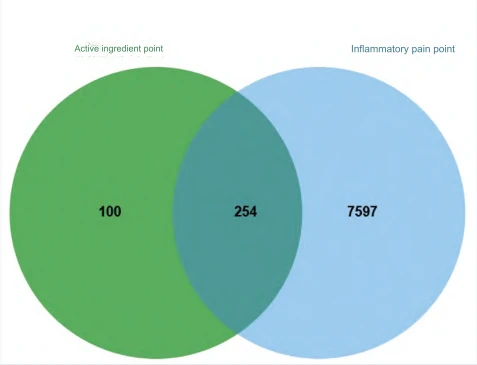
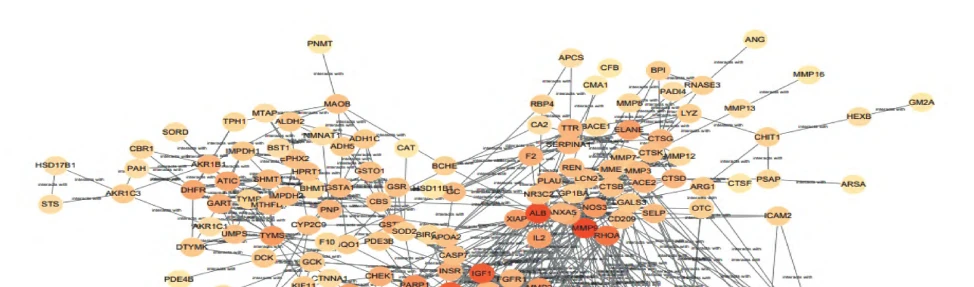

Fig.2 PPI-network diagram of common targets
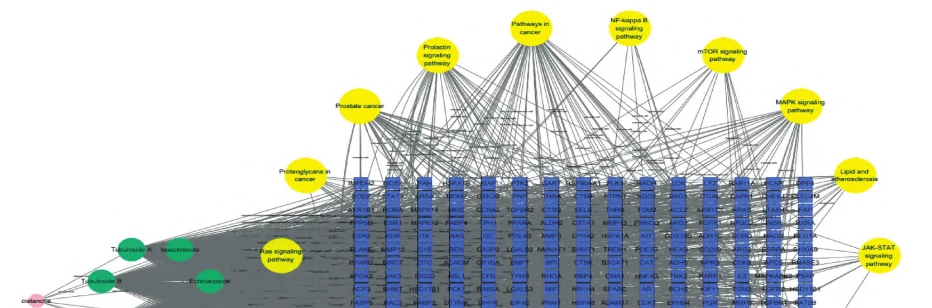
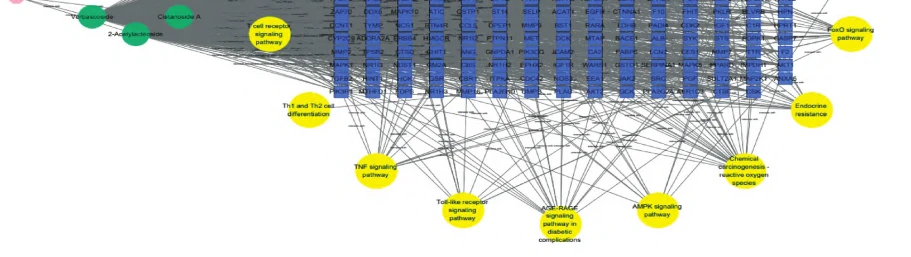
Fig.5 Component-target-pathway networ
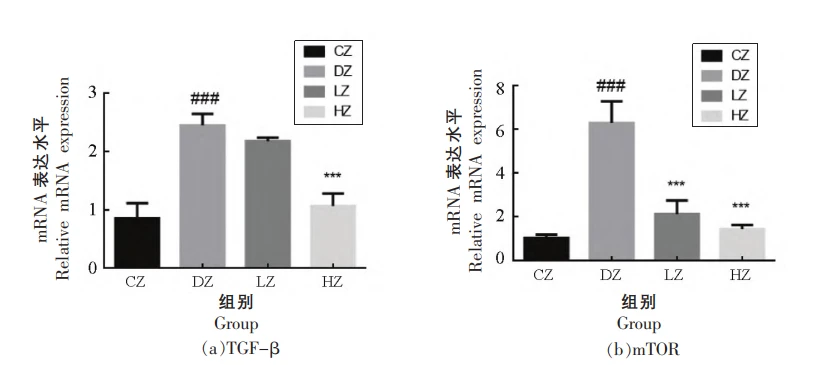
Fig.7 Total glycosides of Cistanche tubulosa downregulates the mRNA of TGF-β and mTOR signaling pathways in IBD mice
3.4 Cistanche tubulosa total glycosides improve DSS-induced DAI score
The test results showed that, except for the CZ group, the other three groups had varying degrees of weight loss and fecal occult blood (Figure 6). Among them, the DSS control group had the highest body weight loss rate, the most severe fecal blood, the highest DAI, and obvious fecal bleeding on the 6th day. After the intervention of Cistanche tubulosa total glycosides, the DAI score gradually decreased, and the occult blood situation gradually decreased. The HZ group had the lowest body weight loss rate and the lowest amount of hidden blood in feces. The results showed that Cistanche tubulosa total glycosides improved the physiological responses caused by inflammatory bowel disease.


CISTANCHE SUPPLEMENT FOR IBD TREATMENT PHGS75% ECH 30% ACT 12%
3.5 Cistanche tubulosa total glycosides down-regulate IBD
Expression of mTOR and TGF-β signaling pathways in mouse spleen mTOR and TGF-β signaling pathways are two important signaling pathways that activate inflammatory responses. The expression of mTOR and TGF-β in the spleen tissue of mice was detected by qRT-PCR. The results showed that the mRNA expression of mTOR and TGF-β in the DSS control group mice was significantly increased compared with that in the normal mice. Compared with the DSS control mice, Compared with Cistanche tubulosa, the expression of mTOR and TGF-β in mice was significantly reduced after Cistanche tubulosa intervention. Among them, the high-dose group had the most significant decrease, and the expression level was basically consistent with that of the normal group (Figure 7). The results showed that Cistanche tubulosa total glycosides down-regulated the expression of mTOR and TGF-β signaling pathways.
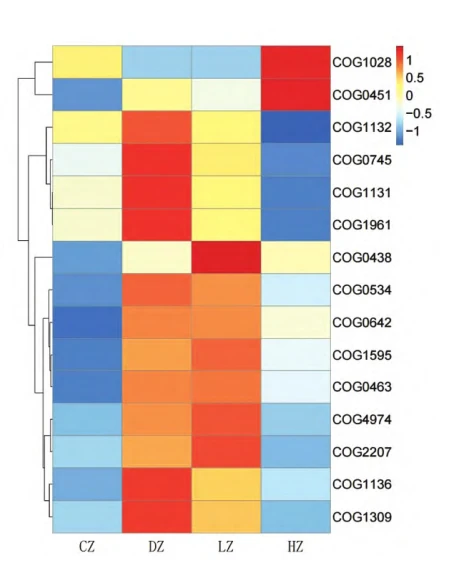
Fig.8 Heatmap of the PICRUSt2-functional abundance clustering
3.6 PICRUSt2 functional annotation analysis
PICRUSt2 is a bioinformatics tool for predicting metagenomic function based on biological 16S rRNA, ASV tree, and ASV gene information in the Greengene database. Select COG database was used for functional prediction, and the results showed that the functions of intestinal flora mainly involve RNA processing; chromatin structure and dynamics; cell cycle control, cell division, chromosome segmentation; defense mechanism; signaling cell wall/cell membrane/envelope biogenesis; cells It has more than 20 functions such as extracellular structure; intracellular transport, secretion, and vesicle transport; energy production and conversion; carbohydrate transport and metabolism. Select the top 15 most abundant features and their abundance information in each sample A heat map (Figure 8) is drawn for the information and clustered from different functional levels.
Compared with the CZ group, the DZ control group mice had COG1132 (ABC-type multidrug transport system), COG0745 (DNA-binding response regulator), COG1131 (ABC-type multidrug transport system), COG1961 (Site-specific DNA recombinase related to the DNA invertase Pin ), COG0438 (Glycosyltransferase involved in cell wall biosynthesis), COG0534 (Na +-driven multidrug efflux pump), COG0642 (Signal transduction histidine kinase), COG1595 (DNA-directed RNA polymerase specialized sigma subunit), COG0463 (Endonuclease), COG4974 (Site -specific recombinase XerD), COG2207 (AraC-type DNA binding domain and AraC -containing proteins), COG1136 (ABC-type lipoprotein export system), and COG1309 (DNA-binding transcriptional regulator) functional gene expression abnormalities. These genes are mainly involved in: V: defense mechanism; T: signal transduction mechanism; M: cell wall/cell membrane/envelope biogenesis; I: lipid transport and metabolism; K: transcription; L: replication, recombination and repair.

After these six functions were given total glycosides of Cistanche tubulosa, the expression of these different physiological functions were close to those of the normal group. Compared with mice in the CZ and DZ groups, mice in the HZ group had high expression of COG1028 (Short-chain alcohol dehydrogenase family) and COG0451 (Nucleoside-phosphate-sugar epimerase) genes. These two genes are related to I: lipid transport and metabolism. And M: The cell wall/cell membrane/envelope biogenesis functions are closely related. Therefore, it is speculated that Cistanche tubulosa total glycosides may regulate the damage of IBD mice by regulating lipid metabolism, glucose metabolism and related defense signal transduction mechanisms in mice.