Female Menopause, Dual Challenges Of Body And Mind
Jan 28, 2026
Female menopause: dual challenges of body and mind

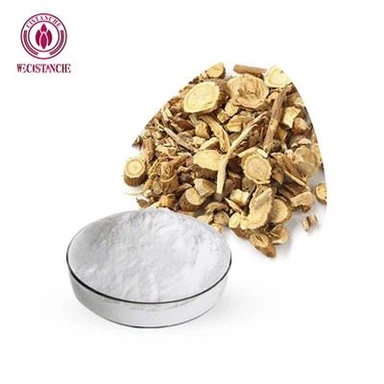
Dragon Herbs cistanche-improve kidney function
Female menopause, usually occurring between the ages of 45 and 55, is a special physiological stage in which a woman transitions from the reproductive period to old age. During this period, there will be drastic changes in hormone levels in women's bodies, especially the decrease in estrogen levels, which is like toppling a domino and triggering a series of physiological and psychological chain reactions.
Hot flashes and night sweats are two of the most typical physical symptoms of menopause. Imagine, without warning, a sudden surge of heat rising from the chest, rapidly spreading to the neck and face, the skin instantly turning red, followed by profuse sweating. This kind of hot flash may occur several times a day, or even dozens of times a day, day and night, seriously affecting the quality of life. Nighttime hot flashes often lead to night sweats, soaking in sweat while sleeping, making it difficult to fall asleep again after waking up, and feeling lethargic the next day.
Emotional fluctuations are also extremely common during this period. At one moment, one's mood may be calm, but the next second, they may become furious over a small matter or fall into inexplicable anxiety or depression. These emotional changes are not intentional for women but rather caused by hormonal fluctuations that disrupt the balance of neurotransmitters in the brain, thereby affecting the regulation of emotions.
Insomnia is also a major problem for menopausal women. Lying in bed, tossing and turning, it's hard to fall asleep. Even if one finally falls asleep, they can easily wake up in the middle of the night and stare at the ceiling until dawn. Long term sleep deprivation can lead to headaches, dizziness, memory loss, lack of concentration, and other problems, making women feel overwhelmed in work and life.

Effects of cistanche-Treatment of climacteric syndrome
In addition to the above symptoms, menstrual disorders are also an important sign of menopause. The menstrual cycle may become irregular, sometimes earlier, sometimes later, with varying amounts of menstrual flow, ultimately leading to a gradual cessation of menstruation. The reproductive system can also change, such as vaginal dryness and decreased libido, which not only affect the harmony of marital life but may also lead to feelings of inferiority, anxiety, and other psychological issues in women.
Kidney deficiency and menopause: intricate connections
In the grand system of traditional Chinese medicine theory, the kidney is regarded as the "innate foundation" of the human body, responsible for storing essence, growth and development, and reproduction. It is like the energy core of the human body, storing the basic substances and driving forces of life activities, and it plays a crucial role in women's physiological health.
The physiological changes in a woman's life are closely related to the rise and fall of the kidneys. In the Yellow Emperor's Inner Canon, it is recorded that at the age of seven, a woman's kidney qi is strong and her teeth become longer. On the second day of the seventh lunar month, when the heavenly and earthly meridians reach their peak, the Ren and Taichong meridians become more prominent, and during the current period of the lunar month, she gives birth... On the seventh day of the seventh lunar month, the Ren meridians are weak, the Taichong meridians weaken less, the heavenly and earthly meridians are exhausted, and the underground passage is blocked, resulting in a bad appearance and no offspring. This passage clearly explains the entire process of growth, development, reproduction, and aging that women go through from childhood to old age, as their kidney qi gradually becomes more abundant, vigorous.

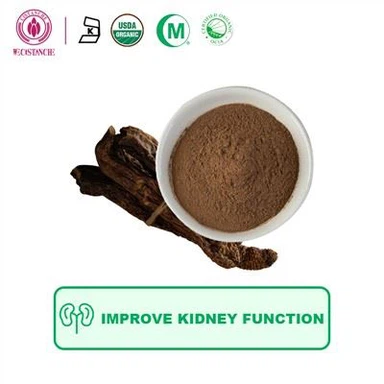
Effects of cistanche-improve kidney function
When women enter menopause, kidney qi begins to naturally decline, which is a normal phenomenon in the process of life. But if, on this basis, it is easily affected by factors such as life pressure, unhealthy lifestyle habits, overwork, and long-term illness and physical weakness, it is easy to develop symptoms of kidney deficiency. Insufficient essence and qi in the kidneys can lead to a decrease in Tian Gui and deficiency of Qi and blood in the Chong Ren meridians, which in turn affects the menstrual cycle and menstrual flow, resulting in menstrual disorders. At the same time, kidney yin deficiency cannot restrict yang qi and can lead to the floating of deficiency yang, resulting in symptoms such as hot flashes, night sweats, facial flushing, irritability, and irritability; Kidney yang deficiency can weaken the body's warming function, resulting in symptoms such as fear of cold, soreness of the waist and knees, and mental lethargy.
From the theory of mutual generation and restraint of the Five Elements, the kidney belongs to water, the liver belongs to wood, and kidney water nourishes the liver and wood. During menopause, if there is insufficient kidney water to nourish the liver, it can lead to liver yang hyperactivity, resulting in symptoms such as dizziness, vertigo, and dry eyes. There is also a close relationship between the kidneys and the heart. The heart belongs to fire, while the kidneys belong to water. Under normal circumstances, the rise of kidney water helps to nourish the heart fire and prevent it from becoming overheated; The decrease of heart fire warms the kidney water, making the kidney water not cold. When there is a kidney deficiency during menopause, if the kidney water cannot nourish the heart fire, symptoms such as insomnia, frequent dreaming, restlessness, palpitations, and heart kidney dysfunction may occur. It can be seen that there is a close internal connection between female menopause and kidney deficiency, and kidney deficiency is one of the important reasons for the occurrence of many symptoms during menopause.

Effects of cistanche-Treatment of climacteric syndrome
Cistanche deserticola: a natural treasure for nourishing the kidneys
In the treasure trove of traditional Chinese medicine, Cistanche deserticola is known as the "desert ginseng" due to its unique medicinal value. It is a long-standing and highly respected kidney tonifying medicine. It mainly parasitizes on the root of the desert plant Haloxylon ammodendron, grows in the desert areas of Inner Mongolia, Xinjiang, and other places in China, grows tenaciously in the extremely arid environment, absorbs the essence of heaven and earth, and silently accumulates powerful medicinal energy.
Cistanche deserticola has a sweet and salty taste, a warm nature, and belongs to the kidney and colon meridians. The "Shennong Bencao Jing" lists it as a top grade, recording that it "governs the five labor and seven injuries, replenishes the middle, removes cold, heat, and pain from the stem, nourishes the five organs, strengthens yin, benefits essence and qi, has many children, and can cure women's ailments. Long-term use can lighten the body. This indicates that, as early as ancient times, people had recognized the significant effects of Cistanche deserticola in nourishing kidney yang and nourishing essence and blood. Chen Shiduo also pointed out in his book "New Compilation of Materia Medica": "Cistanche deserticola has a sweet, warm, salty, and sour taste, and is non-toxic. It enters the kidneys and is most effective in promoting yang, stopping collapse and leakage. Long-term use can give birth to children and warm the waist and knees. However, it is only used to nourish the kidneys with water and fire, and has no other uses. If used frequently, it can smooth the large intestine." This further emphasizes the specialty of Cistanche deserticola in nourishing the kidneys.

Effects of cistanche-improve kidney function
Click here to view Cistanche for Kidney disease products
【Ask for more】 Email:cindy.xue@wecistanche.com / WhatsApp: 0086 18599088692 / Wechat: 18599088692
From the perspective of modern science, Cistanche deserticola is rich in various active ingredients, such as phenylethanolic glycosides, polysaccharides, alkaloids, amino acids, and various trace elements. Among them, phenylethanolic glycosides can promote testosterone secretion, improve the function of the hypothalamic pituitary gonadal axis, and have a significant improvement effect on symptoms such as impotence, premature ejaculation, and soreness and weakness of the waist and knees caused by kidney yang deficiency syndrome. The polysaccharides in Cistanche deserticola not only have immunomodulatory effects, but also promote intestinal peristalsis, increase the volume of intestinal contents, regulate the balance of intestinal microbiota, and effectively alleviate intestinal dryness and constipation caused by insufficient kidney qi. As traditional Chinese medicine says, "the kidneys and intestines complement each other." Cistanche deserticola indirectly plays a role in nourishing the kidneys and strengthening the foundation by moistening the intestines and promoting bowel movements.
The role of Cistanche deserticola in nourishing the kidneys is also reflected in its ability to enhance the body's endurance and anti-fatigue ability. Related studies have shown that extracts from Cistanche deserticola can prolong exercise endurance time, reduce the accumulation of fatigue substance lactate, and enable people to recover energy faster after fatigue. This is particularly important for menopausal women, as kidney deficiency often accompanies physical fatigue and weakness, and Cistanche deserticola can help them improve their physical strength and mental state. In addition, Cistanche deserticola also has antioxidant and neuroprotective effects. Its active ingredients can clear free radicals, inhibit lipid peroxidation reactions, protect the integrity of cell membrane structure, and delay cell aging. At the same time, these ingredients can also pass through the blood-brain barrier, inhibit neuronal apoptosis, promote the expression of neurotrophic factors, and have a certain improvement effect on symptoms such as insomnia, frequent dreaming, and memory loss that may occur in menopausal women.
How does Cistanche deserticola help menopausal women nourish their kidneys

Desert ginseng-improve kidney function
Cistanche deserticola has multidimensional positive effects on nourishing the kidneys of menopausal women, like a caring health manager who takes care of women's bodies from multiple aspects.
Cistanche deserticola is rich in phenylethanoid glycosides, which perform well in regulating endocrine function. It can act on the hypothalamic pituitary ovarian axis, an important endocrine regulatory system in the human body. For menopausal women, as ovarian function declines, estrogen secretion decreases, leading to a series of physical and psychological discomforts. By regulating the function of this axis, Cistanche deserticola helps maintain relatively stable estrogen levels and alleviate symptoms such as hot flashes, night sweats, and menstrual disorders caused by estrogen fluctuations. Just like Ms. Zhang, who is 48 years old, after entering menopause, she frequently experiences hot flashes and night sweats, which severely disrupt her sleep at night, and her emotions become very irritable. On the advice of a traditional Chinese medicine practitioner, she began to persist in taking Cistanche deserticola for conditioning. After a period of time, she was pleasantly surprised to find that the frequency of hot flashes and night sweats had significantly decreased, her sleep quality had greatly improved, and her emotions had gradually stabilized.
The antioxidant effect is also a major "magic weapon" of Cistanche deserticola. Menopausal women experience increased levels of oxidative stress and the production of free radicals due to hormonal changes in their bodies. This not only accelerates aging but also exacerbates various discomfort symptoms. The components, such as verbascoside in Cistanche deserticola, have strong free radical scavenging ability and can effectively resist the damage of oxidative stress to the body. It is like a "cleaning guard" in the body, timely clearing harmful free radicals, protecting cells from damage, and delaying the aging process. Aunt Li has a dull complexion, loose skin, and increasingly deep wrinkles during menopause. After trying to take Cistanche deserticola, she found that her skin gradually became shiny, no longer dull as before, and fine lines seemed to become lighter. This is precisely the manifestation of the antioxidant effect of Cistanche deserticola, which has helped Aunt Li to improve the skin aging problem caused by menopause to a certain extent.
Cistanche deserticola also has immunomodulatory effects, which can enhance the immunity of menopausal women. After entering menopause, women's immune system decreases, and they are more susceptible to various diseases. The polysaccharide components in Cistanche deserticola can activate macrophages and T lymphocytes, which act as the body's "defense forces". After activation, these immune cells can better function and enhance the body's disease resistance. Grandma Wang often catches colds during menopause, and her body's resistance is very weak. After consuming Cistanche deserticola for a period of time, her frequency of catching colds significantly decreased. Even if she occasionally caught a cold, her symptoms were much milder, and she recovered faster than before. This is all thanks to the regulation of the immune system by Cistanche deserticola, which allows Grandma Wang's body to better resist the invasion of external pathogens.