Fenelidone Appears in ECE And Can Significantly Improve Renal Indicators Regardless Of Whether It Is Combined With T2DM Or Not
May 17, 2024
Approximately 40% of patients with type 2 diabetes mellitus (T2DM) will develop CKD, which is accompanied by a substantial increase in the risk of cardiovascular disease and death. Although diabetes is recognized globally as the main cause of CKD, a large part of the global burden is still caused by non-diabetic diseases, such as hypertension, obesity, metabolic diseases, etc. However, whether it is diabetes with CKD or CKD without diabetes, inflammation, and fibrosis caused by MR activation play an important role.

Click to Cistanche for kidney disease
MR is mainly expressed in the heart, kidneys, and blood vessels. Excessive activation of MR in cardiorenal tissue can promote the generation of reactive oxygen species and mediate tissue inflammatory reactions and fibrosis processes, leading to cardiac hypertrophy, glomerular hypertrophy, glomerulosclerosis, and other renal diseases. Heart damage, ultimately inducing adverse renal and cardiac outcomes. Therefore, blocking MR overactivation is crucial to prevent and treat adverse renal and cardiac outcomes.
Fenelidone is a new type of non-steroidal MRA that has beneficial effects on renal function in patients with chronic kidney disease by reducing proteinuria and protecting the glomerular filtration rate. In addition, Fenelidone can potentially inhibit renal function. Excessive activation of MR in cardiac tissue can inhibit and delay the progression of inflammatory fibrosis and related damage, and play a direct protective role in the kidney and heart. More importantly, fenelinone has a unique non-steroidal bulk structure. Compared with traditional steroidal MRA, fenelinone has a stronger binding force to MR, higher binding specificity, and higher selectivity. , has little effect on blood potassium.

Fennelidone can significantly improve eGFR and UACR indicators regardless of whether it is combined with T2DM or not.
Compare the two groups of patients respectively:
The first group included 45 T2DM patients treated with fenelidone. Age was 63.0±6.0 years, mean diabetes duration was 7.0±4.0 years, mean glycosylated hemoglobin (HbA1c) was 7.6±2.2%, mean creatinine level was 115.6±3.78 mmol/l, mean estimated glomerular filtration rate (eGFR) 50.95±1.56 ml/min/1.73m^2, and the average urine albumin to creatinine ratio (UACR) was 43.08±10.84 mg/g.
The second group included 40 patients with non-T2DM but CKD who were treated with fenelidone. The average age was 54.0±4.0 years, the average HbA1c was 5.1±0.9%, the average creatinine was 84.73±2.01mmol/l, the average eGFR was 83.60±1.86 ml/min/1.73m^2, and the average UACR was 25.14±4.18 mg/g.

One-way analysis of variance (ANOVA) and t-test were used to evaluate the effect of fenelidone on eGFR and UACR.
Fennelidone significantly improved renal indicators regardless of whether it was combined with T2DM or not.
➤Improve eGFR levels: Research results show that fenelidone can significantly improve eGFR levels regardless of whether it is combined with T2DM, and there is no significant difference between groups.
➤Reduce UACR: Research results show that UACR is reduced under the influence of fenelinone. There is no significant difference between the diabetic group and the non-diabetic group. A more obvious downward trend is observed in the non-diabetic group.
summary
This study found that, with or without T2DM, fenelidone showed positive effects on renal function (lowering albuminuria and slowing the progression of renal disease), highlighting the potential of fenelidone in the treatment of renal complications.
How Does Cistanche Treat Kidney Disease?
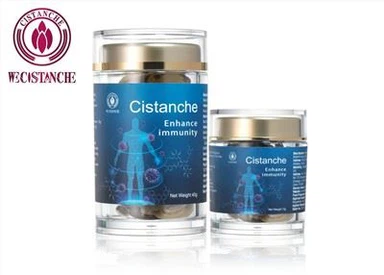
Cistanche is a traditional Chinese herbal medicine used for centuries to treat various health conditions, including kidney disease. It is derived from the dried stems of Cistanche deserticola, a plant native to the deserts of China and Mongolia. The main active components of cistanche are phenylethanoid glycosides, echinacoside, and acteoside, which have been found to have beneficial effects on kidney health.
Kidney disease, also known as renal disease, refers to a condition in which the kidneys are not functioning properly. This can result in a buildup of waste products and toxins in the body, leading to various symptoms and complications. Cistanche may help treat kidney disease ase through several mechanisms.
Firstly, cistanche has been found to have diuretic properties, meaning it can increase urine production and help eliminate waste products from the body. This can help relieve the burden on the kidneys and prevent the buildup of toxins. By promoting diuresis, cistanche may also help Reduce high blood pressure, a common complication of kidney disease.
Moreover, cistanche has been shown to have antioxidant effects. Oxidative stress, caused by an imbalance between the production of free radicals and the body's antioxidant defenses, plays a key role in the progression of kidney disease. ies help neutralize free radicals and reduce Oxidative stress, thereby protecting the kidneys from damage. The phenylethanoid glycosides found in cistanche have been particularly effective in scavenging free radicals and inhibiting lipid peroxidation.
Additionally, cistanche has been found to have anti-inflammatory effects. Inflammation is another key factor in the development and progression of kidney disease. Cistanche's anti-inflammatory properties help reduce the production of pro-inflammatory cytokines and inhibit the activation of inflammation mandatory pathways, thus alleviating inflammation in the kidneys.
Furthermore, cistanche has been shown to have immunomodulatory effects. In kidney disease, the immune system can be dysregulated, leading to excessive inflammation and tissue damage. Cistanche helps regulate the immune response by modulating the production and activity of immune cells, such as T cells and macrophages. This immune regulation helps reduce inflammation and prevent further damage to the kidneys.

Moreover, cistanche has been found to improve renal function by promoting the regeneration of renal tubes with cells. Renal tubular epithelial cells play a crucial role in the filtration and reabsorption of waste products and electrolytes. In kidney disease, these cells can be damaged, leading to damaged renal function. Cistanche's ability to promote the regeneration of these cells helps restore proper renal function and improve overall kidney health.
In addition to these direct effects on the kidneys, cistanche has been found to have beneficial effects on other organs and systems in the body. This holistic approach to health is particularly important in kidney disease, as the condition often affects multiple organs and systems. che has been shown to have protective effects on the liver, heart, and blood vessels, which are commonly affected by kidney disease. By promoting the health of these organs, cistanche helps improve overall kidney function and prevent further complications.
In conclusion, cistanche is a traditional Chinese herbal medicine used for centuries to treat kidney disease. Its active components have diuretic, antioxidant, anti-inflammatory, immunomodulatory, and regenerative effects, which help improve renal function and protect the kidneys from further damage. , cistanche has beneficial effects on other organs and systems, making it a holistic approach to treating kidney disease.