Cistanche: The Desert Ginseng That Tonifies Gently Without Causing Dryness — What Exactly Does It Nourish?
Sep 21, 2026
A Paradox in Its Reputation: How Can Something "Warm-Natured" Avoid Dryness?
In traditional Chinese medicine, tonification is never a simple matter. Overzealous tonification triggers deficiency-aggravating reactions; overly hot tonics generate internal heat; overly cloying tonics burden the spleen-stomach. Generations of physicians sought a tonic that could be absorbed without adverse effects, and cistanche repeatedly emerged as the answer. It bears two well-known monikers: "Desert Ginseng" and the precise description "warm without dryness".
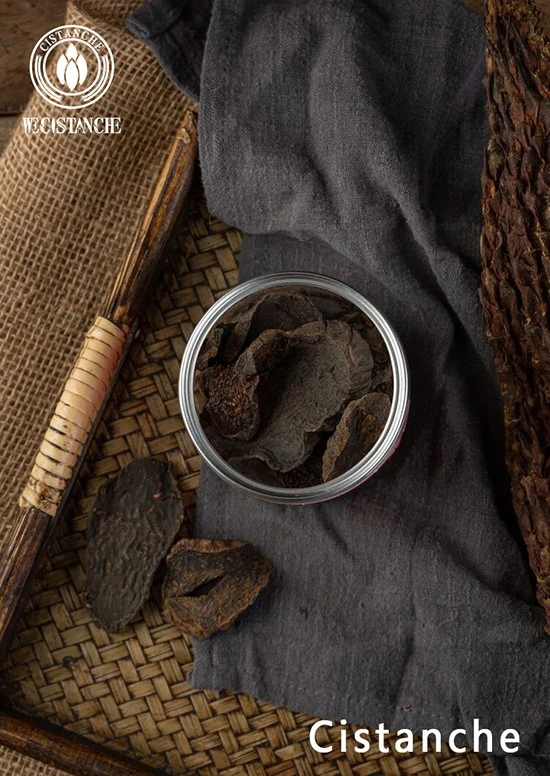
Yet an apparent paradox arises. Most medicines that warm and tonify kidney-yang carry acrid-hot, drying properties: aconite is intensely acrid-hot; cinnamon provides powerful warm-moving effects; epimedium and morinda officinalis exert robust, drying tonification. Cistanche likewise acts on the kidney meridian and tonifies yang, yet Materia Medica Huiyan records it as "warm without heat, tonifying without harshness, warming without dryness, lubricating without inducing diarrhea". How is this possible?
To understand this, we must abandon the simplistic idea that "tonification merely means adding heat". TCM tonification encompasses far more than thermal energy: it supplies essential substances, body fluids, and unblocks functional pathways. Cistanche's uniqueness lies in addressing all three dimensions: it delivers mild warming power, abundant moistening substances, and unblocks pathways constricted by dryness. Its reputation of being "warm without dryness" stems from this synergistic combination.
A Parasite That Spends Most of Its Life Hidden Beneath Desert Soil
Cistanche is a perennial parasitic herb in the Orobanchaceae family. Lacking chlorophyll, it cannot perform photosynthesis and survives by drawing water and nutrients from host plants. It spends nearly its entire life underground: seeds attach to host roots and develop slowly deep within sandy soil, often remaining buried for five, ten years or longer. Only when it breaks through the surface does it flower and set seed, after which the whole plant withers. Harvesting must therefore take place in spring, before or shortly after shoots emerge; flower spikes are removed, and stems are cut into sections and sun-dried.

herb cistanche
Its concealed lifestyle fueled ancient folklore. Annotations to the Divine Farmer's Materia Medica by Tao Hongjing state: "It grows where horses gather; legend says it springs from fallen horse semen, and resembles flesh when fresh". The character "rou" (flesh) refers to its fleshy, succulent stem covered in scale-like leaves. Li Shizhen explained the origin of "cong rong": "This herb tonifies without severity, hence its name 'congrong', meaning gentle and unhurried".
Classical TCM Profile: Upper-Grade Medicinal, Sweet-Salty-Warm, Acts on Kidney and Large Intestine Meridians
Cistanche first appears in Shennong's Classic of Materia Medica, classified as an upper-grade herb. "Upper-grade" signifies more than high quality: it denotes an agent safe for long-term consumption that sustains life. The original text notes: "Sweet-flavored, slightly warm. Treats the five consumptions and seven injuries, tonifies the middle burner… nourishes the five zang-organs, strengthens yin, boosts essence-qi, promotes fertility… long-term use lightens the body". "Five consumptions and seven injuries" is a general term for chronic deficiency; "tonifies the middle burner, nourishes five zang-organs" indicates broad-spectrum effects; "strengthens yin, boosts essence-qi, promotes fertility" specifically relates to reproduction and essence-blood.
Later medical texts emphasized its gentle nature. Materia Medica Huiyan describes it as "a medicine that nourishes the gate of life, tonifies kidney-qi, and replenishes essence-blood". Materia Medica Shu calls it "the premier herb for nourishing the kidney and replenishing essence-blood". Modern standards follow this tradition. The Chinese Pharmacopoeia records cistanche as sweet-salty, warm-natured, acting on the kidney and large intestine meridians. Functions: tonify kidney-yang, replenish essence-blood, moisten intestines to relieve constipation. Indications: kidney-yang deficiency, essence-blood depletion, impotence, infertility, soreness-weakness of lumbus and knees, flaccidity of tendons and bones, intestinal dryness, constipation. Recommended dosage: 6-10 g.
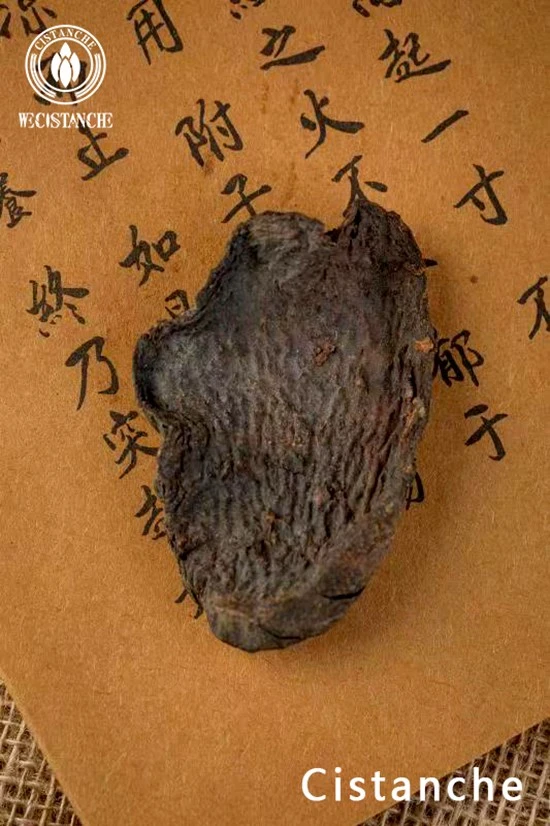
Cistanche tubulosa slice
One statistic illustrates its standing: cistanche ranks high in tonic prescriptions throughout history, second only to ginseng in anti-aging formulas. The title "Desert Ginseng" derives not from marketing, but from two millennia of clinical application records.
What It Tonifies First: Gentle Warmth, Not Blazing Fire
Kidney-yang is often metaphorized as the body's internal fire. Insufficient fire brings cold limbs, lumbago-knee cold soreness, listlessness, frequent nocturia, and diminished sexual function. TCM draws a critical distinction between types of fire, as stated in Huangdi Nei Jing·Su Wen: "Mild fire generates qi; fierce fire consumes qi". Gentle mild fire cultivates healthy vital qi; violent fierce fire depletes it. Aconite and cinnamon represent fierce-fire agents: powerfully restorative for severe yin-cold emergencies, yet prone to stirring heat and damaging yin-fluid in ordinary health maintenance.
Cistanche follows a different pattern. Warm rather than acrid-fierce, sweet-salty instead of purely acrid, its yang-tonifying action is prolonged and mild, belonging to the category of "mild fire". To use an analogy: it does not douse oil onto flames for sudden combustion, but slowly stokes charcoal for steady, sustained warmth. This approach yields gradual results yet offers excellent tolerance, suitable for long-term care of chronic deficiency - this is the clinical meaning of "congrong" (gentle composure).
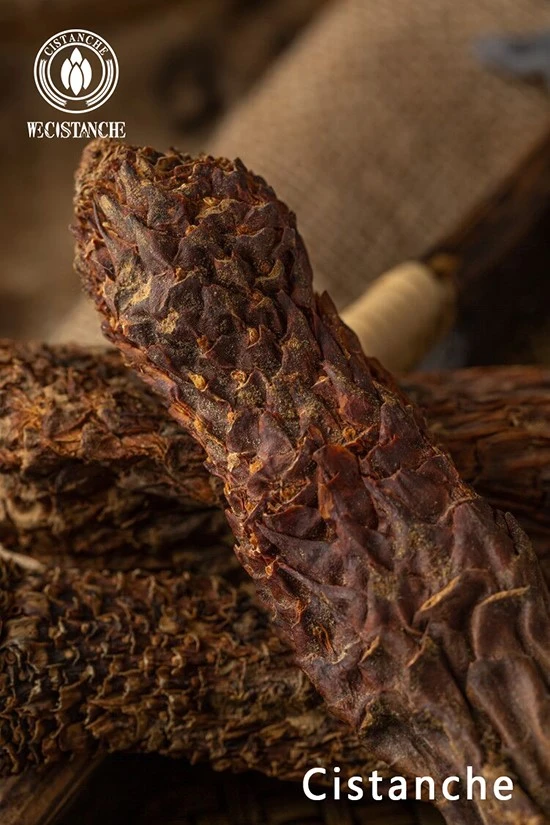
cistanche bodybuilding
Precisely because it is non-drying, it tonifies yang without readily consuming yin fluids. Warm-natured yet rich in lubricating lipids, it concurrently warms yang and moistens dryness - this is what sets it apart among yang-tonifying herbs.
What It Tonifies Second: Essence-Blood - The Body's Material Foundation
Viewing cistanche merely as an "aphrodisiac" oversimplifies its value. Shennong's Classic of Materia Medica mentions "boosting essence-qi", and Materia Medica Shu terms it "the premier herb for nourishing kidney and replenishing essence-blood", pointing to the material dimension of essence-blood. The kidney stores essence; essence and blood share the same origin. Sufficient essence-blood nourishes marrow, strengthens bones-tendons, and supports reproductive function.
Yang deficiency and essence-blood depletion are separate conditions: yang deficiency means impaired physiological function; essence-blood depletion denotes shortage of vital raw materials. Mid-life decline frequently involves both diminished functional fire and depleted raw materials: patients experience cold-intolerance and fatigue alongside dizziness, blurred vision, lumbago-knee soreness, premature greying, scanty menstruation or female infertility. Cistanche addresses both aspects: it warms yang to enhance transport-transformation, and replenishes essence-blood to rebuild the body's foundation.

Effects of Cistanche-Improve kidney function
Click here to view Cistanche for Kidney disease products
【Ask for more】 Email:cindy.xue@wecistanche.com / WhatsApp: 0086 18599088692 / WeChat: 18599088692
Soreness and weakness of the lumbosacral region and knees also stem from this pathology. The kidney governs bones and generates marrow; the lumbar region is the residence of the kidney. Depleted essence-blood fails to nourish marrow and lumbosacral structures. Zhang's Medical Compendium's Jingang Pill combines cistanche with eucommia, morinda officinalis and human placenta for kidney-deficiency bone flaccidity, utilizing its ability to replenish essence-blood and strengthen bones-tendons.
A common misconception needs correction: cistanche is not a "flesh-and-blood medicinal substance" like deer antler or human placenta. As a plant-based remedy, it replenishes essence-blood through sweet, lubricating, lipid-rich constituents, acting moderately and suited for sustained conditioning.
What It Tonifies Third: Moisture - Unblocking Physiological Passages
The Chinese Pharmacopoeia lists three primary actions of cistanche. Its intestinal-moistening laxative effect is often dismissed as secondary, yet it is essential to understanding why cistanche remains "warm without dryness". A frequent side-effect of tonics is stagnation: tonified substances cannot be metabolized, accumulating in the middle burner and causing dry mouth, abdominal distension, constipation, and heat symptoms. Fleshy and lubricant-rich, cistanche contains abundant polysaccharides and galactitol. Acting on the large intestine meridian, it lubricates intestines and promotes defecation. Tonifying while unblocking, it rarely generates dry heat from supplementation - hence the description "lubricating without inducing diarrhea".
Its laxative property occupies a unique niche. Stimulant purgatives such as rhubarb and senna rely on anthraquinones to force intestinal peristalsis; fast-acting yet habit-forming with prolonged use. Cistanche functions as an emollient laxative: it increases stool water content and bulk, stimulating gut motility without harming healthy qi. It is especially indicated for intestinal-dryness constipation in the elderly, postpartum women, and post-illness convalescents.

Effects of cistanche-improve kidney function
Jing-Yue's Complete Works' Jichuan Decoction best illustrates this principle. Composed of cistanche, angelica sinensis, achyranthes, alisma, cimicifuga, and aurantii fructus immaturus, it treats constipation in kidney-qi deficiency marked by clear profuse urine and lumbosacral cold soreness. The formula embodies the strategy "add water to float the boat": when water levels drop and vessels stall, forcing the boat forward is less effective than replenishing river water. In this prescription, cistanche simultaneously warms the kidney and lubricates intestines, fulfilling two core roles, virtually a pharmaceutical illustration of "warm without dryness".
Modern Perspective: Bioactive Substances Behind Its Tonifying Effects
Therapeutic effects correspond to chemical constituents. Major bioactive compounds of cistanche include phenylethanoid glycosides, polysaccharides, iridoids, lignans, betaine, mannitol, galactitol, multiple amino acids, and trace elements. Phenylethanoid glycosides are recognized as its signature active components.
Phenylethanoid glycosides are phenolic glycosides formed by phenylethanoid aglycones bound to sugar moieties, frequently bearing caffeoyl or feruloyl groups. Over 90 compounds of this class have been isolated; echinacoside and acteoside (verbascoside) are the most representative markers. The Chinese Pharmacopoeia sets the total content of these two compounds as its quality-control standard. Pharmacological research focuses on the following domains:
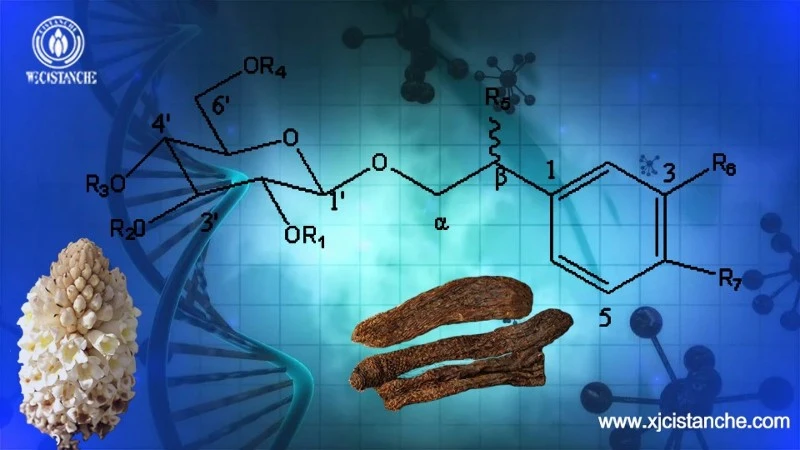
Phenylethanol glycoside is the main active component of Cistanche tubulosa
Antioxidation and anti-aging: Phenolic hydroxyl groups enable free-radical scavenging via pathways including Nrf2/HO-1.
Neuroprotection: In pre-clinical models of Alzheimer's disease, Parkinson's disease, and cerebral ischemia-reperfusion injury, it improves learning and memory, suppresses neuroinflammation, and inhibits neuronal apoptosis - one of the most actively researched areas.
Anti-fatigue: Animal studies demonstrate prolonged loaded-swimming endurance, reduced blood lactic acid and urea nitrogen levels, correlating with ancient records of "strengthening yin and boosting essence-qi".

Effects of cistanche- anti-fatigue
Anti-osteoporosis: Phenylethanoid glycosides positively regulate bone metabolism, consistent with the TCM concept "the kidney governs bones".
Laxative action: Polysaccharides and galactitol increase stool moisture and bulk, advance intestinal transit, and may modulate gut microbiota.