Here Are 7 Signals Your Body Sends When Kidney Yang Is Deficient — And Why You Might Try Cistanche
Sep 20, 2026
Do you always feel like your "internal furnace" is running low? You wear one more layer than everyone else and still feel cold. You get up two or three times a night to urinate. You sleep, and yet you're still exhausted all day. You get blood tests, urine tests, scans - and the report comes back with no red arrows.
This state of "nothing is clearly broken, yet the whole person is slowly running down" has a specific name in Chinese medicine: kidney yang deficiency .
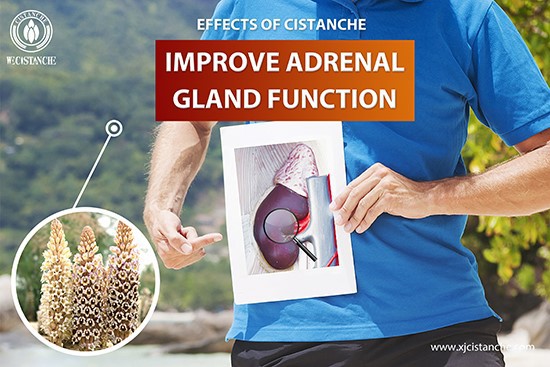
Cistanche tubulosa efficacy: Tonifying the kidney
Click here to view Cistanche for Kidney disease products
【Ask for more】 Email:cindy.xue@wecistanche.com / WhatsApp: 0086 18599088692 / WeChat: 18599088692
First, what exactly is "kidney yang"?
The Chinese medical "kidney" is not the same organ that filters your blood in Western medicine. It functions more like a system: it stores essence (jing), governs reproduction, growth, and development, governs the bones and generates marrow, governs water metabolism, and controls the two eliminations (urine and stool). Kidney yang is the power source of this system - the ancients called it "the fire of the gate of life" (ming men zhi huo). It plays three roles:
The root of all yang in the body. The "fire" of every organ originates in kidney yang. When kidney yang grows deficient, the spleen loses its warming and diarrhea follows; the heart loses its drive and fatigue sets in.
The switch for water metabolism. Kidney yang governs "qi transformation" (qi hua). When that switch fails, you get either edema or frequent nighttime urination.
The gauge of reproduction and aging. When yang is insufficient, reproductive function and vitality decline together.
The Huangdi Neijing says: "Yang qi is like the sky and the sun; when it loses its proper place, life is shortened and fails to flourish." The essence of kidney yang deficiency is simply this: the fire in your body's boiler isn't burning hot enough.

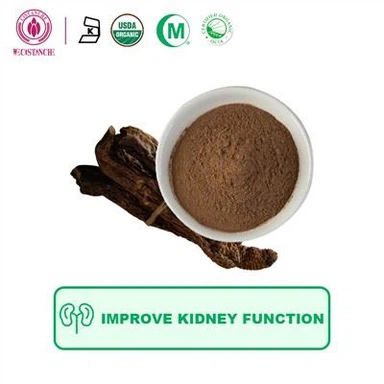
Effects of Cistanche: Improve Kidney Function
7 signals: a self-check list drawn from the diagnostic standard
Signal 1: Cold intolerance and cold limbs, especially below the waist
Others wear short sleeves while you wear a jacket. Your knees and ankles stay cold year-round, and you dare not sit in air conditioning in summer. This is the most typical "nature of the disease" indicator for kidney yang deficiency and carries high weight in the diagnostic standard. The mechanism is plain: deficiency of yang produces cold, and kidney yang cannot deliver warmth to the lower limbs, the parts farthest from the heart. If it comes with a cold feeling in the waist and abdomen that eases with warmth, the indication is stronger still.

Desert ginseng- improves immunity
Signal 2: Soreness, weakness and cold pain in the lower back and knees
Not the muscle ache that follows exercise, but a cold, hollow kind of aching weakness that worsens after standing or sitting a long time and feels better with heat or pressure. "The lower back is the residence of the kidney" - when kidney yang declines, the lumbar region and bones lose their warming nourishment. The kidney also governs the bones and generates marrow; prolonged yang deficiency is linked to falling bone density, which is why lower back and knee complaints in middle-aged and older people are so often treated from the kidney.
Signal 3: Frequent nighttime urination, copious pale urine
Getting up more than twice after falling asleep, passing a decent volume of urine that is pale, almost like plain water. The kidney governs the two eliminations through the transforming and securing action of yang qi; when yang is deficient, the bladder is like a tap that won't fully close. This item also ranks as a high-weight "disease location" indicator in the standard.
Signal 4: "Fifth-watch diarrhea"
Abdominal pain and diarrhea just before dawn, with loose stool containing undigested food - and relief after passing it. The mechanism is "decline of the fire at the gate of life, fire failing to generate earth": kidney yang is the pilot light beneath spleen yang. When the pilot light is low, the spleen and stomach lose their ability to ripen and transform food.
Signal 5: Low libido and declining reproductive function
In men, impotence, premature ejaculation, and cold semen; in women, cold uterus with infertility, and copious thin clear vaginal discharge; an overall drop in sexual desire. The diagnostic standard lists this as a disease-location item, explicitly limited to people aged 18 and over. The Shennong Bencao Jing records that Cistanche "strengthens yin, boosts essence qi, and promotes fertility"; the Rihuazi Bencao says it "treats the man whose yang will not rise and the woman whose yin will not bear" - both referring to this line.

Signal 6: Fatigue, low spirits and excessive sleepiness
Signal 6: Not a lack of sleep
You sleep enough and still can't get going. Chinese medicine calls this "yang qi insufficient, the heart-spirit lacking the force to rouse itself." In modern terms, it overlaps heavily with reduced efficiency of energy metabolism and disturbed neuroendocrine rhythms, and is the very core of chronic fatigue.
Signal 7: Pale, lusterless, or dark grayish complexion, edema of the lower legs
A face that is pale and without sheen, or dull and darkish; ankles that pit when pressed in the afternoon. When yang qi is deficient, the blood moves without force and cannot rise to nourish the face; when yang fails to transform fluids, dampness sinks to the lowest part of the body.
And then there is the final piece - the tongue and pulse: a pale, tender or pale swollen tongue with teeth marks on the edges and a white slippery coat; a deep, forceless pulse, especially at the chi (kidney) position. Tongue and pulse are the last pieces of the pattern-identification puzzle, and also the least reliable part to judge for yourself - better left to a practitioner.
Don't be too quick to diagnose yourself: three easily confused conditions
Kidney yin deficiency. The lower back and knees ache just the same, but this is "deficient heat": heat in the chest, palms and soles, tidal fever, night sweats, dry mouth and throat, a red tongue with little coat, a thin rapid pulse. It is the opposite of the cold pattern of kidney yang deficiency; the treatment is to nourish yin. Get the direction wrong and the more you tonify, the worse it gets.
Spleen yang deficiency. Also cold intolerance, cold limbs and diarrhea, but digestive symptoms dominate: poor appetite, abdominal distension, loose stool - without the kidney-localizing signs such as aching lower back and knees or frequent nighttime urination.
Organic disease. Hypothyroidism, chronic kidney disease, anemia, and adrenocortical insufficiency can all present with the same cold intolerance and fatigue that look like "yang deficiency." Rule these out with modern medicine first, then talk about tonifying.

Effects of Cistanche-Improve kidney function
Why Cistanche: it tonifies without being harsh
Among the herbs that warm and tonify kidney yang, fuzi (aconite), rougui (cinnamon bark), and lurong (deer antler) are all fierce generals - forceful and fiery, and liable to cause heat and damage yin if the pattern doesn't match. Cistanche (Rou Cong Rong) is the gentlest of the group. Li Shizhen explained its name in the Bencao Gangmu: "This substance tonifies without harshness, hence the name cong rong - which means calm and unhurried." The Bencao Huiyan summarizes it further: "warm but not hot, tonifying but not harsh, warming but not drying, moistening but not laxative." It tonifies - but not urgently or violently.
The Chinese Pharmacopoeia records that Cistanche is "sweet and salty, warm, entering the kidney and large intestine channels," with the functions of "tonifying kidney yang, boosting essence and blood, and moistening the intestines to relieve constipation." It is used for impotence, infertility, soreness and weakness of the lower back and knees, weakness of the sinews and bones, and dry-intestinal constipation due to kidney yang deficiency and depletion of essence and blood. The usual dose is 6–10 g. Note that these three actions are coordinated: while tonifying kidney yang, it also boosts essence and blood - and "boosting essence and blood" is precisely what many other yang-warming herbs lack. Yang needs essence and blood to carry it; tonify yang without nourishing essence, and the fire has nothing to sustain it.
It was classified as a "superior grade" (shang pin) herb as early as the Shennong Bencao Jing. It ranks among the most frequently used herbs in tonic formulas throughout history - second only to ginseng in anti-aging prescriptions. It appears in Jichuan Jian for kidney-deficiency constipation and in Dihuang Yinzi for the loss of voice and limb weakness.

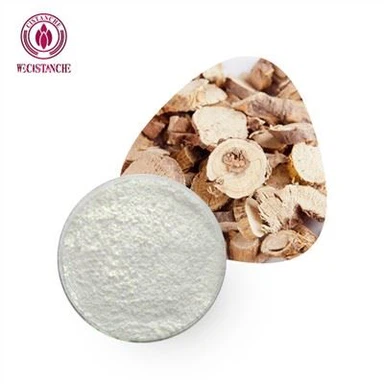
Chinese herb cistanche
Match it against those 7 signals: cold intolerance, cold pain in the lower back and knees, low libido and fatigue are the direct targets of "tonifying kidney yang and boosting essence and blood"; frequent nighttime urination is addressed by warming yang to restore qi transformation; a pale, lusterless complexion is addressed by boosting essence and blood. It is mild and unhurried, suited to slow regulation - not something to expect results from after a single dose.
What modern research has found
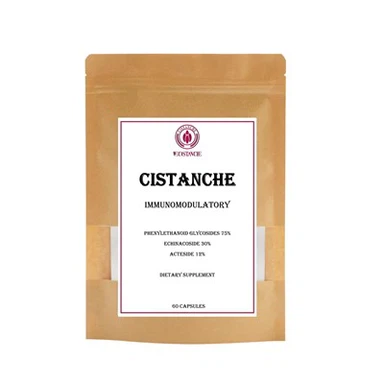
The core active constituents of Cistanche are phenylethanoid glycosides (echinacoside, acteoside/verbascoside, tubuloside A/B and others), of which 99 have so far been isolated and identified; the Chinese Pharmacopoeia uses echinacoside and acteoside as its assay markers. Research falls mainly along these lines:

Phenylethanol glycoside is the main active component of Cistanche tubulosa
The neuroendocrine axis. The research group of Li Xiaobo at the School of Pharmacy, Shanghai Jiao Tong University, has confirmed that total glycosides of Cistanche can coordinately regulate the hypothalamic-pituitary-adrenal (HPA) axis, inflammatory responses, and neurotransmitter levels. The HPA axis is the body's core system for coping with long-term stress.
Energy metabolism and anti-fatigue. Animal experiments show that Cistanche polysaccharides and polyphenols raise hepatic and muscle glycogen reserves and prolong weight-loaded swimming time to exhaustion, while lowering blood lactate and serum urea nitrogen, increasing SOD and GSH-Px activity, and reducing MDA.
Reproduction and bone metabolism. Experimental studies show that its phenylethanoid glycosides can raise serum testosterone in animal models of kidney yang deficiency; echinacoside improves bone mineral density and bone mechanical properties in ovariectomized osteoporotic rats, corroborating the classical claim that "the kidney governs the bones."
Immunity and antioxidation. The polysaccharides promote splenic lymphocyte proliferation and enhance NK cell activity; echinacoside and acteoside exert antioxidant and neuroprotective effects through the Nrf2/HO-1 pathway.