Herb Of The Week | Cistanche (Desert Broomrape) - The Gentle Tonic For Long-Term Nourishment
Apr 01, 2025
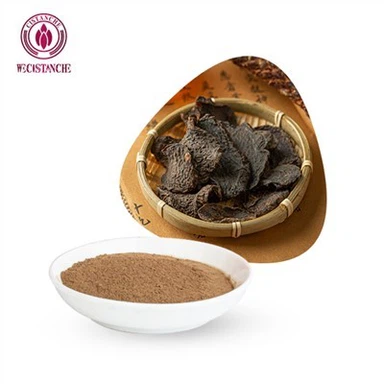
Cistanche (Rou Cong Rong) is a parasitic herbaceous plant with succulent stems covered in scaly leaves. It commonly grows in desert or semi-desert regions with high temperatures and arid conditions. Half of its rhizome remains buried underground. Some believe that cistanche is often found in areas where horses urinate, and local herdsmen refer to it as "Ma Ni" (horse urine). Its appearance resembles bamboo shoots, earning it the nicknames "Golden Shoot" and "Dayun." The cistanche produced in Ruoqiang, Xinjiang, is considered the highest quality and is known as the "Ginseng of the Desert."
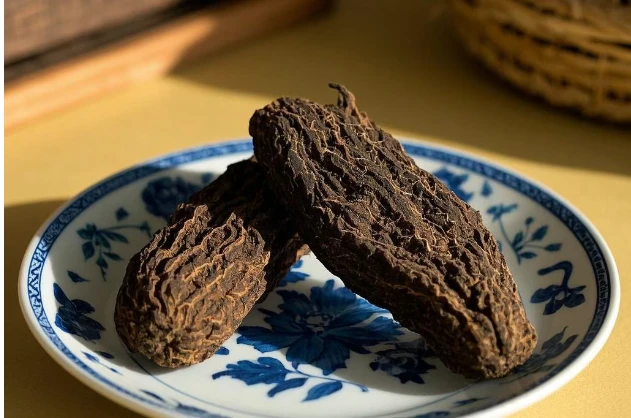
As people become more health-conscious, cistanche has gained popularity as a tonic herb due to its slow and gentle nourishing properties, making it suitable for long-term use. Li Shizhen once praised it, saying, "This herb nourishes without being harsh, hence the name 'Cong Rong,' which implies calmness and moderation. 'Cong Rong' reflects its gentle and temperate nature." Cistanche is warm but not overly hot, nourishing yet not overwhelming, warming but not drying, and lubricating without causing excessive looseness. Like a patient and gentle tonic, it slowly strengthens the body over time, making it especially suitable for the elderly as a supplement to promote longevity and health.

Cistanche is particularly effective in tonifying kidney Yang and replenishing essence and blood. It is used to treat kidney Yang deficiency and essence-blood insufficiency, which can manifest as impotence, infertility, lumbar and knee weakness, or fatigue. It also has moisturizing and lubricating properties, making it effective in treating dryness-induced constipation, particularly in elderly individuals with Yang deficiency. Since cistanche has a mild and gentle medicinal effect, it is typically used in larger doses. However, as it is ultimately a warm tonic, it is not suitable for individuals with Yin deficiency and excessive internal heat, diarrhea, or constipation caused by excessive heat in the intestines and stomach.
Cistanche-Based Formulations
Cistanche Pill
The Cistanche Pill is composed of the following ingredients:
Cistanche (60g)
Cuscuta seed, Chinese yam, Achyranthes, Morinda, Eucommia, Dipsacus, Poria, Goji berry, Schisandra, Cnidium, Cornus (each 30g)
Fu Shen (Poria with root), Polygala, Biota seed (each 60g)
Grind all ingredients into powder, mix with honey, and form pills about the size of a Chinese parasol seed. Take 30 pills with warm wine on an empty stomach, twice daily.
This formula originates from the classic "Tai Ping Sheng Hui Fang" and is traditionally used to tonify the kidney and strengthen Yang, nourish essence and calm the mind. It is suitable for treating conditions such as chronic fatigue, sexual dysfunction, forgetfulness, and soreness of the lower back and knees.

Cistanche Pill
Origin and Properties of Cistanche
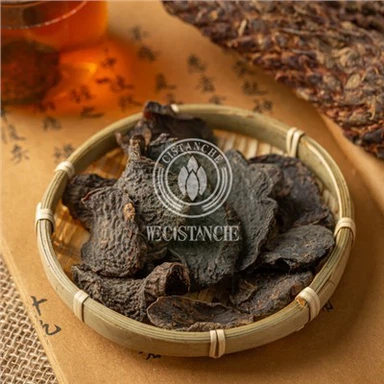
Cistanche is the fleshy stem with scale leaves of the annual parasitic herb from the Orobanchaceae family, mainly Cistanche deserticola or Cistanche tubulosa. It is primarily harvested in Ningxia, Inner Mongolia, Gansu, Xinjiang, and Qinghai.
Spring-harvested Cistanche is dried directly and called "sweet Cistanche".
Autumn-harvested Cistanche is soaked in salt water and then desalted, sliced, and either sun-dried or steamed with wine before drying - this is known as "salt Cistanche."
Properties: Sweet and salty in flavor, warm in nature.
Meridians entered: Kidney and Large Intestine.
Functions: Tonifies kidney Yang, nourishes essence and blood, moistens dryness, and facilitates bowel movement.
Culinary and Dietary Uses of Cistanche
1. Cistanche and Sea Cucumber Congee
Ingredients:
Cistanche 60g
Sea cucumber 50g
Goji berries 30g
Japonica rice 100g
Salt to taste
Instructions:
Soak Cistanche until soft and slice. Soak and slice sea cucumber. Add all ingredients to a pot with 1000 mL water, boil for 30 minutes, then add rice and continue cooking into congee. Add salt to taste.
Benefits:
Nourishes the kidney and essence, enriches blood, and moistens the intestines. Ideal for post-illness recovery, postpartum weakness, Yang deficiency-related constipation, and diabetes-related dryness.
2. Cistanche and Lamb Soup
Ingredients:
Cistanche 30g
Lamb 150g
Scallion, ginger, salt, starch to taste
Instructions:
Soak and chop Cistanche. Add to a pot with 500 mL water, boil for 30 minutes, then strain. Add minced lamb and aromatics, bring to a boil, simmer until tender, thicken with starch, and season.
Benefits:
Warms and tonifies kidney Yang, suitable for elderly individuals or those with chronic kidney deficiency and weakness.

3. Cistanche Medicinal Wine
Ingredients:
Cistanche 50g
Epimedium 100g
1000 mL of 50% rice wine
Instructions:
Wash and soak the herbs, seal in wine for 10 days, shaking daily. Take 20–30 mL, 1–2 times daily.
Benefits:
Tonifies the kidney and strengthens Yang. Used as an adjunct treatment for impotence, infertility due to cold uterus, and cold pain in the lower back and knees caused by kidney Yang deficiency.
Modern Research on Cistanche
Cistanche contains D-mannitol, β-sitosterol, succinic acid, various amino acids, and steroid-like compounds such as testosterone and estradiol analogs.
Pharmacological effects confirmed by modern studies include:
Enhancing immune function
Regulating endocrine activity
Promoting growth and development
Exhibiting anti-aging and anti-atherosclerosis effects
Lowering blood pressure
Relieving constipation
Stimulating saliva secretion
Exhibiting respiratory paralysis reversal effects