Herba Cistanche (Rou Cong Rong): A Review Of Its Phytochemistry And Pharmacology-Ⅰ
Apr 07, 2024
1. Introduction
Herba Cistanche comprises 22 species all over the world and is distributed mainly in arid lands and even deserts across Eurasia and North Africa, such as in China, Japan, Iran, India, and Mongolia.1) Among all these plants, four main species and a variant species are found in China according to the Taxonomical Index of Chinese Higher Plants; all of these species are called Rou Cong Rong in Chinese.2) These species include Cistanche deserticola Y.C. Ma, C. tubulosa (Schenk) R. Wight, C. sinensis G. Beck, C. salsa (C.A. Mey.) G. Beck, and C. salsavar.albifloraP.F.TuetZ.C.Lou.3) The dried succulent stems of the genus Cistanche Hoffmg. Et Link belongs to the Orobanchaceae family.4) Among these four Cistanche plants, only C. deserticola and C. tubulosa have been authenticated as officinal plants in the Chinese Pharmacopoeia (2015 edition), though C. salsa and C. sinensis are commonly used in the regions of Ningxia and Xinjiang due to their remarkable medicinal effects and the source shortage of C. deserticola and C. tubulosa. As for the Japanese Pharmacopoeia, the dried stems of C. salsa, C. deserticola, and C. tubulosa are authorized as a crude drug "Nikujuyou."5) Besides, three species including C. tubulosa, which is mainly distributed in the Central Sahara (Tassili N'Ajjer); C. tinctoria, which is locally known as denounce to treat diabetes, diarrhea, and abdominal pains in the Saharo-Mediterranean region, C. violacea, which is a holoparasitic plant on Chenopodiaceae and Limoniastrum in Northern Africa are the represented Cistanche in the Algerian Sahara.6) Cistanche was first recorded in Shen Nong's Herbal Classic and has had a very long medical history in China.7) C. tubulosa (Kanka-nikujuyou in Japanese) has traditionally been used to promote blood circulation.8) In Korea, Cistanche also has a long medicinal history and C. reported dysfunctional diseases in a Korean medicine book called the DonguiBogam.9) Currently, it is generally used to treat chronic renal disease, female infertility, morbid leucorrhea, profuse metrorrhagia, and constipation in the elderly.10) It has also been used since ancient times as an herbal drug to treat kidney deficiency.11) Among the tonics in traditional Chinese medicine (TCM), this medicine is widely accepted as superior and has been honored as the "Ginseng of the desert." Besides the remarkable uses in China, Herba Cistanche is also used as a healthy food supplement in Japan and Southeast Asia and scholars in many countries like Japan, Korea, Germany, Russia, Australia, Greece, Algérie and Italy have made a lot of modern scientific researches on this plant since the 1980s.12) Chemical research has indicated that phenylethanoid glycosides (PhGs), iridoids, lignans, and polysaccharides are the major constituents of these species,13,14) and Herba Cistanche extracts have been proved to have a range of pharmacologically active functions that include improving chronic renal disease and constipation in the elderly, increasing learning or memorization abilities, treating Alzheimer's disease (AD), and improving immunity by researchers all over the world.1,15–18)
This paper mainly updates the available information about the phytochemical constituents, pharmacological activities, and safety of Cistanches Herba to provide useful information for the development of plant-derived drugs and Chinese medicine preparations from this medicinal plant.
NATURAL CISTANCHE TUBULOSA TRADITIONAL CHINESE MEDICINE PHGS75% ECH 30% ACT 12%
2. Phytochemistry
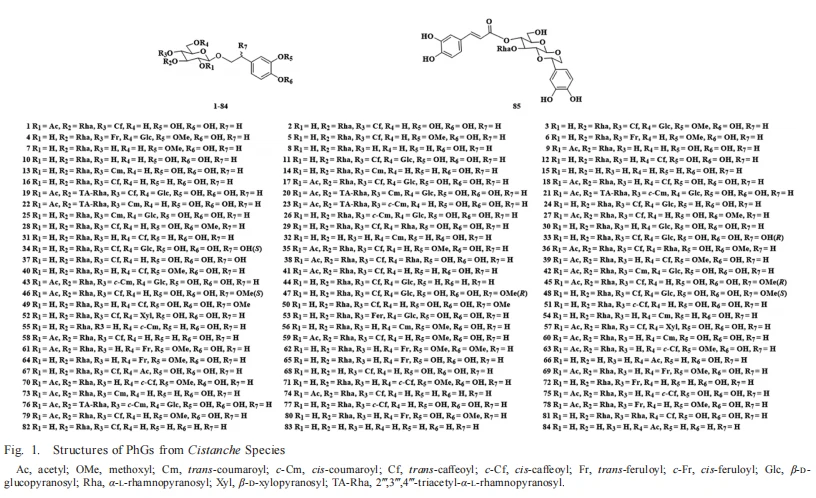
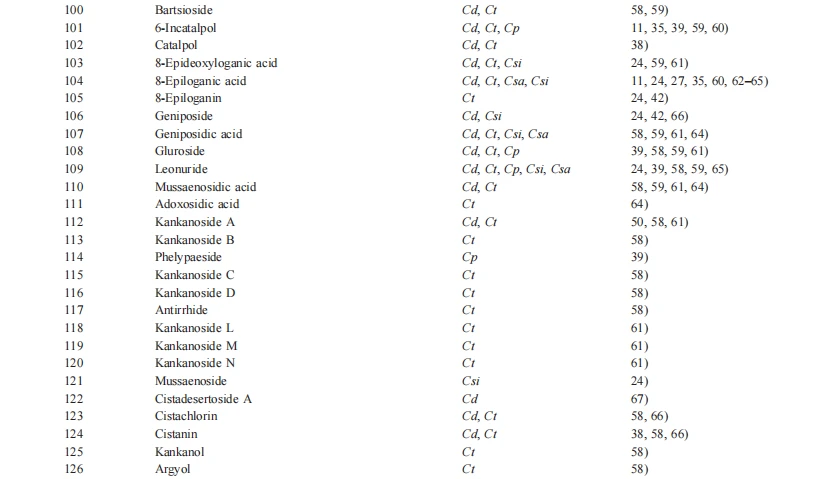
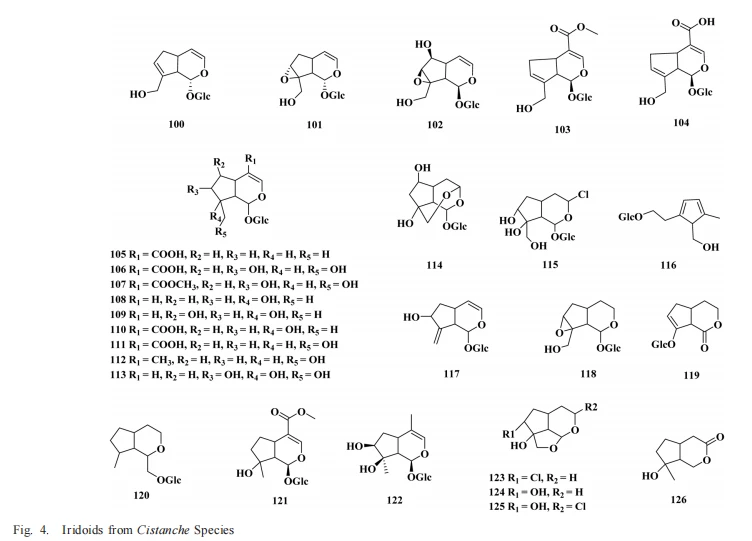
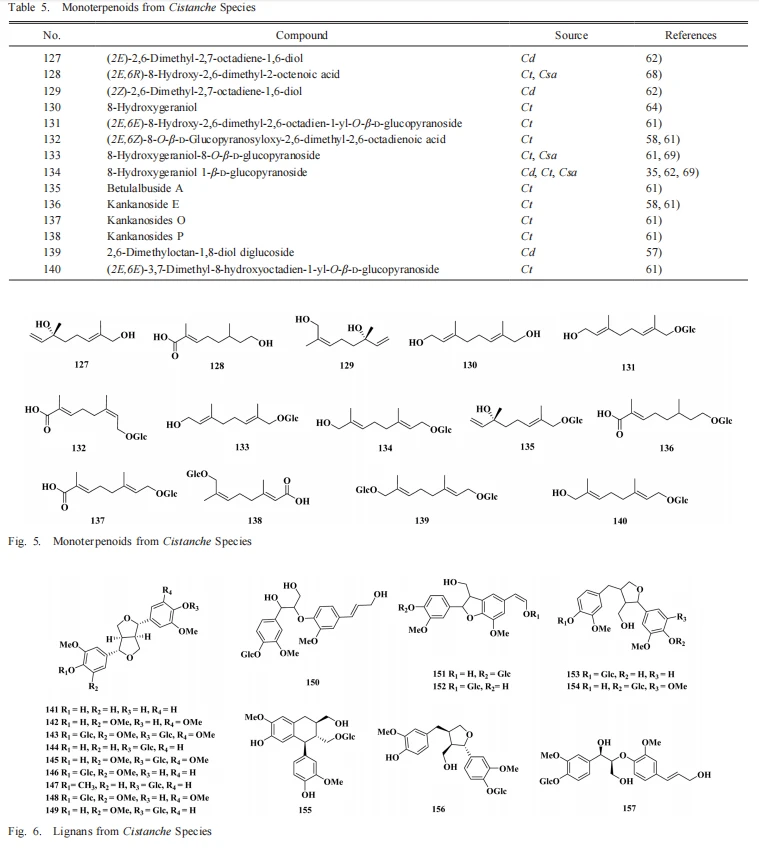
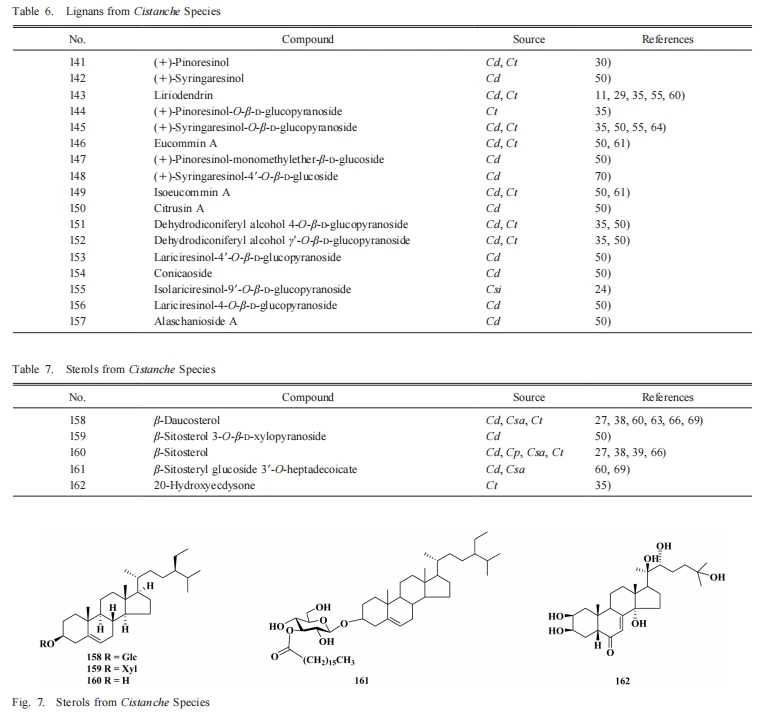
As the oriental medicinal tonic in Japan, C. salsa has been reported to have constituents, such as monoterpene glucoside, iridoid glucoside, phenylpropanoid glycoside, and lignan glycoside early in 1983–1986 by Kobayashi, which may be the earliest modern research report on the chemical constituents of Cistanche. Until now, 213 compounds, including PhGs, benzyl glycosides, phenylacylated oligosugars, iridoids, monoterpenoids, lignans, sterols, alkaloids, polysaccharides, and other compounds, have been obtained from Cistanche plants. Among them, PhGs account for the largest proportion relative to the other types of compounds. Chemical structures that have previously been reported from Cistanche plants are showninFigs.1–9.
2.1. PhGs
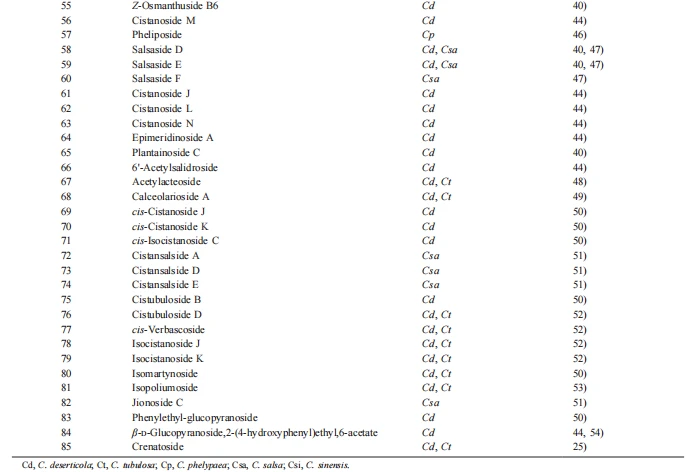
PhGs have been thought to be the primary active components in the Cistanche species. They are a type of phenolic compound characterized by a β-glucopyranoside structure bearing a hydroxy phenylethyl moiety as the aglycone. This kind of compound commonly includes several acyl groups, such as cinnamic acid, p-coumaric acid, caffeic acid, ferulic acid, and is ferulic acid, and various sugars, such as rhamnose and xylose, that are attached to the glucose residue through ester or glycosidic linkages, respectively. In the past few decades, 85 PhGs including 6 monosaccharide glycosides, 52 disaccharide glycosides, and 27 trisaccharide glycosides (Table 1) have been reported in Cistanche plants. The structures of PhG compounds are presented in Fig. 1. Generally, monosaccharide glycosides only contain a glucosyl linked at the C-8 position of the phenylethanol. The disaccharide glycosides generally contain a Rha (1→3) Glc linkage. In the trisaccharide glycosides, there is another glucose or rhamnose at the C-6 position of the inside glucose.
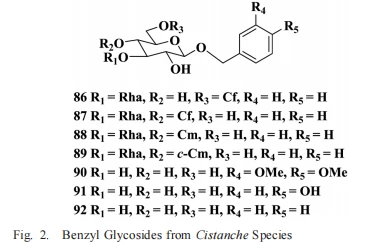
2.2. Benzyl Glycosides
Lei et al. obtained four benzyl glycosides from C. salsa for the first time in 2007.47) Then, in 2013, another three benzyl glycosides were isolated and identified from C. deserticola. 44) The structures of the benzyl glycosides are similar to those of the PhGs. The glucosyl often links directly to the benzyl alcohol aglycone, and a coumaroyl orcaffeoylgroupisusuallylocatedattheglucosylC-4orC-6 position(Fig.2; Table 2).
2.3. Phenylacylated Oligosugars
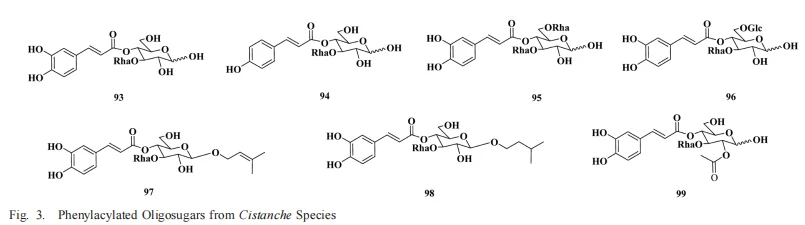
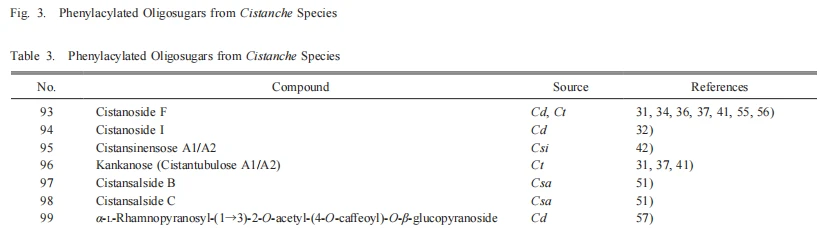
To date, nine phenylacylated oligosugars have been obtained from the genus Cistanche (Fig. 3; Table 3). In these phenylacylated oligosugars, the sugar moiety consists of glucose and rhamnose connected by a Rha (1→3) Glc linkage, and there is generally a coumaroyl or caffeoyl group linked at the glucosyl C-4 position. Occasionally, an additional glucosyl moiety is linked at the glucosyl C-6 position.

NATURAL CISTANCHE TUBULOSA FOR IMPROVING SEXUAL FUNCTION PHGS75% ECH 30% ACT 12%
2.4. Iridoids
Iridoids are a type of monoterpenoid constructed from a 10-carbon skeleton of isoprene building units with a cyclopentanopyran ring system. During structure identification and elucidation studies of iridoid constituents from the Cistanche species, 4 iridoid aglycones and 23 iridoid glycosides were isolated (Table 4; Fig. 4). Their structural features can be summarized as follows. A glucosyl is generally linked at the aglycone C-1 position, a carboxyl is usually linked at the aglycone C-4 position, and H-5 and H-9 are β-oriented. Hydrogenation accidentally appears at C-3 and C-4 whereas hydroxylation often occurs at C-6, C-7, C-8, and C-10. Sometimes, dehydration may occur between the C-10 hydroxyl and that at C-1 or C-3 to form an epoxy substructure.

2.5. Monoterpenoids
To date, 14 monoterpenoids have been isolated from Cistanche plants, among which 4 are monoterpenes and 10 belong to monoterpene glycosides (Table 5; Fig. 5). Their structural characteristics can be summarized as follows: a methyl is generally linked at the aglycone C-2 or C-6 position and a double bond occurs between C-2 and C-3. The positions between C-6 and C-7 or between C-7 and C-8 also often have a double bond. Hydroxyl or carboxyl groups are often linked at the C-1 position and a hydroxyl is usually linked at C-8 in monoterpenes. Monoterpene glycosides are all monoglycosides that only contain a glucosyl linked at the aglycone C-1 or C-8 position.
2.6. Lignans
Until now, there have been 2 lignan aglyconesand15lignanglycosidespurified fromCistanche plants (Table 6; Fig.6).
2.7. Sterols
Sterols are relatively rare in Cistanche plants, and only five such compounds have been reported in this genus (Table 7). The structures of the sterol compounds are presented in Fig.7.
2.8. Alkaloids
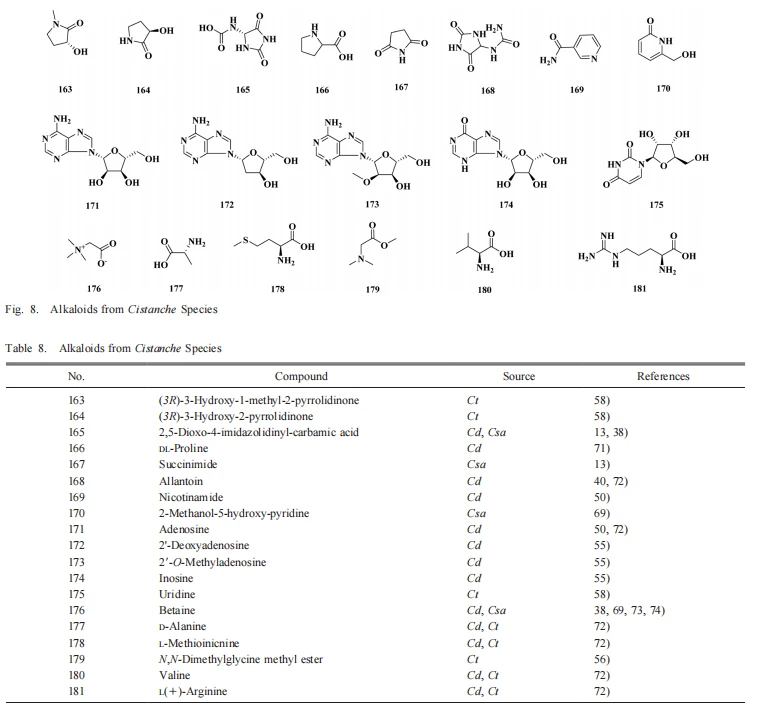
Cistanche plants also contain alkaloids, and approximately 19 compounds have been found and elucidated(Fig.8; Table 8).

NATURAL CISTANCHE TUBULOSA HERB CISTANCHE PHGS75% ECH 30% ACT 12%
2.9. Other Types of Compounds
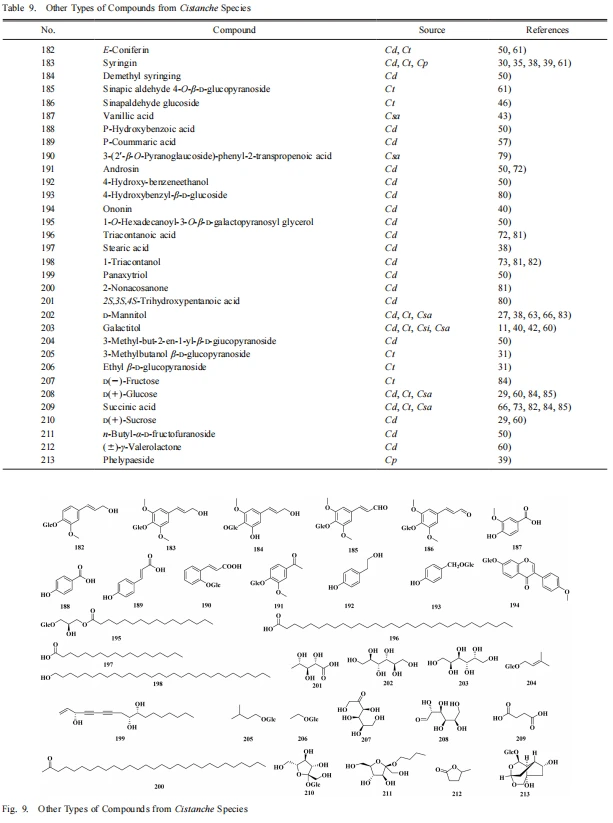
Some other compounds, such as phenolic glycosides, flavonoids, and long-chain fatty acid derivatives, have been isolated from Cistanche plants (Table 9; Fig. 9). A considerable proportion of polysaccharides have also been reported in Cistanche species.75) A large number of studies have shown that polysaccharides are regarded as active constituents to advance body immunity and show antiaging and anticancer activities in Herba Cistanche. 76–78)
3. Pharmacology
Cistanches Herba has wide medicinal uses as a kind of TCM. Many researchers have investigated its pharmacological actions in traditional records and have validated its therapeutic potential in modern methods. Biological activity studies have shown that Cistanches Herba exhibits a wide spectrum of pharmacological activities such as antioxidation, anti-senile dementia, anti-Parkinson's disease, immunoregulation, antiaging, hepatoprotection, and anti-myocardial ischemia effects, which may mainly be attributed to its bioactive components, including PhGs, polysaccharides and so on. As the major active components in Cistanche plants, components 2 and 11 were selected as reference substances for quality control in
Chinese Pharmacopoeia. It is stipulated that the total content of these two compounds should not be less than 0.30 and 1.5% in C. deserticola, and C. tubulosa, respectively, which may indicate the varying pharmacological reactions based on PhGs.86) Nevertheless, it is insufficient to evaluate the quality of Cistanche herbs only based on these two PhG compounds because they could not represent the effective PhGs ingredients. Until now, dozens of bioactive PhGs have been used as reference substances for quality evaluation of Cistanche herbs even their corresponding formulations.87) A method of RPLChydrophilic interaction chromatography (HILIC)-MS/MS for the 23 analytes, including three organic acids, four nucleosides, two sugars, one amino acid, one benzyl glucoside, two lignans, seven PhGs, and three iridoids, was conducted in C. tubulosa by Yan et al. in 2017, and the results showed that those 23 components exhibited wide content ranges and significant variations among 20 batches of C. tubulosa, of which compounds 2, 11, and 202 were abundant in content, whereas ferulic acid showed trace distributions in these 20 batches.88) In 2018, Dong et al. conducted a comparison of the seven PhGs including compounds 1, 2, 3, 5, 11, 12, and 67 between C. deserticola and C. tubulosa by only one marker using a newly calculated method of relative correction factor. The analysis results showed that the chemical compositions and content of these 7 PhGs were quite different.89) In 2019, Zhang et al.90) analyzed the changes in the total PhGs, total polysaccharides, and four PhGs content in the raw product of C. deserticola and its processed product by using UV spectrophotometry method, the phenol-sulfuric acid method and HPLC method, respectively. The results exhibited that the processed C. deserticola has higher amounts of total polysaccharides, total PhGs, and compounds 12 and 14 than raw C. deserticola, while the content of compounds 1 and 2 decreased after processing. Moreover, there are also many other research on the quantitative analysis of Cistanche Herba due to their obvious and remarkable pharmacological activity.91–97)It should be affirmed that the related quantitative research on the active ingredients of Cistanche has laid a solid foundation for its related research on pharmacological activities.
3.1. Antioxidation
Antioxidation activity is against free radicals. Antioxidant drugs can reduce the damage of oxygen free radicals to the blood vessel wall, thus playing an antibacterial sclerosis role. Shi et al.98) first found that extracts from Cistanche species had a lipid peroxidation suppression effect and an immunological enhancement effect. The PhGs from Cistanches Herba could lower the levels of lipid hydroperoxide in humans, which was regarded as effective for antioxidative activity.99,100) The phenolic hydroxyl group in PhGs is necessary for the antioxidant activity. A study found that because of the phenolic hydroxy structure, PhGs can combine with free radicals and activate antioxidant defense systems, and by increasing the number of phenolic hydroxyl groups, the antioxidant activity is increased.34) In another study, Cistanche glycosides showed inhibitory effects on lipid hydroperoxide and thromboxane production in rabbit blood, revealing that these glycosides had protective effects against hemorrhagic shock and reperfusion injury.101) Wu et al.102) found that PhGs from C. salsa possessed very high antioxidant activities. Other studies found that PhGs from C. deserticola dramatically increased superoxide dismutase activities, which decreased malondialdehyde levels in mouse hearts, livers, and brains; thus, the authors believed that PhGs could protect skeletal muscles from oxidative injury by eliminating the over-accumulation of free radicals.103) Researchers focused attention on natural antioxidants to combat diabetic nephropathy disease, and study results have indicated that PhGs from C. deserticola could inhibit reactive oxygen free radicals in vitro and repair free radical damage related to diabetic nephropathy.104) Liang et al.105) pointed out that PhGs extracted from Herba Cistanchehadprotectiveeffectsonhuman sperm DNA with oxidative damage in 2015. Compound 18 obtained from Cistanche plants could increase pheochromocytoma cell (PC12 cell) viability against H2O2-induced cytotoxicity and decrease the apoptotic rate at the same time.106) Wang and Zhao107) established the antioxidant activity of C. deserticola polysaccharides in vitro and found that polysaccharides could scavenge free radicals including the hydroxyl radical, superoxide anion radical, singlet oxygen, and diphenyl acyl. In 2016, an efficient ultrasonic-cellulase-assisted extraction of C. tubulosa polysaccharides was established, and its polysaccharides showed appreciable antioxidant activity.108) Another study pointed out that polysaccharides from C. tubulosa also had great antioxidant activities when evaluated for diphenyl acyl and hydroxyl radicals as well as the scavenging ability of copper ions in vitro. 109) In summary, PhGs and polysaccharides in Cistanche plants are the main antioxidants.
3.2. Anti-Alzheimer's Disease
AD is one of the most harmful neurological diseases facing elderly individuals and is the focus of much research. As a TCM, studies have proven that water and alcohol extracts of Cistanches Herba have good anti-Alzheimer's effects. The Consumer Price Index database of China announced that glycosides in Cistanche and Cistanche Yizhi capsules are authorized for the treatment of AD.110) Nerve growth factor (NGF) can enhance memory function, and Korea scholars111) found that Cistanches Herba could stimulate NGF secretion, improving cognitive behaviors related to memory abilities. An intracisternal infusion of amyloid β peptide 1–42 (Aβ1–42) into rats was primarily deposited in the frontal cortex and hippocampus, causing memory deficits in behavioral tasks and inducing an AD-like pathology. The extracts from C. tubulosa have been proven to reduce cognitive impairment caused by Aβ1–42 by reversing cholinergic neuronal function and blocking amyloid deposition.112) Amyloid β peptide 25–35 (Aβ25–35) neurotoxicity can lead to cholinergic system damage, which is an important determinant of cognitive dysfunction. AD. Luo113) explained the effects and mechanism of Cistanche glycosides in a rat model of AD induced by Aβ25–35, proposing that PhGs could decrease acetylcholinesterase activities and Ca2+ contents in the hippocampus in AD model rats, which would promote normal acetylcholine levels and improve the learning and memory capabilities of AD rats.114) Additionally, C. tubulosa extract, which contains PhGs, similar to compounds 2 and 11, could ameliorate the cognitive dysfunction caused by Aβ1–42 via blocking amyloid deposition and reversing cholinergic and hippocampal dopaminergic neuronal function.115) Li et al.116) evaluated the neuroprotective effects of Cistanches Herba on AD patients and found that the levels of total tau protein, tumor necrosis factor-α, and interleukin-1β were decreased in the Cistanches Herba capsule group, which proved that this plant has potential neuroprotective effects for AD. PhGs have protective effects on cognitive dysfunction by improving synaptic plasticity in an AD rat model. Jia et al.117) revealed that this AD protective mechanism may inhibit cytotoxicity mediated by Aβ1–42 administration and reduce oxidant stress. Another experiment also found that PhGs protect neurons by lowering the expression of Aβ1–42 and Aβ1–40 proteins in the mouse hippocampus. All of these results provide theoretical support for the further development of new drugs against AD.118)

NATURAL CISTANCHE TUBULOSA FOR ANTI-ALZHEMIMER'S DISEASE PHGS75% ECH 30% ACT 12%