How Can I Restore My Sex Function?
Apr 12, 2022
Diagnosis
For many people, a physical exam and answering questions (medical history) are all that is needed for a doctor to diagnose erectile dysfunction and recommend a treatment. If you have chronic health conditions or your doctor suspects that an underlying condition might be involved, you might need further tests or a consultation with a specialist.
Tests for underlying conditions might include:
Physical exam. This might include careful examination of your penis and testicles and checking your nerves for sensation.
Blood tests. A sample of your blood might be sent to a lab to check for signs of heart disease, diabetes, low testosterone levels, and other health conditions.
Urine tests (urinalysis). Like blood tests, urine tests are used to look for signs of diabetes and other underlying health conditions.
Ultrasound. This test is usually performed by a specialist in an office. It involves using a wand-like device (transducer) held over the blood vessels that supply the penis. It creates a video image to let your doctor see if you have blood flow problems.
This test is sometimes done in combination with an injection of medications into the penis to stimulate blood flow and produce an erection.
Psychological exam. Your doctor might ask questions to screen for depression and other possible psychological causes of erectile dysfunction.
Treatment
The first thing your doctor will do is to make sure you're getting the right treatment for any health conditions that could be causing or worsening your erectile dysfunction.
Depending on the cause and severity of your erectile dysfunction and any underlying health conditions, you might have various treatment options. Your doctor can explain the risks and benefits of each treatment and will consider your preferences. Your partner's preferences also might play a role in your treatment choices.
Oral medications
Oral medications are a successful erectile dysfunction treatment for many men. They include:
Sildenafil (Viagra)
Tadalafil (Adcirca, Cialis)
Vardenafil (Levitra, Staxyn)
Avanafil (Stendra)
All four medications enhance the effects of nitric oxide — a natural chemical your body produces that relaxes muscles in the penis. This increases blood flow and allows you to get an erection in response to sexual stimulation.
Taking one of these tablets will not automatically produce an erection. Sexual stimulation is needed first to cause the release of nitric oxide from your penile nerves. These medications amplify that signal, allowing normal penile function in some people. Oral erectile dysfunction medications are not aphrodisiacs, will not cause excitement and are not needed in people who get normal erections.
The medications vary in dosage, how long they work and side effects. Possible side effects include flushing, nasal congestion, headache, visual changes, backache and stomach upset.
Your doctor will consider your particular situation to determine which medication might work best. These medications might not treat your erectile dysfunction immediately. You might need to work with your doctor to find the right medication and dosage for you.
Before taking any medication for erectile dysfunction, including over-the-counter supplements and herbal remedies, get your doctor's OK. Medications for erectile dysfunction do not work for everyone and might be less effective in certain conditions, such as after prostate surgery or if you have diabetes. Some medications might also be dangerous if you:
Take nitrate drugs — commonly prescribed for chest pain (angina) — such as nitroglycerin (Nitro-Dur, Nitrostat, others), isosorbide mononitrate (Monoket), and isosorbide dinitrate (Isordil, Bidil)
Have heart disease or heart failure
Have very low blood pressure (hypotension)
Other medications
Other medications for erectile dysfunction include:
Penis pumps, surgery, and implants
If medications aren't effective or appropriate in your case, your doctor might recommend a different treatment. Other treatments include:
Penis pumps. A penis pump (vacuum erection device) is a hollow tube with a hand-powered or battery-powered pump. The tube is placed over your penis, and then the pump is used to suck out the air inside the tube. This creates a vacuum that pulls blood into your penis.
Once you get an erection, you slip a tension ring around the base of your penis to hold in the blood and keep it firm. You then remove the vacuum device.
The erection typically lasts long enough for a couple to have sex. You remove the tension ring after intercourse. Bruising of the penis is a possible side effect, and ejaculation will be restricted by the band. Your penis might feel cold to the touch.
If a penis pump is a good treatment choice for you, your doctor might recommend or prescribe a specific model. That way, you can be sure it suits your needs and that it's made by a reputable manufacturer.

Penile implants. This treatment involves surgically placing devices into both sides of the penis. These implants consist of either inflatable or malleable (bendable) rods. Inflatable devices allow you to control when and how long you have an erection. The malleable rods keep your penis firm but bendable.
Penile implants are usually not recommended until other methods have been tried first. Implants have a high degree of satisfaction among those who have tried and failed more-conservative therapies. As with any surgery, there's a risk of complications, such as infection. Penile implant surgery is not recommended if you currently have a urinary tract infection.
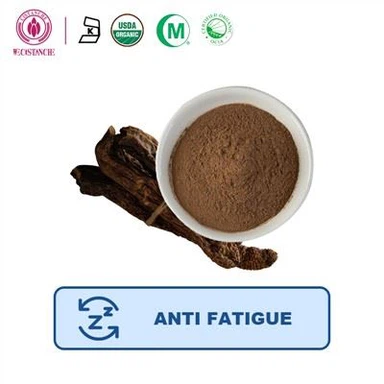
Limb weakness, sexual dysfunction, etc., are related to diseases such as chronic fatigue syndrome and male sexual dysfunction in modern medicine.
Cistanche deserticola, a traditional Chinese medicine, has become the first choice for tonifying kidney and yang because of its effects of tonifying kidney yang, nourishing essence and blood.
Studies have shown that Cistanche deserticola benefits has a regulating effect on the function of the hypothalamus-pituitary-target gland axis, and can improve the fatigue state and reproductive ability by maintaining the body's internal environment homeostasis. From recent medical experiments, experts start from chronic fatigue syndrome and male sexual dysfunction, which are closely related to kidney-yang deficiency, and establish two fatigue models central and exercise models and reproductive injury models in rats. Observation combined with the detection of relevant hormone levels in the circulation to screen the Citanache (Schenk) Wight, Oligosaccharides of Cistanche tubulosa, Polysaccharides of Cistanche tubulosa, Glycan and Phenylethanol glycosides from Cistanche tubulosa, CPhGs for sexual function Pharmacodynamic activity was evaluated for all disorders.
It was concluded that Oligosaccharides of Cistanche tubulosa was the main anti-fatigue part of Cistanche. CPhGs can protect the testis from hydrocortisone injury, increase the weight of the testis and its accessory sex organs, and maintain the hypothalamus-pituitary gland. - Stabilize the levels of hormones related to the gonad axis; and through the direct regulation of CYP11A1 in the T synthesis pathway, increase the expression of CYP11A1 and 3β-HSD in the enzymatic reaction during the synthesis of T after cholesterol enters the mitochondria, and promote the secretion and release of T, Improve the reproductive ability of mice and play the role of tonifying kidney yang.


Exercise
Recent studies have found that exercise, especially moderate to vigorous aerobic activity, can improve erectile dysfunction.
Even less strenuous, regular exercise might reduce the risk of erectile dysfunction. Increasing your level of activity might also further reduce your risk.
Discuss an exercise plan with your doctor.
Psychological counseling
If your erectile dysfunction is caused by stress, anxiety or depression — or the condition is creating stress and relationship tension — your doctor might suggest that you, or you and your partner, visit a psychologist or counselor.
Coping and support
Whether the cause is physical, psychological or a combination of both, erectile dysfunction can become a source of mental and emotional stress for you and your partner. Here are some steps you can take:
Don't assume you have a long-term problem. Don't view occasional erection problems as a reflection on your health or masculinity, and don't automatically expect to have erection trouble again during your next sexual encounter. This can cause anxiety, which might make erectile dysfunction worse.
Involve your sexual partner. Your partner might see your inability to have an erection as a sign of diminished sexual interest. Your reassurance that this isn't the case can help. Communicate openly and honestly about your condition. Treatment can be more successful for you when you involve your partner.
Don't ignore stress, anxiety or other mental health concerns. Talk to your doctor or consult a mental health provider to address these issues.
Preparing for your appointment
You're likely to start by seeing your family doctor. Depending on your particular health concerns, you might go directly to a specialist — such as a doctor who specializes in male genital problems (urologist) or a doctor who specializes in the hormonal systems (endocrinologist).
Because appointments can be brief and there's often a lot of ground to cover, it's a good idea to be well prepared. Here's some information to help you get ready and know what to expect from your doctor.
What you can do
Take these steps to prepare for your appointment:
Ask what you need to do ahead of time. When you make the appointment, be sure to ask if there's anything you need to do in advance. For example, your doctor might ask you not to eat before having a blood test.
Write down any symptoms you've had, including any that might seem unrelated to erectile dysfunction.
Write down key personal information, including any major stresses or recent life changes.
Make a list of all medications, vitamins, herbal remedies, and supplements you take.
Take your partner along, if possible. Your partner can help you remember something that you missed or forgot during the appointment.
Write down questions to ask your doctor.
The joint project of Wecistanche Biotechnology Co., Ltd. and Dichen Company carried out the "100 million red willows plan" in Xinjiang, China, to create a large-scale planting of Cistanche, and to open up a new way for local desertification control and poverty alleviation work for the local farmer.


According to the main active ingredient contained in cistanche. Now Cistanche deserticola plays an important role of for today's vaccine adjuvant and reducing the harm of fatigue from covid 19 and overworking.
For more information, contact wallence.suen@wecistanche.com