How Constipation Patients Should Improve Their Symptoms in Daily Life
Sep 19, 2023
Constipation is a pain in the hearts of many people. Some people often complain that they haven’t had a bowel movement in three days, and they even start to have acne, look bad, and their skin quality deteriorates, as if their intestines are full of toxins and feces. With the combination of various factors such as the accelerated pace of life and changes in dietary structure, more and more people are troubled by constipation.

Click to immediate constipation relief adults
So what is constipation?
Defecation less than 3 times a week, dry and hard stool, difficulty in defecation, and incomplete defecation are constipation. Those that last for more than 6 months are chronic constipation. Most constipation is functional constipation, but long-term constipation is not only painful but also harmful to the human body. Good eating habits are the primary condition for maintaining smooth bowel movements and are also the basic measures for treating constipation. So, what should patients with constipation do in their daily lives?
01 Develop the habit of regular bowel movements
Developing the habit of regular bowel movements is the first way to improve constipation. Colon activity is most active when you wake up in the morning and after a meal. It is recommended to try to defecate in the morning or within 2 hours after a meal. Concentrate on defecation to reduce interference from external factors. Each defecation time should not be too long (<10 minutes/time) . Regardless of whether you feel the urge to defecate or not, you should defecate regularly every day and make full use of the two "golden hours" of defecation.
02 Defecation posture should be correct
A good posture can relieve constipation. It is recommended to adopt the traditional squatting posture for defecation or use a small stool to elevate your feet when sitting on the toilet. It is not recommended to hold your breath and exert force, especially for people with basic cardiovascular and cerebrovascular diseases, as it may be risky.

03 Adjusting your diet is the guarantee of smooth bowel movements
① Eat more foods rich in crude fiber. Crude fiber can absorb water and swell, increase the volume of feces, promote intestinal peristalsis, and facilitate defecation.
②Drink more water to increase the water content of stool. After getting up in the morning, drink 2 glasses of water (about 500 ml). At this time, 80% of the water consumed is absorbed by the small intestine and 10% is absorbed by the large intestine, which can effectively promote defecation. Drinking water should reach about 2000ml every day to ensure that the crude fiber in the intestines can absorb enough water.
③ Increase high-fat foods appropriately. Fats and oils can directly moisturize the intestines, and their decomposition products, fatty acids, can also stimulate intestinal peristalsis, such as sesame seeds and cooking vegetable oils, but not too much. Cooking oil should be controlled at 25-30g per day.
④ Pay attention to taking in sufficient protein to improve the nutritional status of the gastrointestinal tract.
⑤ Ingesting fermented foods to supplement probiotics can improve intestinal flora and facilitate defecation. Such as yogurt, cheese, bread, etc.
04 Provide a quiet and secluded environment
Provide a concealed environment for those who defecate and do not suppress the urge to defecate. If you resist the urge to defecate, the stool will have to return to the colon, which often disrupts defecation habits.
05Move more and sit less
Exercise is beneficial to gastrointestinal peristalsis and promotes defecation. You should exercise appropriately and move more and sit less. It is recommended that you exercise 5 days a week and do at least 30 minutes of moderate-intensity aerobic exercise every day, such as brisk walking, jogging, etc.
06 Regular life
Life should be regular and three meals a day should be regular, which is conducive to the regular spontaneous peristalsis of the gastrointestinal tract and promotes defecation.

07 Maintain a good mental state
Emotions are closely related to gastrointestinal motility. Stress, anxiety, and depression will all affect gastrointestinal motility, thus affecting normal defecation.
Natural Herbal Medicine For Relieving Constipation-Cistanche
Cistanche is a genus of parasitic plants that belongs to the family Orobanchaceae. These plants are known for their medicinal properties and have been used in Traditional Chinese Medicine (TCM) for centuries. Cistanche species are predominantly found in arid and desert regions of China, Mongolia, and other parts of Central Asia. Cistanche plants are characterized by their fleshy, yellowish stems and are highly valued for their potential health benefits. In TCM, Cistanche is believed to have tonic properties and is commonly used to nourish the kidney, enhance vitality, and support sexual function. It is also used to address issues related to aging, fatigue, and overall well-being. While Cistanche has a long history of use in traditional medicine, scientific research on its efficacy and safety is ongoing and limited. However, it is known to contain various bioactive compounds such as phenylethanoid glycosides, iridoids, lignans, and polysaccharides, which may contribute to its medicinal effects.

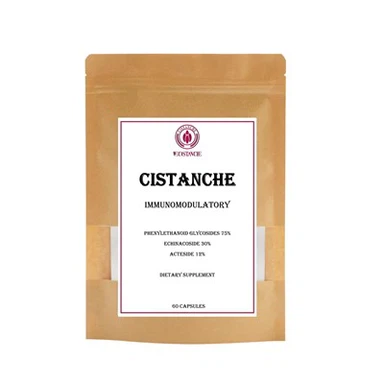
Wecistanche's cistanche powder, cistanche tablets, cistanche capsules, and other products are developed using desert cistanche as raw materials, all of which have a good effect on relieving constipation. The specific mechanism is as follows: Cistanche is believed to have potential benefits for relieving constipation based on its traditional use and certain compounds it contains. While scientific research specifically on Cistanche's effect on constipation is limited, it is thought to have multiple mechanisms that may contribute to its potential to relieve constipation. Laxative Effect: Cistanche has long been used in Traditional Chinese Medicine as a remedy for constipation. It is believed to have a mild laxative effect, which can help promote bowel movements and induce constipation. This effect may be attributed to various compounds found in Cistanche, such as phenylethanoid glycosides and polysaccharides. Moistening the Intestines: Based on traditional use, Cistanche is considered to have moisturizing properties, specifically targeting the Intestines. Promoting hydration and lubrication of the Intestines, it may help soften tools and facilitate easier passage, thereby relieving constipation. Anti-inflammatory Effect: Constipation can sometimes be associated with inflammation in the digestive tract. Cistanche contains certain compounds, including phenylethanoid glycosides and lignans, that are believed to have anti-inflammatory properties. By reducing inflammation in the intestines, it may help improve bowel movement regularity and relieve constipation.