The anti-fatigue effect of Cistanche: how to affect the mouse serum creatine kinase and skeletal muscle ultrastructure?
Dec 05, 2021
Abstract:
Gavage mice with Cistanche Decoction can extend their swimming time. The increase in serum creatine kinase decreased after heavy exercise. The ultrastructure of Skeletal Muscle showed abundant glycogen content, and mitochondria were generally proliferated and hypertrophied after exercise, with no swelling, vacuole, etc. The original good-dimensional structure of the muscle remains intact. No obvious damage.
Keywords: Cistanche, creatine kinase, super microstructure
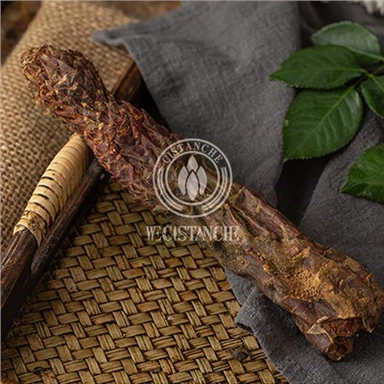
Cistanche is a fleshy stem with scales of Cistanche. It is distributed in the Gobi desert. It is a valuable tonic. It has the functions of strengthening the liver and kidneys and replenishing vital energy. According to statistics, among the ancient prescriptions of Zengli Chinese Medicine, the appearance rate is the highest. Through animal experiments, we conducted a series of studies on Cistanche and its compound preparations and explored its effects on exercise capacity and fatigue recovery. This article mainly introduces the effects of Cistanche on the changes of serum creatine enzyme and skeletal muscle superstructure changes in mice after exercise.
For more information please contact: Joanna.jia@wecistanche.com

Material
Animal Kunming, male and healthy mice, weighing 20-25g, were supplied by the animal room of the Inner Mongolia Institute for Pharmaceutical Inspection and Control with the drug Cistanche deserticola Y. C. Ma is produced in Ejina Banner, Inner Mongolia, and it has been identified by Zhou Kai of the Inner Mongolia Institute for Drug Control and is in compliance with the regulations of the Chinese Pharmacopoeia. The crude drug is made into 15 water decoction, sterilized, and stored for later use.
Methods and results
1. Anti-fatigue effect
(Mouse swimming test) The mice were randomly divided into 2 groups (n=15), and the experimental group was given gastric (PO) cistanche decoction. Daily consumption is 3g/kg. In the control group p0, the same volume of water was used for 15 consecutive days. One hour after the last administration, the tail of the mouse was tied with a weight of 0.5g and placed in 30±0.5°C water for swimming to keep it moving. With the head sinking in the water within about 5 seconds as the final point, the swimming time is recorded. Results The swimming time of mice in the Cistanche group was 150.60±16.16min, which was significantly higher than that of the control group 11067±10.04rain (P<0.01). Experiments show that Cistanche can significantly prolong the swimming time of mice and have a strong anti-fatigue effect.
2. The effect on serum CK in mice after heavy exercise
The mice were randomly divided into 4 groups. The administration method and dosage were the same as above. One hour after the last administration, the tail weighed 1g, and it was placed in 30±0.5℃ water for 90 minutes and rested for 10 hours after swimming. Blood was collected from the tail and the serum was separated. The serum CK content was measured at rest and after exercise. Use American-made BECKM AN-700 fully automatic biochemical analyzer and CK kit (89007, produced by Zhongsheng Company), enzymatic determination. Using a fully automated program, the results suggest that when it is quiet and not moving. Cistanche had no significant effect on serum CK activity and compared with the control group, the difference was not significant (P>0.05). After 10 hours of load swimming, the serum CK levels of the two groups increased on average, but the increase in the Cistanche group was significantly lower than that of the control group (P<0.01). Although it was higher than at rest, it was not statistically significant. The serum CK of the control group after exercise The level was significantly higher than that at rest (P<0.01). It shows that Cistanche can reduce the increase of serum CK after load exercise in mice.
3. the impact on the microstructure of the Muscle Muscle after heavy exercise
The 4 groups of mice in the previous experiment were killed immediately after blood was taken from their tails. Samples were taken from the left biceps femoris muscles for electron microscopy; they were fixed with glutaraldehyde and osmic acid, as usual, embedded in Epon-812 epoxy resin, and LKBNora Sections with an ultra-thin microtome, double staining with uranium and lead, observation with H-700 transmission electron microscope, and photographs, the results are as follows
3.1. The control group had a normal skeletal muscle structure when calmed down; myofibrils consisted of countless myofilaments neatly arranged. It can be seen as A, I zone, z line, H zone, and M line. The sarcomere length is basically the same. There are mitochondria between myofibrils, which are round and elliptical. The cristae are long and distinct, the matrix density is uniform, and there are fewer lipid droplets.
3.2. In the control group, muscle fiber structure was disordered after exercise, sarcomere length varied, and lipid droplets increased. Mitochondria are generally swollen, the ridge fracture matrix density is reduced, and the star-shaped vesicles merge with each other into giant mitochondria. In some areas, the normal structure completely disappeared, the myofilament was twisted, and the mitochondria were enlarged, fused, and ruptured
3.3. The cistanche group is rich in glycogen particles at rest, distributed between muscle fibers and myofibrils, and the structure of myofibrils is clear, basically the same as the control group.
3.4. The muscle filaments of the Cistanche deserticola group were looser after exercise, the myofibril structure remained intact, the mitochondria were abundant, the volume increased, the performance was hyperplasia and hypertrophy, the cristae were intact, the matrix density did not decrease, and there were more glycogen particles.

Discussion
CK is mainly distributed in skeletal guanidine and cardiomyocytes. Under normal circumstances, there are fewer escaped cells, so the serum concentration is low, but vigorous long-term exercise can cause a significant increase in CK levels. The reason is currently believed to be ① prolonged and vigorous exercise depleted glycogen, insufficient ATP supply, reduced energy to maintain cell structure, enzyme proteins are not easy to maintain in functional positions, cell membrane structure changes; ③ exercise causes muscle cell damage, fatty degeneration, and Focal necrosis. The results not only cause muscle pain after exercise but also a large number of enzyme molecules enter the blood. Increased CK activity usually occurs after exercise. The changes are significant and sensitive. Measuring the changes can assess the degree of exercise capacity and the effect of exercise on bone {I preparation muscles and myocardium.
After 90 minutes of load exercise, the serum CK level in the control group was significantly higher than that at rest, and the skeletal guanidine ultrastructure showed muscle fiber disorder and increased lipid droplets. Among them, the mitochondrial cristae are broken, the density of the matrix is reduced, and the production of ATP is bound to decrease. The lack of muscle protein causes mitochondria to fuse with each other to form giant mitochondria. The above indicates that the muscle fiber dimension damage has not been recovered, and the membrane permeability cannot be maintained and increased. The changes in serum CK and skeletal muscle ultrastructure in the control group were in line with literature reports. After taking Cistanche deserticola, the swimming time of the mice was prolonged, and the electron microscope showed that the muscles were rich in glycogen, after exercise, the number of mitochondria increased day by day, the volume increased, the cristae were intact, and the formation of vacuolar giant mitochondria was not seen. It is suggested that Cistanche can increase glycogen reserves, reduce muscle protein decomposition after exercise, and promote adaptive hypertrophy and hyperplasia of mitochondria to meet the energy required for muscle contraction and rehabilitation [5]. The cell membrane permeability was maintained normal, the muscle fiber structure was not significantly damaged, and it remained basically intact. Correspondingly, the serum CK changes insignificantly after exercise, and the increase is minimal. The above results all confirm that Cistanche has the effect of strengthening and anti-fatigue.

References
[1]3 Li Shicheng. Feng grass {fI and. Beijing; People's Health Publishing House, 1977, 727
[2] Fighting force and so on. Chinese Journal of Sports Medicine 1990F9(1)一1
[3] Min cable bag, etc. Translated. Mammal cells are super structured. Beijing: Science Press,1986j142
[4] Wang Jianfang. Chinese Journal of Sports Medicine 1988|7(1)t46
[5] Wu Zhongbi et al. Super loose I am still the foundation of science. Beijing-People's Health and Health are born out of Menashe,