How Much Do You Know About Constipation Treatment?
Sep 07, 2023
"Constipation" has a long history. Constipation was first recorded in the "Huangdi Neijing" and was called "post-unfavorable", "post-embarrassment", "large intestine knot", etc. Zhang Zhongjing described constipation as "dry feces in the stomach", "not having bowel movements for five or six days", etc., and for the first time proposed the concepts of "spleen knot", "yin knot" and "yang knot". Since then, through many dynasties, famous local doctors and various schools have emerged, and medical theories have flourished. Different doctors have different names for constipation. Until the Ming and Qing Dynasties, most doctors called constipation "constipation" or "dry knot". Shen Jin'ao of the Qing Dynasty clarified the term "constipation" in "The Origin of Miscellaneous Diseases". After that, "constipation" has been used as a disease name to this day. The main symptoms are reduced bowel movements (less than 3 bowel movements per week), dry and hard stools that are difficult to pass, or difficulty in passing out stools that are not dry, laborious defecation, incomplete defecation, and a feeling of anorectal obstruction or obstruction during defecation, and Defecation requires manual assistance, etc.
Traditional Chinese medicine has a very rich and profound understanding of constipation. Based on the opinions of ancient and modern doctors, each family has a different understanding of the etiology and pathogenesis of constipation. There are many causes of constipation. Internally, it can be caused by improper diet, abnormal transportation and transformation of the spleen and stomach, disharmony of emotions, imbalance of qi, etc. Externally, it can be caused by the invasion of external evils such as wind, cold, heat, dampness, dryness, fire, etc; External causes may be related to overwork, physical weakness, mistreatment, etc. In addition, congestion, phlegm, etc. are also causes of constipation that cannot be ignored. The pathogenesis is abnormal conduction in the large intestine.
There are a large number of records on the classification of constipation syndromes in ancient Chinese medicine classics. The syndrome differentiation of constipation in traditional Chinese medicine is mainly based on the syndrome differentiation of eight cardinal principles or syndrome differentiation of viscera or a combination of the two, but no unified conclusion has been reached so far. The function of the six fu organs is to clear the bowels and to lower the bowels to smoothen the bowels. The location of constipation is in the large intestine, so the diagnosis and treatment of constipation are mainly based on "clearing the lower bowels". The Tongyi method is a commonly used method for the clinical treatment of constipation. If used properly, the evil will be removed and the stool will be cleared. If used improperly, the healthy energy will be damaged and the evil will remain. The overall concept of traditional Chinese medicine and syndrome differentiation and treatment should be implemented throughout the whole process of prescription and medication.

The "Expert Consensus Opinion on the Diagnosis and Treatment of Constipation in Traditional Chinese Medicine (2017)" divides constipation into seven types: heat accumulation, cold accumulation, qi stagnation, qi deficiency, blood deficiency, yin deficiency, and yang deficiency. The treatment methods are to soothe the lungs, strengthen the spleen, nourish the kidneys, soothe the liver, nourish qi, nourish the blood, clear away heat, remove dampness, nourish yin, and moisten the intestines. For the secret of heat accumulation, choose Ma Ziren Pills to clear away heat and moisturize the intestines; for the secret of cold accumulation, use Wenpi Decoction; for the secret recipe of qi stagnation, choose Liumo Decoction to smooth the qi, guide stagnation and open the bowels; for the secret of qi deficiency, use Huangqi Decoction to nourish qi and moisturize the intestines; for the secret of blood deficiency, use Huangqi Decoction to nourish qi and moisturize the intestines; Runchang Pill nourishes blood and moisturizes dryness; for yin deficiency secretion and yang deficiency secretion, use Zengye Decoction and Jichuan Jian respectively. In addition to traditional Chinese medicine decoctions, Chinese patent medicines are also a good choice for patients with constipation. Chinese patent medicines are patent medicines made by processing Chinese herbal medicines using modern technology and equipment. Because it not only has the characteristics of compatibility with traditional Chinese medicine, but also has the advantages of being easy to carry, store, and take, it is easily accepted by patients.
Traditional Chinese medicine has a variety of treatments for constipation. In addition to oral medications, different external TCM treatments can also be used for different patients.
Acupuncture treatment: Acupuncture has a long history in treating constipation. Acupuncture treatment is based on the theory of meridians and acupuncture points. It uses acupuncture, electro-acupuncture, warm acupuncture, etc. to stimulate the meridians and acupoints on the body surface, thereby achieving the effects of relaxing muscles and dredging meridians and harmonizing Qi and blood, so that the functions of Qi and blood of the human body's internal organs can be effectively improved. Regulation, and thereby achieving appropriate promotion of gastrointestinal motility, treating the disease and alleviating symptoms. The treatment methods include tonifying the deficiency and dredging the intestines, dredging the accumulated stagnation, and attacking and tonifying.
Acupoint application method: Acupoint application therapy refers to applying the medicine to the umbilicus. After being absorbed through the umbilicus, it acts on the intestines to stimulate intestinal peristalsis to promote defecation. It has both the therapeutic effect of drugs and the function of acupoints. Compared with oral administration of drugs, acupoint application has less toxicity and side effects, less dosage, saves medicinal materials, is easy to operate, easy to store, and can be stopped at any time if discomfort occurs. features. Shenque point is located in the umbilicus, which can activate the human body's fetal breath, collect and reduce turbid qi, and has a good therapeutic effect on intestinal diseases. Raw rhubarb has the effect of attacking accumulation, channeling stagnation, purging fire, and detoxifying. Applying raw rhubarb to Shenque can improve intestinal function and promote defecation.
Acupoint catgut embedding method: The Acupoint catgut embedding method has the comprehensive effects of acupuncture, needle retention, needle implantation, and modern tissue embedding methods. Some studies have found that acupoint catgut embedding can regulate the sympathetic and parasympathetic nerves of the human body, increase the secretion of large intestinal fluid, and accelerate large intestinal peristalsis. When the human body is active, it can also play the role of needling, reduce the number of needling, and provide a better treatment method for those who are afraid of needling and fainting. Research has found that one of the advantageous diseases of acupoint catgut embedding is constipation.
Auricular point treatment: "The ear is where the ancestral veins gather". The ear is closely related to the meridians and viscera. Pressing beans through the auricular point can stimulate intestinal peristalsis, regulate gastrointestinal digestive function, dredge the visceral qi, and conduct dregs to relieve constipation.
Massage therapy: Massage therapy can adjust the autonomic nervous system and gastrointestinal function, strengthen gastrointestinal peristalsis, and promote the movement of food residues.
Enema method: The earliest enema method is to use soil melon root and pig bile. Traditional Chinese medicine enemas can directly contact the liquid with the lesion, increase the local drug concentration of the lesion, and make the drug fully exert its efficacy without being decomposed by the digestive juice. Compared with oral drugs, rectal administration has faster absorption and longer local action time, while avoiding the first-pass effect of the liver. The drug acts directly on the rectum and causes defecation through absorption of the rectal mucosa and stimulation of the intestinal wall.
In addition to the methods discussed above, acupoint injection, scraping, and traditional Chinese medicine packs are also safe and effective for the treatment of constipation.
Western medicine often uses cathartic drugs, biofeedback, colonic hydrotherapy, fecal microbiota transplantation, surgery, and other methods to treat constipation. (5-HT4) receptor agonists, colon secretagogues, etc., although quick-acting, are prone to relapse, and long-term use of cathartic drugs is prone to drug dependence, and even abdominal distension, abdominal cramps, liver and kidney function damage, Colon melanosis, etc., can cause cancer in severe cases.
Traditional Chinese medicine has unique advantages in treating constipation with flexible methods, stable and long-lasting curative effects, and few adverse effects. Traditional Chinese medicine puts more emphasis on starting from the whole and treating both symptoms and root causes in treatment. The external treatment of traditional Chinese medicine does not go through the metabolism of the liver and kidneys, has no liver first-pass effect, and is not decomposed by digestive juice. It is green, harmless, convenient and cheap, safe and effective, easy to accept by patients, and has good compliance. Long-term use will not cause dependence and toxic side effects. For some patients with impaired liver and kidney function who are unwilling to take medicine, it can be regarded as an effective treatment method.

Natural Herbal Medicine For Relieving Constipation-Cistanche
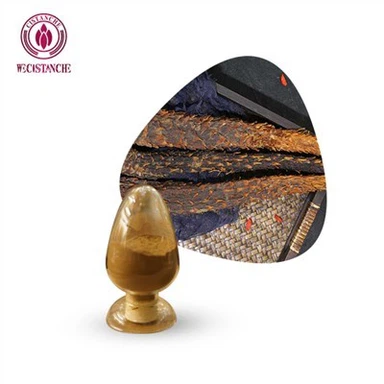
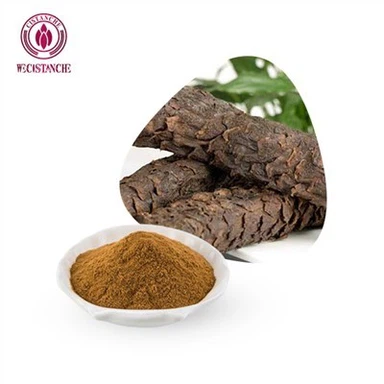
Cistanche is a genus of parasitic plants that belongs to the family Orobanchaceae. These plants are known for their medicinal properties and have been used in Traditional Chinese Medicine (TCM) for centuries. Cistanche species are predominantly found in arid and desert regions of China, Mongolia, and other parts of Central Asia. Cistanche plants are characterized by their fleshy, yellowish stems and are highly valued for their potential health benefits. In TCM, Cistanche is believed to have tonic properties and is commonly used to nourish the kidney, enhance vitality, and support sexual function. It is also used to address issues related to aging, fatigue, and overall well-being. While Cistanche has a long history of use in traditional medicine, scientific research on its efficacy and safety is ongoing and limited. However, it is known to contain various bioactive compounds such as phenylethanoid glycosides, iridoids, lignans, and polysaccharides, which may contribute to its medicinal effects.

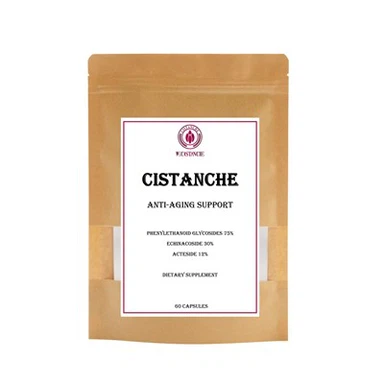
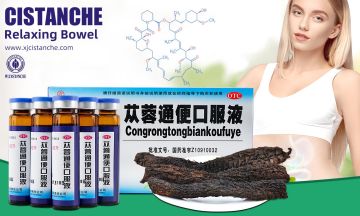
Wecistanche's cistanche powder, cistanche tablets, cistanche capsules, and other products are developed using desert cistanche as raw materials, all of which have a good effect on relieving constipation. The specific mechanism is as follows: Cistanche is believed to have potential benefits for relieving constipation based on its traditional use and certain compounds it contains. While scientific research specifically on Cistanche's effect on constipation is limited, it is thought to have multiple mechanisms that may contribute to its potential to relieve constipation. Laxative Effect: Cistanche has long been used in Traditional Chinese Medicine as a remedy for constipation. It is believed to have a mild laxative effect, which can help promote bowel movements and induce constipation. This effect may be attributed to various compounds found in Cistanche, such as phenylethanoid glycosides and polysaccharides. Moistening the Intestines: Based on traditional use, Cistanche is considered to have moisturizing properties, specifically targeting the Intestines. Promoting hydration and lubrication of the Intestines, it may help soften tools and facilitate easier passage, thereby relieving constipation. Anti-inflammatory Effect: Constipation can sometimes be associated with inflammation in the digestive tract. Cistanche contains certain compounds, including phenylethanoid glycosides and lignans, that are believed to have anti-inflammatory properties. By reducing inflammation in the intestines, it may help improve bowel movement regularity and relieve constipation.