How To Properly Consume Cistanche For Autumn Health Preservation?
Oct 12, 2026
After the start of autumn, the weather shifts from hot to cool, and the climate gradually dries out. According to Traditional Chinese Medicine (TCM), autumn corresponds to the lung, and dryness becomes the prevailing pathogenic factor. It readily consumes the body's fluids, leading to symptoms of "autumn dryness" such as dry mouth, dry nose, itchy skin, and dry stools. Meanwhile, as Yang Qi converges inward and metabolism slows down, some people may feel chills and a sore, weak waist and knees due to insufficient kidney Yang and deficiency of essence and blood. Among numerous tonic herbs, Cistanche tubulosa (known as Rou Cong Rong) is regarded by physicians of all dynasties as a top-grade herb for mild autumn supplementation, characterized by its properties of "warming without heating, tonifying without being harsh, warming without drying, and moistening without causing leakage". It can not only tonify kidney Yang and replenish essence and blood but also moisten the intestines to relieve constipation, perfectly aligning with the autumn health preservation principle of "moistening dryness without causing greasiness".

I. Understanding Cistanche: Pharmacopoeia Records and Modern Pharmacology
1. Pharmacopoeia Records and Nature/Channel Tropism
According to the Chinese Pharmacopoeia and various TCM classics, Cistanche is the dried fleshy stem with scale-like leaves of Cistanche tubulosa. It is mainly produced in the desert areas of Inner Mongolia, Xinjiang, and Gansu. It tastes sweet and salty, is warm in nature, and enters the kidney and large intestine meridians. Its core effects are tonifying kidney Yang, replenishing essence and blood, and moistening the intestines to relieve constipation. It is indicated for impotence, infertility, soreness and weakness of the waist and knees, and lack of strength caused by kidney Yang deficiency and essence-blood deficiency, as well as intestinal dryness constipation.

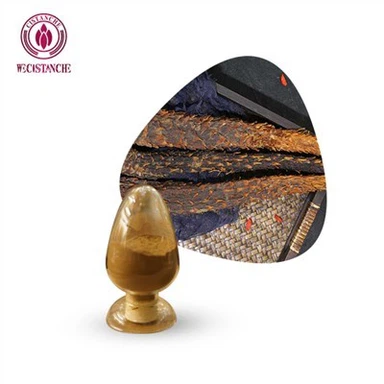
Chinese herb cistanche
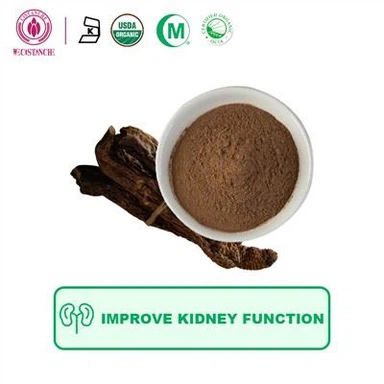
Click here to view Cistanche for Kidney disease products
【Ask for more】 Email:cindy.xue@wecistanche.com / WhatsApp: 0086 18599088692 / WeChat: 18599088692
2. Modern Pharmacological Research
Modern pharmacological studies have revealed the rich chemical composition of Cistanche. Its main active components include phenylethanoid glycosides (such as echinacoside and acteoside), Cistanche polysaccharides, lignans, and betaine. Regarding intestinal regulation, galactitol and oligosaccharides in Cistanche tubulosa can promote intestinal peristalsis, increase intestinal osmotic pressure, and inhibit water absorption in the large intestine, significantly shortening defecation time. Additionally, total glycosides of Cistanche can reduce cerebral infarction volume, increase the activity of brain antioxidant enzymes, and protect against cerebral ischemia-reperfusion injury; Cistanche polysaccharides and acteoside can also enhance immune function.

Main Chemical Constituents of Cistanche tubulosa
3. Difference between Raw and Processed Products
Raw Cistanche: Has a more significant effect on moistening the intestines and relieving constipation, suitable for those with intestinal dryness constipation.
Wine-processed Cistanche (stewed/steamed with wine): The surface is black-brown with a slight wine aroma and a soft, moist texture. After wine processing, the content of phenylethanoid glycosides increases, enhancing the effect of tonifying kidney Yang and avoiding the side effect of loose stools caused by the raw product.

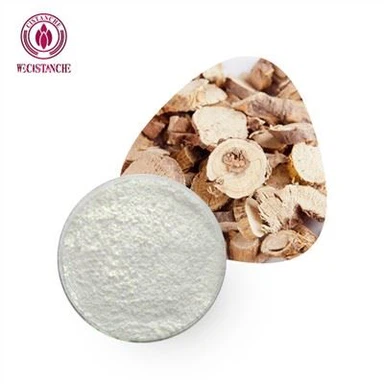
Cistanche tubulosa slice
II. Phased Autumn Consumption: Strategies for Cistanche Intake
Autumn health preservation emphasizes "moistening dryness first in early autumn, then warming as it gets cooler". The consumption of Cistanche should be flexibly adjusted according to the climatic characteristics of early, mid, and late autumn. Blindly taking heavy tonics at the beginning of autumn should be avoided.
1. Early Autumn (Focus on Moistening, Mild Dietary Inclusion)
In early autumn, the summer heat has not yet subsided, autumn dryness begins, and spleen-stomach function is still weak. Heavy supplementation should be avoided. Cistanche should be paired with moistening ingredients like Tremella, Lily bulb, and Lotus seed to avoid warmth and dryness.
Recommended Recipe: Cistanche, Lily Bulb, and Tremella Decoction
Ingredients: 3g Cistanche slices, half a Tremella (soaked), 10g dried Lily bulb, a few Goji berries.
Preparation: Tear Tremella into small pieces after soaking, and boil with Lily bulb until soft. Add Cistanche slices 20 minutes before turning off the heat, and finally add Goji berries.
Effect: Tremella produces colloids, Lily bulb clears the heart, and Cistanche provides foundational support, resulting in a thick yet non-greasy moistening effect, suitable for dry throat and itchy skin caused by early autumn dryness.

cistanche tea
2. Mid-Autumn (Focus on Mild Tonic, Regulating Spleen and Kidney)
During mid-autumn, the weather turns cooler, dryness becomes pronounced, and Yang Qi converges inward. The dosage of Cistanche can be increased, paired with spleen-strengthening Chinese Yam and Poria, or ginger and red dates for warming the middle burner.
Recommended Recipe: Cistanche, Chinese Yam, and Lean Meat Soup
Ingredients: 5- 8 g Cistanche, 1 section of Chinese Yam, appropriate amount of lean meat, 2 slices of ginger.
Preparation: Blanch the lean meat, then simmer with Cistanche, Chinese Yam, and ginger in a clay pot for 1.5 hours after boiling. Season with salt.
Effect: Awakens the spleen-stomach digestive capacity, resolves coldness from excessive raw food intake, and is warming and moistening without being sticky, fitting the mild tonic needs of mid-autumn.
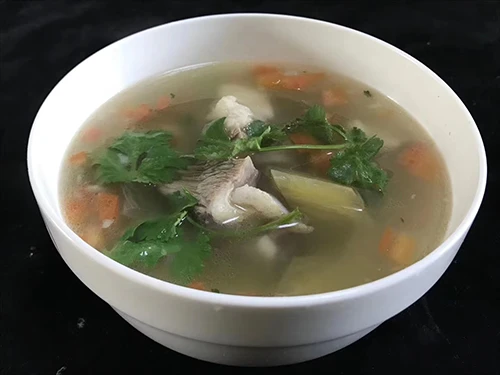
Stewed Cistanche tubulosa soup
3. Late Autumn (Focus on Warming and Tonifying, Nourishing Essence and Blood)
In late autumn approaching winter, coldness intensifies. Those with kidney Yang deficiency may experience chills, cold limbs, and frequent nocturia. It can be combined with warming kidney Yang and essence-nourishing ingredients like mutton, walnut, and black sesame.
Recommended Recipe: Cistanche and Mutton Congee
Ingredients: 15-30g Cistanche, 150-200g mutton, appropriate amount of rice.
Preparation: Slice the mutton, boil with Cistanche until the meat is cooked. Remove Cistanche, add rice to cook into congee, and season with salt.
Effect: Tonifies the kidney, replenishes essence, and strengthens Yang, assisting in alleviating soreness and coldness in the waist and knees, impotence, and seminal emission due to kidney Yang deficiency.

Stewed Cistanche tubulosa soup
III. Daily Convenient Consumption Methods and Compatibility Contraindications
1. Daily Convenient Consumption Methods
Thermos Special (Herbal Tea Substitute): Take 3g Cistanche slices, add 5g dried Mulberry and 1 small piece of Tangerine peel. Steep in boiling water for 15 minutes. It offers an initial citrus aroma, a slightly sour middle note, and a sweet, moist aftertaste, suitable for office workers. Alternatively, combine 3g Cistanche, 5g Goji berries, and 3 Chrysanthemum flowers for a clearer, moister tea ideal for autumn afternoons.
Cistanche Rice Cooker Meal: Dice Cistanche into small pieces. Grab a small handful when washing rice, and cook with potato cubes, peas, and a little sausage in a rice cooker. The diced Cistanche becomes soft and glutinous when cooked, fitting a fast-paced lifestyle.
Classic Herbal Paste: 500g Cistanche, 50g Angelica sinensis, 50g Achyranthes bidentata. Decoct in water, concentrate, and add honey to form a paste. It can assist in treating Yang deficiency constipation characterized by difficult defecation and clear, frequent urination.
2. Dosage and Contraindications
Pharmacopoeia Dosage: The Chinese Pharmacopoeia and China Medical Information Query Platform recommend a conventional oral decoction dosage of 6- 10 g (or 10- 15 g) for Cistanche. For daily health care, it is recommended to start with 3- 5 g, avoiding large doses. Excessive doses (over 50g) may cause gastrointestinal reactions such as vomiting and diarrhea.
Contraindicated Groups: It is not suitable for those with Yin deficiency and excessive fire (often dry mouth, hot palms, restless sleep), loose stools (diarrhea), or heat-binding constipation (excessive heat constipation). In addition, individuals with common colds, fever, pregnant women, breastfeeding mothers, infants, and those taking other medications should consult a professional physician first.
Compatibility Taboos: Cistanche should not be used with spicy and drying foods (such as large amounts of leeks or heavily spicy hotpot) to avoid generating heat and damaging Yin. It should also not be eaten with cold foods (such as mung beans and bitter melon) to prevent counteracting its effects. Traditional Chinese medicine also emphasizes avoiding copper and iron utensils for decoction, suggesting the use of clay pots, ceramic, or glassware.

IV. Purchase and Storage Guide
1. Key Points for Purchase
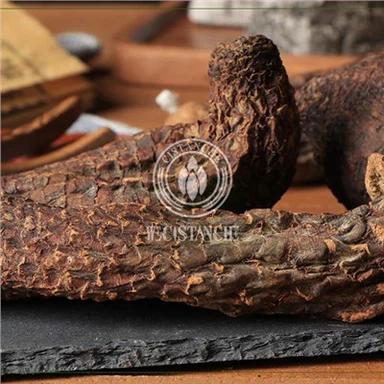
High-quality Cistanche should have a natural color (surface brown or gray-brown), an oily and moist cross-section, a pure, authentic smell, and be densely covered with imbricate fleshy scales. It is mainly produced in the desert areas of Alxa Left and Right Banners in Inner Mongolia, Gansu, and Xinjiang. The product from Alxa, Inner Mongolia, is considered the authentic and superior source. Be wary of inferior products that are too black and shiny or emit a pungent, sour smell.

Cistanche tubulosa
2. Storage Methods
Cistanche should be stored in a ventilated and dry place, protected from moisture, mold, and insects. For daily household storage, seal it and place it in a cool, dry place, or refrigerate it. Consume it as soon as possible after opening.
The key to autumn health preservation lies in adapting to the natural seasonal changes and applying tonic based on syndrome differentiation. As the "Ginseng of the Desert", Cistanche, with its warm and moist properties, is an ideal choice for autumn supplementation. Whether it is moistening in early autumn, mild tonifying in mid-autumn, or warming in late autumn, the key lies in selecting appropriate combinations and dosages according to individual constitution and seasonal changes. Dietary therapy cannot replace drug treatment. Before enjoying the nourishment brought by Cistanche, it is recommended to consult a professional TCM practitioner to ensure this ancient herb truly safeguards your health.