How To Solve The Unspeakable Secrets Of People With Constipation?
Dec 01, 2023
Once upon a time, constipation was an exclusive disease only for the elderly and the frail, and now it has spread to young people. The fast pace of life and unreasonable eating habits make many people suffer from constipation, which not only causes mental distress but also physical pain.
What is constipation?
Constipation is a combination of clinical symptoms characterized by difficulty in defecation and/or infrequent defecation, and dry and hard stools. Defecation difficulties include straining to defecate, difficulty in passing out, a sense of anorectal blockage, a sense of incomplete defecation, time-consuming defecation, and the need for manual assisted defecation. Reduced bowel movement refers to <3 bowel movements per week. If the above symptoms persist for more than 6 months, it is called chronic constipation. With the accelerated pace of life, changes in dietary structure, and the influence of social and psychological factors, the prevalence of constipation is on the rise.

What are the causes of constipation?
age
Constipation is far more common in older people than in younger people. Common causes of constipation in older adults are related to several factors, including lack of regular bowel movements or aging, lack of proper diet, lack of adequate fluid intake, lack of adequate physical activity, illness, or use of medications.
gender
Constipation, on the other hand, is more common in women than men. Furthermore, older women were significantly more likely to experience severe constipation than men. During pregnancy, especially in the final months, the risk of constipation is high due to a significant increase in sex hormones, reduced intestinal motility, and delayed intestinal emptying due to mechanical stress.
diet
Lack of fiber (insufficient consumption of fruits, vegetables, and other foods containing fiber), not enough drinking water or fluids.
drug
Several drugs that cause constipation are indicated as causative factors of constipation, including antipyretics (such as morphine and codeine), anticholinergics (Xiaoxin), antidepressants (imipramine and fluoxetine), Antiepileptic drugs (such as phenytoin and carbamazepine), antipsychotics (haloperidol and clozapine), food supplements containing iron and calcium.
social psychological factors
The patient is mentally stimulated, frightened, emotionally stressed, or highly focused on a certain task, which makes the urge to defecate disappear and cause constipation.
mechanical reasons
Strictures of the colon, rectum, or anus, megacolon, rectocele, intestinal pseudo-obstruction, tissue damage, diverticular disease. Organic strictures: Cancer or cancer-related causes (e.g., colorectal cancer and tumors, intestinal radiation therapy, etc.), diverticulitis, sigmoid or cetacean volvulus, intestinal masses, inflammation, and ischemic or surgical strictures.

What are the classifications of constipation?
slow transfer type
Common diseases include congenital megacolon, secondary megacolon, colon weakness, spastic colon, and long segmental colon.
Outlet obstruction type
Common diseases include rectocele, intrarectal intussusception, rectal mucosal prolapse, pelvic floor hernia, pelvic floor spasm syndrome, and descending perineal syndrome.
Hybrid
It has the characteristics of both slow transit type and outlet obstruction type.

What are the dangers of constipation?
As we all know, constipation is extremely harmful to people. Constipation can not only cause many diseases, such as "general belly", age spots, lethargy, body aches, arteriosclerosis, Alzheimer's disease (dementia), anal fissures, hemorrhoids, etc. It can also induce breast cancer and intestinal cancer, affect children's intellectual development, and in severe cases lead to acute myocardial infarction, cerebrovascular accidents, etc. Therefore, people must pay attention to it.
constipation treatment
It is necessary to formulate a multi-disciplinary individualized treatment plan based on the condition that simultaneously addresses basic diseases, defecation behaviors, defecation habits, psychological problems, etc. Each friend should have his or her defecation management plan.
non-surgical treatment
❖Medical nutrition intervention, such as dietary fiber, water intake, physical activity, etc.;
❖Establish good defecation habits, such as defecation on time and concentration;
❖Microecological treatment, including probiotics, etc.;
❖Medical treatment, including volumetric laxatives, osmotic laxatives, stimulant laxatives, prokinetic drugs, secretagogues, etc.; long-term use of laxatives containing quinones can lead to colonic melanosis and increase the risk of cancer; in addition, For patients with high blood pressure, diabetes, and renal insufficiency, there is a risk of aggravating underlying diseases when using laxatives, so it is very important to use them under the guidance of a professional doctor.
❖Psychological adjustment treatment;
❖Colon hydrotherapy: Colon hydrotherapy uses the principle of constant temperature to inject water into the intestines, clean the intestines with ionized warm water, rebuild the normal peristaltic rhythm of colon muscles, expel waste, feces, and toxins from the body, and promote intestinal mucosal secretion, thereby restoring the intestinal tract to normal defecation function.
❖Traditional Chinese medicine and acupuncture treatment.
Surgical treatment
Does constipation still need surgical treatment? Many friends may find it incredible.
Surgical treatment may be considered for patients who fail to respond to standardized and systematic non-surgical treatments. Surgical treatment requires both resection of intestinal slow transit lesions and removal of outlet obstruction factors, but surgical treatment must be very cautious.
What situations require surgical treatment?
❖The medical history is more than 3 years old and standard medical treatment is ineffective (at least 3 months);
❖Colon transit time is significantly prolonged;
❖Outlet obstruction constipation;
❖Defecography examination shows rectal mucosal intussusception with or without rectocele;
❖Adult megacolon.
Natural Herbal Medicine For Relieving Constipation-Cistanche
Cistanche is a genus of parasitic plants that belongs to the family Orobanchaceae. These plants are known for their medicinal properties and have been used in Traditional Chinese Medicine (TCM) for centuries. Cistanche species are predominantly found in arid and desert regions of China, Mongolia, and other parts of Central Asia. Cistanche plants are characterized by their fleshy, yellowish stems and are highly valued for their potential health benefits. In TCM, Cistanche is believed to have tonic properties and is commonly used to nourish the kidney, enhance vitality, and support sexual function. It is also used to address issues related to aging, fatigue, and overall well-being. While Cistanche has a long history of use in traditional medicine, scientific research on its efficacy and safety is ongoing and limited. However, it is known to contain various bioactive compounds such as phenylethanoid glycosides, iridoids, lignans, and polysaccharides, which may contribute to its medicinal effects.

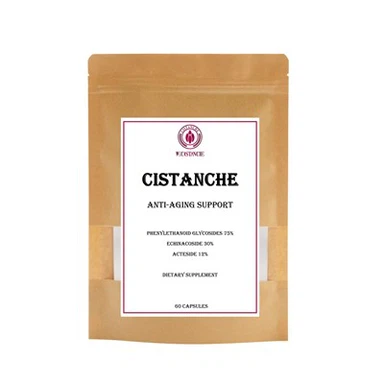
Wecistanche's cistanche powder, cistanche tablets, cistanche capsules, and other products are developed using desert cistanche as raw materials, all of which have a good effect on relieving constipation. The specific mechanism is as follows: Cistanche is believed to have potential benefits for relieving constipation based on its traditional use and certain compounds it contains. While scientific research specifically on Cistanche's effect on constipation is limited, it is thought to have multiple mechanisms that may contribute to its potential to relieve constipation. Laxative Effect: Cistanche has long been used in Traditional Chinese Medicine as a remedy for constipation. It is believed to have a mild laxative effect, which can help promote bowel movements and induce constipation. This effect may be attributed to various compounds found in Cistanche, such as phenylethanoid glycosides and polysaccharides. Moistening the Intestines: Based on traditional use, Cistanche is considered to have moisturizing properties, specifically targeting the Intestines. Promoting hydration and lubrication of the Intestines, it may help soften tools and facilitate easier passage, thereby relieving constipation. Anti-inflammatory Effect: Constipation can sometimes be associated with inflammation in the digestive tract. Cistanche contains certain compounds, including phenylethanoid glycosides and lignans, that are believed to have anti-inflammatory properties. By reducing inflammation in the intestines, it may help improve bowel movement regularity and relieve constipation.