Identification Of Authentic Medicinal Herb Cistanche Deserticola
May 11, 2024
As a genuine medicinal herb, Roucongrong is one of the "Nine Immortal Grasses of China" and is known as the "Desert Ginseng". It has extremely high medicinal value and is a precious traditional Chinese medicinal herb. Cistanche deserticola has been regarded as a precious treasure of the tribute court by various countries in the Western Regions throughout history and is also one of the most frequently used tonifying drugs in the history of kidney tonifying and yang strengthening prescriptions.

chinese herb cistanche
In recent years, with the more widespread application of Cistanche deserticola in health food, medicine, and the big health industry, the Cistanche deserticola in the market is also a mix of good and bad, and one may accidentally choose fake Cistanche deserticola. Therefore, it is important to choose the best Cistanche deserticola, and the selection process for Cistanche deserticola involves a lot of attention and knowledge. So, how should we choose Cistanche deserticola for ourselves?
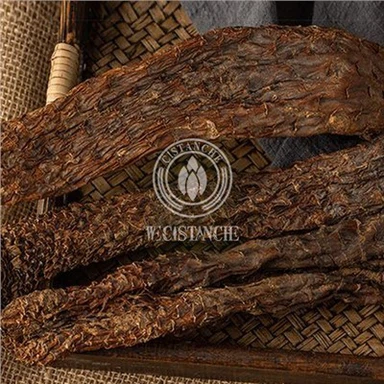
Cistanche deserticola is flat cylindrical, slightly curved, 3-15cm long, 2-8cm in diameter, with a surface brownish or grayish brown, densely covered with fleshy scales arranged in a tile-like pattern, usually with the tip of the scales broken.
Weight, hard texture, slightly flexible, not easily broken, with a brownish cross-section and light brown dotted vascular bundles arranged in a wavy ring pattern.

Cistanche deserticola slice
There are four main species of plants in the genus Cistanche in China, among which the effective ingredient content of Cistanche tubulosa is the highest. Hotan artificially planted 250700 acres of red willows and 167500 acres of planted red willows in Dayun. Currently, the annual production of red willows and Dayun in the entire region is about 4000 tons. As of now, the artificial red willow planting area in Yutian County has reached 81000 acres, with a vaccination area of 70000 acres. Among them, 30000 acres of artificial red willow planting have completed the certification work of organic product production base and AA-level green food base.
The Top Quality of Cistanche deserticola - Tubular Cistanche deserticola
1, Appearance
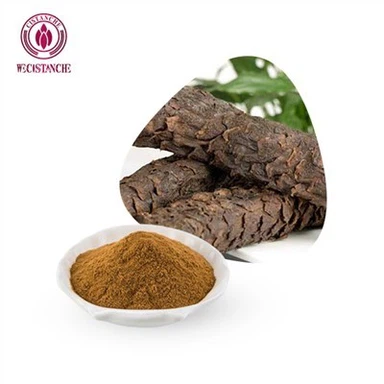
Irregular shapes such as spindle-like, flat spindle-like, or flat column-shaped, often twisted, with a length of 2-25cm and a diameter of 2.6-9cm. The surface is reddish brown, brownish to dark brown. The fleshy scales arranged in a tiled pattern on the surface are dense in the upper half and sparse in the lower half, with many scales having broken off at the tips. Weight, hardness, lack of toughness, difficulty to break, granular cross-section, mostly gray-brown, and some outer rings appear as black hard glial-like. There are numerous black-brown dotted vascular bundles, irregularly scattered, and some with small cracks.

Cistanche deserticola
2, Taste
Slight breath, taste sweet and slightly bitter in the mouth.
3, Origin
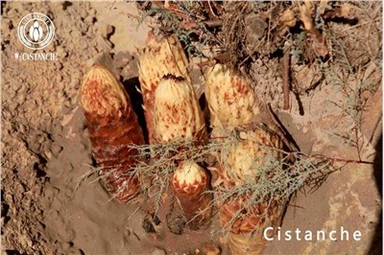
The Tubular Cistanche is naturally distributed in the Taklamakan Desert and its surrounding areas in southern Xinjiang, with the Tubular Cistanche from its native Hetian being an outstanding representative. Due to unique biological code constraints and strict requirements for ecological and natural climate conditions, Hotan in Xinjiang is most suitable for the natural growth of Cistanche deserticola. The Tubular Cistanche growing in Hotan, whether grown naturally or artificially, has a content of effective functional components that is 5 to 10 times higher than that of Desert Cistanche.
4, Planting techniques
The large-scale tube flower Cistanche planted in Hotan is managed and managed by professional institutions. The GAP breeding base implements strict field management for tube flower Cistanche, and hires third-party professional institutions to strictly monitor the atmospheric environment, soil, and water quality of the base in real time; Technicians use natural enemies of pests or moderate artificial pest control, so their is no need to apply chemical insecticides; The base also keeps detailed records of the planting of each tube flower Cistanche, and each plant can be directly traced back to the person responsible for planting;
In addition, the water source for irrigation on the farm comes from the pure snow water of the Kunlun Mountains, which is rich in minerals, vitamins, and trace organic matter, allowing the Cistanche deserticola to absorb rich nutrients and create a unique and precious value.
5, Active ingredients:
So far, 75 compounds have been isolated from Cistanche deserticola, as follows:

Main Chemical Constituents of Cistanche deserticola
1. Phenylethanol glycosides
Phenylethanol glycosides are the main active ingredients in the fleshy stems of Cistanche plants. There are mainly two representative substances, one is quercetin and the other is piloside.
2. Cyclone ether terpenes and their glycosides
It is a white crystalline or amorphous powder with optical rotation and hygroscopicity. It has a bitter taste and is soluble in glacial acetic acid. A small amount of copper ions are added and heated, resulting in a blue reaction.

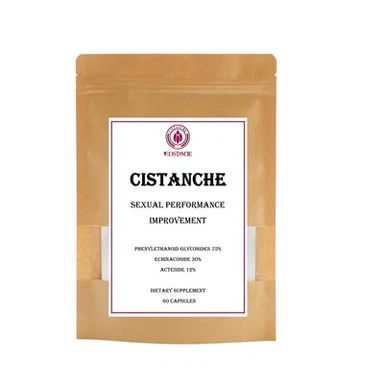
Phenylethanol glycoside is the main active component of Cistanche deserticola
3. Monoterpenes and their glycosides
At present, 7 monoterpenes and their glycosides have been isolated from plants of the genus Cistanche. Its effects have certain physiological activities, such as expectorant, cough relieving, windward, sweating, deworming, and analgesic. In the production of spices, essential oils containing terpenes and their derivatives are widely used.
4. Lignan and its glycoside compounds
Lignan and its glycoside compounds are present in plants and belong to a type of plant estrogen. They have the functions of clearing free radicals in the body and antioxidation. At present, 2 lignans and 14 lignan glycosides, including lignans and their glycoside compounds, have been isolated from plants of the genus Cistanche. They can bind to estrogen receptors and interfere with cancer-promoting effects. Therefore, it may prevent and regulate breast cancer, prostate cancer, and colon cancer.
5. Carbohydrates and their derivatives
Carbohydrates, also known as carbohydrates, are a collective term for polyhydroxy aldehydes or polyhydroxy ketones, their condensates, and certain derivatives. They are generally composed of three elements: carbon, hydrogen, and oxygen, and are widely distributed in nature. Carbohydrates are important nutrients for the human body, mainly divided into four categories: monosaccharides, disaccharides, oligosaccharides, and polysaccharides, which play important roles in daily life. At present, research has mainly focused on the polysaccharide components in Cistanche deserticola, and 13 polysaccharide components have been isolated.
6, Extraction technology
Guanhua Cistanche is also the only Cistanche species that has been separated into multiple effective components through membrane separation technology. Hetian Dichen Company has isolated the main effective ingredients, such as echinoside, piloside, and phenylethanol glycoside, from Cistanche deserticola through membrane separation technology. Their chemical components have multiple effects such as protecting the liver and relieving alcohol, improving reproductive health, antioxidation, enhancing memory, and delaying aging. They have also applied for a patent (CN101041677) and passed the scientific and technological achievement appraisal of Xinjiang Uygur Autonomous Region.
7, Four taboos for Cistanche deserticola:

Click here to view Cistanche deserticola tea products
【Ask for more】 Email:cindy.xue@wecistanche.com / Whats App: 0086 18599088692 / Wechat: 1859908869
1. People with yin deficiency and excessive fire should not eat Guanhua Cistanche. Guanhua Cistanche itself nourishes kidney yang, and people with yin deficiency and excessive fire are characterized by yang excess and yin deficiency. If Cistanche is used to supplement yang, yin deficiency, and yang excess will be more severe.
2. Metal objects should be avoided in Cistanche deserticola. Guanhua Cistanche cannot be soaked in water or wine with iron or copper utensils, as these metal objects absorb the nutrients of Guanhua Cistanche, causing it to lose its nutritional value. It's best to use a glass to soak the food Cistanche.
3. Friends under the age of 18 are advised not to consume Cistanche deserticola. One of the functions of Cistanche deserticola is to nourish the kidneys and strengthen the yang. For underage friends, their physical and mental development is still in the developmental stage and they are not fully mature. At this time, consuming Cistanche deserticola has a certain impact on the development of various aspects of the body.
4. Women are advised not to consume Cistanche deserticola during their menstrual period. Normally, it can be consumed in moderation, but menstruation, is a period of discharge of some waste substances in the female body. It is not recommended to consume Cistanche deserticola to avoid unnecessary problems.