If Parkinson's Disease Patients Do These 8 Things Early, The Disease Will Not Be Easy To Develop And Aggravate!
Apr 18, 2022
Parkinson's disease is a disease with slow progression and aggravation. After diagnosis, patients need lifelong treatment. During this long treatment process, a correct treatment direction and reasonable medication habits are crucial for Parkinson's patients, then What problems should patients with Parkinson's disease pay attention to in the process of medication?
Patients with Parkinson's disease should do the following 8 things:

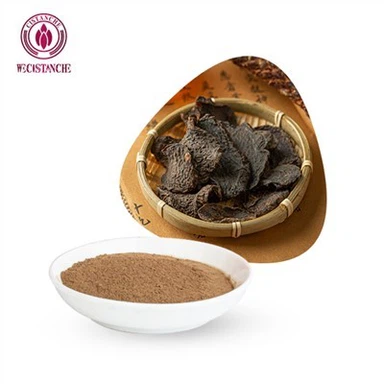
Click to cistanche deserticola supplement and Cistanche dosage for Parkinson's disease
1. The initial stage of Parkinson's patients is mainly tremors, which have not affected their life at this time, and considering that long-term use of Parkinson's drugs will cause switching and end-of-dose phenomena, it is very difficult for patients to seek medical treatment in time. At present, there are data showing that the earlier the symptoms are detected and the earlier the treatment, the better the effect. It has been clinically proven that patients who started taking medication within 1 to 3 years after the onset of the disease were significantly better than those who started taking medication 4 to 6 years after the onset of the disease in terms of self-care ability, and acting ability, and quality of life. In addition, early treatment can also reduce the cost of treatment by delaying the progression of the disease, because the cost of advanced Parkinson's disease treatment is far greater than the cost of early and mid-term treatment.
2. Regarding the issue of prescribing medicine, if it is not convenient for the patient to go to the hospital to prescribe medicine in person, you can ask family members or children to take your medical records and go to the hospital to find a doctor to prescribe medicine, but pay attention to protection, measure body temperature, wear a mask to avoid Stop where people gather.

3. If it is really inconvenient to go out, you can contact the doctor through online consultation and mail the medicine for treatment. Do not reduce the medicine without authorization, which may cause the aggravation of symptoms.
4. Many patients with Parkinson's disease often take medopa or Sine-like other drugs after meals, and the final effect is often not good, thinking that the drug is wrong. Even many neurologists don't know how to take it. In fact, it should be taken about half an hour before meals, so as to avoid high protein after meals inhibiting the absorption of dopa.
5. In addition, many people also believe that if you have a chronic disease, you need to "make up for it". Often patients take high-protein foods such as turtles while taking dopa preparations. As a result, the patient not only did not become strong, but the disease recurred and the symptoms worsened. Parkinson's disease itself has no taboos, and the diet should be arranged according to the principle of a balanced diet.
6. Homecare for Parkinson's patient's Special attention should be paid to Parkinson's patients with mastication and swallowing dysfunction. Sitting is appropriate when eating, and foods that are easy to chew, easy to swallow, high in nutrition, and high in fiber should be selected. Recall the swallowing steps before eating. Allow him to swallow excess saliva during meals and move food around with his tongue while chewing. Eat less at a time, eat slowly, drink water after meals, and swallow the remaining food to prevent aspiration pneumonia.

7. Patients with Parkinson's disease generally take levodopa drugs. This drug has a characteristic: it will combine with protein in food and affect absorption. Therefore, taking the drug must be separated from the time of eating meat and dairy products. For example, the protein components in milk have a certain influence on the absorption of levodopa drugs, which will reduce their efficacy, so it is recommended to drink milk before going to bed at night.
8. In addition, it is recommended to use vegetable oil to cook food. As for cereals, vegetables, fruits, and other foods, they have less effect on levodopa and can be eaten with confidence.
Now the medical treatment of Parkinson's disease has made great progress and has an irreplaceable status, but there are also many drawbacks. In the long-term practice of traditional Chinese medicine, it has accumulated rich experience in the treatment of Parkinson's disease. How correctly understanding the status, function, and characteristics of traditional Chinese medicine in the treatment of Parkinson's disease will be conducive to the organic combination of the two medical methods and improve the therapeutic effect.
Traditional Chinese medicine has a long history, broad content, and is a subject with the theoretical, scientific, and clinical applications; this subject has far-reaching influence on the world, and now Western countries have recognized the scientific and practical value of traditional Chinese medicine, and established licensing systems and The examination system shows that traditional Chinese medicine in the motherland is effective and reliable in the treatment of diseases.

Echinacoside in Cistanche can improve the behavioral defects of MPTP-induced PD model mice, increase the striatal dopamine (DA) metabolite 3,4-dihydroxypheny lacetic acid (3,4-dihydroxypheny lacetic acid, DOPAC), and high Vanillic acid (homovanillic acid, HVA) content significantly inhibits the apoptosis of cerebellar granule neurons caused by the activation of caspase-3 and caspase-8; reduces the overexpression of biliverdin reductase B in the brain of Parkinson's patients, suggesting Echinacoside may reduce the increase of biliverdin reductase B caused by oxidative stress through its anti-oxidative stress effect, and protect dopaminergic neurons from oxidative stress damage. Its neuroprotective mechanism may be similar to that of bile Decreased levels of chlorophyll reductase B are related; to the reduction of dopaminergic neurons and dopamine transporters in the substantia nigra of the brain of patients with Parkinson's disease, and can enhance neurotrophic factor [neurotrophic factor, NTF. brain-derived neurotrophic factor, BDNF) and nerves The activity and protein expression level of glial cell line-derived neurotrophic factor (GDNF) derived from the glial cell line can reduce the ratio of mRNA and protein in apoptosis and Bax/Bcl-2. In addition, echinacoside can significantly increase the content of dopamine, DOPAC, and HVA in the extracellular fluid of the striatum of patients with Parkinson's disease.
for more information:ali.ma@wecistanche.com