Immunomodulatory Factors in Cistanche Salsa
Mar 05, 2022
Contact: Audrey Hu Whatsapp/hp: 0086 13880143964 Email: audrey.hu@wecistanche.com
Shinjiro MARUYAMA," Koji YAMADA, Hirofumi TACHIBANA
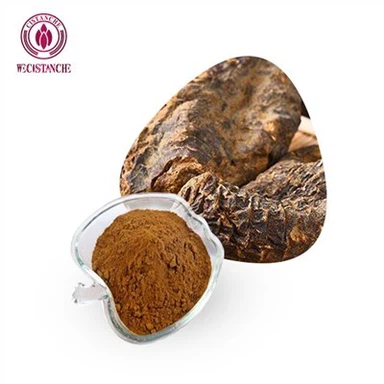
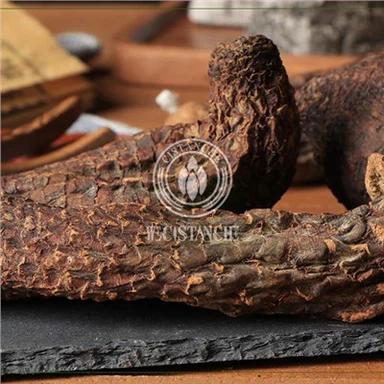
Cistanche salsa (C.A.Mever) G.Beck, Orobanchaceae is a parasitic plant that is used as an oriental medicinal tonic in Japan. In our previous study, we found that C, salsa extract enhanced the production of both IgM and IgG in human Ivmph node lymphocytes. Furthermore, C, salsa dialysate (CSD)prepared using a dialysis membrane with an a3.500-Da molecular weight cut-off enhanced IgM production in the human B-cell line BALL-1; in addition, it induced slight cell proliferation. However, in contrast, CSD induced growth inhibition accompanied by apoptosis in the human Burkitt's lymphoma cell line Namalwa. These results indicate the possible presence of active constituents in CSD that are specific to lymphocytes, Thus far, the chemical properties of these constituents have not been elucidated. In this study, we investigated the chemical properties of the active constituents in CSD. Both the abovementioned activities in B-cell lines were not inactivated by autoclave treatment of CSD. Using gel filtration column chromatography, we found that the peaks of the active fractions were concentrated in different fractions. Our results suggest that there are at least 2 types of active constituents in CSD, and they may be polysaccharides since they are water-soluble high molecular weight constituents and thermostable.
Keywords: Cistanche salsa, high molecular weight, IgM, growth inhibition.

Introduction
Cistanche salsa(C.A. Meyer) G.Beck, Orobanchaceae is a parasitic plant that is used as an oriental medicinal tonic in Japan. In China, this plant is an important traditional medicine used for the treatment of kidney deficiency and neurasthenia. Through in vitro studies, we have already reported the effects of C. salsa on the immune system. First. we demonstrated that C. salsa extract enhanced the production of IgM and IgG in human lymph node lymphocytes. Second, we showed that C. salsa dialysate(CSD)prepared using a 3,500-Da molecular weight cut-off dialysis mem-brane enhanced IgM production in the human B-cell line BALL-1; in addition, it induced cell proliferation to a small extent.2Furthermore, CSD has an opposite effect whereby it induces growth inhibition accompanied by apoptosis in the human Burkitt's lymphoma cell line, Namalwa.3)These findings suggested that this effect of CSD was related to the activation of B cells, while the apoptosis resulted from the lack of other signals that are required for B-cell differentiation, such as cytokines and cell-cell contact; however, the chemical properties of CSD were not elucidated in any of the previous studies. Therefore, in this study, we investigated the chemical properties of the active constituents in CSD.
Materials and Methods
CSD was prepared by the same method in our previous study. CSD was dissolved in phosphate-buffered saline (PBS)at 20 mg/ml. The prepared solution(0.8 ml) was passed through a filter(0.22 um)before application and then eluted with the same solution through columns contain-ing TOYOPEARL HW-40F(1.0×96.5 cm; Tosoh Corp, Japan),TOYOPEARL HW-55F(1.0 × 98.0 cm; Tosoh Corp.,Japan), and Sephacryl S-400HR(1.0×98.0 cm; GE Healthcare UK Ltd.,.England); and 1 ml(30 drops) fractions were then collected. To determine the void volume of the gels and the approximate molecular weight (MW) of the fractionated constituents, blue dextran (BD)(Sigma-Aldrich Japan K.K., Japan); and dextrans of known MW obtained from Leuconostoc spp.(Sigma-Aldrich Japan K.K.,Japan), i.e.of MW2,000kDa(D1),500kDa(D2),70 kDa (D3)and 6 kDa (D4); and cyanocobalamin (VB12, MW:1355.4)(Wako Pure Chemical Industries Ltd.,Japan) were used. The total sugar and protein contents of each fraction were determined using the phenol-sulphuric acid method and the Lowry method with the PIERCETM bicinchoninic acids (BCA) protein assay kit (Thermo Fisher Scientific Inc., USA), respectively. Glucose and bovine serum albumin were used as respective standards. Further, the absorbance at 320nm(A:2o)of each fraction was measured. The elution peaks of blue dextran and cyanocobalamin were determined by their absorbance value at 260 nm, and the peaks of dextrans of known MW were determined using the phenol-sulphuric acid method.CSD was autoclaved at 120℃ for 20 min to assess its thermostability. In bioassays, cell culture and measurement of IgM were done by the same method in our previous study.

Cistanche salsa extract
Results and Discussion
Figure 1 shows the gel filtration column chromatograms of CSD on HW-40F. From Figure la, the MW of the active constituents was estimated to be more than 6 kDa based on the dextran marker D4. Furthermore, both the CSD activities,i.e. enhancing IgM production and inducing growth inhibition, were not inactivated by autoclave treatment(Figure 2), although some constituents aggregated and were lost after CSD was passed through the 0.22-um filter. The elution patterns of CSD and the autoclaved CSD were almost identical, however, the relative activity of enhancing IgM production in the autoclaved CSD was lower than non-treated CSD. Some of the reasons seem that the aggregates held the active constituents or some of the active constituents were inactivated. The results of chromatography on HW-55F showed the possible presence of 2 types of immunomodulatory factors: the first, concentrated in fr. no.32. was a high-molecular-weight active constituent (HCS)that could enhance IgM production, while the second, concentrated in fr. no.50, was a middle-molecular-weight active constituent (MCS)that could inhibit cell proliferation (Figure 3). However, the peaks obtained for both HCS and MCS(fr.no.32 and 50 respectively) were not as sharp as those of the dextrans of known MW(data not shown). These observations indicate the possibility of there being by-products artificially generated during CSD preparation, polymers of active constituents that are easily destroyed and comprise multiple units, or various active constituents that have different original MWs. The elution patterns on the chromatograms show that it is not easy to obtain pure constituents from HCS and MCS since there seem to be various constituents that have slightly different MWs as mentioned above. Although both are mixtures of active constituents, it appears that HCS comprises constituents of MW exceeding 70 kDa, while MCS comprises those of MW exceeding 6 kDa. HCS was eluted on HW-55F in a fraction that was beyond the separation range. On Sephacryl-S400.a part of HCS(fr.no.36) was eluted in the same fraction as the D1 marker, which is of MW 2,000 kDa (Figure 4). In general, polysaccharides and proteins are taken into account as water-soluble high MW constituents in plant extracts. Since almost all functional proteins are inactivated by heat treatment, they seem to be polysaccharides. However, Park et. al. have reported the thermostable cytotoxic small protein called viscotoxin, which is prepared from mistletoe (Viscum album L., Viscaceae)extract.4Furthermore, viscotoxins have been shown to enhance the immunomodulatory activity of human natural killer cells.5In Figure 3, the MCS, which has a lower MW, shows higher content of protein. Considering these facts, the MCS may be protein-bound polysaccharide8or might be a thermostable protein like the viscotoxins. These results show that the 2 active constituents may be polysaccharides. Otherwise, the MCS might be thermostable proteins.

References
1) Deng, M., Zhao, J.Y., Ju, X.D., Tu, P.F, Jiang, Y., Li, Z.B.: Protective effect of tubuloside B on TNF alpha-induced apoptosis in neuronal cells.Acta Pharmacol. Sin.,25, 1276-1284,2004.
2) Maruyama, S., Yamada, K., Tachibana, H.:Cistanche salsa extract enhanced IgM production in the human B cell line, BALL-1.J. Trad. Med.,24,209-211,2007.
3) Maruyama, S., Yamada, K., Tachibana, H: Cistanche salsa extract induced apoptosis in the human Burkitt's lymphoma cell line Namalwa. J.Trad. Med.,25,24-27,2008.
4) Park. JH,Hyun, C.K.,Shin H.K: Cytotoxic effects of the components in heat-treated mistletoe(Viscum album).Cancer Let, 139, 207-213,1999.
5) Tabasco, J., Pont, F, Fournic, J.J, Vercellone, A.: Mistletoe viscotoxins increase natural killer cell-mediated cytotoxicity. Eur.J. Biochem.,269,2591-2600, 2002.
6) Fisher, M., Yang, L.X.: Anticancer effects and mechanisms of poly saccharide-K (PSK): implications of cancer immunotherapy.Anticancer Res.,22,1737-1754,2002.

cistanche supplements