Innovation In Traditional Chinese Medicine And The Inheritance Of Medical Principles Based On The Theory Of Four Properties And Five Flavors
Sep 03, 2026
ZHANG Kaiyuan¹˒², NI Xiaochen¹˒², WANG Chuhang¹˒², GUO Jianing¹˒², FAN Wei¹˒², JIANG Tao¹˒²˒³, ZHANG Guangji¹˒²˒³
(¹ Zhejiang Chinese Medical University, Hangzhou 310053, China;
² Zhejiang Key Laboratory of "Blood-Stasis-Toxin" Syndrome, Hangzhou 310053, China;
³ Traditional Chinese Medicine "Preventing Disease" Wisdom Health Project Research Center of Zhejiang, Hangzhou 310053, China)
Abstract
Traditional Chinese medicine (TCM) has a profound historical lineage. One of its most enduring frameworks is differentiation based on the "four properties and five flavors", which has been preserved for centuries. The four properties-cold, hot, warm, and cool-are used to correct imbalances of yin and yang. The five flavors-sour, bitter, sweet, pungent, and salty-are believed to act on specific organ systems and generate therapeutic effects. Together, they form a cornerstone of herbal pharmacology and an organizing framework for TCM syndrome differentiation and treatment.
Modern TCM development, influenced by Western pharmacology, often focuses on isolating chemical compounds and studying molecular mechanisms of single ingredients. While this approach can be highly effective for precise treatment of specific diseases, it often overlooks traditional principles such as holism and compound synergy, making it difficult to demonstrate the systemic and synergistic effects of classical herbal formulas. As a result, traditional theories of the "four properties and five flavors" are weakening, and research and application of TCM's overall pharmacology face significant challenges.
This paper traces the origins of the "four properties and five flavors," compares traditional theory with modern science, analyzes current dilemmas in TCM development, and explores a pathway that integrates heritage with innovation-aiming to open new prospects for the future development of TCM.
Keywords: Four properties and five flavors; Traditional Chinese medicine; Compound formulas; Single ingredients; Natural botanical medicine; Pharmacology; Synergy
1. Why "Four Properties and Five Flavors" Matters (A Gentle Introduction for Western Readers)
TCM embodies a philosophical view that emphasizes the unity between humans and nature and the pursuit of dynamic balance-often described as yin–yang equilibrium.
In classical TCM, the clinical effect of an herb is not described only by "active ingredients." Instead, it is understood through pattern-based treatment grounded in the differentiation of four properties and five flavors:
Four properties (四气): cold, hot, warm, cool
Five flavors (五味): sour, bitter, sweet, pungent (acrid), salty
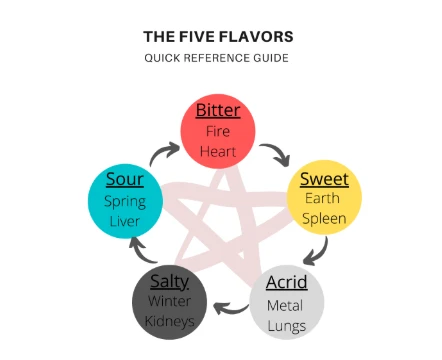
In practice, these attributes are considered alongside other organizing principles such as ascending/descending, floating/sinking, meridian entry (organ-channel tropism), and formula compatibility-all working together to dispel pathogenic factors and restore balance.
The classic text Huangdi Neijing (Su Wen) states:
"Pungent and sweet disperse and promote-this is yang; sour and bitter drain and purge-this is yin." 111
This statement is often treated as a纲领 (guiding principle) of four properties and five flavors, and a distilled expression of classical medical thinking 222.
However, much of modern herbal product development has leaned toward isolating single compounds and validating them via pharmacological experiments-sometimes at the expense of understanding the full profile of herbal nature and formula synergy. Artemisinin (from Artemisia annua, qinghao) is a well-known success story, yet it also illustrates a limitation: artemisinin represents an extraordinary anti-malarial component, but it does not automatically convey the broader TCM understanding of qinghao as bitter in flavor, cold in nature, capable of "clearing deficiency heat" and addressing "steaming bone fever" patterns-nor does it capture the richness of compound formula compatibility.
"Natural botanical medicines" and "Chinese materia medica" share plant origins, but their research philosophies and application pathways can be very different:
Natural botanical medicine (as typically developed in modern pharma/nutraceutical contexts) often prioritizes chemical molecules, isolates single active constituents, and validates effects through target-based mechanisms.
TCM herbs, guided by four properties and five flavors, emphasize system-level regulation, multi-component synergy, and formula compatibility to modulate yin–yang and functional organ systems.
For this reason, this article traces the origins of four properties and five flavors, clarifies today's practical dilemmas, and proposes a path of "守正创新"-preserving core principles while innovating with modern science.
2. Current Dilemmas: Applying "Four Properties and Five Flavors" in Modern TCM Development
2.1 Over-standardization Around Single Compounds Can Ignore the Whole-Herb Effect
Standardization aims to ensure consistent quality and stable clinical outcomes. In real-world practice, however, modern pharmaceutical-style standardization often focuses on quantifying one or a few chemical markers, which may conflict with the holistic and dynamic characteristics emphasized by the theory of four properties and five flavors.
The discovery of artemisinin is a model of combining tradition with modern science. In the Eastern Jin dynasty, Ge Hong recorded a method for treating malaria using qinghao in Zhouhou Beiji Fang. Inspired by that record, Tu Youyou's team used low-temperature extraction and isolated artemisinin. Its powerful anti-malarial effect has saved millions worldwide 333. Yet the extraction of artemisinin reveals only part of qinghao's therapeutic potential.
Modern research often centers on artemisinin's molecular structure and pharmacology, while classical theory describes qinghao more broadly: bitter (and sometimes noted as slightly pungent), cold in nature, entering the Liver and Gallbladder meridians, clearing deficiency heat and alleviating "bone steaming." Artemisinin is highly effective for malaria, but it cannot replace qinghao's multi-faceted role in pattern-based treatment or its value inside formulas. This example highlights the gap between single-compound research and TCM's holistic approach.
2.2 Divergence-and Possible Integration-Between Natural Botanical Medicine and TCM
Both natural botanical medicines and TCM originate from medicinal plants and produce therapeutic effects through bioactive constituents (for example: berberine, artemisinin, elemene). Both emphasize efficacy and safety. But because their research and application pathways differ, they often play different roles.
Natural botanical medicine is typically guided by modern pharmacology and molecular biology. It emphasizes purification and isolation of single active components and uses target validation to achieve precise treatment. Artemisinin's development follows this path and does not necessarily reflect qinghao's holistic nature or formula roles in TCM theory.
Similarly, berberine is used to treat infectious or inflammation-related conditions and fits the botanical medicine paradigm via identifiable antimicrobial targets, but this can detach it from the broader TCM therapeutic profile of Coptis (Huanglian) as "clearing heat, drying dampness, draining fire, and resolving toxicity." Elemene, extracted from Curcuma (often associated with zedoary in Chinese contexts), has been developed into modern formulations such as liposomes for tumor therapy; its research trajectory is largely separated from classical TCM theory and is often categorized as botanical drug development rather than TCM practice.
By contrast, TCM is grounded in the theory of four properties and five flavors, highlighting meridian entry, holistic regulation, and compatibility rules. For example, Huanglian is bitter and cold, often used with Huangqin and Huangbai to enhance "clearing heat and drying dampness." Qinghao appears in the classic formula Qinghao Biejia Tang, combined with Biejia and Digupi to clear deficiency heat and relieve "bone steaming," demonstrating the systemic effectiveness of formulas.
Research objectives differ as well. Botanical medicine often prioritizes standardization and quantification, sometimes overlooking how processing methods (paozhi) and compatibility can modulate herbal properties. TCM emphasizes dynamic balance and multi-target synergy through formulas.
3. Origins and Evolution of the "Four Properties and Five Flavors" Theory
3.1 Classical Roots in the Medical Canon
The theory begins in Su Wen: Xuanming Wuqì, which states:
"The five flavors enter the five zang organs: sour enters the Liver, bitter enters the Heart, sweet enters the Spleen, pungent enters the Lung, salty enters the Kidney." 111
Each flavor is associated with certain functional tendencies-such as astringing, draining, moderating, dispersing, or softening-and is used to regulate yin–yang balance.
The four properties-cold, hot, warm, cool-are used to regulate yin and yang: cold/cool belong to yin; warm/hot belong to yang. Yin–yang is considered the foundational principle of nature and human physiology, and herbal effects are understood within this framework.
Shennong Bencao Jing inherited this theoretical tradition. It classified medicines into upper, middle, and lower grades, listed 365 substances, and described their four properties, five flavors, and functions 444. Examples include: gypsum as bitter and cold, clearing heat; cinnamon twig as pungent and warm, warming and unblocking channels; Coptis as bitter and cold, draining fire and drying dampness. This laid the foundation of Chinese materia medica for later generations.

3.2 Interpretation and Development by Physicians Across Dynasties
Zhang Zhongjing of the Eastern Han dynasty applied these ideas in Shang Han Lun, establishing six-channel pattern differentiation. Using formulas such as Guizhi Tang and Baihu Tang, he combined pungent-sweet-warm dispersing strategies with bitter-cold clearing strategies to treat externally contracted cold–heat mechanisms.
The Song dynasty text Taiping Huimin Hejiju Fang collected many formulas and used compound compatibility to correct extremes of qi and flavor, enhancing efficacy. Li Shizhen's Bencao Gangmu in the Ming dynasty further systematized four properties and five flavors and explained: "Medicines have偏性 (directional bias); without bias, they cannot treat disease." 555 In this view, cold/hot/warm/cool and sour/bitter/pungent/sweet are fundamental expressions of herbal action. Zhang Jingyue also wrote: "When medicines are used, their effect must correspond to their nature; nature is the manifestation of yin and yang." 666
Over a thousand years of practice, four properties and five flavors not only guided formula compatibility but also integrated into theories of yin–yang and five phases, zang–fu organs, and meridians, forming a systematic approach to syndrome differentiation and treatment. With the modern introduction of Western medicine, however, traditional theoretical systems have sometimes been simplified, and continuity of classical frameworks has been challenged.
3.3 Reconstructing an Efficacy Evaluation System Centered on Four Properties and Five Flavors
The theory of four properties and five flavors is a core foundation of TCM, guiding clinical herb selection and formula design. Yet in modern development, many single compounds and effective constituents derived from TCM are evaluated mainly within a modern biomedical framework that emphasizes pharmacology and clinical medicine outcomes. These compounds often become products of modern pharmacology detached from the guidance of four properties and five flavors, reflecting a form of discontinuity between inheritance and innovation.
While this approach provides precise treatment tools, it can restrict the full expression of TCM's holistic efficacy and syndrome differentiation advantages. Therefore, future modernization should protect traditional essence while integrating modern technology, rebuilding a multi-dimensional efficacy evaluation system centered on four properties and five flavors. Such a system may include:
Chemical material basis layer: use chromatography, mass spectrometry, and related tools to characterize signature constituent groups, not only a single "active" molecule.
Biological effect layer: evaluate the overall influence of herbs/formulas on relevant physiological and pathological processes using molecular biology and related methods.
Clinical efficacy layer: design outcomes based on TCM syndrome indicators and integrate modern medical endpoints for comprehensive assessment.
Compatibility (formula synergy) layer: use network pharmacology and other approaches to explore how formula compatibility affects outcomes.
Evaluation should integrate experimental and clinical data, apply data mining and AI to build predictive models, and establish correlation assessment from material basis to holistic effects. With clinical data-sharing platforms, datasets can be integrated to dynamically improve the system. Traditional processing (paozhi) should be respected for its theoretical value, and a "theory–clinic–evidence" feedback mechanism can be formed through coordinated clinical and research efforts-providing scientific support for standardization and advancing synergy between TCM theory and modern application.

4. A "Four Properties and Five Flavors" Lens on Research Into Active Constituents
4.1 The Tension Between Molecular Reductionism and Holism
TCM efficacy is grounded in holism and compatibility: "monarch, minister, assistant, courier" roles in formulas, and the harmony of qi and flavor. This cannot be fully replaced by a single herb or a single compound. Modern pharmacology, dominated by reductionism, emphasizes purification and isolation at the molecular level and may neglect holistic principles and compatibility rules-leading to disconnection between theory and practice.
Many single constituents derived from TCM are applied clinically mainly under modern medical guidance and do not embody TCM characteristics. Consider Huanglian Jiedu Tang (Coptis, Scutellaria, Phellodendron, Gardenia): four bitter-cold herbs work synergistically to clear heat and resolve toxicity. Extracting only berberine may preserve antimicrobial/anti-inflammatory activity but isolates it from the formula's synergy. Mahuang Tang combines Ephedra (pungent-warm, promotes sweating), Cinnamon twig (supports yang, unblocks), Apricot kernel (supports lung qi and relieves wheezing), and Licorice (harmonizes). Extracting only ephedrine cannot reflect the multi-target synergy. In TCM thinking, efficacy emerges from unity among multi-component synergy, meridian entry, and compatibility.
Modern science can explain parts of pharmacological action, but it remains difficult to fully reconstruct overall herbal nature, flavor characteristics, and dynamic regulation.
4.2 The Scientific Substance of "Formula Holism"
In recent years, research on the material basis of formula efficacy has grown. Network pharmacology and multi-omics technologies increasingly suggest that formula effects result from multi-component, multi-target, multi-pathway actions.
Compatibility embodies classical principles: formulas address multi-dimensional mechanisms and match the body's systemic regulatory patterns. Research indicates, for example, that synergy between Ephedra and Cinnamon twig can influence thermoregulation via the sympathetic nervous system 777; pairing Scutellaria with Coptis may provide complementary regulation of inflammatory signaling pathways and enhance "clearing heat and resolving toxicity" 888.
The effectiveness of TCM lies in systemic integration, not in a simple summary of molecular targets. Ignoring four properties and five flavors and departing from compatibility rules-while allowing reductionism to dominate-risks distorting herbal nature and breaking the continuity of medical principles. By studying formula synergy, modern research can provide evidence supporting four properties and five flavors and demonstrate the contemporary value of TCM holism.
4.3 Unifying "Four Properties and Five Flavors" With the Material Basis of Efficacy
Four properties and five flavors are not merely abstract labels; they can be interpreted as concentrated expressions of an herb's internal material basis and efficacy tendencies. Modern research suggests that these attributes arise from the integrated effects of chemical constituents and their biological impacts.
Studies indicate that cold/cool herbs often contain alkaloids and flavonoids and may clear heat by modulating inflammatory factors 999. Warm/hot herbs may contain volatile oils and phenylpropanoids and can promote metabolism and support yang 101010. The functions of flavors also correlate with chemical foundations:
Sour: organic acids, tannins → astringing and securing
Bitter: rich in alkaloids → drying dampness, draining fire
Sweet: sugars, triterpenoid saponins → tonifying qi, strengthening digestion, relieving spasm/pain, harmonizing properties
Pungent: volatile oils → dispersing and exterior-releasing
Salty: inorganic salts, polysaccharides → softening hardness and dispersing nodules 111111
Electronic nose and electronic tongue technologies can quantify taste-related chemical perception and help link flavors to constituents 121212. Metabolomics research indicates that sugars and volatile oils not only shape taste but may also influence cold–hot attributes 131313. Thus, "taste" is not only a sensory experience; it can reflect physiological effects triggered by constituents.
4.4 Modern Technology as a Partial "Reconstruction" of Four Properties and Five Flavors
Network pharmacology, molecular docking, and computational simulations are increasingly used in TCM research to support classical theory. For example, network pharmacology may illustrate synergy in Mahuang Tang between ephedra alkaloids (promoting sweating and supporting yang) and cinnamon twig (warming and unblocking) 141414. Computational approaches may predict constituent profiles associated with cold–hot tendencies: Coptis alkaloids as heat-clearing, cinnamon aldehydes as warming and unblocking.
Volatile oils associated with pungency can stimulate olfactory receptors, reflecting dispersing tendencies; activation of bitter receptors may relate to inflammation modulation and provide a modern "echo" of bitter flavor functions 151515.
Modern technology is strong at quantifying material bases, revealing synergy, and enhancing prediction. Yet because it often relies on reductionism and focuses on single components or targets, it may neglect holism, formula synergy, and dynamic regulation. Therefore, an integrated approach is needed: explain mechanisms while preserving the advantages of holistic, pattern-based practice-supporting the "preserve-and-innovate" development of four properties and five flavors.
5. Conclusion (Key Takeaways for Developers of TCM Products and Natural Supplements)
This discussion highlights both conflict and integration between traditional theory and modern science in TCM development. Modern development often emphasizes isolating single constituents and pharmacological validation, which can succeed in precise treatment but can weaken TCM's systemic and formula-based strengths.
The development of botanical products such as artemisinin and berberine may originate from TCM yet often becomes detached from the guiding framework of four properties and five flavors, limiting visibility of whole-herb, dynamic regulation and the value of compound compatibility.
Although natural botanical medicines and TCM share material foundations, their research philosophies differ: the former emphasizes standardization and quantification, whereas the latter values flavor/nature, meridian entry, and multi-dimensional regulation. Looking forward, TCM modernization should protect core principles while integrating modern technologies, reconstructing an efficacy evaluation system centered on four properties and five flavors to enable coordinated innovation between theory and practice.
References (Complete, as Provided)
111 Anonymous. Huangdi Neijing Suwen. Beijing: People's Medical Publishing House, 2012.
222 Zhao Yu, Qu Yi. Research on the application of five-flavor compatibility in classical formulas under the concept of medicine–food homology. China Journal of Traditional Chinese Medicine and Pharmacy, 2024, 39(11): 6207–6210.
333 Chi Li, Wang Manyuan. On the modernization evolution of TCM: the modern research course of Artemisia annua (qinghao). Engineering Studies: Interdisciplinary Perspectives, 2023, 15(1): 32–40.
444 Ma Jixing. Shennong Bencao Jing Jizhu. Beijing: People's Medical Publishing House, 1995: 178–179.
555 Li Shizhen. Bencao Gangmu. Beijing: Chemical Industry Press, 2022: 576.
666 Zhang Jiebin. Jingyue Quanshu. Beijing: People's Medical Publishing House, 1991: 231–235.
777 Ni Qinghua, Li Chunhui, Yang Jujie, et al. Network pharmacology study on key components and synergistic mechanisms of the Mahuang–Guizhi herb pair in treating bronchitis. Chinese Traditional Patent Medicine, 2021, 43(1): 246–254.
888 Huang Xiaoying, Yue Rensong, Zhang Boxun, et al. Effects of Scutellaria–Coptis decoction on the TLR4/NF-κB inflammatory signaling pathway in the liver of type 2 diabetic rats. China Journal of Traditional Chinese Medicine and Pharmacy, 2022, 37(3): 1672–1675.
999 Gu Jianjun, Jia Lilong, Li Ran, et al. Preliminary exploration of the material basis of the five flavors in Chinese materia medica. Shandong Journal of Traditional Chinese Medicine, 2011, 30(6): 422–424.
101010 Fang Jinmiao, Du Wuxun. Research on the material basis of the four properties and five flavors in Chinese materia medica. Journal of Liaoning University of Traditional Chinese Medicine, 2015, 17(12): 66–68.
111111 Liu Yangxi. Quantitative characterization of the five flavors of Chinese materia medica and research on their material basis. Wuhan: South-Central Minzu University, 2018.
121212 Sheng Liang. Detecting the common material basis of pharmacological effects in Chinese and Western medicines using electronic nose and electronic tongue. Modern Journal of Integrated Traditional Chinese and Western Medicine, 2008, 17(18): 2778–2780.
131313 Huang Liping, Zhou Rong, Meng Xiaofang, et al. Effects of the cold-natured Chinese herb Scutellaria (Huangqin) on energy metabolism in rats. Chinese Medicinal Materials, 2010, 33(4): 575–577.
141414 Lai Feifei, Sun Zhizhong, Huang Yongzhi, et al. Exploring the mechanism of Mahuang in treating childhood asthma based on network pharmacology. Journal of Liaoning University of Traditional Chinese Medicine, 2019, 21(11): 211–217.
151515 Long Wei. Application of "computational TCM" in studies of herbal properties and compound formulas. Beijing: Peking Union Medical College, 2011.