Insufficient Liver Blood Triggers An Alarm! Can Cistanche Deserticola Become Your Liver Protector And Savior?
May 23, 2025
Liver blood deficiency: a silent alarm from the body
Have you often experienced in life that when you suddenly stand up, your eyes turn black and you feel dizzy and disoriented; It's hard to fall asleep after tossing and turning at night, even if you fall asleep, you still have endless dreams; My eyes are always dry and uncomfortable, and I can't see things as clearly as before; My fingers sometimes tremble inexplicably, making it difficult to hold things steadily; Female friends may also find that their menstrual flow has decreased and their cycles are irregular. If these situations occur frequently, you have to be careful. Perhaps your body is quietly telling you that your liver blood is insufficient.
Liver blood deficiency, in traditional Chinese medicine theory, refers to insufficient blood stored in the liver, which cannot fully nourish various organs and tissues of the body, leading to a series of discomfort symptoms. The liver plays an extremely important role in the human body, as it stores blood and acts as a 'blood reserve'. It not only stores blood, but also regulates blood volume, delivering it to the appropriate parts of the body when needed. Once the liver's blood is insufficient, this "reserve pool" will be depleted, and the body will be like a machine that has lost sufficient nutrients, with various components starting to malfunction.

Cistanche male benefits- Maintaining the liver
Typical symptoms of liver blood deficiency
Insufficient liver blood is like an "invisible crisis" in the body, and its symptoms involve multiple aspects of the body. Let's take a detailed look below.
(1) Protests from the Head and Eyes
When there is insufficient liver blood, the most obvious discomfort is in the head and eyes. The liver blood cannot fully reach the head and face, and the brain does not receive sufficient blood nourishment, which can easily lead to symptoms of dizziness and vertigo, just like the feeling of spinning and spinning when suddenly standing up. In severe cases, it can even affect normal walking and standing. At the same time, the complexion will become pale and lifeless, losing the rosy luster of health. And the eyes, as the external manifestation organ of the liver, "the liver opens its orifices to the eyes". Once the liver blood is deficient, the eyes will not receive sufficient nutrients. The eyes seem to have lost their moist nourishment, becoming extremely dry and unclear, like being covered in a layer of fog. In severe cases, night blindness can even occur, making it difficult to see in low-light environments.

Effects of Cistanche Treatment of Climacteric Syndrome
(2) Abnormal signals in limbs and joints
The liver is located in the body, and the tendons are in addition to the nails. Insufficient liver blood and inadequate nourishment of muscles and meridians can lead to symptoms of numbness and tremors in the limbs. You may find that your fingers and toes tremble slightly unintentionally, and you are not very stable when using chopsticks or writing; Or when walking, there may be a slight spasm in the legs, feeling unable to stretch straight and having limited mobility. And nails will also become dry, brittle, dull, easy to break, and no longer as tough and smooth as when healthy, all of which are signals sent by insufficient liver blood to limbs and joints.
(3) Women's unique 'health crisis'
For women, insufficient liver blood has a particularly significant impact on menstruation. In traditional Chinese medicine, it is said that 'women are born with the liver'. Liver blood is the material basis of menstruation, and the fullness of the blood sea depends on the adequacy of liver blood. When the liver blood is insufficient, the blood sea becomes empty, the menstrual flow decreases, and the color becomes lighter, no longer the normal dark red color. In severe cases, amenorrhea may even occur, which can have a great impact on women's reproductive health and endocrine system, and may also lead to other gynecological diseases in the long run.

Effects of Cistanche
(4) The 'Chain Reaction' of Emotions and Sleep
Insufficient liver blood can also affect mood and sleep. The liver hides the soul, and blood can nourish the soul. When the liver blood is insufficient, the soul is restless, and people are prone to insomnia and frequent dreams. They may find it difficult to fall asleep by tossing and turning in bed at night. Even if they finally fall asleep, they will be entangled by various dreams and feel exhausted when they wake up. At the same time, insufficient liver blood can lead to a loss of liver qi, which can easily cause emotional problems such as irritability, anxiety, and depression. Even a small matter can cause significant emotional fluctuations, making it difficult to control one's temper and seriously affecting quality of life and interpersonal relationships.
Cistanche deserticola: a liver-protecting treasure in the desert?
After understanding the symptoms of liver blood deficiency, we turned our attention to a mysterious desert plant - Cistanche deserticola, which has attracted much attention in the field of health preservation. So, can it nourish and protect the liver? Let's unveil the mysterious veil of Cistanche deserticola together.

Chinese herb cistanche
(1) Get to know Cistanche deserticola
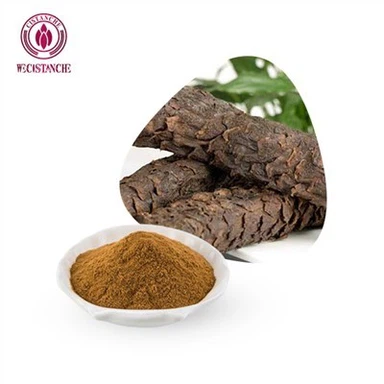
Cistanche deserticola, a parasitic plant that parasitizes the roots of the desert tree Salix, is known as the "Desert Ginseng" and is a precious traditional Chinese medicinal herb. It is mainly distributed in the desert areas of Inner Mongolia, Ningxia, Gansu, Xinjiang, and other places in China, and tenaciously roots and grows in that vast, arid, and hot desert environment. From the appearance, Cistanche deserticola appears as a flattened, cylindrical shape, slightly curved, measuring 3-15 centimeters in length and 2-8 centimeters in diameter. Its surface is brown or grayish brown, densely covered with tile-shaped, arranged fleshy scales, resembling a treasure wrapped in layers. Its texture is hard and not easy to break, with a brown cross-section and light brown dotted vascular bundles arranged in wavy rings. Its unique structure seems to tell the story of the years it has experienced in the desert. In ancient times, Cistanche deserticola was regarded as a nourishing delicacy, often used to regulate the body and enhance physical fitness. Its medicinal value has been highly praised by medical practitioners throughout history.
(2) The hepatoprotective secret of Cistanche deserticola

Benefits of Cistanche tubulosa- Maintaining the liver
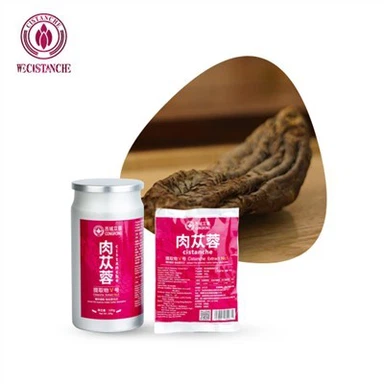
Click here to view Cistanche deserticola liver protection products
【Ask for more】 Email:cindy.xue@wecistanche.com / WhatsApp: 0086 18599088692 / Wechat: 18599088692
The reason why Cistanche deserticola is considered to have a protective effect on the liver is due to its rich chemical composition. Modern research has found that Cistanche deserticola contains various active ingredients such as total phenylethanolic glycosides, polysaccharides, flavonoids, etc. These ingredients act as "health guardians" and play an important role in protecting the liver. Among them, total phenylethanolic acid glycosides can alleviate liver damage and promote the regeneration of liver cells, just like injecting a new force into injured liver cells to help them restore vitality; Polysaccharides can enhance the antioxidant capacity of the liver, alleviate oxidative stress damage to the liver, and establish a strong antioxidant defense line around the liver to resist the invasion of harmful substances such as free radicals; Flavonoids have anti-inflammatory effects, which can inhibit liver inflammation, alleviate the inflammatory state of the liver, and allow the liver to work in a relatively "calm" environment.
(3) Clinical and research evidence
More and more studies and clinical cases provide strong evidence for the hepatoprotective effect of Cistanche deserticola. Related experimental studies have shown that feeding carnivorous Cistanche deserticola extract to experimental animals significantly improves their liver function indicators, reduces the degree of liver tissue damage, and enhances the regenerative ability of liver cells. In clinical applications, for some patients with alcoholic liver disease and chronic hepatitis, in addition to conventional treatment, the use of Cistanche deserticola for auxiliary regulation can reduce liver function indicators such as alanine aminotransferase and aspartate aminotransferase, alleviate liver inflammation, and improve physical condition to a certain extent. For example, a hospital conducted a three-month observation on a group of patients with alcoholic liver disease. While receiving routine treatment, the patients were also given Cistanche deserticola preparations. The results showed that the liver function indicators of most patients gradually tended to be normal, and symptoms such as fatigue and loss of appetite also decreased. This fully demonstrates the potential value of Cistanche deserticola in liver protection.
Guidelines and Taboos for the Use of Cistanche deserticola
(1) Correct consumption method
There are various ways to consume Cistanche deserticola, each of which allows us to fully absorb its nutrients. Brewing tea is the most convenient way. Cut 3-5 grams of Cistanche deserticola into thin slices, put them in a cup, brew with boiling water that has just been boiled, then cover the cup and let it steep for 10-15 minutes. This will allow the effective ingredients of Cistanche deserticola to be fully released into the water. When the water temperature drops slightly, it can be consumed and brewed repeatedly until the taste becomes lighter. This method is suitable for busy office workers, who can easily enjoy the nourishment brought by Cistanche deserticola during work breaks.
Boiling soup can integrate the nutrients of Cistanche deserticola into the soup, bringing health to the whole family. Taking Cistanche deserticola and pig bone soup as an example, prepare 500g of pig bones, 30g of Cistanche deserticola, 20g of wolfberry, 20g of Chinese yam, 15g of Codonopsis pilosula, 15g of lotus seeds, and 20g of goji berries. First, wash the Cistanche deserticola. If the texture of the Cistanche deserticola is hard, it can be cut into large pieces with a knife. Wash and blanch the pig bones to remove blood and impurities. Put all the ingredients together in a pot, add an appropriate amount of water, bring to a boil over high heat, then reduce the heat and simmer for 2-3 hours until the meat bones are crispy and the soup is rich. Finally, add an appropriate amount of salt to season. The soup stewed in this way not only tastes delicious, but also has the effects of tonifying the kidneys, promoting yang, and nourishing essence and blood, making it suitable for nourishing the bodies of family members on cold winter days.
Soaking wine is also a common way of consumption, which can perfectly combine the medicinal value of Cistanche deserticola with the richness of the wine. Prepare a clean glass bottle with 30g Cistanche deserticola and 1000 mL high Baijiu. First, wash and dry Cistanche deserticola, cut it into small pieces or thin slices, put it into a glass bottle, pour Baijiu, and ensure that Cistanche deserticola is completely immersed in the liquor. Tighten the bottle cap and place it in a cool and dry place, avoiding direct sunlight. Gently shake the bottle once a day to allow the Cistanche deserticola to come into full contact with the wine. After soaking for 2-4 weeks, the color of the wine gradually darkens, and it is now ready to be consumed. Drinking 15-30 milliliters each time, 1-2 times a day, can not only enjoy the pleasure of slight drunkenness, but also achieve the goal of health and wellness.
(2) Attention should be paid to taboo groups
Although Cistanche deserticola is good, it is not suitable for everyone, and special attention should be paid to the following groups of people. Pregnant women should avoid using Cistanche deserticola, as it has certain medicinal properties that may have adverse effects on fetal development. For the health of the fetus, contact with Cistanche deserticola should be avoided during pregnancy. People with yin deficiency and excessive fire should not use Cistanche deserticola. Those with yin deficiency and excessive fire have a deficiency of yin essence in their body, resulting in excessive fire. Cistanche deserticola, on the other hand, has a warm nature and can further aggravate the body's fire, leading to symptoms such as restlessness in the five hearts, dry mouth and tongue, and night sweats, which are not conducive to the recovery of the body. Diarrhea sufferers should also use it with caution. Cistanche deserticola has the effect of moistening the intestines and promoting bowel movements. After taking it, diarrhea patients may experience worsening diarrhea symptoms, leading to even weaker bodies. In addition, it is not suitable for people with constipation caused by excessive heat to consume Cistanche deserticola. Excessive heat constipation is caused by the accumulation of excess heat in the body, and the warming and nourishing properties of Cistanche deserticola may exacerbate the symptoms of excessive heat and worsen constipation. People who are prone to allergies should also be cautious before consuming Cistanche deserticola, as certain components contained in Cistanche deserticola may become allergens, causing allergic reactions such as skin itching, rash, shortness of breath, etc. If you are unsure whether you are allergic to Cistanche deserticola, you can try a small amount first, observe your body's reaction, and then decide whether to continue consuming it.
Caring for the liver, starting from daily life
(1) Dietary regulation

Superman herbs cistanche
Diet plays a crucial role in nourishing and protecting the liver, and a reasonable diet is like injecting a continuous stream of vitality into the liver. Spinach, as a "star ingredient" for nourishing the liver, is like a glimmer of vitality in spring, bringing nourishment to the liver. It has a sweet taste and a mild nature. It belongs to the liver, stomach, and large intestine meridians, and can nourish yin, calm the liver, promote digestion, and relieve heat toxicity. From a nutritional perspective, spinach is rich in nutrients such as carotenoids, vitamin C, and vitamin K, which are beneficial for preventing eye diseases such as dry eye syndrome, macular degeneration, and cataracts. It can also promote intestinal peristalsis and prevent constipation. Recommend a simple and delicious dish of spinach mixed with peanuts. Wash and blanch the spinach, then remove it from the water and set it aside in cold water. Stir-fry the peanuts until cooked and crushed, then stir-fry fry sesame paste in sesame oil. Add salt, vinegar, and mustard oil, mix well, and sprinkle with crushed peanuts on top of the spinach. After the peanuts are cooked, consume them to protect the liver. Paired with spinach, the liver protection effect is even better.
Duck blood is also a great product for nourishing the liver. It has a neutral nature and is rich in nutrients, which can nourish the liver blood and treat anemia. In a moderate amount of chives, bean sprouts, duck blood, and ginger in a chives, bean sprouts, and duck blood soup, chives and bean sprouts are beneficial for relieving liver qi, while duck blood replenishes blood and moistens dryness. It is also rich in heme iron, low-fat, and can improve iron deficiency anemia. It is a liver-nourishing soup suitable for spring consumption.
Black sesame is also not to be underestimated. It is rich in lecithin, which can break down liver fat, and vitamin E can fight against free radical damage. Eating a spoonful of black sesame walnut powder on an empty stomach in the morning, matching it with a ratio of 2:1, or drinking a cup of five black soybean milk (black sesame+black beans+black rice+mulberry+black wolfberry), can add points for liver health. However, it should be noted that individuals with chronic enteritis are advised to consume small amounts multiple times.
(2) Daily routine
Regular sleep patterns are the cornerstone of nourishing the liver and blood, just like building a strong defense line for the liver. Traditional Chinese medicine believes that the liver's detoxification and repair functions are most active at night. Going to bed early and getting up early to ensure sufficient sleep can provide the liver with sufficient rest and nourishment. At night, as we enter a sweet dreamland, various organs of the body begin to self-repair, and the liver embarks on a busy 'detoxification journey'. At this point, sufficient blood flows to the liver, providing it with the nutrients needed for repair and metabolism, like injecting a clear spring into a tired liver to restore its vitality. If you stay up late for a long time, the liver cannot complete detoxification and repair work normally. Toxins accumulate in the body, which will increase the burden on the liver and affect the generation and storage of liver blood, leading to problems such as insufficient liver blood. Therefore, developing the good habit of going to bed early and getting up early, ensuring 7-8 hours of high-quality sleep every day, can safeguard the health of the liver, allowing the liver to better function in storing blood and regulating blood volume, and maintain the normal operation of the body.
(3) Moderate exercise
Moderate exercise is like injecting a source of vitality into the liver, which can promote blood circulation, enhance the liver's detoxification ability, and help the liver better metabolize and excrete waste. Walking is a simple and easy way of exercise. In the morning or evening, taking a stroll on the paths in the park, breathing fresh air, walking lightly and rhythmically, for 30-60 minutes each time, can make the body slightly sweat, promote blood circulation, and reduce the burden on the liver.
Tai Chi and Ba Duan Jin are treasures in traditional health exercises, with slow and gentle movements that emphasize the coordination of breathing and movement. When practicing Tai Chi, all parts of the body are exercised, and each move is synchronized, resulting in a stable breath and relaxation of the body and mind. It can effectively relieve stress and reduce the tension in the liver. Practicing the Eight Section Brocade, each movement contains wisdom for health preservation. Techniques such as using both hands to support the celestial body's three burners and opening the bow left and right like shooting an eagle can promote the circulation of qi and blood in the liver and enhance its function through stretching, twisting, and other movements. It is recommended to practice Tai Chi or Baduanjin 3-5 times a week for 30-45 minutes each time, allowing the liver to radiate vitality during exercise. During exercise, it is also necessary to gradually increase the intensity and duration of the exercise according to one's physical condition and exercise ability, and avoid overexertion, to achieve the best effect of nourishing and protecting the liver.
Insufficient liver blood can cause various discomforts to our body, from dizziness, dry eyes, limb numbness, menstrual disorders, to abnormal emotions and sleep. These symptoms remind us to pay attention to liver health. As a traditional and precious Chinese medicinal herb, Cistanche deserticola has demonstrated unique value in nourishing and protecting the liver with its rich active ingredients, providing us with a natural choice for caring for the liver.
In daily life, we should cultivate good habits and take comprehensive care of the liver from aspects such as diet, daily routine, and exercise. In terms of diet, consume more liver nourishing foods such as spinach, duck blood, and black sesame to supplement nutrients for the liver; In terms of daily routine, go to bed early and wake up early to give the liver sufficient rest time; In terms of exercise, moderate walking, Tai Chi, Ba Duan Jin and other exercises can promote the circulation of qi and blood in the liver. At the same time, regular physical examinations should be conducted to timely understand the health status of the liver. If you find yourself with symptoms of insufficient liver blood, do not blindly take medication on your own. Seek medical attention promptly and receive treatment under the guidance of a professional doctor to maintain the health of our liver, provide solid support for the normal operation of the body, and enjoy a healthy and beautiful life.