Intestinal Permeability And Depression In Patients With Inflammatory Bowel DiseaseⅡ
Dec 20, 2023
3. Results
Thirty participants were involved in the study, presenting a balanced gender ratio. Of these, 40% of the participants were diagnosed with Crohn's disease (CD) and 60% with ulcerative colitis (UC). There was an increased frequency of cases in the age category 30–40 years, 40–50 years, and 50–60 years (Table 1).

3.1. Socioeconomic Conditions of the Studied Group
Considering civil status, several 20 (66.6%) married people participated in this study, and 10 (33.3%) were unmarried participants. Most of the participants (76.6%) lived in an urban area, and less than a quarter (23.3%) lived in a rural area. The educational level showed that 56.6 % graduated from university, 20% graduated from high school and 23.3 % had other forms of education. Of the participants, 56.6% were full-time or part-time employees, and 43.3% of the participants benefited from various forms of social support (Table 1).

Click to constipation treatment
A high percentage (70%) of the participants found it difficult to comply with the recommended treatment, and only 30% of the patients easily followed the recommended diet. Almost half of the participants (46.6 %) performed minimal or no physical activity at all, while the rest (53.3 %) were engaged in regular physical activity for at least 30 min per day. Concerning consumption habits, 26.6% of the participants declared themselves as smokers and 73.3% as nonsmokers; 33.3% of the participants stated they did not consume alcohol, while more than half (66.6%) stated they consumed alcohol (Table 1).
3.2. Central Tendency and Dispersion in Patients' Health Score, Quality of Life and Biomarkers
For the PHQ-9 score, the median value was 6.50, with a maximum value of 16 and a minimum value of 0 (Table 1). A total of two (7%) participants had moderate–severe depression, five (17%) participants had moderate depression, and 10 (33%) participants had mild depression. For 13 (43%) participants, depression was absent or minimal. The median EQ-5D score was 80.00, with a maximum value of 100 and a minimum value of 45 (Table 2). Quality of life was assessed between the intervals 40 and 49 by one patient (3.33%), between 50 and –59 by three patients (10%), and between 60 and 69 by only one patient (3.33%) again, while for the interval 70–79, there were eight patients (26.67) that fitted, for 80–89 there were six patients (20%) and for 90–99 there were eight patients (26.67%). Only three patients (10%) assessed their quality of life to a score of 100.

For calprotectin, the median value was 149.64 ug/g, with a maximum value of 330.21 and a minimum value of 2.80 ug/g. The LBP median value was 42.00 ng/mL, with a maximum value of 49.41 and a minimum value of 35.14 ng/mL. In zonulin, the median value was 32.94 ng/mL, with a maximum value of 37.84 and a minimum value of 19.23 ng/mL. In IFABP/FABP2, the median value was 0.87 ng/mL, with a maximum value of 3.00 and a minimum value of 0.35 ng/mL (Table 2).

3.3. Correlations between Patients' Health Score and Biomarkers
A Spearman's rank-order correlation was performed to determine the relationship between PHQ-9 score and calprotectin (ug/g), LBP (ng/mL), zonulin (ng/mL), IFABP/FABP2 (ng/mL) and EQ-5D. There was a moderate, positive correlation between PHQ-9 score and calprotectin (ug/g) that was statistically significant (rs(30) = 0.416, p = 0.022, Table 3, Figure 1a), and a moderate, positive correlation between PHQ-9 score and LBP (ng/mL) that was also statistically significant (rs(30) = 0.398, p = 0.029, Table 3, Figure 1b).

Between the PHQ-9 score and EQ-5D, we identified a weak, negative correlation that was statistically significant (rs(30) = −0.372, p = 0.043). No statistically significant correlation was found between PHQ-9 score and zonulin (ng/mL) (rs(30) = 0.016, p = 0.934) or between PHQ-9 score and IFABP/FABP2 (ng/mL) (rs(30) = −0.059, p = 0.755).

Natural Herbal Medicine For Relieving Constipation-Cistanche
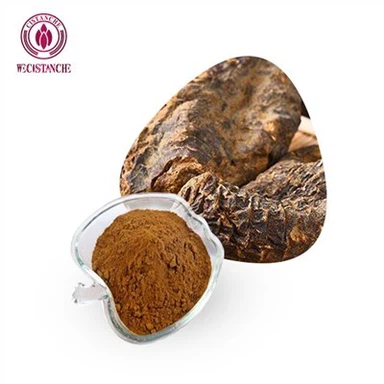
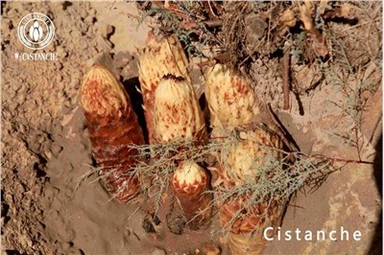
Cistanche is a genus of parasitic plants that belongs to the family Orobanchaceae. These plants are known for their medicinal properties and have been used in Traditional Chinese Medicine (TCM) for centuries. Cistanche species are predominantly found in arid and desert regions of China, Mongolia, and other parts of Central Asia. Cistanche plants are characterized by their fleshy, yellowish stems and are highly valued for their potential health benefits. In TCM, Cistanche is believed to have tonic properties and is commonly used to nourish the kidney, enhance vitality, and support sexual function. It is also used to address issues related to aging, fatigue, and overall well-being. While Cistanche has a long history of use in traditional medicine, scientific research on its efficacy and safety is ongoing and limited. However, it is known to contain various bioactive compounds such as phenylethanoid glycosides, iridoids, lignans, and polysaccharides, which may contribute to its medicinal effects.

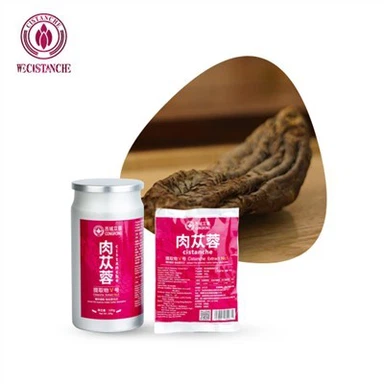
Wecistanche's cistanche powder, cistanche tablets, cistanche capsules, and other products are developed using desert cistanche as raw materials, all of which have a good effect on relieving constipation. The specific mechanism is as follows: Cistanche is believed to have potential benefits for relieving constipation based on its traditional use and certain compounds it contains. While scientific research specifically on Cistanche's effect on constipation is limited, it is thought to have multiple mechanisms that may contribute to its potential to relieve constipation. Laxative Effect: Cistanche has long been used in Traditional Chinese Medicine as a remedy for constipation. It is believed to have a mild laxative effect, which can help promote bowel movements and induce constipation. This effect may be attributed to various compounds in Cistanche, such as phenylethanoid glycosides and polysaccharides. Moistening the Intestines: Based on traditional use, Cistanche is considered to have moisturizing properties, specifically targeting the Intestines. Promoting hydration and lubrication of the Intestines may help soften tools and facilitate easier passage, thereby relieving constipation. Anti-inflammatory Effect: Constipation can sometimes be associated with inflammation in the digestive tract. Cistanche contains certain compounds, including phenylethanoid glycosides and lignans, that are believed to have anti-inflammatory properties. By reducing inflammation in the intestines, it may help improve bowel movement regularity and relieve constipation.