

Ishophloroglucin A Isolated From Ishige Okamurae Suppresses Melanogenesis Induced By α-MSH: In Vitro And In Vivo Part 2
Apr 03, 2023
3. Discussion
The compound DPHC isolated from IOE already had reported tyrosinase inhibitory activity and protective effect against UV-B radiation-induced cell damage in vitro [8]; however, the anti-melanogenesis effect of the components derived from IOE in silico by interaction with tyrosinase, in vivo in phenotype studies in animal models, and their underlying molecular mechanisms, have not yet been examined. In the present study, we determined the anti-melanogenesis and tyrosinase inhibitory activities of IPA, a phlorotannin isolated from IO and IOE, in a vertebrate model of zebrafish in vivo and in B16F10 melanoma cells in vitro, after induction with α-MSH.
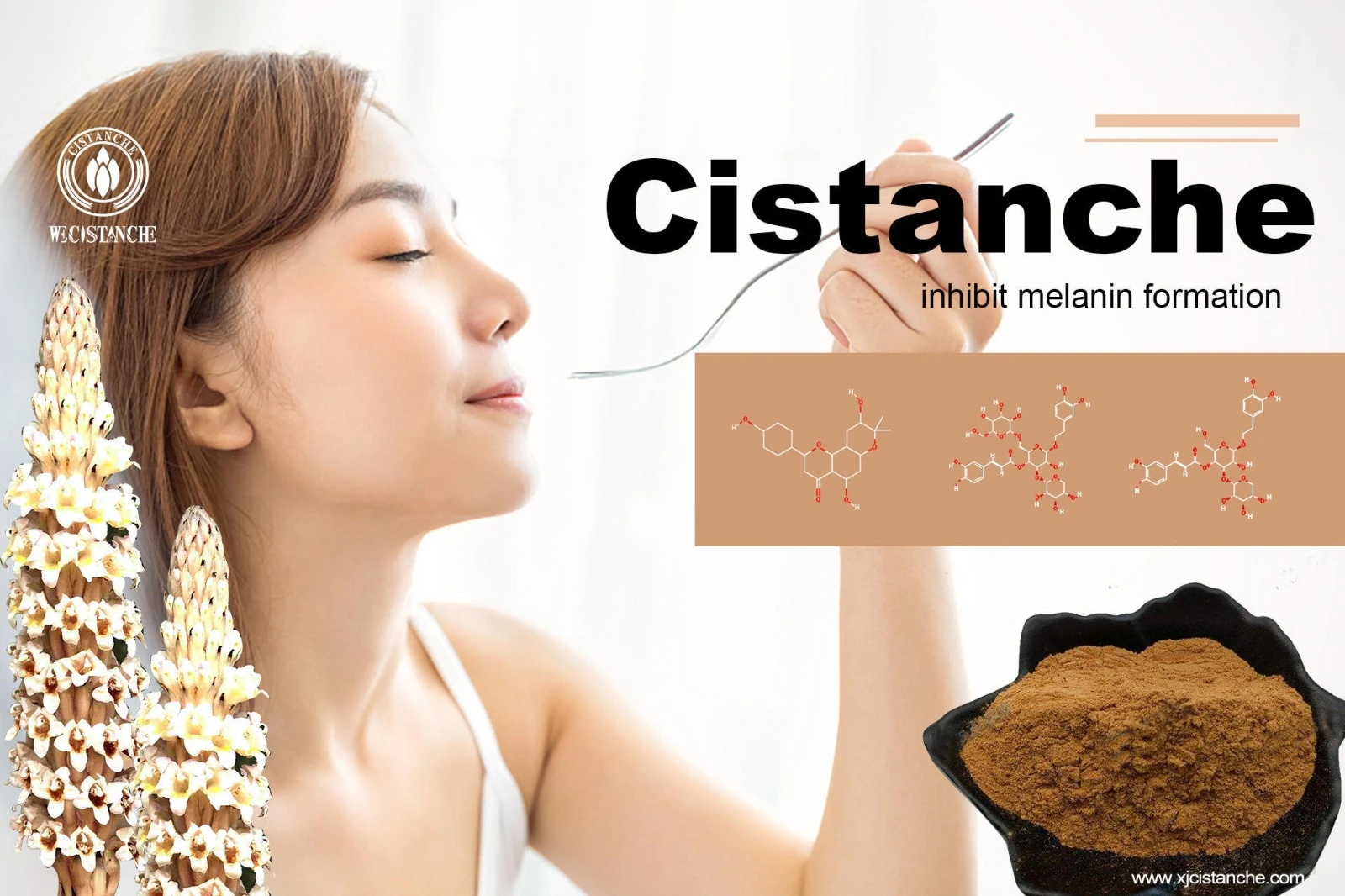
cistanche has the function of promoting collagen production, which can increase the elasticity and luster of the skin and help repair damaged skin cells. Cistanche Phenylethanol Glycosides have a significant down-regulating effect on tyrosinase activity, and the effect on tyrosinase is shown to be competitive and reversible inhibition, which can provide a scientific basis for developing and utilizing the whitening ingredients in Cistanche. Therefore, cistanche has a key role in skin whitening. It can inhibit melanin production to reduce discoloration and dullness; and promote collagen production to improve skin elasticity and radiance. Due to the widespread recognition of these effects of cistanche, many skin whitening products have begun to infuse herbal ingredients such as Cistanche to meet consumer demand, thus increasing the commercial value of Cistanche in skin whitening products. In summary, the role of cistanche in skin whitening is crucial. Its antioxidant effect and collagen-producing effect can reduce discoloration and dullness, improve skin elasticity and luster, and thus achieve a whitening effect. Also, the wide application of Cistanche in skin whitening products demonstrates that its role in commercial value cannot be underestimated.
Click on Where Can I Buy Cistanche
Ask for more:
david.deng@wecistanche.com WhatApp:86 13632399501
Treatment with α-MSH is known to induce melanin synthesis and tyrosinase activity [20]. In addition, tyrosinase has been demonstrated to be essential for melanogenesis [29]. Previous studies have shown that molecular docking can be used to evaluate tyrosinase inhibitory activity [30,31]. Thus, molecular docking calculations were performed to understand the binding model of IPA and DPHC, a known polyphenol isolated from IO, which has revealed higher binding energy in anti-melanogenesis activity than arbutin, as a positive control. According to the results (Figure 1), IPA revealed the lowest docking scores, which indicated that the interaction of IPA with the target protein tyrosinase was stronger than the other two compounds, DPHC, and arbutin. However, there is a limitation in correlating the inhibition of mushroom tyrosinase activity with that of cellular tyrosinase or melanin production in cultured melanocytes [32]. Thus, the inhibitory effects of IPA on tyrosinase activity and melanogenesis were examined in a zebrafish in vivo model and murine B16F10 melanoma cells.
Melanin pigments accumulate on the surface of zebrafish, allowing microscopic observation of the pigmentation process without complicated experimental procedures, making them a suitable model for screening melanogenesis inhibitors [33,34]. We evaluated the melanin inhibitory effects of IPA and IOE in a zebrafish larva model stimulated by α-MSH through melanin content determination. All the tested samples exerted profound inhibitory effects on zebrafish pigmentation with no signifificant toxicity (Figure S2). The inhibitory effects of pigmentation were observed via morphological analysis of zebrafish larvae related to the different treatments (Figure 2). In addition, the use of early-stage larvae rather than the adult stage provides another advantage in testing the percutaneous effects of medicinal or cosmetic compounds [33,35]. In this case, we chose α-MSH as an inducer both in zebrafish in vivo and in B16F10 melanoma cells in vitro. According to both results in zebrafish embryos and B16F10 melanoma cells, the melanin content increased by α-MSH stimulation.
Melanin content correlates directly with the activity and protein levels of tyrosinase [36]. Therefore, we determined the inhibitory effects of IPA and IOE on the tyrosinase activity induced by α-MSH on B16F10 cells. We found that the IPA-treated group had a decreased tyrosinase activity and melanin content stimulated by α-MSH, with a reduction of approximately 35% tyrosinase activity and 40% melanin content (Figure 4A, C). IOE inhibited the activity of tyrosinase in a dose-dependent manner and significantly decreased melanogenesis in B16F10 cells (Figure 4B, D). Compared with arbutin, IPA and IOE have signifificant inhibitory effects on melanin production and tyrosinase activity, which was to the results of previous molecular docking studies.
To investigate the mechanism of the inhibitory effects on α-MSH-induced melanin synthesis in cells, Western blotting was performed. The expression levels of melanin-related proteins, including ERK, JNK, and p38, following treatment with IPA or IOE, were evaluated. Activated phosphorylation of ERK can promote the degradation of MITF via the ubiquitin–proteasome-dependent pathway [28]. This suggests that potential melanogenesis inhibitors may suppress melanin synthesis by promoting the proteasomal degradation of MITF, which was related to the activation of the ERK signaling pathways [37]. The ERK, JNK, and p38 MAPKs belong to the MAPK family [38–40]. In addition, activation of the p38 MAPK pathway induced MITF expression [41]. In this study, Western blot analysis revealed that IPA promotes p-JNK and p-p38 (Figure 5B, C). In contrast, the levels of p-ERK did not change with the treatment of IPA and IOE (Figure 5A). These results imply that the inhibitory effects of IPA and IOE on tyrosinase activity and melanogenesis may be related to the JNK and p38 signaling pathways.
4. Materials and Methods
4.1. Chemicals and Reagents

Dimethylsulfoxide (DMSO), 3-(4,5-dimethylthiazol-2-yl)-2,5-diphenyltetrazolium bromide (MTT), L-DOPA, alpha-melanocyte stimulating hormone (α-MSH) and phosphate-buffered saline (PBS) were purchased from Sigma–Aldrich Chemical Co. (St. Louis, MO, USA). Dulbecco’s modified Eagle’s medium (DMEM) and fetal bovine serum (FBS) were obtained from Invitrogen–Gibco (Grand Island, NY, USA). The extracellular signal-regulated kinase (ERK1/2), phosphorylated ERK1/2 (p-ERK1/2), c-Jun N-terminal kinase (JNK), phosphorylated JNK (p-JNK), p38, phosphorylated p38 (p-p38), cAMP response element-binding protein (CREB), phosphorylated CREB (p-CREB), microphthalmia-associated transcription factor (MITF), tyrosinase-related protein-1 (Trp-2), tyrosinase-related protein-1 (Trp-1), tyrosinase (TYR), anti-mouse and anti-rabbit IgG antibodies were purchased from Cell Signaling Technology (Beverly, MA, USA). All other reagents, including α-MSH, were purchased from Sigma–Aldrich Chemical Co.
4.2. Molecular Docking of Tyrosinase
For the docking study, the crystal structure of tyrosinase (PDB: 3NM8) was obtained from the Protein Data Bank. The docking studies were performed using CDOCKER in Accelrys Discovery Studio 3.0 (Accelrys, Inc., San Diego, CA, USA). When a whole nucleotide sequence is covered by the receptor grid, ligands are presumed to select the best docking position [42]. The docking procedure was mentioned in the previous study. Briefly, three steps were followed: (1) conversion of the 2D structure into a 3D structure; (2) calculation of charges; and (3) addition of hydrogen atoms using the flexible docking program [31,43].
4.3. Preparation of IOE and Isolation of IPA
IO was harvested in June 2018 along the east coast of Jeju Island, Korea. The alga was washed twice with tap water to remove the salt, epiphytes, and sand attached to the surface. Next, it was carefully rinsed with fresh water and was maintained in a medical refrigerator at −20 ◦C. Thereafter, the frozen alga was lyophilized and homogenized with a grinder before extraction. The IOE was extracted in 50% ethanol (v/v, in water) under stirring for 24 h at room temperature, then it was filtered. The filtrate extract was concentrated under decompression and freeze-dried to powder (IOE). A 50% ethanol extract of IO was conducted by Shinwoo Co. Ltd. (Lot No. SW9E29SA, Gyeonggi-do, Korea). IPA was isolated from IOE as previously described [9]. Briefly, the IOE was fractionated using centrifugal partition chromatography. All fractions were collected and the IPA was eventually purified by a semi-preparative HPLC column (YMC-Pack ODS-A, 10 mm, 250 mm, 5 m). IPA was determined as a polyphenol and its chemical structure (Figure S1, Supplementary Materials) was identified via LC/MS analysis with a mass m/z of 992.1315, thus indicating a molecular formula of C96H66O48 (1986.26 of calculated molecular weight, ∆0.6, [M − 2H] 2−).
4.4. Origin and Maintenance of Parental Zebrafish
4.5. Measurement of Melanin Content in Zebrafish Larvae
IPA and IOE and stimulator α-MSH concentrations were used to examine the effects of concentration on embryo development. Fifteen zebrafish embryos (3–4 hpf) were seeded in each well, comprising 1.9 mL embryo medium, in a 12-well seeding plate. Test samples were dissolved in 1% DMSO with 1× PBS and mixed well. Every morning for the first 5 pdf, viable embryos were enumerated to obtain a survival measure. To determine the melanin content, embryos at 7–9 hpf were seeded into a 6-well plate with 30 embryos in each well into a 2.7-mL embryo medium. After 3 days, the larvae were rinsed twice with 1× PBS to remove any residual reagents or particles, and similar amounts of larvae were placed into the e-tubes. Before measuring the melanin content, several larvae of each group were captured with a microscope, and the remaining were centrifuged.
4.6. Cytoxicity of IPA and IOE in B16F10 Cells

4.7. Determination of Cellular Melanin Content
Cellular melanin content was measured using a previously described method [33]. The cells (2 × 10⁴ cells/mL) were incubated with various concentrations of IPA and IOE for 72 h; therefore, they were washed in ice-cold PBS. Briefly, the cells were incubated at 80 ◦C for 1 h in 1 mL of 1 N NaOH/10% DMSO and were then vortexed to solubilize the melanin: the absorbance was measured at 450 nm. The optical density of the inhibition in the control was considered to be 100%. The data are presented in the form of mean percentages and the results were repeated in triplicate.
4.8. Tyrosinase Inhibition Activity and Melanin Content Induced by α-MSH
Cellular tyrosinase activity was measured according to the previously reported method with slight modifications [33]. Briefly, the cells were cultured at 2 × 10⁴ cells/mL in 24-well plates.
4.9. Western Blot Analysis
4.10. Statistical Analysis
5. Conclusions

Supplementary Materials: The following are available online at the website, Figure S1. Structure of Ishophloroglucin A (IPA, A) and Diphlorethohydroxycarmalol (DPHC, B) isolated from Ishige Okamurae. Figure S2: Effffects of α-MSH and arbutin on the cell viability and melanin content of B16F10 melanoma cells. Cytotoxicity of α-MSH (A) and arbutin (B) in B16F10 melanoma cells. Cells were incubated with different concentrations of α-MSH 0.1, 0.3, 1, 3, and 10 nM) and arbutin (10, 30, 100, and 300 µM) for 72 h, and cell viability was determined by MTT assay. Results are normalized to control. Melanin contents of a group of α-MSH (C) and a group of arbutin (D) in B16F10 cells. After 72 h incubation, absorbance was measured at 450 nm. Melanin contents are expressed as percent values. The data are shown as means ±SD of independent experiments; ns, not signifificant; *p < 0.05, **p < 0.01, and ***p < 0.001 compared to no sample treated group.
Author Contributions: X.L. performed the main experiments, and data analysis and wrote the manuscript; J.-Y.O. performed formal analysis and validation; Y.J. isolated and provided the Ishophloroglucin A (IPA) and cellular activity; H.-W.Y. advised the validation experiment. Y.-J.J. and B.R. conceived the project and supervised the study. All authors have read and agreed to the published version of the manuscript.
Funding: This research was a part of the project titled ‘Development of functional food products with natural materials derived from marine resources (no. 20170285)’, funded by the Ministry of Oceans and Fisheries, Korea.
Conflicts of Interest: The authors declare no conflict of interest.
References
1. Athukorala, Y.; Lee, K.; Kim, S.-K.; Jeon, Y. Anticoagulant activity of marine green and brown algae collected from Jeju Island in Korea. Bioresour. Technol. 2007, 98, 1711–1716.
2. Kang, S.-M.; Heo, S.-J.; Kim, K.-N.; Lee, S.-H.; Jeon, Y.-J. Isolation and identification of new compound, 2, 7 ”-phloroglucinol-6, 60 -beckon from brown algae, Ecklonia cava, and its antioxidant effect. J. Funct. Foods 2012, 4, 158–166.
3. Heo, S.-J.; Yoon, W.-J.; Kim, K.-N.; Ahn, G.-N.; Kang, S.-M.; Kang, D.H.; Affffan, A.; Oh, C.; Jung, W.-K.; Jeon, Y.-J. Evaluation of the anti-inflammatory effect of fucoxanthin isolated from brown algae in lipopolysaccharide-stimulated RAW 264.7 macrophages. Food Chem. Toxicol. 2010, 48, 2045–2051.
4. Sanjeewa, K.; Lee, J.-S.; Kim, W.-S.; Jeon, Y.-J.; Sanjeewa, K.K.A. The potential of brown-algae polysaccharides for the development of anticancer agents: An update on anticancer effects reported for fucoidan and laminarin. Carbohydr. Polym. 2017, 177, 451–459.
5. Lee, S.-H.; Jeon, Y.-J. Anti-diabetic effects of brown algae-derived phlorotannins and marine polyphenols through diverse mechanisms. Fitoterapia 2013, 86, 129–136.
6. Kazir, M.; AbuHassira, Y.; Robin, A.; Nahor, O.; Luo, J.; Israel, A.; Golberg, A.; Livney, Y.D. Extraction of proteins from two marine macroalgae, Ulva sp., and Gracilaria sp., for food application, and evaluating digestibility, amino acid composition, and antioxidant properties of the protein concentrates. Food Hydrocoll. 2019, 87, 194–203.
7. Brunt, E.G.; Burgess, J.G. The promise of marine molecules as cosmetic active ingredients. Int. J. Cosmet. Sci. 2017, 40, 1–15.
8. Heo, S.-J.; Ko, S.-C.; Kang, S.-M.; Cha, S.-H.; Lee, S.-H.; Kang, D.-H.; Jung, W.-K.; Affffan, A.; Oh, C.; Jeon, Y.-J. Inhibitory effect of diphlorethohydroxycarmalol on melanogenesis and its protective effect against UV-B radiation-induced cell damage. Food Chem. Toxicol. 2010, 48, 1355–1361.
9. Ryu, B.; Jiang, Y.; Kim, H.-S.; Hyun, J.-M.; Lim, S.-B.; Li, Y.; Jeon, Y.-J. Ishophloroglucin A, a Novel Phlorotannin for Standardizing the Anti-α-Glucosidase Activity of Ishige Okamurae. Mar. Drugs 2018, 16, 436.
10. Morris, G.M.; Lim-Wilby, M. Molecular docking. In Molecular Modeling of Proteins; Springer: Berlin, Germany, 2008; pp. 365–382.
11. Ewing, T.J.; Makino, S.; Skillman, A.G.; Kuntz, I.D. DOCK 4.0: Search strategies for automated molecular docking of flexible molecule databases. J. Comput. Mol. Des. 2001, 15, 411–428.
12. Shoichet, B.K.; Kuntz, I.D.; Bodian, D.L. Molecular docking using shape descriptors. J. Comput. Chem. 1992, 13, 380–397.
13. Anantharaman, A.; Hemachandran, H.; Priya, R.R.; Sankari, M.; Mohan, S.; Palanisami, N.; Siva, R. Inhibitory effect of apocarotenoids on the activity of tyrosinase: Multi-spectroscopic and docking studies. J. Biosci. Bioeng. 2016, 121, 13–20.
14. Ali, A.; Ashraf, Z.; Kumar, N.; Rafifiq, M.; Jabeen, F.; Park, J.H.; Choi, K.H.; Lee, S.; Seo, S.-Y.; Choi, E.; et al. Influence of plasma-activated compounds on melanogenesis and tyrosinase activity. Sci. Rep. 2016, 6, 21779.
15. Ando, H.; Kondoh, H.; Ichihashi, M.; Hearing, V.J. Approaches to Identify Inhibitors of Melanin Biosynthesis via the Quality Control of Tyrosinase. J. Investig. Dermatol. 2007, 127, 751–761.
16. Roulier, B.; Pérès, B.; Haudecoeur, R. Advances in the Design of Genuine Human Tyrosinase Inhibitors for Targeting Melanogenesis and Related Pigmentations. J. Med. Chem. 2020.
17. Lin, J.Y.; Fisher, D.E. Melanocyte biology and skin pigmentation. Nature 2007, 445, 843–850.
18. Gilchrest, B.A.; Park, H.-Y.; Eller, M.S.; Yaar, M. Mechanisms of Ultraviolet Light-Induced Pigmentation. Photochem. Photobiol. 1996, 63, 1–10.
19. Agar, N.; Young, A.R. Melanogenesis: A photoprotective response to DNA damage? Mutat. Res. Fundam. Mol. Mech. Mutagenesis 2005, 571, 121–132.
20. Lee, T.H.; Lee, M.S.; Lu, M.-Y. Effects of α-MSH on Melanogenesis and Tyrosinase of B-16 Melanoma. Endocrinology 1972, 91, 1180–1188.
21. Lamason, R.L.; Mohideen, M.-A.P.; Mest, J.R.; Wong, A.C.; Norton, H.L.; Aros, M.C.; Jurynec, M.J.; Mao, X.; Humphreville, V.R.; Humbert, J.E.; et al. SLC24A5, a Putative Cation Exchanger, Affffects Pigmentation in Zebrafish and Humans. Science 2005, 310, 1782–1786.
22. Kelsh, R.; Harris, M.L.; Colanesi, S.; Erickson, C.A. Stripes, and belly-spots—A review of pigment cell morphogenesis in vertebrates. Semin. Cell Dev. Biol. 2009, 20, 90–104.
23. Colanesi, S.; Taylor, K.L.; Temperley, N.D.; Lundegaard, P.R.; Liu, D.; North, T.E.; Ishizaki, H.; Kelsh, R.; Patton, E.E. Small molecule screening identifies targetable zebrafish pigmentation pathways. Pigment. Cell Melanoma Res. 2012, 25, 131–143.
24. Logan, D.W.; Burn, S.; Jackson, I. Regulation of pigmentation in zebrafish melanophores. Pigment. Cell Res. 2006, 19, 206–213.
25. Heo, S.-J.; Hwang, J.-Y.; Choi, J.-I.; Han, J.S.; Kim, H.-J.; Jeon, Y.-J. Diphlorethohydroxycarmalol isolated from Ishige Okamurae, brown algae, a potent α-glucosidase and α-amylase inhibitor, alleviates postprandial hyperglycemia in diabetic mice. Eur. J. Pharmacol. 2009, 615, 252–256.
26. Fernando, K.; Yang, H.-W.; Jiang, Y.; Jeon, Y.-J.; Ryu, B. Ishige Okamurae Extract and Its Constituent Ishophloroglucin an Attenuated in Vitro and in Vivo High Glucose-Induced Angiogenesis. Int. J. Mol. Sci. 2019, 20, 5542.
27. Huang, H.-C.; Huang, W.-Y.; Tsai, T.-C.; Hsieh, W.-Y.; Ko, W.-P.; Chang, K.-J.; Chang, T.-M. Supercritical fluid extract of Lycium chinense Miller root inhibition of melanin production and its potential mechanisms of action. BMC Complement. Altern. Med. 2014, 14, 208.
28. Kim, E.S.; Jeon, H.B.; Lim, H.; Shin, J.H.; Park, S.J.; Jo, Y.K.; Oh, W.; Yang, Y.S.; Cho, D.-H.; Kim, J.-Y. Conditioned Media from Human Umbilical Cord Blood-Derived Mesenchymal Stem Cells Inhibits Melanogenesis by Promoting Proteasomal Degradation of MITF. PLoS ONE 2015, 10, e0128078.
29. Chakraborty, A.; Chakraborty, D. The effect of tryptophan on dopa-oxidation by melanosomal tyrosinase. Int. J. Biochem. 1993, 25, 1277–1280.
30. Santi, M.D.; Peralta, M.A.; Puiatti, M.; Cabrera, J.L.; Ortega, M.G. Melanogenic inhibitory effects of Triangularin in B16F0 melanoma cells, in vitro and molecular docking studies. Bioorg. Med. Chem. 2019, 27, 3722–3728.
31. Kang, S.-M.; Heo, S.-J.; Kim, K.-N.; Lee, S.-H.; Yang, H.-M.; Kim, A.-D.; Jeon, Y.-J. Molecular docking studies of a phlorotannin, dieckol isolated from Ecklonia cava with tyrosinase inhibitory activity. Bioorg. Med. Chem. 2012, 20, 311–316.
32. Promden, W.; Viriyabancha, W.; Monthakantirat, O.; Umehara, K.; Noguchi, H.; De-Eknamkul, W. Correlation between the Potency of Flavonoids on Mushroom Tyrosinase Inhibitory Activity and Melanin Synthesis in Melanocytes. Molecules 2018, 23, 1403.
33. Cha, S.-H.; Ko, S.-C.; Kim, D.; Jeon, Y.-J. Screening of marine algae for potential tyrosinase inhibitor: Those inhibitors reduced tyrosinase activity and melanin synthesis in zebrafish. J. Dermatol. 2010, 38, 354–363.
34. Wu, S.-Y.S.; Wang, H.-M.D.; Wen, Y.-S.; Liu, W.; Li, P.-H.; Chiu, C.-C.; Chen, P.-C.; Huang, C.-Y.; Sheu, J.-H.; Wen, Z.-H. 4-(Phenylsulfanyl) butane-2-One Suppresses Melanin Synthesis and Melanosome Maturation In Vitro and In Vivo. Int. J. Mol. Sci. 2015, 16, 20240–20257.
35. Choi, T.-Y.; Kim, J.-H.; Ko, D.H.; Kim, C.-H.; Hwang, J.-S.; Ahn, S.; Kim, S.Y.; Kim, C.D.; Lee, J.-H.; Yoon, T.-J. Zebrafish as a new model for phenotype-based screening of melanogenic regulatory compounds. Pigment. Cell Res. 2007, 20, 120–127.
36. Körner, A.; Pawelek, J. Mammalian tyrosinase catalyzes three reactions in the biosynthesis of melanin. Science 1982, 217, 1163–1165.
37. Chung, B.Y.; Kim, S.Y.; Jung, J.M.; Won, C.H.; Choi, J.H.; Lee, M.W.; Chang, S.E. The antimycotic agent clotrimazole inhibits melanogenesis by accelerating ERK and PI3K-/Akt-mediated tyrosinase degradation. Exp. Dermatol. 2015, 24, 386–388.
38. Johnson, G.L.; Lapadat, R. Mitogen-Activated Protein Kinase Pathways Mediated by ERK, JNK, and p38 Protein Kinases. Science 2002, 298, 1911–1912.
39. Su, B.; Karin, M. Mitogen-activated protein kinase cascades and regulation of gene expression. Curr. Opin. Immunol. 1996, 8, 402–411.
40. Roux, P.P.; Blenis, J. ERK, and p38 MAPK-Activated Protein Kinases: A Family of Protein Kinases with Diverse Biological Functions. Microbiol. Mol. Biol. Rev. 2004, 68, 320–344.
41. Zhou, J.; Shang, J.; Ping, F.; Zhao, G. Alcohol extract from Vernonia anthelmintica (L.) wild seed enhances melanin synthesis through activation of the p38 MAPK signaling pathway in B16F10 cells and primary melanocytes. J. Ethnopharmacol. 2012, 143, 639–647.
42. Geng, J.; Yuan, P.; Shao, C.; Yu, S.-B.; Zhou, B.; Zhou, P.; Chen, X. Bacterial melanin interacts with double-stranded DNA with high affinity and may inhibit cell metabolism in vivo. Arch. Microbiol. 2010, 192, 321–329.
43. Lee, S.-H.; Kang, S.-M.; Sok, C.H.; Hong, J.T.; Oh, J.-Y.; Jeon, Y.-J. Cellular activities and docking studies of eckol isolated from Ecklonia cava (Laminariales, Phaeophyceae) as a potential tyrosinase inhibitor. Algae 2015, 30, 163–170.
Ask for more: david.deng@wecistanche.com WhatApp:86 13632399501


