Isn’t All Obesity in CKD Patients Related To Frailty?
May 15, 2024
More than one-third of CKD patients suffer from frailty, which is characterized by increased susceptibility to stressors and has been proven to be associated with a series of adverse clinical events, such as all-cause death, cardiovascular events, and poor quality of life. In the general population, general obesity and abdominal obesity have been shown to be important causes of frailty. So in CKD patients, are general obesity (defined based on high BMI) and abdominal obesity (defined based on high waist circumference) related to frailty in CKD patients?

Click to Cistanche for kidney disease
This study is a cross-sectional study that analyzed data from the National Health and Nutrition Examination Survey (NHANES 2003~2018). The inclusion criteria for the study were: ① age ≥ 20 years old; ② confirmed diagnosis of CKD. The exclusion criteria of the study were ① patients with estimated glomerular filtration rate (eGFR) <15ml/min/1.73㎡, that is, patients with CKD stage 5; ② patients with incomplete frailty assessment data; ③ patients with BMI < 18.5kg/㎡.
The primary outcome of the study was frailty, assessed by the 36-item Frailty Index (FI). The FI score ranges from 0 to 1, where 0 represents complete health and 1 represents extreme weakness. Frailty was defined as FI≥0.25.
Researchers will use the patient's BMI to determine whether there is general obesity and waist circumference to determine whether there is abdominal obesity. Patients were divided into normal weight (18.5~24.9kg/㎡), overweight (25.0~29.9kg/㎡) and general obesity groups (≥30.0kg/㎡) according to their BMI. The obesity group was further divided into grade 1 obesity group (30.0~34.9kg/㎡), grade 2 obesity group (35.0~39.9kg/㎡), and grade 3 obesity group (≥40.0kg/㎡). Determine whether a patient has abdominal obesity based on waist circumference, that is, the absolute value of waist circumference is ≥102cm for men and ≥88cm for women.
This study included a total of 5604 adult CKD patients in stages 1 to 4, of whom 40.7% were diagnosed with frailty. The median age of participants was 71 years, and 42% were male. Nearly 3/4 of the participants are elderly. The median eGFR was 57.3 mL/min/1.73㎡, and the proportions of CKD stages 1 to 4 were 15.3%, 23.8%, 56.1% and 4.7% respectively. Overall, the prevalence of general and abdominal obesity decreased with age, and the prevalence of frailty increased with age.
1 General obesity is not significantly associated with frailty in CKD patients
BMI has a J-shaped relationship with risk of frailty. However, once other factors such as waist circumference were adjusted as additional covariates, the association was no longer statistically significant.
2 Abdominal obesity is not associated with frailty in CKD patients, but increased waist circumference is associated with frailty
Similar to BMI, abdominal adiposity was not significantly associated with frailty in Model 3 (with BMI as an adjustment factor). However, if waist circumference is used as a continuous variable, in Model 3, for every 5 cm increase in waist circumference, the risk of CKD patients feeling frail will significantly increase (OR = 1.09; 95% CI, 1.02~1.17; P=0.01). Through RCS modeling, it was found that there is an approximately linear relationship between waist circumference and prefrailty. Analysis of gender subgroups found that the waist circumference thresholds for frailty were 122cm for men and 103cm for women.

3 High BMI combined with abdominal obesity is significantly associated with frailty in CKD patients
Compared with CKD patients with normal BMI and normal waist circumference, CKD patients with high BMI and abdominal obesity had a significantly higher risk of frailty (OR = 1.53; 95% CI, 1.20~1.95, P<0.001).
Analysis conclusion
Overall, this study suggests that general obesity combined with abdominal obesity may interact with frailty in patients with CKD, and the impact of obesity on patients should be taken into consideration when preventing frailty.
Expert Reviews
This study provides physicians with valuable insights into the complex relationship between obesity and frailty in CKD patients, in which BMI and abdominal adiposity alone may not be significantly associated with frailty.
Previous studies have shown that there is a significant correlation between obesity and frailty, but the included population was the general elderly. Characteristics of patients with CKD differ significantly from those of the elderly in general, such as disease characteristics, altered metabolic status, hormonal imbalances, diet, and comorbidities. Therefore, the research conclusions of the general population cannot be directly applied to the CKD population, and more in-depth research on CKD patients is needed.

Previous studies in CKD patients have shown that BMI and waist circumference are related to the prognosis of CKD patients. This study further highlights that CKD patients with both general obesity (high BMI) and abdominal obesity (high waist circumference) may be more susceptible to frailty.
In addition, this study also suggests that the waist circumference thresholds that cause frailty are 122cm for men and 103cm for women. This threshold is significantly different from that of the general population. Therefore, the definition of "obesity" in patients with CKD may be different from that in the general population.
How Does Cistanche Treat Kidney Disease?
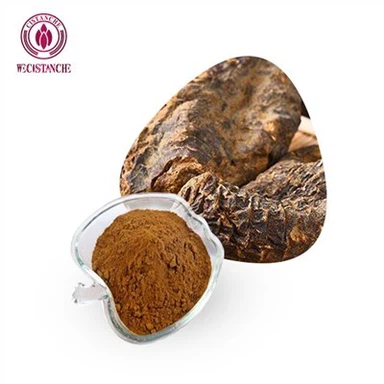
Cistanche is a traditional Chinese herbal medicine used for centuries to treat various health conditions, including kidney disease. It is derived from the dried stems of Cistanche deserticola, a plant native to the deserts of China and Mongolia. The main active components of cistanche are phenylethanoid glycosides, echinacoside, and acteoside, which have been found to have beneficial effects on kidney health.
Kidney disease, also known as renal disease, refers to a condition in which the kidneys are not functioning properly. This can result in a buildup of waste products and toxins in the body, leading to various symptoms and complications. Cistanche may help treat kidney disease ase through several mechanisms.
Firstly, cistanche has been found to have diuretic properties, meaning it can increase urine production and help eliminate waste products from the body. This can help relieve the burden on the kidneys and prevent the buildup of toxins. By promoting diuresis, cistanche may also help Reduce high blood pressure, a common complication of kidney disease.
Moreover, cistanche has been shown to have antioxidant effects. Oxidative stress, caused by an imbalance between the production of free radicals and the body's antioxidant defenses, plays a key role in the progression of kidney disease. ies help neutralize free radicals and reduce Oxidative stress, thereby protecting the kidneys from damage. The phenylethanoid glycosides found in cistanche have been particularly effective in scavenging free radicals and inhibiting lipid peroxidation.
Additionally, cistanche has been found to have anti-inflammatory effects. Inflammation is another key factor in the development and progression of kidney disease. Cistanche's anti-inflammatory properties help reduce the production of pro-inflammatory cytokines and inhibit the activation of inflammation mandatory pathways, thus alleviating inflammation in the kidneys.
Furthermore, cistanche has been shown to have immunomodulatory effects. In kidney disease, the immune system can be dysregulated, leading to excessive inflammation and tissue damage. Cistanche helps regulate the immune response by modulating the production and activity of immune cells, such as T cells and macrophages. This immune regulation helps reduce inflammation and prevent further damage to the kidneys.

Moreover, cistanche has been found to improve renal function by promoting the regeneration of renal tubes with cells. Renal tubular epithelial cells play a crucial role in the filtration and reabsorption of waste products and electrolytes. In kidney disease, these cells can be damaged, leading to damaged renal function. Cistanche's ability to promote the regeneration of these cells helps restore proper renal function and improve overall kidney health.
In addition to these direct effects on the kidneys, cistanche has been found to have beneficial effects on other organs and systems in the body. This holistic approach to health is particularly important in kidney disease, as the condition often affects multiple organs and systems. che has been shown to have protective effects on the liver, heart, and blood vessels, which are commonly affected by kidney disease. By promoting the health of these organs, cistanche helps improve overall kidney function and prevent further complications.
In conclusion, cistanche is a traditional Chinese herbal medicine used for centuries to treat kidney disease. Its active components have diuretic, antioxidant, anti-inflammatory, immunomodulatory, and regenerative effects, which help improve renal function and protect the kidneys from further damage. , cistanche has beneficial effects on other organs and systems, making it a holistic approach to treating kidney disease.