Kidney Yang Is Not A Metaphor: Rethinking The Kidney Tonic Through Cistanche Tubulosa
Nov 19, 2026
If "warming the kidney" really means restoring the body's capacity to generate heat and energy, the whole conversation changes.
1. A Word That Got Hijacked
Cold hands in winter. Hitting snooze three times. A dull ache in the lower back. Two trips to the bathroom every night. Bloodwork comes back normal. Someone says the kidney is deficient, and a shelf of products labeled "kidney tonic" appears.
The confusion starts here: in traditional Chinese medicine, the kidney is not the bean-shaped organ. It is a functional axis - growth, reproduction, water metabolism, the depth of the breath, the bones, the marrow, the hair. "Kidney deficiency" describes a system running low, not an organ failing.
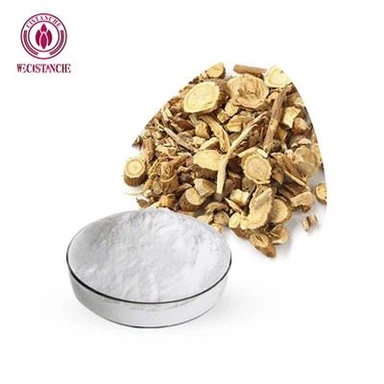
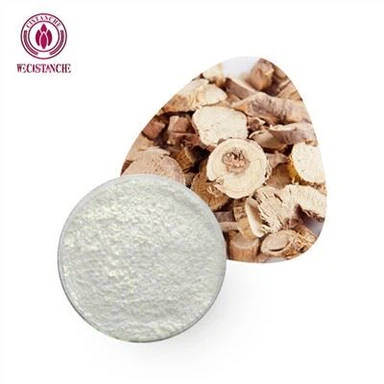
Cistanche tubulosa efficacy: Tonifying the kidney
So tonifying the kidney is not topping up an organ with fuel. It is restoring a system. And kidney yang is the most basic layer of that system: warmth. In modern terms, warmth is heat production and energy supply.
2. Translating Kidney Yang into Physiology
In TCM, kidney yang is described as the root of all yang qi. Yang qi behaves in three ways: warm, mobile, strong.
Map those onto physiology. First, basal heat production, which happens largely in brown fat, beige fat, and skeletal muscle. Second, mitochondrial density and oxidative phosphorylation - whether the cell's power plants deliver enough current. Third, muscle strength and endurance, which come down to whether ATP supply keeps pace.
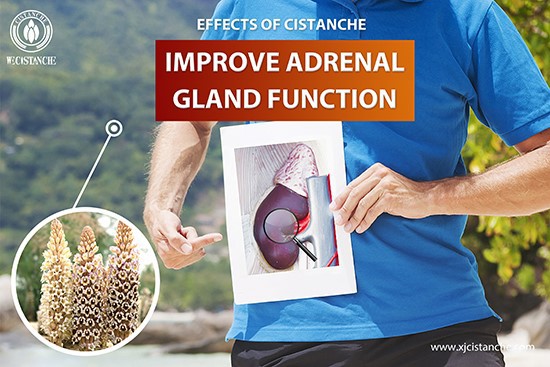
Effects of Cistanche: Improve Kidney Function
Click here to view Cistanche for Kidney disease products
【Ask for more】 Email:cindy.xue@wecistanche.com / WhatsApp: 0086 18599088692 / WeChat: 18599088692
Now look at the classic picture of kidney yang deficiency: cold intolerance, cold hands and feet, fatigue, a sore lower back and knees, frequent nighttime urination, reduced libido. These symptoms sit in different organ systems, yet share one underlying condition - low output. Not enough heat, so the person is always cold. Not enough ATP, so energy flags. Slower repair, so the back aches and recovery drags.
This is not an attempt to explain TCM away. It gives "warmth" a measurable landing point. What was previously described only through bodily sensation can now be stated plainly: it is whether a cell can, and will, burn energy.
3. One Molecule That Relights the Furnace
Echinacoside (ECH) is the most abundant active compound in Cistanche tubulosa, and belongs to the phenylethanoid glycoside family.
A 2024 study found that ECH promoted myogenic differentiation in skeletal muscle, increased glucose and fatty acid uptake, enhanced lipid catabolism, upregulated mitochondrial biogenesis proteins and oxidative phosphorylation (OXPHOS) complexes, and induced ATP-dependent thermogenesis. The mechanism was traced to D1-like dopaminergic receptors.
A companion study in beige adipocytes found the same direction: UCP1 up, browning signals up, genes for mitochondrial biogenesis and ATP-dependent thermogenesis up, while adipogenic genes went down.
What makes these findings interesting is not that another benefit was discovered. It is that the mechanism is legible: this compound does not push the body; it repairs it.
Cistanche tubulosa experiment
In the old imagination, warming yang meant throwing another log on the fire - fast, and often borrowed against the future, like a hormonal spark. ECH acts on the mitochondrion itself: the cell grows more power plants, and the thermogenic pathway reopens.
That finally gives "tonifies without causing dryness" an explanation. No exogenous stimulation, only restored endogenous capacity. The person is warm and strong, not dry-mouthed, irritable, and inflamed.
4. Why Cistanche tubulosa, Not Just "Cistanche"
Most people assume cistanche is one thing. The Chinese Pharmacopoeia lists two botanical sources: Cistanche deserticola and Cistanche tubulosa.

Chinese herb cistanche
The difference starts from the ground up. C. deserticola parasitizes saxoul roots and is mainly produced in Inner Mongolia, Gansu, and Xinjiang. C. tubulosa parasitizes tamarisk roots and comes mainly from the Hotan and Yutian areas of Xinjiang. Same desert, different host plant, different chemistry.
A comparative analysis of the two found echinacoside, acteoside and isoacteoside all significantly higher in C. tubulosa than in C. deserticola (P<0.01), with cistanoside A not detected. The Pharmacopoeia accordingly sets separate content limits: for C. deserticola, combined echinacoside and acteoside must be no less than 0.30 percent, while C. tubulosa carries a higher limit.
Industry follows the chemistry. Extracts are standardized on echinacoside, and C. tubulosa dominates the raw material used in supplements and exports.

Phenylethanol glycoside is the main active component of Cistanche tubulosa
So "desert ginseng" is a label covering two different concentrations. Before discussing results, ask three questions: which botanical source, what marker content, and is it standardized. That is far more useful than asking whether it felt like it worked.
5. Three Lines, One Compound
TCM says the kidney governs the bones, generates marrow, and controls urination and defecation. Three separate slogans that now connect through a single molecule.
Bones. A team at China Pharmaceutical University reported in Phytomedicine that echinacoside inhibits osteoclastogenesis by targeting HSC70, improving ovariectomy-induced osteoporosis. The human picture of bone loss - lost height, loose teeth, weak legs - overlaps closely with the TCM description of insufficient kidney essence.
Marrow and brain. Echinacoside has been observed to improve spatial cognition in mice under hypobaric hypoxia. Altitude, sleep deprivation and prolonged sitting are variations on one challenge: when oxygen and energy run short, the brain - the most energy-hungry organ - drops offline first.
Urination and defecation. Cistanche's laxative effect is not irritation-driven. Polysaccharides hold water and improve the intestinal environment, and the herb is also studied as a prebiotic-like substrate that gut bacteria can ferment.
Put together, the picture changes. Kidney yang is not a lamp; it is a power grid supplying muscle, bone, brain, and gut. Restore the supply, and every connected unit returns to normal.

Effects of Cistanche: Improve Kidney Function
That also explains why kidney deficiency looks so scattered: cold limbs, sore back, poor memory, constipation, declining libido. Unrelated on the surface, they are different output terminals of the same system.
6. The Dose and the Boundary
This is the part marketing tends to blur, so it is worth stating plainly.
Who it suits: people who are persistently cold, have cold hands and feet, struggle to get going in the morning, tire easily, ache at the lower back and knees, urinate often at night, and have dry, difficult bowel movements - a low-output picture.
Who it does not suit: a red tongue with little coating, dry mouth and throat, and heat in the palms and soles (yin deficiency with empty fire, where warming herbs can add fuel); loose stools or bloating, since cistanche is moist and lubricating; and anyone with an acute fever or a true heat pattern.
Several practical details matter. The pharmacopoeial dose is 6 to 10 grams daily, decocted or taken in pills and powders. Phenylethanoid glycosides are water-soluble but not stable under prolonged high heat, so a slow simmer or a covered hot infusion is better than a hard rolling boil. Traditional pairings exist for a reason: with angelica and achyranthes, as in the Ji Chuan Jian formula, the herb lubricates downward and draws blood down; with lamb or goji berries, it becomes food therapy.
Do not expect results in three days. Thermogenesis and mitochondrial function are slow variables, and four to eight weeks is a fair observation window. Track specifics rather than a vague sense of feeling better: whether hands and feet are warmer on waking, how many times you get up at night, how your legs feel on stairs, and the quality of your stools.
Anyone taking anticoagulants, glucose-lowering or blood-pressure medication, and anyone pregnant, breastfeeding, or giving it to a child, should check with a clinician first - and should not stack several warming tonics at once.7. Restoring "Kidney Tonic" as a Physiological

Effects of cistanche-improve kidney function
Question
The phrase has been used for so long, and so loosely, that it can be either a shelf label or a serious physiological proposition. The difference lies in whether we are willing to translate it into language that can be tested.
Cistanche tubulosa suggests the following: real tonification is not making the fire bigger. It is keeping the ember alive - letting cells rebuild mitochondria, reopening the thermogenic pathway, and returning muscle, bone, and brain to full output. That is what "kidney yang is the root of all yang qi" looks like in modern terms.
People who are always cold do not need something hotter. They need a greater capacity to produce heat. Those are two very different things.
References
[1] Chinese Pharmacopoeia Commission. Pharmacopoeia of the People's Republic of China (2020 edition, Vol. I), monographs for Cistanche deserticola and Cistanche tubulosa.
[2] Echinacoside stimulates myogenesis and ATP-dependent thermogenesis in the skeletal muscle via the activation of D1-like dopaminergic receptors. PubMed: 38215960. https://pubmed.ncbi.nlm.nih.gov/38215960/
[3] Echinacoside induces UCP1- and ATP-dependent thermogenesis in beige adipocytes via the activation of dopaminergic receptors. PMC10619551. https://pmc.ncbi.nlm.nih.gov/articles/PMC10619551/
[4] Comparative analysis of differential constituents and the separate content limits for Cistanche deserticola and Cistanche tubulosa in the Chinese Pharmacopoeia. VIP Journal Database.
[5] Echinacoside improves ovariectomy-induced osteoporosis by targeting HSC70 to inhibit osteoclastogenesis (Phytomedicine, China Pharmaceutical University team); reported via Foodaily.
[6] Improvement of spatial cognition by echinacoside in mice under hypobaric hypoxia and its mechanism. China Pharmacy, 2019.
[7] Pharmacology of Chinese Materia Medica (national TCM higher education textbook, 14th Five-Year Plan): trace elements and meridian tropism of kidney-tonifying herbs.