Medicine And Food Are Of The Same Origin Of TCM
Oct 24, 2022
China has a long history of the same origin of medicine and food. According to the "Huangdi Neijing Taisu" written 1,500 years ago: "It is called food when it is used to satisfy hunger, and it is called medicine when it is used to cure diseases."
Medicinal and edible homologous substances are essentially edible Chinese medicinal materials. Because of their dual-purpose properties, they have always been used in medical care in the form of diet therapy, dietary supplements, and medicated diets [1]. Today, under the background of the state's strategy of building a "Healthy China", the concept of medicine and food homology rooted in traditional Chinese medicine culture has received unprecedented attention, and there has been a trend of "developing multiple formats in the name of traditional Chinese medicine". The definition of homology of medicine and food The homology of medicine and food is based on the guidance of the concept of homology of medicine and food, and is used in traditional Chinese medicine and dietetics in my country to be both edible and medicinal Chinese medicinal materials [2]. Ancient medical scientists applied the theory of "four properties" and "five flavors" of traditional Chinese medicine to food, and believed that each food also had "four properties" and "five flavors".

The medicinal food homologous food market has broad development prospects and domestic policy orientation [3]
In February 2016, the State Council issued the Outline of the Strategic Plan for the Development of Traditional Chinese Medicine (2016-2030), marking that the cause of traditional Chinese medicine in my country has become a national strategic deployment, and the state's emphasis on traditional Chinese medicine will surely contribute to the development of the cause of traditional Chinese medicine in my country. bring new opportunities. Afterward, the state released policy documents such as the 2017 Implementation Plan for the Poverty Alleviation Work of the Chinese Medicinal Material Industry and the 2019 Chinese Medicinal Material Industry Poverty Alleviation Work Plan, mainly focusing on the industrial development and production of health products with dual-use Chinese medicinal materials as the main raw materials, supporting enterprises. The development of functional, health care, plant extracts, and other products mainly for food and medicine.
Herbal coffee
Chinese herbal coffee was born in the collision of Chinese traditional food culture and foreign coffee culture.
In 2009, "China Food News" reported the first coffee drink of Luo Han Guo, "Oriental Coffee", which is the earliest traditional Chinese medicine coffee in my country, followed by ginseng coffee, cinnamon coffee, Ophiopogon japonicus, okra coffee, etc. Traditional Chinese medicine health products with coffee flavor, or health coffee containing traditional Chinese medicine ingredients.

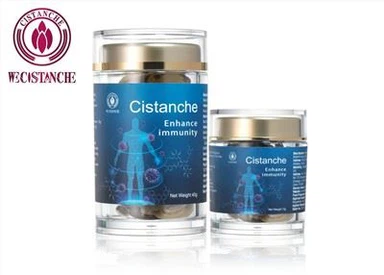
Cistanche Coffee Powder
In the lipid-lowering experiment of ginseng coffee on experimental hyperlipidemia mice, Du Yingying [6] and others concluded that ginseng coffee can improve blood lipid levels in hyperlipidemic mice. In the anti-fatigue experiment of Ophiopogon japonicus, Xu Xianxiang et al. [7] conducted a weight-bearing swimming experiment with mice. The results showed that Ophiopogon japonicus can increase the glycogen reserve and reduce the accumulation of lactic acid, which is beneficial to the body's resistance to exercise-induced fatigue. The collected patents on traditional Chinese medicine health coffee are on CNKI, mostly based on preparation methods and formulas, which have the effects of enhancing immunity, reducing fatigue, and assisting in lowering blood sugar. For example, Chengdu University of Traditional Chinese Medicine's "A TCM Compound Granule Preparation for Auxiliary Hypoglycemic and Its Preparation", Chongqing University of Traditional Chinese Medicine's "Traditional Chinese Medicine Conditioning Coffee and Traditional Chinese Medicine Combination for People with Metabolic Syndrome of Qi and Yin Deficiency"
"Traditional Chinese Medicine Composition for People with Metabolic Syndrome with Qi-Yin Deficiency", and Shanghai University of Traditional Chinese Medicine.
Herbal enzyme
People's dietary concept has gradually changed from the initial "eat enough" and "eat well" to today's "green food" and "non-polluting food", and words such as "medicine and food homology", "pure natural food" and "enzyme" have also begun to change. gotta get popular. Using "medicine and food homologous" plant resources to develop new food products with disease prevention and control functions
for a new trend. "Medicinal food homologous" plant enzymes are rich in beneficial bacteria and active ingredients, which combine the medicinal effects of medicinal and edible plants with the nutritional and health care functions of enzyme foods, and have become a new hot spot in the development of enzyme products in recent years. Therefore, "medicine and food homologous" plant enzymes have a lot of research space.
The microorganisms used by "medicine and food homologous" plant enzymes are mainly yeast, lactic acid bacteria, acetic acid bacteria and molds. "Medicine and food homologous" plants are rich in enzymes after microbial fermentation, among which the main functional enzymes are superoxide dismutase (SOD), protease and lipase. Plant enzymes have health care effects in anti-oxidation, improving gastrointestinal function, improving immunity, whitening and anti-aging.
In October 2019, the State Council issued the "Opinions of the Central Committee of the Communist Party of China and the State Council on Promoting the Inheritance, Innovation and Development of Traditional Chinese Medicine", which put forward clear requirements on the unique role of traditional Chinese medicine in maintaining and promoting people's health. In January 2021, the State Council issued the "Several Policies and Measures on Accelerating the Development of Traditional Chinese Medicine Characteristics", which pointed out to create a good atmosphere for the development of traditional Chinese medicine and strengthen the dissemination of traditional Chinese medicine culture. The promotion of national policies has made medicine and food homologous products have a broad market.

Food is the main development direction of homologous substances of medicine and food. The increase of chronic diseases and the changes of living environment caused by internal and external pressures make people in a "sub-healthy" state for a long time, which seriously affects work efficiency and quality of life. According to traditional Chinese medicine, sub-healthy people have insufficient "righteousness" in their bodies, and "evil spirits" invade the body, making them susceptible to diseases. The medicine and food are of the same origin, with both nutritional and "righting" effects, and it is safe and suitable for long-term use [4].
In recent years, with the continuous popularization of Chinese traditional Chinese medicine culture, more and more young people's awareness of Chinese medicine health preservation has been continuously improved. A new form of health care that integrates various functions such as traditional Chinese medicine health care. Tong Ren Tang's "Zhima Health" Shuangjing Store integrates, innovates and upgrades new business formats and traditional business formats; Zhang Zhongjing Pharmacy builds a large health chain brand with "medicine and food homology, health preservation" as the core; takes "Materia Medica Life" as the core innovation The office store model; the Fupai Ejiao Health Care Workshop in Hangzhou Fanghuichuntang Chinese Pharmacy uses Ejiao to make cakes, snacks, moon cakes, dumplings and other delicacies, redefining the concept of "Ejiao health care".
Analysis of medicinal and edible homologous food products
The future consumer market of medicine and food homology will be dominated by Asia. my country will become one of the main consumer countries of homologous derivatives of medicine and food, and it is also a key research and development country.
Now the analysis of several types of medicine and food homologous products on the market is as follows:
medicated diet
Since the appearance of writing, Chinese oracle bone inscriptions and bronze inscriptions have existed in Chinese characters for medicine and food.
Medicinal diets sprouted in the Xiayu era, and food medicine appeared in the Zhou Dynasty. In the Spring and Autumn Period and the Warring States Period, there were records in the books such as "Lü's Spring and Autumn Period: The Original Taste", "The Yellow Emperor's Classic of Internal Medicine" and "The Classic of Mountains and Seas". It has already begun to take shape, and it has developed by leaps and bounds in the Song and Yuan dynasties. In the Yuan Dynasty, Hu Sihui's "Yinshan Zhengyao" is the earliest monograph on nutrition in my country. From the perspective of nutrition, it emphasizes that normal people should strengthen their diets. , nutrition intake, prevent disease; Ming and Qing dynasties are traditional Chinese medicine food
During the development period of the prescription, the recorded contents were mostly dietary hygiene, medicated diet, medicated diet and so on.
Traditional Chinese medicine has accumulated rich clinical experience, with a large number of medical documents and more than 300,000 kinds of folk traditional Chinese medicine formulas [5]. In 2010, the China Medicinal Diet Research Association issued the "Basic Requirements for Chinese Medicated Diet Production and Qualifications", which filled the gap in the same field in China, and defined "medicated diet" as guided by the theory of traditional Chinese medicine, using traditional Chinese medicine itself or adding specific traditional Chinese medicine, with Regulates the functions of yin, yang, qi and blood of human viscera, as well as the characteristics of color, aroma, taste, shape, etc., and is suitable for food of specific groups, including vegetables, soup, noodles, rice, porridge, tea, wine, beverages, etc.
In 2016, the Chinese Society of Traditional Chinese Medicine issued the "General Principles of Medicinal Diet Standards of Medicinal and Food Homologous" as a group standard to define "medicated diet". A class of food that is processed and produced by craftsmanship or modern technology and has functions such as recuperation, rehabilitation and health care. Medicated diet follows the principle of TCM syndrome differentiation and treatment, combined with the characteristics of food, has a high degree of acceptance, the combination of various health-care delicacies, such as medicated dishes, snacks, snacks, etc., are too numerous to list.
There are more than 500 kinds of Chinese herbal medicines that can be used to make nourishing diets, accounting for about 1/10 of all Chinese herbal medicines, and there are more than 70 kinds of Chinese herbal medicines promulgated by the health authorities of the Chinese government. These kinds of special dietary medicinal products are mostly from ancient books or folk experiences and modern processed and improved products. The most commonly used medicinal foods are: Chinese yam, ginseng, astragalus, gastrodia elata, Atractylodes, Poria, Coix Seed, Licorice, Jujube, Angelica , walnut, lotus seed, wolfberry, Huang Jing, white fungus, longan meat, etc.

Problems existing in the development of medicine and food homology
Insufficient basic research
Insufficient research on the theory of compatibility, material basis and mechanism of action of weakly processed traditional Chinese medicines restricts the development of special medicinal and edible homologous foods. The rough industrial transformation of advanced processing technologies such as extraction, purification, refining, and structural transformation restricts the improvement of product vitality and added value. Taking the research and development of ginseng products as an example, compared with South Korea, its ginseng products have high technological content, many varieties, large scale, and high added value. At present, more than 600 varieties have been widely used in medical care, food and daily cosmetics industries. . Strengthen the R&D investment of enterprises, build a technical support system for the comprehensive development of homology of medicine and food in "academies, schools, and enterprises", establish research on characteristic formulations based on traditional Chinese medicine, keep up with the research frontier of homology of medicine and food, and increase the development of intensively processed products. Investing in research and development, always paying attention to market demand, and mastering the core technology of high-end products are the only way for the current development of medicine and food.
Product recognition is not high, and the phenomenon of homogeneity is serious
The data shows that nearly 30% of the health foods in my country claim to have the function of "enhancing immunity", and most of the health foods use homologous substances of medicine and food as the main raw materials. Insufficient investigation of market demand and consumption habits, lack of top-level planning for product lines, lack of product innovation, and poor identification of product packaging. Even if better products are developed, they are vulnerable to vicious competition from counterfeit products. produce the expected benefits.
To this end, we should conduct in-depth investigations and objectively analyze market demand. Based on the basic theory of traditional Chinese medicine, we should follow the principles of yin and yang balance, strengthening the body and eliminating pathogenic factors, and adjusting measures according to the three factors, so as to accurately locate different consumer target groups; ” as the principle, do a good job in the top-level planning of products, design products that can fully reflect the ingredients, efficacy and positioning, and establish a brand image. The tonic effects of medicinal and food homologous substances can be subdivided into qi, blood, yin, and yang, etc. The original intention is to achieve different tonic functions through reasonable compatibility. It cannot accurately reflect the comprehensive multiple health-care functions of homologous substances in medicine and food. It is suggested to increase the functions of Chinese herbal medicines in health food, and formulate corresponding function evaluation methods and standards to promote the development of Chinese medicine industry.
There is a long history of improving the quality assurance measures of medicinal materials, and the current progress in quality control of Chinese herbal medicines is slow, which is the reality of the development of medicinal and food homologous varieties. The quality control standards of the 2015 edition of the Chinese Pharmacopoeia for the homologous varieties of medicine and food are mainly based on traditional characters and microscopic identification, supplemented by simple physical and chemical inspection and content determination, and their accuracy and precision need to be improved urgently. The components of the homologous varieties of medicine and food are complex. Different from the chemical raw materials or preparations with a single component, the effectiveness or toxicity of some homologous varieties of medicine and food is not clear, so the inspection of their complex ingredients is particularly important. Since the active ingredients of most of the homologous varieties of medicine and food have not yet been determined, there are certain limitations to the quality monitoring of them by the quantitative method of single index component. Therefore, it is necessary to promote the transformation of traditional Chinese medicine varieties from controlling "indicator components" to controlling "effective components". In order to ensure the effectiveness of the homologous varieties of medicine and food, a quality control evaluation system based on "drug efficacy" should also be gradually established. Due to the complex composition of the homologous varieties of medicine and food, the traditional single analysis method has certain limitations. In particular, the detection of trace components in some varieties is easily overlooked.
Therefore, the development of traditional Chinese medicine fingerprint technology and the application of new analytical techniques and methods such as QAMS and chemical pattern recognition conform to the complexity of quality control of traditional Chinese medicine, and make it possible to more objectively identify Chinese herbal medicine varieties and obtain more accurate quality control. .
Discuss
The "medicine and food homology" industry is not only a Chinese health industry, but also a national cultural heritage industry, and a rapidly emerging industry in the new era. The combination of food and traditional Chinese medicine not only caters to the needs of young people for the safety, convenience and nourishing properties of health products, but also deepens the awareness of young consumers on traditional Chinese medicine, and cultivates new consumer groups and Consumption habits contribute to the promotion of sales of Chinese herbal medicines and the inheritance of Chinese medicine culture.
While China's scientific and technological innovation in the industrialization of "medicine and food homology" is accelerating, the "medicine and food homology" industry must develop in a standardized way. Products from the cultivation and processing of Chinese medicinal materials to the research and development, production and sales of new products must formulate a unified "medicine and food homology" standard, in line with all national standards for pharmaceutical food.
At the same time, it is necessary to continuously strengthen the combination of production, education and research, give full play to the commercial value of patents and technologies, open up the innovation chain and promote innovation and development; comprehensively develop medicine and food homologous derivative products, and strengthen international patent protection of traditional Chinese medicine technology.
If you have any questions, please contact us: wallence.suen@wecistanche.com