Study On The Microbial Enzymes Produced During Combined Bacterial Fermentation And Their Biological Activities Ⅲ
Oct 28, 2024
Chapter 3 Study on the Antioxidant Activity of Enzymes
Many human diseases have been proven to be related to active oxygen and free radicals, such as inflammation, arteriosclerosis, aging, diabetes, cancer, etc. Excessive free radicals in the body can cause protein denaturation, cell damage and death, and even pathological changes in the body. Therefore, many studies at home and abroad are looking for foods rich in natural antioxidant ingredients to prevent and regulate diseases caused by free radicals through diet. Today, with the increasing living standards, people gradually shift their focus to their own bodies, so more and more health products emerge in an endless stream. However, it is not easy to be truly useful. Enzymes are a kind of food that can be made by yourself in people's lives. The cost is not very high and there are many benefits.
Microbial enzymes have a variety of health functions such as antibacterial and anti-inflammatory, promoting metabolism, improving immunity, whitening and anti-aging, detoxification and anti-cancer. At present, there are relatively few studies on the antioxidant properties of microbial enzymes at home and abroad, so we plan to conduct in-depth research on them. This paper takes apple enzyme as the research object, and uses total phenol content, reducing power, DPPH· free radical, ·OH free radical, superoxide free radical and ABTS free radical scavenging ability as the determination indexes to conduct a comprehensive and systematic investigation of apple enzyme after fermentation for 3 months. The composition and content of antioxidant active ingredients were studied, and its antioxidant activity was understood.

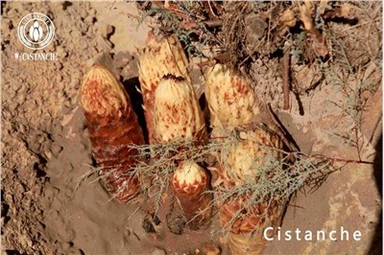
NEW HERBS CISTANCHE WITH MUCH MORE ANTI-OXIDATION POWER THAN BACTERIA FERMENTATION
Supportive Service Of Wecistanche-The largest cistanche exporter in the China:
Email:wallence.suen@wecistanche.com
Whatsapp/Tel:+86 15292862950
3.1 Materials and Methods
3.1.1 Materials
(1) Experimental materials
Wash fresh apples with sterile water under sterile conditions, dry them naturally in a sterile operating table, peel them, and slice them for later use. Add white sugar and apples in a sterilized glass jar at a mass ratio of 1:1. Activate the bacteria required for the experiment and inoculate them into the enzyme according to the optimal scheme (this operation step is omitted in the control group), seal it and place it in a cool and dry place. After 3 months of room temperature fermentation, take a sample to obtain the entire enzyme liquid containing the pulp, and filter it. Take the supernatant as the experimental sample, and centrifuge the sample at 10000rpm for 15 minutes in a high-speed centrifuge before determining the relevant data. It is worth noting that in the process of making enzymes, in order to avoid unnecessary contamination, all our operations are carried out under sterile conditions.
(2) Main instruments
Spectrophotometer: V-1100, Shanghai Anting Scientific Instrument Factory;
Constant temperature water bath: HH-2, Wuhan Litian Technology Instrument Co., Ltd. Other instruments are the same as 2.1.3.

3.1.2 Methods
(1) Determination of total phenol content[53]
① Preparation of standard curve:
Accurately weigh 0.123 g of gallic acid, dissolve it in a small amount of distilled water, and transfer it to a 500 mL volumetric flask to make up the volume. Take 8 clean 10 mL volumetric flasks, add 0, 0.2, 0.4, 0.6, 0.8, 1.0, 1.2, and 1.4 mL of gallic acid standard solution, respectively, dilute to the mark with distilled water, add 1 mL of Folin reagent and 2 mL of 20% NaCO3 to each, heat in a boiling water bath for 1 min, cool and dilute to 20 mL, and place at room temperature for 30 min. Use a spectrophotometer to measure the absorbance A at a wavelength of 650 nm, and draw a standard curve with absorbance A as the horizontal axis and sample concentration as the vertical axis. ② Detection
Add distilled water to 100μL, 200μL, 300μL, 400μL, and 500μL sample solutions to 46mL, then add 1mL of Folin-phenol reagent, mix evenly, react for 3min, then add 3mL of 20% NaCO3, shake in a 25℃ constant temperature water bath for 2h, use distilled water as blank control, and measure its absorbance A at a wavelength of 760nm with a spectrophotometer. The total phenol content is expressed as gallic acid equivalents, and the total phenol content is calculated according to the standard curve equation.
(2) Reduction assay [54]
Add 100μL, 200μL, 300μL, 400μL, and 500μL of sample to 2.5mL of phosphate buffer with a concentration of 0.2mol/L and a pH value of 6.6, then add 2.5mL of potassium ferricyanide (w/v) with a mass concentration of 1%, and react at 50℃ for 30 minutes. Then add 2.5mL of trichloroacetic acid (w/v) with a mass concentration of 10%, and centrifuge at 3000rpm for 10 minutes in a high-speed centrifuge. Immediately after taking out, take 2.5mL of supernatant into a volumetric flask, add 2.5mL of distilled water and 0.5mL of ferric chloride (w/v) with a mass concentration of 0.1%. Use distilled water as a blank control, and measure the absorbance A at a wavelength of 700nm using a spectrophotometer. The strength of reducing power can be judged by the absorbance value. The higher the absorbance value, the stronger the reducing power.

(3) Determination of superoxide anion free radical scavenging effect[55]
Take 4.5 mL of 0.05 mol/L pH 8.2 Tris-HCl buffer and preheat it in a 25 ℃ water bath for 20 min. Add 1 mL of enzyme sample solution with concentrations of 10%, 20%, 30%, 40%, and 50% and 0.4 mL of 25 mmol/L pyrogallol solution respectively. Mix well and react in a 25 ℃ water bath for 5 min. Add 1.0 mL of 8 mol/L HCl to terminate the reaction. Use Tris-HCl buffer as a reference and use a spectrophotometer to measure the absorbance A at a wavelength of 299 nm to calculate the scavenging rate. For the blank control group, 1 mL of solvent was used instead of sample. The O2- scavenging rate was calculated according to formula 3.1: O2- scavenging rate (%) = (A1-A2)/A1×100 (3.1) Where: A1 is the absorbance of the blank tube; A2 is the absorbance of the sample.
(4) Determination of scavenging effect on hydroxyl radicals[56]
100μL, 200μL, 300μL, 400μL, 500μL sample solution was added with water to 2mL, then added to 1.4mL of hydrogen peroxide with a molar mass concentration of 6mmol/L, then added with 0.6mL of sodium salicylate with a molar mass concentration of 20mmol/L and 2mL of ferrous sulfate with a molar mass concentration of 1.5mmol/L, and heated in a constant temperature water bath at 37℃ for 1h. Adjust to zero with distilled water, and measure the absorbance A at a wavelength of 562nm using a spectrophotometer. Perform 3 replicates for each treatment. Calculate the hydroxyl radical scavenging rate according to formula 3.2: Hydroxyl radical scavenging rate (%) = [(A1-A2)/A1] × 100 (3.2) Where: A1 is the average absorbance of the blank; A2 is the average absorbance of the sample solution. (5) Determination of DPPH free radical scavenging effect[57]

NEW HERBS CISTANCHE WITH MUCH MORE ANTI-OXIDATION POWER THAN BACTERIA FERMENTATION
Accurately pipette 2 mL of enzyme sample solution with concentrations of 10%, 20%, 30%, 40%, and 50% into a 10 mL volumetric flask, then add 2 mL of 80% DPPH ethanol aqueous solution to the volumetric flask. The molar mass concentration is 2×10⁻⁴ mol/L. After mixing, let it stand at room temperature for 30 min. Using 80% ethanol solution as a reference, measure the absorbance of the sample at a wavelength of 517 nm, which is recorded as A1. Mix 2 mL of DPPH solution and 2 mL of ethanol solution with a mass concentration of 80% and measure their absorbance at the same wavelength, which is recorded as A0. Mix 2 mL of enzyme solution and 2 mL of ethanol solution with a mass concentration of 80% and measure their absorbance at the same wavelength, which is recorded as A2. Calculate the DPPH free radical scavenging rate according to formula 3.3:
DPPH free radical scavenging rate (%) = [1-(A1-A2)/A0] × 100 (3.3) Where: A1 is the absorbance of 2 mL DPPH 80% ethanol aqueous solution and 2 mL enzyme sample solution; A2 is the absorbance of a mixed solution of 2 mL enzyme solution and 2 mL 80% ethanol by mass concentration; A0 is the absorbance of a mixed solution of 2 mL DPPH solution and 2 mL 80% ethanol by mass concentration.
(6) ABTS free radical scavenging ability [58]
Add a certain amount of potassium sulfate to 7 mmol/L ABTS solution until the final concentration of the mixed solution is 2.45 mmol/L. Place the mixed solution in a cool and dry place at room temperature for 12 to 16 hours. 1μL, 3μL, 5μL, 7μL, and 9μL of sample solution were supplemented to 10μL with 5mmol/L pH7.4 phosphate buffer, and then mixed evenly with 10mL of the above potassium sulfate and ABTS mixed solution, and allowed to react at a reaction temperature of 30°C and a reaction time of 5min. Zero with distilled water, and measure the absorbance A at a wavelength of 734nm using a spectrophotometer. Calculate the ABTS free radical scavenging rate according to formula 3.4:
ABTS free radical scavenging rate (%) = [(A1-A2)/A1] × 100 (3.4) Where: A1 is the absorbance of the blank control group; A2 is the absorbance of the experimental group
3.2 Results and analysis
3.2.1 Total phenol content
(1) Standard curve
The standard curve of total phenol content was drawn with the concentration of gallic acid as the horizontal axis and the absorbance value A as the vertical axis, as shown in Figure 3.1.

Fig.3.1 The standard curve of total phenol content
From Fig.3.1, we can see that the standard curve equation is y=11.375x+0.2593 (x is the sample concentration, y is the absorbance), R2=0.9981.
(2) Determination of samples
The results of the total phenol content determination of apple enzymes in the control group and the experimental group at different concentrations are shown in Fig.3.2.

Fig.3.2 The curve of total phenolic content
As shown in Fig.3.2, the apple enzymes in both the control group and the experimental group have high total phenolic content, and both increase with the increase of the amount of sample solution added. In the same concentration gradient, the total phenolic content of the apple enzyme in the control group increased from 0.673mg to 2.807mg, and the total phenolic content of the experimental group increased from 0.961mg to 4.185mg. The total phenolic content of the experimental group is much higher than that of the control group, and the upward trend is more obvious. According to the total phenolic content, the overall antioxidant activity of the experimental group is greater than that of the control group.
3.2.2 Reducing power
The results of reducing power determination of apple enzymes in the control group and experimental group at different concentrations are shown in Figure 3.3.

As shown in Figure 3.3, the changing trend of reducing power of apple enzymes is similar to the changing trend of total phenol content. The reducing power of the experimental group is higher than that of the control group, and whether it is the experimental group or the control group, within the concentration range presented in the experiment, the reducing power shows an increasing trend with the increase of the amount of sample solution added. The experimental data also confirmed that in terms of reducing power, the antioxidant activity of the experimental group is greater than that of the control group.
3.2.3 Superoxide anion free radical scavenging ability
The results of superoxide anion free radical scavenging ability of apple enzymes in the control group and the experimental group at different concentrations are shown in Figure 3.4.

As shown in Figure 3.4, there is a great difference in the superoxide anion free radical scavenging ability between the experimental group and the control group. Within the concentration range presented in the experiment, the superoxide anion free radical scavenging ability of the experimental group changes most significantly when the sample concentration is 10% to 20%, and the change is not obvious after the concentration is greater than 20%; when the concentration is 50%, the superoxide anion free radical scavenging ability is as high as 85.4%. The superoxide free radical scavenging ability shown by the control group can be clearly seen from the trend chart. As the enzyme concentration increases, this free radical scavenging ability also increases, changes slowly, and gradually tends to a stable state. The scavenging ability reaches a maximum of 42.6%. The experimental group is nearly twice as high as the control group.
3.2.4 Hydroxyl free radical scavenging ability
The changes in the hydroxyl free radical scavenging ability of the apple enzymes in the control group and the experimental group at different concentrations are shown in Fig. 3.5.

Fig.3.5 The curve of scavenging hydroxyl free radical
It can be seen from Fig. 3.5 that within the concentration range presented in the experiment, the hydroxyl free radical scavenging ability of the enzymes in the experimental group and the control group increased with the increase of the added amount. The hydroxyl free radical scavenging ability of the experimental group was lower than that of the control group, and it performed very poorly at low concentrations. At high concentrations, the hydroxyl free radical scavenging ability increased significantly. The reason may be that during the fermentation process, the types and contents of microorganisms in the apple enzymes in the experimental group and the control group were different, and the contents of the secondary metabolites and components of each product produced by the fermentation were different, so the antioxidant capacity shown was different.
3.2.5 DPPH·free radical scavenging ability
Compared with other detection methods, DPPH·free radical scavenging ability is widely used to evaluate antioxidant activity in a short period of time [59]. The DPPH·free radical scavenging ability at different concentrations was plotted according to the results of the control group and experimental group apple enzymes, as shown in Figure 3.6.

As shown in Figure 3.6, when the concentration of the control group apple enzyme was lower than 30%, the DPPH·free radical scavenging ability was less than 50%, but the experimental group apple enzyme also showed a higher DPPH·free radical scavenging ability at low concentrations. The experimental results show that the addition of Aspergillus oryzae, yeast, thermophilic Streptococcus and Bulgarian Lactobacillus is beneficial to the DPPH·free radical scavenging ability of the enzyme. When the enzyme concentration is 50%, this ability is as high as 91.4%, which is much higher than the 69.8% of the control group at the same concentration.
3.2.6 ABTS radical scavenging capacity
The results of the ABTS radical scavenging capacity of the apple enzymes in the control group and the experimental group at different concentrations are shown in Fig. 3.7.

Fig.3.7 The curve of ABTS radical scavenging capacity
It can be seen from Fig. 3.7 that the scavenging rate of the apple enzymes in the experimental group is higher when the enzyme addition amount is greater than 5μL. The study by Erel et al. showed that the scavenging capacity of ABTS radicals depends largely on the higher concentration of phenolic substances [60]. The results of the total phenol content determination showed that the total phenol content of the experimental group was higher than that of the control group. The experimental results in Fig. 3.7 just verified that the scavenging capacity of ABTS radicals is greater than that of the control group.
3.3 Summary of this chapter
This chapter studies the relationship between the antioxidant activity of apple enzymes produced by fermentation with four selected strains of apples, the concentration of enzyme samples, and the comparison of antioxidant active components and free radical scavenging ability between the experimental group and the control group. The experimental results show that the total phenol content of the apple enzyme in the control group is lower than that in the experimental group, and its reducing power, superoxide anion free radical, DPPH free radical and ABTS free radical scavenging ability are better than those in the control group; the enzyme in the control group has a particularly good scavenging ability for hydroxyl free radicals.
In general, the experimental group showed higher antioxidant activity, which further confirmed the feasibility of artificially adding strains to make microbial enzymes. In this way, microbial enzyme foods have more substances beneficial to human health on the basis of the original natural fermentation, and can better develop in the direction expected by people.