Native Language Experience Shapes Pre-attentive Foreign Tone Processing And Guides Rapid Memory Trace Build-up: An ERP Study Part 7
Jan 31, 2024
5 | CONCLUSION
The current study investigated how native language experience shapes L2 tone processing and acquisition.
Our mother tongue is the language we are most familiar with when we grow up. It runs through our lives and becomes the cornerstone of our expression and thinking. In the process of learning a new language, the experience and memory of our mother tongue play an irreplaceable and important role.

Click Know Short-term Memory how to improve
First, experience with our native language helps us better understand the new language. There are many similarities between languages in the same language family. For example, Chinese, Japanese, and Korean all belong to the East Asian language family. They all have similarities in pronunciation, grammar, and vocabulary. At this time, when we understand the new language through the experience of our mother tongue, we will feel more familiar and natural.
Secondly, the memory of our mother tongue can help us remember the new language more effectively. Familiar language makes it easier for us to understand new vocabulary and grammatical structures. In the process of learning a new language, comparing native words and phrases can help us memorize new words and phrases more quickly and accurately. At the same time, our mother tongue is also very helpful to our inductive logic ability and thinking ability. These abilities greatly promote our memory and understanding when learning a new language.
Finally, experience and memory in our native language can also help us better grasp the language system and cultural background of the new language. The experience of our mother tongue can help us better master the grammar and language habits of the new language, and the memory of our mother tongue can help us better understand the cultural connotation of the new language and help us better use the new language.
To sum up, native language experience and memory are inseparable from learning a new language. Properly utilizing the knowledge and experience of the native language can make it easier for us to master the new language and improve our expression and understanding abilities.

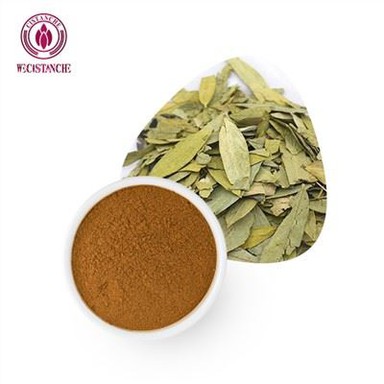
They are the key to our pursuit of language learning. An important guarantee for success. It can be seen that we need to improve memory, and Cistanche deserticola can significantly improve memory because Cistanche deserticola is a traditional Chinese medicinal material that has many unique effects, one of which is to improve memory. The efficacy of minced meat comes from its various active ingredients, including acid, polysaccharides, flavonoids, etc. These ingredients can promote brain health in various ways.
We found a narrow effect of L1–L2 similarity in an early word recognition component at ~50 ms, such that only tones that were identical to tonal learners' native tones in function and pitch shape were acquired ultra-rapidly, i.e., within 20 minutes, and consequentially stood out against all other types of tones.
For nontonal learners, there was no difference between tone types in the early, pre-attentive ERPs, supporting the assumption that differential pre-attentive processing and memory trace formation cannot occur without functional L1–L2 transfer.
Later processing, which is modulated by attention, on the other hand, was not differentially affected by the learners' language experience. All learners elicited anterior negativity that was larger for inflected novel words than for meaningless pseudowords, indicative of rule-based processing of the inflected words.
This was facilitated through entrenchment and pitch prominence resulting in an amplitude reduction, suggesting that the overall processing cost decreased with learning and for the more salient contour tones.
Similar to attention-modulated processing, the learners' behavioral responses to tone mismatches were not significantly affected by the L1 experience. Both groups and all four subgroups identified tone mismatches equally rapidly and equally well. Thus, the present results suggest that pre-attentive processing during L2 tone acquisition can be facilitated by language experience.
At the same time, they relativize the importance of transfer effects, suggesting that only highly similar phonetic features in L1 and L2 lead to the facilitation of pre-attentive processing.
They further reveal that a lack of L1–L2 similarity can be overcome during later, higher-level stages of speech processing which is likely an important reason why transfer effects do not always appear in studies on L2 acquisition and L2 processing.

However, it is possible that the impact of pre-attentive processing is stronger in natural second-language acquisition and that learners, depending on testing conditions, can experience learning advantages for facilitated tones.
CONFLICT OF INTEREST
The authors declare that there is no conflict of interest.
AUTHOR CONTRIBUTIONS
Sabine Gosselke Berthelsen: Conceptualization; formal analysis; investigation; methodology; visualization; writing – original draft; writing – review and editing.
Merle Horne: Conceptualization; supervision; writing – review and editing.
Yury Shtyrov: Conceptualization; funding acquisition; methodology; supervision; writing – review and editing.
Mikael Roll: Conceptualization; funding acquisition; methodology; supervision; writing – review and editing.

REFERENCES
1.Andersson, A., Sayehli, S., & Gullberg, M. (2019). Language background affects online word order processing in a second language but not offline. Bilingualism: Language and Cognition, 22(4), 802–825. https://doi.org/10.1017/S1366728918000573
2. Banti, G. (1989). Two Cushitic systems: Somali and Oromo nouns. In H. van der Hülst & N. Smith (Eds.), Autosegmental studies on pitch accent (pp. 11–50). Foris Publications.
3.Benjamini, Y., & Hochberg, Y. (1995). Controlling the false discovery rate: A practical and powerful approach to multiple testing. Journal of the Royal Statistical Society. Series B (Methodological), 57(1), 289–300. https://doi.org/10.2307/2346101
4.Bermúdez-Margaretto, B., Beltrán, D., Cuetos, F., & Domínguez, A. (2018). Brain signatures of new (pseudo-) words: Visual repetition in associative and non-associative contexts. Frontiers of Human Neuroscience, 12, 354. https://doi.org/10.3389/ fnhum.2018.00354/full
5.Blomberg, F., Roll, M., Frid, J., Lindgren, M., & Horne, M. (2020). The role of affective meaning, semantic associates, and orthographic neighbors in modulating the N400 in single words. The Mental Lexicon, 15(2), 159–186. https://doi.org/10.1075/ml.19021.blo
6.Boersma, P. (2001). Praat is a system for doing phonetics by computer. Glot International, 5(9/10), 341–345.
7.Brown-Schmidt, S., & Canseco-Gonzalez, E. (2004). Who do you love, your mother or your horse? An event-related brain potential analysis of tone processing in Mandarin Chinese. Journal of Psycholinguistic Research, 33(2), 103–135. https://doi. org/10.1023/B:JOPR.0000017223.98667.10
8. Bruce, G. (1977). Swedish word accents in sentence perspective. Gleerup.
9. Bruce, G. (1983). Accentuation and timing in Swedish. Folia Linguistica, 17(1-4), 221–238. https://doi.org/10.1515/ flin.1983.17.1-4.221
10. Bruce, G. (1987). How floating is a focal accent? In K. Gregersen & H. Basbøll (Eds.), Nordic prosody IV: Papers from a symposium (pp. 41–49). Odense University Press.
For more information:1950477648nn@gmail.com