Natural Testosterone Support: How Cistanche Tubulosa Optimizes Male Hormone Health At The Cellular Level
Aug 12, 2026
Testosterone is far more than a sex hormone. It is the biochemical foundation of male vitality-governing muscle mass, bone density, red blood cell production, mood regulation, cognitive sharpness, and libido. After age 35, total testosterone declines approximately 1% per year. Free testosterone-the biologically active fraction-falls even faster, as sex hormone-binding globulin rises with age and sequesters more testosterone into inactive complexes. For millions of men, this slow hormonal erosion translates into a constellation of symptoms: flagging energy, stubborn abdominal fat, diminished sexual desire, loss of competitive drive, brain fog, and a creeping sense that they are a diminished version of their former selves. Testosterone replacement therapy is a medical option but carries significant risks-suppression of natural production, testicular atrophy, polycythemia, and potential cardiovascular effects. A fundamentally different approach is to support the body's own testosterone synthesis machinery. Cistanche tubulosa, through its active ingredients echinacoside and acteoside, is demonstrating multiple mechanisms that target the rate-limiting steps of endogenous testosterone production and preservation.
The Biochemistry of Testosterone Synthesis
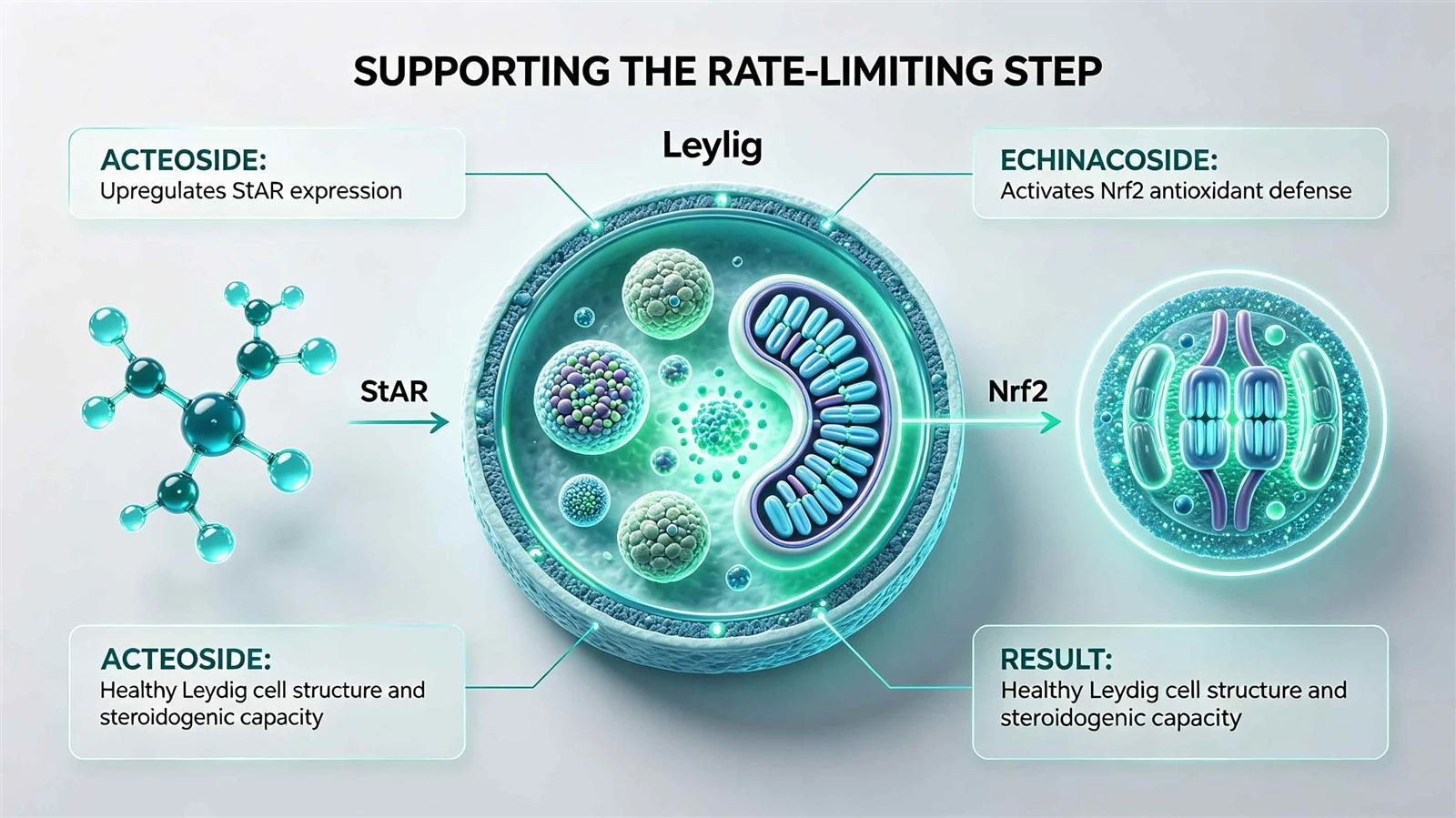
Testosterone is produced in the Leydig cells of the testes through a multi-step steroidogenic pathway. The process begins with cholesterol, which must be transported from the outer mitochondrial membrane to the inner mitochondrial membrane, where the first steroidogenic enzyme-CYP11A1-resides. This transport is the rate-limiting step in testosterone synthesis, and it is mediated entirely by the steroidogenic acute regulatory protein (StAR) . Without StAR, cholesterol cannot enter the mitochondria, and the entire steroidogenic cascade grinds to a halt. StAR is the molecular gatekeeper of testosterone production.
Once cholesterol enters the mitochondria, it is converted to pregnenolone, which then travels to the smooth endoplasmic reticulum for further processing through a series of enzymatic reactions: pregnenolone to 17α-hydroxypregnenolone to dehydroepiandrosterone, and finally to testosterone. The entire pathway is regulated by luteinizing hormone from the pituitary, which binds to LH receptors on Leydig cells and activates a cAMP/PKA signaling cascade that drives StAR expression and steroidogenic enzyme activity.
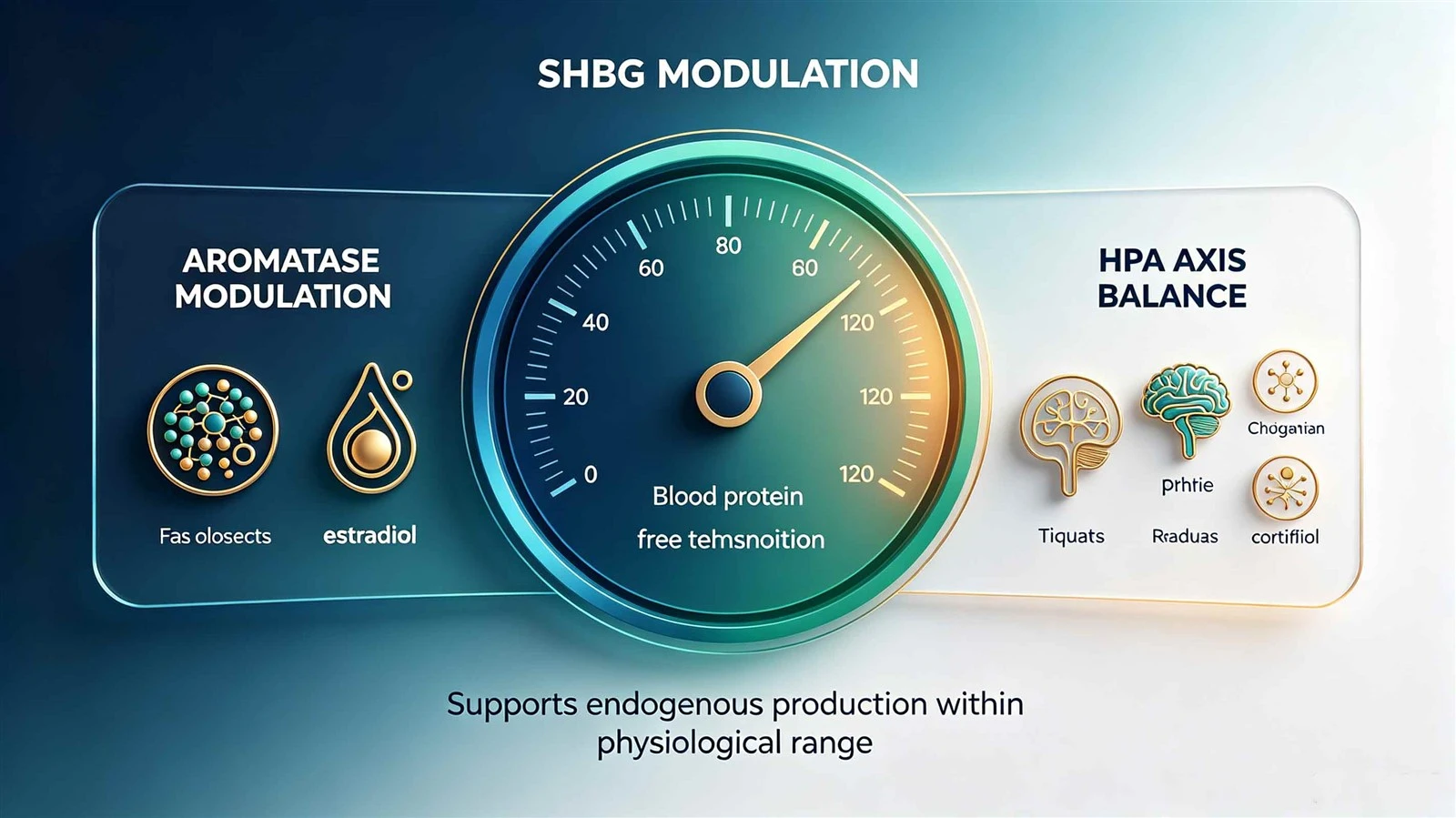
Three factors determine a man's functional testosterone status: the rate of testicular production, the extent of conversion to estradiol by the enzyme aromatase in adipose tissue, and the amount bound by SHBG in the bloodstream. Only free, unbound testosterone is biologically active. An ideal natural testosterone support agent would therefore enhance production at the StAR-mediated rate-limiting step, reduce excessive aromatization, and modulate SHBG to optimize the free testosterone fraction-all while protecting the Leydig cells themselves from oxidative and inflammatory damage. Cistanche tubulosa addresses all four targets.
How Cistanche Tubulosa Supports Testosterone Production
1. Upregulating StAR Protein: Opening the Gate
Acteoside has been shown in Leydig cell models to significantly upregulate StAR expression at both the mRNA and protein levels. By increasing the amount of this gatekeeper protein, acteoside facilitates cholesterol transport into the mitochondria, providing the raw material for testosterone synthesis. This mechanism operates upstream of the steroidogenic enzymes themselves-it addresses the delivery of substrate rather than modifying the enzymes. The effect is a gentle enhancement of the cell's own capacity to produce testosterone within its physiological ceiling, rather than a pharmacological forcing of the pathway that could lead to downregulation or suppression.
In animal models, Cistanche extract administration has been shown to increase serum testosterone levels in models of age-related and stress-induced decline. Treated animals maintained higher testicular StAR expression, higher Leydig cell density, and better Leydig cell morphology compared to controls-the cells were larger, with more abundant mitochondria and lipid droplets, indicating healthy steroidogenic machinery.
2. Protecting Leydig Cells from Oxidative Damage
Leydig cells are rich in mitochondria, which generate the ATP needed for steroidogenesis but also produce reactive oxygen species as a byproduct. With age, antioxidant defenses decline, and ROS accumulate. These free radicals damage mitochondrial membranes, impair StAR function, and trigger Leydig cell apoptosis. The testes are also susceptible to oxidative damage from environmental toxins, alcohol, and endocrine-disrupting chemicals.
Echinacoside, through its potent activation of the Nrf2 pathway, upregulates the Leydig cell's own antioxidant enzyme systems-superoxide dismutase, glutathione peroxidase, heme oxygenase-1, and catalase. By reducing the oxidative burden, echinacoside helps maintain the structural integrity of Leydig cell mitochondria and the StAR protein embedded in their membranes. This protective effect is particularly relevant in the context of aging, where oxidative damage is the primary driver of declining Leydig cell function.
3. Modulating Aromatase and SHBG
Aromatase is the enzyme that converts testosterone to estradiol. It is highly expressed in adipose tissue, which is why men with abdominal obesity often exhibit a high estradiol-to-testosterone ratio-testosterone is being diverted into estrogen. Some preclinical evidence suggests that acteoside may exert a mild inhibitory effect on aromatase activity, reducing this diversion and helping preserve testosterone.
At the same time, the adaptogenic and metabolic effects of Cistanche-AMPK activation, improved insulin sensitivity, and reduced systemic inflammation-help address the root cause of elevated aromatase: visceral obesity and metabolic dysfunction. By supporting a healthier body composition, Cistanche indirectly reduces the aromatase burden.
Sex hormone-binding globulin is another critical variable. SHBG binds testosterone with high affinity, rendering it inactive. SHBG levels rise with age, liver dysfunction, and chronic inflammation. Acteoside's anti-inflammatory effects may help modulate SHBG production in the liver, potentially increasing the free, bioavailable testosterone fraction. This triple action-more production, less conversion to estrogen, and less binding to SHBG-creates a comprehensive hormonal optimization profile.
4. HPA Axis Modulation: Removing the Stress Brake
Chronic stress suppresses testosterone through cortisol-mediated inhibition at multiple levels of the hypothalamic-pituitary-gonadal axis. Cortisol directly suppresses GnRH release from the hypothalamus, LH release from the pituitary, and StAR expression in Leydig cells. As an adaptogen, Cistanche helps regulate the HPA axis, reducing excessive cortisol output. By calming the stress response, it removes one of the most potent brakes on testosterone production. This is why men under chronic stress often experience significant improvements in libido and energy with adaptogenic support-not because the herb is directly "boosting" testosterone, but because it is removing the stress-induced suppression that was artificially lowering it.
5. Downstream Benefits of Restored Testosterone
The benefits of maintaining healthy testosterone levels extend throughout the body. Testosterone stimulates muscle protein synthesis through androgen receptor-mediated activation of satellite cells and the mTOR pathway, supporting muscle mass and strength. It promotes osteoblast activity and is converted to estradiol in bone, where it supports bone mineral density-a critical factor in preventing osteoporosis in aging men. Testosterone receptors are distributed throughout the brain, including the hippocampus and prefrontal cortex, where the hormone supports cognitive function, spatial memory, and mood. It also supports erythropoiesis, mitochondrial function, and metabolic rate. These downstream effects mean that supporting endogenous testosterone production has systemic, multi-organ benefits.
A comprehensive 2022 review in Frontiers in Pharmacology catalogs the hormone-supporting, antioxidant, and adaptogenic properties of Cistanche tubulosa and its active ingredients echinacoside and acteoside, confirming the multi-pathway basis for its traditional use as a male vitality tonic. (Frontiers in Pharmacology review on Cistanche tubulosa)
The Active Ingredients for Testosterone Support
The testosterone-supporting effects of Cistanche are driven by echinacoside and acteoside. Acteoside is the primary StAR upregulator and aromatase modulator. Echinacoside is the primary Nrf2 activator and Leydig cell protectant. Both compounds contribute to the adaptogenic stress-modulating effects that support the HPG axis. A standardized extract containing 20–40% total phenylethanoid glycosides is essential to deliver the concentrations associated with hormonal benefit. The evidence-informed dose for testosterone support is 400–600 mg daily, taken with a meal, ideally in the morning when testosterone levels naturally peak.
Integrating Cistanche for Hormonal Health
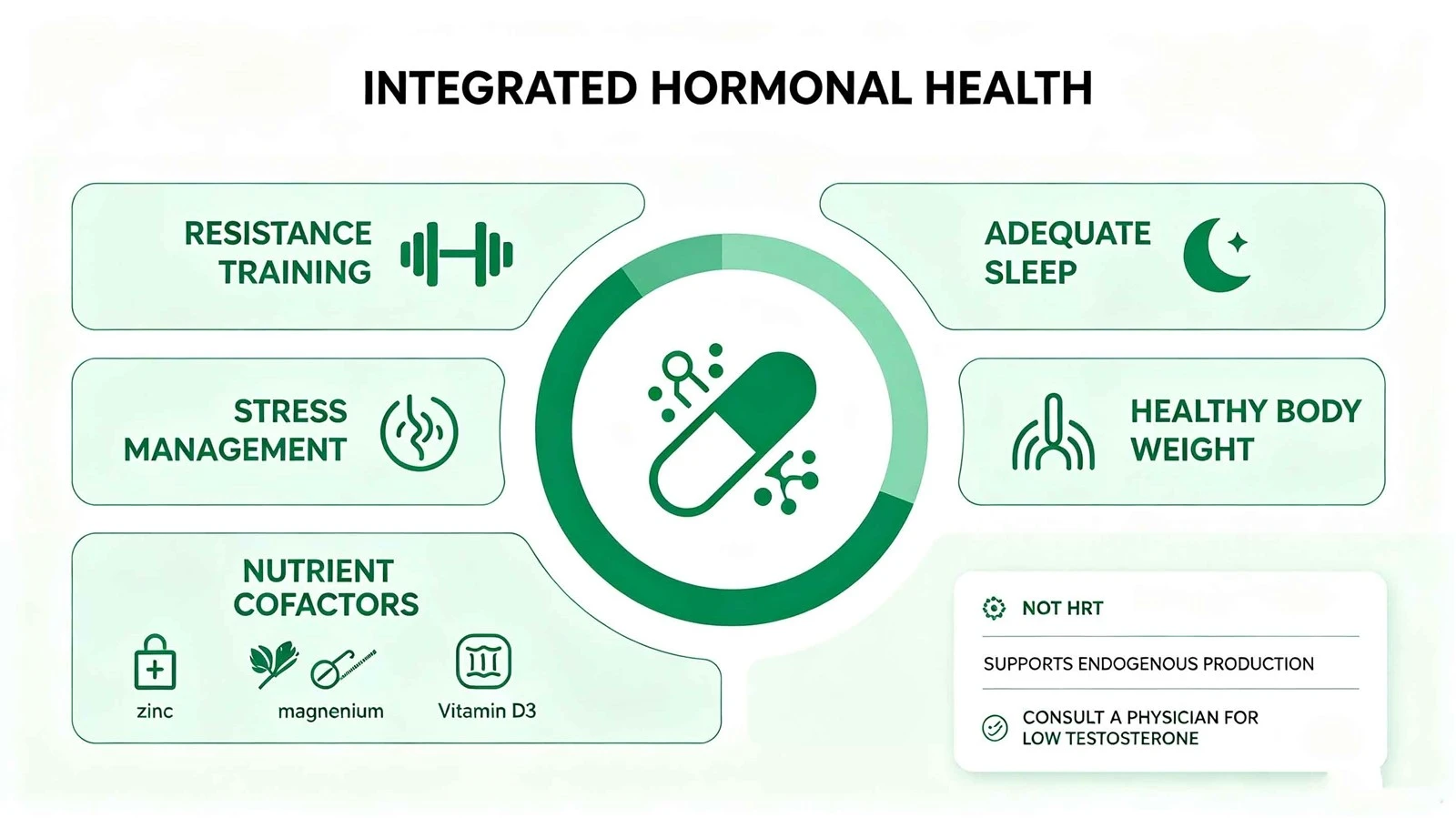
Unlike exogenous testosterone or anabolic steroids, Cistanche does not introduce external hormones and does not suppress the body's own production. It works within the physiological range, supporting the body's own machinery. This makes it safe for long-term use and free from the risks of testicular atrophy, gynecomastia, or cardiovascular strain. Consistent use over two to three months is recommended, as hormonal changes occur gradually. The extract pairs well with zinc (essential cofactor for testosterone synthesis), magnesium (supports free testosterone by reducing SHBG), and vitamin D3 (associated with higher testosterone in deficient men). Lifestyle factors-adequate sleep, regular resistance training, stress management, and maintenance of a healthy body weight-are foundational and synergistic.
Our AndroBalance Cistanche Extract is sourced from authentic Cistanche tubulosa and standardized for a high concentration of echinacoside and acteoside. Each batch is independently tested for purity and potency.
Safety and Medical Context
Cistanche tubulosa is well tolerated with a centuries-long safety record. It does not suppress the HPG axis, cause testicular atrophy, or produce estrogenic side effects. However, persistently low testosterone can have underlying medical causes-pituitary tumors, genetic conditions, testicular injury-that require endocrinological evaluation. Any man with significant hypogonadal symptoms should undergo appropriate lab testing and consult a physician.