Neural Correlates Of Sleep-induced Benefits On Traumatic Memory Processing Part 1
Dec 13, 2023
Abstract
Recent findings indicate that sleep after trauma compared to sleep loss inhibits intrusive memory development, possibly by promoting adequate memory consolidation and integration. However, the underlying neural mechanisms are still unknown.
Intrusive memories refer to extremely profound memories left in the brain after some strong emotional experiences. These memories often have a strong psychological impact on people. For example, they may trigger emotional experiences such as anxiety, depressive symptoms, or fear. Although intrusive memories may hurt a person under certain circumstances, such memories can be beneficial to a person's memory.
As many experts point out, intrusive memories can play a positive role in a person's memory. When some strong emotional experiences and feelings are deeply imprinted in our minds, these memories become an important tool for us to express and record our experiences. Intrusive memories can help us retain the information we need throughout life's challenges and difficulties and make smarter, more powerful decisions later in life.
In addition, the relationship between intrusive memory and memory is also shown in that it can improve people's learning efficiency. Intrusive memories can help us remember those memories related to our emotions more deeply, making it easier for us to remember or reconstruct the memorized information in the future. This is very important for learning and mastering new knowledge because it can effectively improve our learning efficiency and help us better understand the knowledge we have learned.
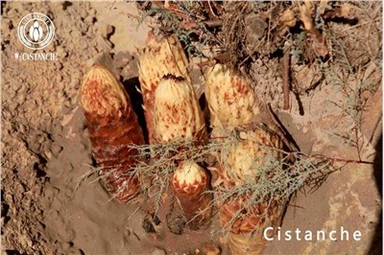
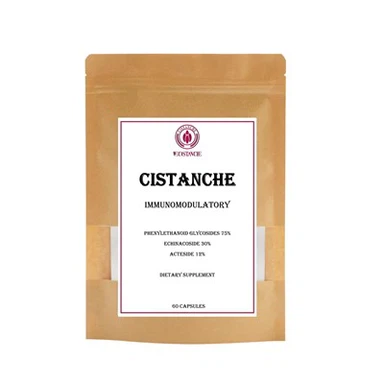
In conclusion, there is a strong connection between intrusive memories and memory performance. Although intrusive memories may have negative effects on people in some cases, they have a positive effect on people's memory and learning efficiency. We should cherish such memories as an important part of our personal and emotional experiences, and integrate them with our learning and growth to gain broader and deeper knowledge and memory. It can be seen that we need to improve our memory. Cistanche deserticola can significantly improve memory because Cistanche deserticola is a traditional Chinese medicinal material with many unique effects, one of which is to improve memory. The efficacy of minced meat comes from the various active ingredients it contains, including acid, polysaccharides, flavonoids, etc. These ingredients can promote brain health in a variety of ways.

Click know 10 ways to improve memory
Here, we examined the neural correlates underlying the effects of sleep on traumatic memory development in 110 healthy participants using a trauma film paradigm and an implicit memory task with fMRI recordings in a between-subjects design. To further facilitate memory integration, we used targeted memory reactivation (TMR) to reactivate traumatic memories during sleep.
We found that sleep (i.e., nap) compared to wakefulness reduced the number of intrusive traumatic memories for the experimental trauma groups. TMR during sleep only descriptively reduced the intrusions further.
On the level of brain activity, increased activity in the anterior and posterior cingulate cortex, retrosplenial cortex, and precuneus was found in the experimental trauma group compared to the control group after wakefulness. After sleep, on the other hand, these findings could not be found in the experimental trauma groups compared to the control group.
Sleep compared to wakefulness increased activity in the cerebellum, fusiform gyrus, inferior temporal lobe, hippocampus, and amygdala during implicit retrieval of trauma memories in the experimental trauma groups.
Activity in the hippocampus and the amygdala predicted subsequent intrusions. Results demonstrate the beneficial behavioral and neural effects of sleep after experimental trauma and provide indications for early neural predictor factors. This study has implications for understanding the important role of sleep for personalized treatment and prevention in posttraumatic stress disorder.
KEYWORDS
fMRI, PTSD, sleep, targeted memory reactivation, trauma memory.
1 | INTRODUCTION
Posttraumatic stress disorder (PTSD) is a trauma- and stressor-related disorder characterized by symptoms including intrusive traumatic memories, avoidance, negative alterations in cognition and mood, and increases in arousal (American Psychiatric Association, DSM-5 Task Force, 2013).
In addition, PTSD is typically accompanied by sleep disturbances: Patients wake up more often and spend more time in lighter sleep stages than in deep sleep (Kobayashi et al., 2007). These objective measurements of aberrant sleeping patterns in PTSD are accompanied by subjective reports of hyperarousal throughout all sleep stages.
Additionally, PTSD patients report a wide range of sleep disturbances including nightmares, insomnia, night terrors, and further disruptive symptoms (Germain, 2013). Generally, disturbed sleep after exposure to a traumatic event represents a risk factor for developing PTSD (Germain, 2013; Spoormaker & Montgomery, 2008).
Among the key symptoms of PTSD are intrusive, traumatic memories. Traumatic memories represent major distress to patients as they are reactivated involuntarily after exposure to internal or external cues. They are rendered highly intrusive and disturbing. PTSD can be perceived as a disorder of memory (Brewin, 2014; Brewin et al., 1996; Ehlers & Clark, 2000; Elbert & Schauer, 2002), specifically characterized by a lack of integration of traumatic episodic memories (hippocampus) into semantic networks (neocortex) (Stickgold, 2002).

This lack of traumatic memory integration makes it difficult for PTSD patients to understand the traumatic event as a part of the past and not the present (Brewin, 2014; Brewin et al., 1996; Ehlers & Clark, 2000; Elbert & Schauer, 2002).
The isolation and lack of integration of traumatic memories might be a major cause for the intrusive and involuntary nature of traumatic memories. Interestingly, successful therapy for PTSD focuses on the reintegration of traumatic memories into autobiographical memories (Schauer et al., 2011). Specifically, during exposure therapy, the traumatic memory of a patient is recalled and restructured.
The restructuring of the trauma memory is initiated during recall of the trauma memory by providing on the one hand an anxiety-reducing habituation to the trauma memory and on the other hand by integrating corrective information that adapts pathological elements of the memory (Rothbaum & Schwartz, 2002). Moreover, a safe environment provided in therapy incorporates safety information into the trauma memory where the patient can learn that the threat is no longer ongoing and dangerous (Rothbaum & Schwartz, 2002).

Another way to integrate memory during exposure therapy is by deliberately reconnecting "hot" fear memories to "cold" facts and contextual memories for optimal memory integration as in narrative exposure therapy (Elbert & Schauer, 2002; Schauer et al., 2011).
Sleep plays an important role in consolidating and integrating memories (Rasch & Born, 2013). During learning, episodic memories are rapidly stored and bound together critically involving hippocampal brain regions. Over time cortico-cortical memory representations are strengthened rendering the memory trace gradually more stable and less dependent on hippocampal brain areas.
It is assumed that sleep facilitates reconsolidation of activated memories (Brawn et al., 2018; Klinzing et al., 2016). According to the active-systems consolidation theory (Born & Wilhelm, 2012), non-rapid eye movement (NREM) sleep plays an important role in this process by spontaneous reactivation of memory representations, strengthening of cortico-cortical connections, and integrating memories in neocortical memory networks (Diekelmann & Born, 2010; Marr, 1971; McClelland et al., 1995).
Recent account assumes a critical role of slow oscillations, sleep spindles, and sharp-wave ripples in this process (Klinzing et al., 2019). The exact brain regions involved in memory consolidation during sleep probably depend on the type of memory consolidated during sleep and less on sleep-related consolidation processes in general. In addition, novel research revealed that induced reactivation with odors (i.e., scents) or sounds associated with a newly learned memory strengthens this process (Oudiette & Paller, 2013; Rasch et al., 2007; Rasch & Born, 2007).
A recent meta-analysis shows that this technique of targeted memory reactivation (TMR) during sleep reliably induces moderate benefits in memory consolidation processes (Hu et al., 2020).
Mechanistically, TMR additionally boosts the spontaneous reactivation process (reconsolidation) during slow-wave sleep (SWS). Thus, with the help of a memory-bound cue, temporary storage in the hippocampus is more effectively redistributed to neocortical long-term memory networks during sleep.
Given the fact that sleep benefits memory integration and sleep disturbances represent a risk factor in PTSD development, good sleep after trauma exposure might be protective against PTSD and hinder the development of intrusive traumatic memories.
Thus, functional sleep after trauma might be a potential therapy in PTSD treatment. In line with this, previous research using an analog study design suggests that sleep after exposure to a traumatic event reduces the number of intrusive memories and the level of distress in healthy participants (Kleim et al., 2016; Sopp et al., 2019). Furthermore, survivors of car accidents in real life develop less intrusive memories when they have functional sleep shortly after the trauma (Luik et al., 2019).
In contrast to these findings, one study in healthy participants revealed that remaining awake during the night after a trauma film resulted in less intrusive memories, however, only in the first 2 days, whereas the advantage of sleep appeared to emerge in the longer time intervals (Porcheret et al., 2015). In a similar study from the same group, sleep decreased intrusive memories after 2 days as compared to sleep deprivation when participants were examined at home (Porcheret et al., 2019).
Interestingly, a study on sleep after trauma exposure using emergency room patients found a U-shaped relationship between sleep duration during the first night after trauma and intrusive memory development during the subsequent week. Specifically, while too much or too little sleep resulted in more intrusions, an intermediate sleep of approximately 7 h duration was associated with fewer intrusions (Porcheret et al., 2020).

Thus, a period of normal sleep after exposure to a trauma film or a real trauma event appears to benefit the consolidation and integration of traumatic memories in both healthy participants and patients leading to reduced development of traumatic memories. However, the neural mechanisms of the beneficial effect of sleep on intrusive memories are still unknown.
For more information:1950477648nn@gmail.com