On “the Kidney Governing Bone”: An Analysis Of The Mechanisms By Which Cistanche Regulates Bone Metabolism And Remodeling
Nov 26, 2026
Abstract: Moving beyond previous discussions that addressed the "kidney-tonifying" action of Cistanche from perspectives such as reproduction, thermogenesis, and the gut, this article returns to the original Traditional Chinese Medicine (TCM) proposition that "the kidney governs bone and generates marrow." In light of modern bone remodeling research, it reviews experimental evidence concerning how Cistanche and its active components act on bone formation, bone resorption, hormone-like regulation, antioxidation, and the immune–bone axis. It distinguishes the TCM concept of "kidney–bone–marrow" from modern bone tissue, clarifies that current evidence comes mostly from animal and cell experiments and still lacks clinical validation, and notes that Cistanche cannot replace standard osteoporosis prevention and treatment.
Effects of Cistanche-Improve kidney function
Keywords:Cistanche; bone metabolism; bone remodeling; osteoporosis; OPG/RANKL/RANK; Wnt/β-catenin; phenylethanoid glycosides
1 Introduction: From "Tonifying the Kidney" to "Governing Bone"
In traditional usage, "tonifying the kidney" often means improving sexual function, relieving soreness and weakness in the lower back and knees, or moistening the intestines to relieve constipation. Yet, when one returns to classical statements such as "the kidney governs the bones and marrow of the body" in Suwen · Weilun, an independent theoretical thread runs between the kidney, the bones, and the marrow: when kidney essence is abundant, marrow is filled, and bones are strong; when kidney essence is deficient, marrow declines, bones wither, and sinews and bones become weak. In the traditional classification, Cistanche enters the kidney and large intestine meridians, and is valued for warming kidney yang and replenishing essence and blood; it has been used over the centuries for soreness and weakness of the lower back and knees, weak sinews and bones, and dry-intestine constipation. Modern research has accumulated most evidence in reproductive endocrinology, anti-fatigue, and antioxidant, whereas the correspondence between Cistanche and bone metabolism has been a thread rarely developed in previous discussions. Taking "the kidney governing bone" as its entry point, this article juxtaposes the traditional visceral-manifestation proposition with modern bone-remodeling mechanisms, discusses the possible steps through which Cistanche may influence the balance between bone formation and bone resorption, and states plainly the strength of the evidence and the boundaries of its application.

Cistanche efficacy-Tonifying kidney
2 Conceptual Distinction: The TCM "Kidney–Bone–Marrow" and Modern Bone Tissue
2.1 The Kidney, Bone, and Marrow in the TCM Context
The TCM "kidney" is not the unilateral anatomical kidney; it is a systemic concept covering functions such as growth and development, reproduction, fluid metabolism, and the generation of bone marrow and brain marrow. "The kidney stores essence; essence generates marrow; marrow nourishes bone": kidney essence transforms into bone marrow, which fills the bone cavity and moistens and nourishes the skeleton. Teeth are called "the surplus of bone"; the strength of bones, the hardness and brittleness of teeth, and the flexion and extension of sinews and bones all take kidney essence as their material basis. In old age, when kidney essence gradually declines, or after childbirth and prolonged illness when essence and blood are depleted, people often present with soreness and weakness of the lower back and knees, unsteady gait, and loose, brittle teeth and bones; in the traditional view, this represents "marrow declining and bone withering." It must be emphasized that this is a language of visceral manifestation linking function to signs; it cannot be equated directly with the descriptions of bone, bone-marrow cavity, or renal structure in modern medicine.

Effects of cistanche-improve kidney function
2.2 Bone Remodeling in the Modern Context
Modern bone tissue is not a static mineral deposit but an organ undergoing continuous renewal. Adult bone completes the removal of old bone and the synthesis of new bone through basic multicellular units (BMUs): osteoblasts synthesize bone matrix and promote mineralization; osteoclasts dissolve and resorb old bone; osteocytes embedded in mineralized bone sense mechanical and metabolic signals; and osteoblasts and osteoclasts are precisely coupled. When bone resorption persistently exceeds bone formation, bone mass is lost, and the bone microarchitecture is disrupted, entering a state of osteoporosis. The postmenopausal decline of estrogen, aging, long-term glucocorticoid use, and chronic kidney disease may all upset this balance. To understand the relationship between Cistanche and "bone," one must localize it separately at the two levels of "TCM visceral manifestation" and "modern cells and pathways," avoiding the direct conversion of a traditional efficacy into a therapeutic action on a specific organ.
3 Material Basis: Components Relevant to Bone Action and Botanical Origins
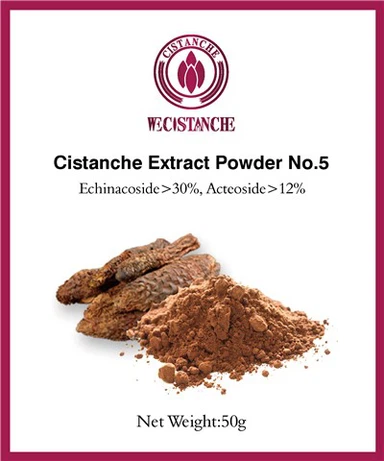
Cistanche is the dried succulent stem of Orobanchaceae Cistanche plants. The Pharmacopoeia of the People's Republic of China (2020 edition) records two botanical origins: Cistanche deserticola Y. C. Ma and Cistanche tubulosa (Schenk) Wight. Its main chemical constituents include phenylethanoid glycosides (PhGs), polysaccharides, iridoids, lignans, and oligosaccharides. Among them, echinacoside and acteoside (also called verbascoside) are the marker components specified by the Pharmacopoeia, and glycosides such as cistanoside A (Cis A) have also been included in bone-related studies. In existing animal and cell experiments, components associated with bone protection include total glycosides (TGs), polysaccharides (PSs), total phenylethanoid glycosides (CDPG), water or alcohol extracts (CDE), and individual compounds or fractions such as echinacoside, acteoside, cistanoside A, and 6-acetylmagnololide (6-AA). It should be stated in advance that the constituent profiles and potency differ across botanical origins, extraction parts, and individual compounds; when specific conclusions are discussed below, the model and component will be noted, and the results for a single compound should not be extrapolated directly as the universal efficacy of the whole crude Cistanche herb.

Effects of Cistanche: Improve Kidney Function
4 Mechanism 1: Promoting Bone Formation-Osteogenic Differentiation via Wnt/β-catenin and BMP/Smad
4.1 Two Main Pathways of Osteogenic Differentiation
Bone formation begins with the differentiation of bone-marrow mesenchymal stem cells toward the osteoblastic lineage, followed by proliferation, matrix secretion, and mineralization and maturation. In the canonical Wnt/β-catenin pathway, Wnt proteins bind the LRP5/6 receptor, inhibit β-catenin degradation, and allow it to enter the nucleus and induce the expression of osteogenic transcription factors such as Runx2 and Osterix. The BMP/Smad pathway activates the Smad cascade through bone morphogenetic proteins (e.g., BMP-2) and cooperates in driving the osteogenic phenotype. Alkaline phosphatase (ALP), type I collagen, and osteocalcin (OCN) are commonly used markers of osteogenic differentiation and mineralization.
4.2 Experimental Evidence Related to Cistanche
In the senescence-accelerated mouse prone 6 (SAMP6) model, total glycosides and polysaccharides of C. deserticola improved histopathological bone damage, promoted the formation of new bone, collagen fibers, and chondrocytes, and accelerated calcium deposition. Molecular assays showed that both fractions up-regulated BMP-2, OCN, OPG, and phosphorylated GSK-3β (Ser9), and modulated the expression of proteins related to the Wnt/β-catenin pathway, thereby promoting osteogenic bone formation and alleviating damage to the bone microarchitecture. Water and alcohol extracts were also observed in rat osteoblasts and ovariectomized rat models to raise serum ALP, osteocalcin, and calcium levels and to promote BMP-2 expression in osteoblasts. In MC3T3-E1 osteoblasts, acteoside attenuated dexamethasone-induced osteoblast apoptosis through a p53-dependent pathway; cistanoside A was observed to increase the expression of microtubule-associated protein light chain 3-I/II (LC3-I/II), enhance Wnt/β-catenin pathway activity, reduce apoptosis, enhance autophagy, and promote osteogenic differentiation. These results suggest that Cistanche-related fractions may support bone formation in experimental systems through both "promoting differentiation" and "protecting osteoblast survival," but the evidence remains predominantly at the animal and cellular levels.
Cistanche prevents Alzheimer's disease
Click here to view Cistanche for Kidney disease products
【Ask for more】 Email:cindy.xue@wecistanche.com / WhatsApp: 0086 18599088692 / WeChat: 18599088692
5 Mechanism 2: Restraining Bone Resorption-The OPG/RANKL/RANK Axis and Osteoclast Differentiation
5.1 The Switch of Osteoclast Differentiation: The OPG/RANKL/RANK System
Osteoclasts differentiate from hematopoietic myeloid precursors. Osteoblastic/stromal cells secrete RANKL, which binds the RANK receptor on osteoclast precursors and, through TRAF6, activates downstream NF-κB, PI3K/AKT, and MAPK (including JNK) pathways. These activate key osteoclast transcription factors such as NFAT2 (NFATc1) and c-Fos, ultimately forming mature osteoclasts. Osteoprotegerin (OPG) is secreted by osteoblasts and other cells; it binds RANKL competitively and blocks its association with RANK. The RANKL/OPG ratio is therefore regarded as an important indicator reflecting the intensity of bone resorption. A higher ratio means that the osteoclast-differentiation signal prevails and bone resorption is enhanced; a lower ratio favors the suppression of excessive bone resorption.
5.2 Evidence for Cistanche's Regulation of This Axis
In the osteoblastic cell line MC3T3-E1, echinacoside within a certain concentration range raised the OPG/RANKL ratio, thereby inhibiting the differentiation of osteoclast precursors into mature osteoclasts. In SAMP6 mice, total glycosides and polysaccharides down-regulated RANKL expression while promoting osteogenesis. In ovariectomized rat models, Cistanche extract and fractions such as cistanoside A, 6-acetylmagnololide, and total phenylethanoid glycosides were reported to down-regulate TRAF6, RANKL, RANK, and downstream osteoclast-related signals including NF-κB, PI3K/AKT, NFAT2, and c-Fos, and to reduce bone-resorption markers such as tartrate-resistant acid phosphatase, cathepsin K, and deoxypyridinoline, thus suppressing osteoclast formation and bone resorption. Other studies observed that Cistanche water extract and echinacoside promoted T-lymphocyte proliferation and interleukin-2 (IL-2) expression, suggesting indirect involvement in the immune–bone coupling regulation of the OPG/RANK/RANKL axis through the cytokine IL-2. Most of the above studies were animal models or in vitro cell experiments; the primary and secondary relationships among pathways, the dose–response effects, and human relevance remain to be further verified.
6 Mechanism 3: Estrogen-Like Action-Targeting High-Turnover Postmenopausal Bone Loss
The anti-osteoclast effect of estrogen on bone weakens markedly after menopause, accelerating bone turnover and enhancing bone resorption, which is an important pathological background of postmenopausal osteoporosis. Existing experiments suggest that Cistanche-related fractions may exhibit some phytoestrogen-like activity: medicated serum promoted proliferation of MCF-7 breast cancer cells and synergistically enhanced the pro-proliferative effect of diethylstilbestrol. In an estrogen-response-element reporter system, echinacoside and acteoside showed bidirectional synergistic/antagonistic regulation with estrogen, displaying features of phytoestrogen activity. Total glycosides were observed in immature female rats to exert an estrogen-mimetic action through the estrogen signaling pathway; acteoside promoted bone formation and inhibited bone resorption in ovariectomized rats, with histological, biomechanical, and bone histomorphometric results consistent with its estrogen-like activity. It must be stated cautiously that the action of phytoestrogens on human estrogen receptors varies by tissue and dose; the above cellular and animal results cannot be directly extrapolated to a therapeutic effect on human postmenopausal osteoporosis, and the initiation or discontinuation of estrogen-related medications must be evaluated by a physician.
7 Mechanism 4: Antioxidation and the Immune–Bone Axis-Protecting the Osteocyte Microenvironment
During aging and metabolic imbalance, reactive oxygen species (ROS) rise in the bone microenvironment, which can damage osteoblasts, osteocytes, and bone-marrow mesenchymal stem cells and enhance osteoclast differentiation through RANKL-related pathways; chronic low-grade inflammation and imbalance of immune cytokines also participate in bone loss. Experiments showed that Cistanche polysaccharide (CDP) increased antioxidant enzyme expression in ovariectomized rats, attenuated RANKL-induced ROS production in osteoclasts, and inhibited the activation of NFAT and MAPK, thereby suppressing osteoclastogenesis. Fractions such as total phenylethanoid glycosides were reported to inhibit the RANKL/RANK/TRAF6 downstream activation of NF-κB and PI3K/AKT and the activities of NFAT2 and c-Fos. In addition, the aforementioned T-cell–IL-2–OPG/RANKL thread can be regarded as one experimental observation point for the coupling between immune status and bone metabolism. The significance of this level lies in the possibility that Cistanche's support for bone acts not only on a single osteoblastic or osteoclastic cell type, but also on the oxidative and inflammatory microenvironment in which osteocytes reside. However, this evidence likewise remains at the preclinical stage; how antioxidation and immunomodulation translate into human bone-mass benefit still lacks direct evidence.
8 Differences in Botanical Origins and Components: C. deserticola and C. tubulosa Must Not Be Conflated
Different Cistanche botanical origins differ in host, origin, and constituent profile. Among published bone-related studies, the SAMP6 mouse Wnt/β-catenin study and some ovariectomized rat and osteoblast studies used C. deserticola and its extracts or individual compounds as subjects. Echinacoside and acteoside are marker components in both sources, but their specific content ratios and enriched parts differ. Previous studies on constipation and the microbiota were mostly based on C. deserticola, whereas C. tubulosa shows its own characteristics in phenylethanoid glycoside constituents. Therefore, when discussing "Cistanche and bone metabolism," one should distinguish botanical origin, extraction part, and specific component; the results for a certain fraction of C. deserticola should not be applied directly to products of C. tubulosa. For product labeling, the content of marker components, the detection method, and the applicable population should likewise be based on statutory standards and the product label.

Effects of cistanche- anti-fatigue
9 Evidentiary Boundaries and Research Gaps
Overall, current Cistanche bone-related research has the following boundaries. First, the evidence level is dominated by in vitro cell experiments and rodent models; conclusions from models such as ovariectomized rats, SAMP6 mice, MC3T3-E1, and MCF-7 cannot be equated directly with human efficacy. Second, well-designed clinical trials with adequate samples are still lacking, and high-quality evidence on effects on human bone mineral density, bone-turnover markers, and fracture risk is absent. Third, the absorption, distribution, metabolism, and excretion (ADME) of constituents such as phenylethanoid glycosides and polysaccharides have not been fully elucidated; available data suggest that they are mainly absorbed through the intestine, distributed to tissues such as the liver, kidney, and bone, and excreted in urine and feces after hepatic and intestinal metabolism, but oral bioavailability and the process of entry into bone still require study. Fourth, data on safety and long-term use are insufficient, and individual differences, concomitant medications, and underlying diseases have not been systematically assessed. Based on these gaps, the mechanisms described in this article should be understood as "potential steps suggested by experiments," rather than therapeutic actions clinically proven. Cistanche cannot replace standard diagnosis and treatment of osteoporosis; those who have been diagnosed with osteoporosis, take glucocorticoids long term, show marked postmenopausal bone-mass decline, or have concurrent chronic kidney disease should be evaluated and treated under the guidance of an orthopedic, endocrinology, or nephrology physician.
10 Conclusion
From the traditional proposition that "the kidney governs bone and generates marrow," to osteoblast–osteoclast coupling, the OPG/RANKL/RANK axis, and the Wnt/β-catenin and BMP/Smad pathways in modern bone remodeling, and further to experimental threads of hormone-like action, antioxidation, and the immune–bone axis, there exists a research path between Cistanche and bone that can be juxtaposed and tested. Existing preclinical studies suggest that its related fractions may act in promoting osteogenic differentiation and survival, restraining excessive bone resorption, and improving the bone microenvironment; however, the evidence remains concentrated at the cellular and animal levels, and human benefit and long-term safety await clinical-trial validation. Returning to TCM language, "tonifying the kidney" in relation to bone is an overall summary of kidney essence nourishing marrow and marrow nourishing bone; in modern language, its true strength must be tested pathway by pathway and model by model. The two languages may inspire each other but cannot replace one another, and a traditional efficacy must not be used as a promise of modern therapeutic effect.
References
[1] Wang F, Tu P, Zeng K, Jiang Y. Total glycosides and polysaccharides of Cistanche deserticola prevent osteoporosis by activating Wnt/β-catenin signaling pathway in SAMP6 mice[J]. Journal of Ethnopharmacology, 2021, 271.
[2] Research progress on the anti-osteoporosis mechanism of Cistanche deserticola extract[J]. Food Science, 2025. DOI:10.7506/spkx1002-6630-20250124-189.
[3] Potential of natural medicines for treatment of osteoporosis: a narrative review[J/OL]. PMC9924724, 2023.
[4] Li Z, Lin H, Gu L, Gao J, Tzeng C M. Herba Cistanche (Rou Cong-Rong): one of the best pharmaceutical gifts of Traditional Chinese Medicine[J]. Frontiers in Pharmacology, 2016, 7: 41.
[5] Therapeutic Anabolic and Anticatabolic Benefits of Natural Chinese Medicines for the Treatment of Osteoporosis[J/OL]. PMC6886594.
[6] Natural Products from Chinese Medicines with Potential Benefits to Bone Health[J]. Molecules, 2016, 21(3): 239.
[7] Research on the active constituents of the food-medicine homologous Cistanche and its industrial status[J]. Journal of the Chinese Institute of Food Science and Technology, 2025.