Part Ⅰ Meta-Analysis Of The Efficacy And Safety Of Finerenone in Diabetic Kidney Disease
May 15, 2023
Abstract
Background
The phase III clinical trial of the nonsteroidal mineralocorticoid receptor antagonist finer enone (BAY 94- 8862) has been completed, aiming to investigate renal and cardiovascular outcomes in type 2 diabetes (T2D) with chronic kidney disease (CKD). However, the efficacy and safety of finer enone in renal function remain controversial. The purpose of this study was to explore the efficacy and safety of finer enone in treating patients with diabetic kidney disease (DKD).
Methods
Databases of PubMed, Cochrane Library, Embase, and Web of Science were searched for randomized controlled trials (RCTs) on patients with DKD receiving finer enone treatment from inception to September 2021. Data including patient characteristics and interested outcomes were extracted, and the dichotomous data and continuous variables were evaluated using risk ratio (RR) with 95% confidence intervals (CIs) and mean differences (MD) with 95% CIs, respectively.
Results
A total of 4 RCTs involving 13,945 patients were included in this meta-analysis. Analysis results demonstrated that patients receiving finer enone showed a significant decrease in changing urinary albumin-to-creatinine ratio (UACR) from baseline (MD: −0.30; 95% CI [−0.33, −0.27], p = 0.46, I 2 = 0%) (p < 0.05). The number of patients with ≥40% reduction in estimated glomerular filtration rate (eGFR) from baseline in the finer enone group was significantly smaller than that in the placebo group (RR: 0.85; 95% CI [0.78, 0.93], p = 0.60, I 2 = 0%) (p < 0.05). No difference was found in adverse events between the finer enone and placebo groups (RR: 1.00; 95% CI [0.98, 1.01], p = 0.94, I 2 = 0%) (p = 0.65). The incidence of hyperkalemia was higher in the finer enone group than that in the placebo group (RR: 2.03; 95% CI [1.83, 2.26], p = 0.95, I 2 = 0%) (p < 0.05).
Conclusion
Finerenone contributes to the reduction of UACR and can ameliorate the deterioration of renal function in patients with T2D and CKD. A higher risk of hyperkalemia was found in the finer enone group compared with the placebo; however, there was no difference in the risk of overall adverse events.
Keywords
Finerenone (BAY 94-8862); Safety; Diabetic kidney disease; Efficacy; Renal function; Cistanche's effects.

Click here to know what is the Cistanche
Introduction
Chronic kidney disease, defined as an abnormal renal function for more than 3 months, has affected a large part of the population and resulted in a heavy burden in treatment costs around the world [1, 2]. As one of the traditional risk factors for CKD, diabetes mellitus was a prevalent disease in the world [3]. The incidence of diabetes mellitus around the world was 9.3% (463 million people) in 2019 as estimated and will rise to 10.2% (578 million people) by 2030 and 10.9% (700 million people) by 2045 [4]. Approximately 30– 40% of T2D patients will develop into DKD, with the typical clinical features of persistent albuminuria or eGFR < 60 mL/min/1.73 m2 for more than 3 months [5]. DKD with various renal pathological changes (such as extracellular matrix deposition, thickening of the glomerular basement membrane, tubule atrophy, and finally, glomerulosclerosis and tubulointerstitial fibrosis) is the leading cause of end-stage kidney disease in the developed world [6]. With a 3-fold higher risk of cardiovascular death than those with T2D alone [7], patients suffering from DKD may eventually require chronic renal replacement therapy as renal impairment progresses. However, treatments to slow the progression of DKD are limited, and current therapies are wildly used as a cornerstone, including angiotensin-converting enzyme inhibitors, angiotensin II receptor blockers, and sodium-glucose cotransporter 2 inhibitors [8–11].
Finerenone (BAY 94-8862), a novel nonsteroidal mineralocorticoid receptor antagonist, shows a higher selectivity toward the mineralocorticoid receptor and low affinity for androgen, glucocorticoid, and progesterone receptors in vitro [12, 13]. As the third generation of the nonsteroidal mineralocorticoid receptor antagonist drug, finer enone demonstrates better protective effects on cardiorenal function compared with spironolactone or eplerenone due to the balanced tissue distribution in the heart and kidney [14–18], as well as a lower incidence of adverse events such as hyperkalemia [14]. In recent years, various research studies were conducted on the clinical effectiveness and safety of finer enone in cardiovascular and kidney diseases [19, 20]. Owing to a lack of relevant reviews reporting the efficacy and safety of finer enone on the renal function of DKD patients, this meta-analysis of randomized, placebo-controlled trials was conducted to evaluate the efficacy and safety of oral finer enone as a treatment for DKD.

Herba Cistanche
Methods
1. Search Strategy
We searched PubMed, the Cochrane Library, Embase, and Web of Science for eligible studies published in English from inception to September 2021, with the search terms “Chronic kidney disease” and “Finerenone.” The detailed search strategy is available in online supplementary Table S1 (for all online suppl. material, see www.karger.com/doi/10.1159/000521908).
2. Inclusion and Exclusion Criteria
Studies meeting these criteria were considered eligible: (1) patients (age ≥18 years) with T2D and chronic kidney disease (UACR ≥30 mg/g and eGFR ≤90 mL/min/1.73 m2 ) who previously received ≥4 weeks of treatment of angiotensin-converting enzyme inhibitors or angiotensin II receptor blockers or both; (2) oral finer enone as an intervention at any doses; (3) placebo applied in the control group; (4) at least one interested outcome was reported; (5) RCTs published in English. The exclusion criteria were as follows: (1) patients with a serum potassium concentration ≥4.8 mmol/L; (2) patients receiving renal replacement therapy; (3) patients with glycosylated hemoglobin >12%; (4) animal experiments; (5) meta-analysis, review, case report, conference, and letter.
3. Data Extraction
Two reviewers independently extracted data from the included studies, and any disagreements were resolved through consultation with a third reviewer to reach a consensus. The extracted data included the first author, publication time, gender, country, drug dose, intervention time, sponsorship source, conflicts of interest, outcomes, and results. The outcomes included the changing UACR from baseline, the incidence of a ≥40% reduction in eGFR from baseline, serum potassium ≥5.6 mmol/L, and adverse events. The risk of bias was explored according to the Cochrane Handbook for Systematic Reviews of Interventions (the detailed list was as follows: selection bias [random sequence generation, allocation concealment], performance bias [blinding of participants and personnel], detection bias [blinding of outcome assessment], attrition bias [incomplete outcome], reporting bias [selective reporting], and other bias [such as conflicts of interest]) [21].
4. Data Synthesis and Analysis
The dichotomous data of outcomes were presented as a risk ratio (RR) with 95% confidence intervals (CIs). In comparison, the continuous variables of outcomes (changing from baseline to certain follow-up time) were reported as mean differences (MD) with 95% CIs. The fixed-effects model was adopted for meta-analysis when no significant heterogeneity was observed (I 2 < 50%, p ≥ 0.1), otherwise, the random-effects model was used. Sensitivity analysis was conducted to find the heterogeneity source by sequentially excluding every single study. Statistical analysis was conducted with RevMan 5.3, and p < 0.05 was considered as statistically significant.

Cistanche supplements
The efficacy and safety of Cistanche extract on diabetic nephropathy
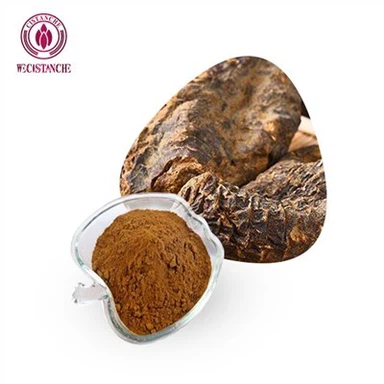
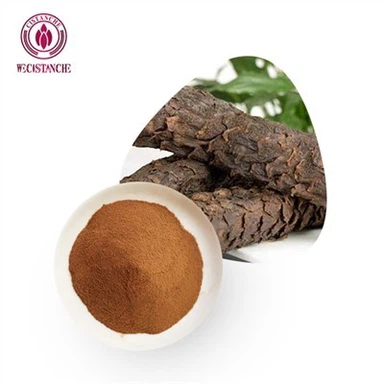
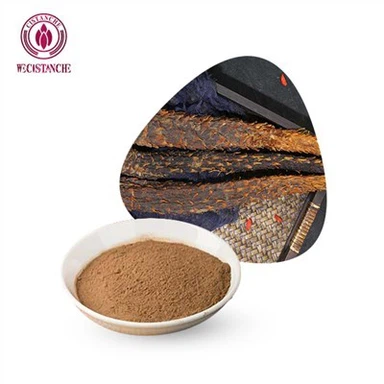
Cistanche is an herb that has been used in traditional Chinese medicine for centuries. In recent years, there has been growing interest in the potential health benefits of using Cistanche extract for managing diabetic nephropathy, a common complication of diabetes.
Research has shown that Cistanche extract offers a range of therapeutic benefits, including anti-inflammatory and antioxidant properties, which are important in managing diabetic nephropathy. These properties help to reduce oxidative stress and inflammation within the kidney, which play key roles in the development and progression of diabetic nephropathy.
Several studies have investigated the efficacy and safety of Cistanche extract on diabetic nephropathy. One study found that supplementation with Cistanche extract improved renal function in diabetic rats by reducing levels of albuminuria and serum creatinine. Another study demonstrated that Cistanche extract had protective effects against kidney damage in type 2 diabetic rats by decreasing oxidative stress markers.
Moreover, no adverse effects were reported in any of these studies, suggesting that Cistanche extract is safe for use as a complementary therapy for managing diabetic nephropathy.
In conclusion, Cistanche extract shows promise as a safe and effective therapy for diabetic nephropathy due to its anti-inflammatory and antioxidant properties. However, further research is needed to establish its long-term safety and efficacy, as well as its optimal dosages and treatment protocols for this condition.

the benefits of Cistanche
References
1. Garcia-Garcia G, Jha V. CKD in disadvantaged populations. J Nephrol. 2015 Feb;28(2): 1–5.
2. Xie Y, Bowe B, Mokdad AH, Xian H, Yan Y, Li T, et al. Analysis of the Global Burden of Disease study highlights the global, regional, and national trends of chronic kidney disease epidemiology from 1990 to 2016. Kidney Int. 2018 Sep;94(3):567–81.
3. Luyckx VA, Cherney DZI, Bello AK. Preventing CKD in developed countries. Kidney Int Rep. 2020 Mar;5(3):263–77.
4. Saeedi P, Petersohn I, Salpea P, Malanda B, Karuranga S, Unwin N, et al. Global and regional diabetes prevalence estimates for 2019 and projections for 2030 and 2045: results from the International Diabetes Federation Diabetes Atlas, 9th edition. Diabetes Res Clin Pract. 2019 Nov;157:107843.
5. Tuttle KR, Bakris GL, Bilous RW, Chiang JL, de Boer IH, Goldstein-Fuchs J, et al. Diabetic kidney disease: a report from an ADA Consensus Conference. Diabetes Care. 2014 Oct; 37(10):2864–83.
6. de Boer IH, Rue TC, Hall YN, Heagerty PJ, Weiss NS, Himmelfarb J. Temporal trends in the prevalence of diabetic kidney disease in the United States. JAMA. 2011 Jun 22; 305(24):2532–9.
7. Afkarian M, Sachs MC, Kestenbaum B, Hirsch IB, Tuttle KR, Himmelfarb J, et al. Kidney disease and increased mortality risk in type 2 diabetes. J Am Soc Nephrol. 2013 Feb; 24(2):302–8.
8. Wang K, Hu J, Luo T, Wang Y, Yang S, Qing H, et al. Effects of angiotensin-converting enzyme inhibitors and angiotensin II receptor blockers on all-cause mortality and renal outcomes in patients with diabetes and albuminuria: a systematic review and meta-analysis. Kidney Blood Press Res. 2018;43(3):768–79.
9. Association AD. Microvascular complications and foot care: standards of medical care in diabetes-2020. Diabetes Care. 2020 Jan; 43(Suppl 1):S135–51.
10. Fernandez-Fernandez B, Sarafidis P, Kanbay M, Navarro-González JF, Soler MJ, Górriz JL, et al. SGLT2 inhibitors for non-diabetic kidney disease: drugs to treat CKD that also improve glycemic. Clin Kidney J. 2020 Oct; 13(5):728–33.
11. Wada T, Mori-Anai K, Kawaguchi Y, Katsumata H, Tsuda H, Iida M, et al. Renal, cardiovascular and safety outcomes of canagliflozin in patients with type 2 diabetes and nephropathy in east and southeast Asian countries: results from the CREDENCE Trial. J Diabetes Investig. 2022 Jan;13(1):54–64.
12. Bärfacker L, Kuhl A, Hillisch A, Grosser R, Figueroa-Pérez S, Heckroth H, et al. Discovery of BAY 94-8862: a nonsteroidal antagonist of the mineralocorticoid receptor for the treatment of cardiorenal diseases. ChemMedChem. 2012 Aug;7(8):1385–403.
13. Rico-Mesa JS, White A, Ahmadian-Tehrani A, Anderson AS. Mineralocorticoid receptor antagonists: a comprehensive review of finer enone. Curr Cardiol Rep. 2020 Sep 10; 22(11):140.
14. Pitt B, Kober L, Ponikowski P, Gheorghiade M, Filippatos G, Krum H, et al. Safety and tolerability of the novel non-steroidal mineralocorticoid receptor antagonist BAY 94-8862 in patients with chronic heart failure and mild or moderate chronic kidney disease: a randomized, double-blind trial. Eur Heart J. 2013 Aug;34(31):2453–63.
15. Kolkhof P, Delbeck M, Kretschmer A, Steinke W, Hartmann E, Bärfacker L, et al. Finerenone, a novel selective nonsteroidal mineralocorticoid receptor antagonist protects from rat cardiorenal injury. J Cardiovasc Pharmacol. 2014 Jul;64(1):69–78.
16. Bakris GL, Agarwal R, Chan JC, Cooper ME, Gansevoort RT, Haller H, et al. Effect of finer enone on albuminuria in patients with diabetic nephropathy: a randomized clinical trial. JAMA. 2015 Sep 1;314(9):884–94.
17. Kolkhof P, Jaisser F, Kim SY, Filippatos G, Nowack C, Pitt B. Steroidal and novel nonsteroidal mineralocorticoid receptor antagonists in heart failure and cardiorenal diseases: comparison at bench and bedside. Handb Exp Pharmacol. 2017;243:271–305.
18. Grune J, Beyhoff N, Smeir E, Chudek R, Blumrich A, Ban Z, et al. Selective mineralocorticoid receptor cofactor modulation as the molecular basis for finer enone’s antifibrotic activity. Hypertension. 2018 Apr; 71(4): 599–608.
19. Pei H, Wang W, Zhao D, Wang L, Su GH, Zhao Z. The use of a novel non-steroidal mineralocorticoid receptor antagonist finer enone for the treatment of chronic heart failure: a systematic review and meta-analysis. Medicine. 2018 Apr;97(16):e0254.
20. Fu Z, Geng X, Chi K, Song C, Wu D, Liu C, et al. Efficacy and safety of finer enone in patients with chronic kidney disease: a systematic review with meta-analysis and trial sequential analysis. Ann Palliat Med. 2021 Jul; 10(7):7428–39.
21. Higgins JPT. Cochrane handbook for systematic reviews of interventions version 6.1. John Wiley & Sons; 2020.
Yaning Zheng a; Sheng Ma b; Qiaomu Huang a; Yu Fang a; Hongjin Tan a; Yong Chen a; Cairong Li a, c.
a. Department of Nephrology, Xianning Central Hospital, First Affiliated Hospital of Hubei University of Science and Technology, Xianning, China;
b. Department of Anorectal, Xianning Central Hospital, First Affiliated Hospital of Hubei University of Science and Technology, Xianning, China;
c. Xianning Medical College, Hubei University of Science and Technology, Xianning, China