Patients With Primary Aldosteronism Are At Increased Risk Of Heart And Kidney Target Organ Damage? How To Treat It?
May 06, 2024
Primary aldosteronism (PA) is the most common cause of secondary hypertension, but it is often underrecognized and undertreated. In addition, patients with PA are at significantly increased risk of cardiac and renal target organ damage. Steroidal mineralocorticoid receptor antagonists (MRA) have good efficacy in the treatment of PA and can reduce the risk of target organ damage. However, steroidal MRAs are often underprescribed and are poorly tolerated by some patients due to side effects. Nonsteroidal MRA reduces adverse renal and cardiovascular outcomes in patients with diabetic nephropathy and is well tolerated. Although the antihypertensive effect of these drugs is unclear, they may play a potential role in targeting organ damage in patients with PA.

click to Cistanche for kidney disease
Epidemiological study of the effects of PA on target organs of the heart and kidneys
1. Cardiovascular effects
PA is associated with left ventricular hypertrophy, increased ventricular volume, and impaired systolic and diastolic function. In addition to exhibiting adverse cardiac remodeling, PA patients also have a significant clinical cardiovascular disease burden, with prevalence estimates ranging from 9.4% to 35%. Despite the identification of PA and targeted therapy, patients with PA are at higher risk for cardiovascular events (CVE) compared with non-PA hypertensive patients. Coronary artery disease (CAD), heart failure, stroke, and atrial fibrillation are common CVEs in patients with PA.
2. Kidney effects
Compared with non-PA hypertension, PA was associated with glomerular hyperfiltration and microalbuminuria (OR=2.09; 95% CI: 1.40-3.12) and overt proteinuria (OR=2.68; 95% CI: 1.89- 3.79) are associated with higher risks. In a retrospective Japanese registry of 2366 patients with PA, the authors reported a prevalence of overt proteinuria of 10.3%, which is comparable to the prevalence reported in a smaller European study. The incidence of microalbuminuria in PA patients is estimated to be 26.5% to 42%.
There is limited evidence on how the renal effects of PA translate into clinical renal endpoints. Hundemer et al evaluated the risk of chronic kidney disease (CKD) in 520 PA patients and 15,464 matched non-PA hypertensive patients. The results of the study showed that PA patients receiving medical treatment were associated with 55.6 CKD events per 1000 person-years, compared with 35.6 events per 1000 person-years in the non-PA hypertension group, and the glomerular filtration rate (eGFR) decreased more in PA patients. quick.
Steroidal MRA in PA and hypertension
1. Application of steroid MRA in PA
Steroidal MRA is the main non-surgical treatment for patients with bilateral PA or those who are unfit/unwilling to undergo adrenalectomy. Although adrenal surgery in patients with unilateral PA has a better antihypertensive effect than MRA treatment, MRA can effectively reduce blood pressure and improve hypokalemia in patients with PA.
Observational studies have shown that MRA treatment is associated with a 25% reduction in systolic blood pressure, with nearly half of patients achieving adequate blood pressure control with less total antihypertensive medication after starting MRA treatment compared with before treatment.
2. Application of steroid MRA in hypertension
MRA has good efficacy in blood pressure control, and high-quality evidence supports its use in the treatment of refractory hypertension. After optimized first-line antihypertensive therapy (with angiotensin receptor blockers or angiotensin-converting enzyme inhibitors, calcium channel blockers, and thiazides or thiazide diuretics), approximately 70% of refractory MRA is recommended as the drug of choice in adult patients with hypertension, even in the absence of PA. MRA is not recommended only in patients with or at risk for hyperkalemia (eg, patients with advanced CKD).

Steroidal vs. nonsteroidal MRAs: mechanisms of action and adverse effects
Steroidal MRAs (spironolactone and eplerenone) and nonsteroidal MRAs (fenelidone) have differences in mode of action, tissue distribution, pharmacokinetics, effects on cofactor recruitment, and gene expression. Fenelinone has a nonsteroidal structure and unique mineralocorticoid (MR) binding properties, resulting in high potency and selectivity. The renal tissue distribution of steroidal MRAs is higher than that of the heart, whereas the renal-cardiac distribution of fenelidone is the same, which may explain the smaller effect of fenelidone on electrolyte balance compared with steroidal MRAs. Unlike spironolactone, fenelinone is less lipophilic and is less excreted by the kidneys. Finelidone blocks MR cofactor recruitment more effectively than eplerenone.
Both spironolactone and eplerenone can cause hyperkalemia and worsening of renal function. Antiandrogenic effects, including gynecomastia, breast pain, and sexual side effects, have been seen with spironolactone and non-selective first-generation MRA. The risk of hyperkalemia has been reported to be 2% to 7% in patients receiving steroid MRA therapy. Gynecomastia and breast pain were reported in 10% to 14% of patients receiving spironolactone, compared with <1% of patients receiving placebo or eplerenone.
Target organ damage of steroidal MRA and PA
In carefully controlled clinical trials, both spironolactone and eplerenone were effective in restoring normal blood pressure and potassium. However, data from several large retrospective cohort studies suggest that the doses of steroidal MRA used in clinical practice often have varying efficacy in preventing target organ damage. A retrospective cohort study of 107 patients with PA and 894 patients with essential hypertension showed that patients with medically treated PA were less likely to develop atrial fibrillation compared with patients with surgically treated PA or essential hypertension. The stakes are higher.
In a US single-center cohort of 602 patients with PA treated with steroid MRA and 41,853 age-matched patients with essential hypertension, the adjusted 10-year cumulative CVE incidence rate in patients with PA was 14.1 (95 % CI: 10.1~18.0)/100 people, the adjusted risk of new death, diabetes and atrial fibrillation was higher. Results of a study of hypertensive patients without known cardiovascular disease showed that the 10-year cumulative incidence of new-onset atrial fibrillation in patients with PA who were under-treated with MRA was 26.5 cases per 100 patients, compared with the hypertensive control group. The risk increased by 2.55 times. Notably, cardiovascular and renal risks in both studies were mitigated in medically treated PA patients whose plasma renin was no longer suppressed.
Taken together, the available data suggest that, to mitigate the increased cardiovascular and renal risks of PA, pharmacological treatment should target renin normalization as an alternative to adequate MR blockade. However, clinicians rarely focus on renin targets after initiation of MRA therapy.
Steroid MRA and target organ damage in essential hypertension
MR acts as a nuclear receptor expressed in several non-epithelial tissue/cell types, including kidney, heart, endothelial cells, vascular smooth muscle cells, and inflammatory cells (especially macrophages and fibroblasts). The physiological effects of aldosterone activation lead to salt and water retention, directly affecting blood pressure.
In animal and translational models, pathological MR overactivation also affects target gene expression in inflammation and fibrosis pathways, directly inducing target organ damage in the heart, blood vessels, and kidneys. Furthermore, MR-mediated cardiac and renal injury occur independently of systemic blood pressure effects and are exacerbated by high sodium intake.
Even without PA, steroidal MRAs have emerged as promising agents for improving inflammation and fibrosis in patients with resistant hypertension, CKD, and heart failure, and not just as potassium-sparing diuretics.
Although RCT evidence supports the protective effects of steroidal MRAs on target organs, observational studies have shown that in real-world clinical practice, MRAs may cause increased mortality due to acute kidney injury, hyperkalemia, and the anti-androgenic effects of steroidal MRAs. There is significant prescribing inertia and high discontinuation rates.
Nonsteroidal MRA and target organ damage in diabetic nephropathy
Two recent RCT studies (FIDELIO-DKD trial and FIGARO-DKD trial) evaluated the effect of fenelidone on the progression of CVE and diabetic nephropathy in patients with type 2 diabetes.
The FIDELIO-DKD trial is a double-blind RCT study that enrolled 5734 patients with CKD and type 2 diabetes who were randomly assigned to receive fenelinone or placebo in a 1:1 ratio. The study results showed that the risk of primary endpoint events (renal failure, sustained reduction of eGFR by at least 40% from baseline, or death from renal causes) in the fenelidone group and the placebo group were 17.8% and 21.1% respectively, and the risk of secondary composite events (cardiovascular disease) was 17.8% and 21.1% respectively. The risks of death from causes, nonfatal myocardial infarction, nonfatal stroke, or hospitalization for heart failure were 13.0% and 14.8%, respectively.

The FIGARO-DKD trial was similar to the FIDELIO-DKD trial. A total of 7437 patients with diabetic nephropathy were included in the study and randomly assigned to receive fenelidone or placebo. The risk of the primary endpoint (death from cardiovascular causes, nonfatal myocardial infarction, nonfatal stroke, or hospitalization for heart failure) was 12.4% in the fenceline group and 14.2% in the placebo group, and the risk of the secondary composite endpoint (renal Failure, sustained eGFR decrease of at least 40% from baseline, or death from renal causes) were 9.5% and 10.8% respectively.
In both studies, the risk of adverse events (including acute kidney injury) was similar in both groups, and the risk of hyperkalemia was higher in the fenceline group than in the placebo group, but there were no fatal events in either study. Hyperkalemia. Based on these studies, the American Diabetes Association recently updated its guidelines to recommend the use of fenelidone (Grade A) in patients with CKD who are at increased risk for CVE or CKD or who are unable to use sodium-glucose cotransporter 2 (SGLT-2) inhibitors.
summary
Patients with PA are at increased risk of damage to target organs such as the heart and kidneys, and require early identification and targeted treatment. Steroid MRA can effectively reduce blood pressure in patients with refractory hypertension and PA and can reduce the risk of target organ damage. Despite this, steroidal MRA has not been fully utilized. Nonsteroidal MRA is better tolerated and has been shown to significantly reduce the risk of renal and cardiovascular adverse events in patients with diabetic nephropathy.
How Does Cistanche Treat Kidney Disease?
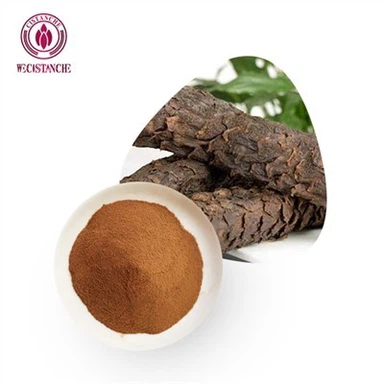
Cistanche is a traditional Chinese herbal medicine used for centuries to treat various health conditions, including kidney disease. It is derived from the dried stems of Cistanche deserticola, a plant native to the deserts of China and Mongolia. The main active components of cistanche are phenylethanoid glycosides, echinacoside, and acteoside, which have been found to have beneficial effects on kidney health.
Kidney disease, also known as renal disease, refers to a condition in which the kidneys are not functioning properly. This can result in a buildup of waste products and toxins in the body, leading to various symptoms and complications. Cistanche may help treat kidney disease ase through several mechanisms.
Firstly, cistanche has been found to have diuretic properties, meaning it can increase urine production and help eliminate waste products from the body. This can help relieve the burden on the kidneys and prevent the buildup of toxins. By promoting diuresis, cistanche may also help Reduce high blood pressure, a common complication of kidney disease.
Moreover, cistanche has been shown to have antioxidant effects. Oxidative stress, caused by an imbalance between the production of free radicals and the body's antioxidant defenses, plays a key role in the progression of kidney disease. ies help neutralize free radicals and reduce Oxidative stress, thereby protecting the kidneys from damage. The phenylethanoid glycosides found in cistanche have been particularly effective in scavenging free radicals and inhibiting lipid peroxidation.
Additionally, cistanche has been found to have anti-inflammatory effects. Inflammation is another key factor in the development and progression of kidney disease. Cistanche's anti-inflammatory properties help reduce the production of pro-inflammatory cytokines and inhibit the activation of inflammation mandatory pathways, thus alleviating inflammation in the kidneys.

Furthermore, cistanche has been shown to have immunomodulatory effects. In kidney disease, the immune system can be dysregulated, leading to excessive inflammation and tissue damage. Cistanche helps regulate the immune response by modulating the production and activity of immune cells, such as T cells and macrophages. This immune regulation helps reduce inflammation and prevent further damage to the kidneys.
Moreover, cistanche has been found to improve renal function by promoting the regeneration of renal tubes with cells. Renal tubular epithelial cells play a crucial role in the filtration and reabsorption of waste products and electrolytes. In kidney disease, these cells can be damaged, leading to damaged renal function. Cistanche's ability to promote the regeneration of these cells helps restore proper renal function and improve overall kidney health.
In addition to these direct effects on the kidneys, cistanche has been found to have beneficial effects on other organs and systems in the body. This holistic approach to health is particularly important in kidney disease, as the condition often affects multiple organs and systems. che has been shown to have protective effects on the liver, heart, and blood vessels, which are commonly affected by kidney disease. By promoting the health of these organs, cistanche helps improve overall kidney function and prevent further complications.
In conclusion, cistanche is a traditional Chinese herbal medicine used for centuries to treat kidney disease. Its active components have diuretic, antioxidant, anti-inflammatory, immunomodulatory, and regenerative effects, which help improve renal function and protect the kidneys from further damage. , cistanche has beneficial effects on other organs and systems, making it a holistic approach to treating kidney disease.