PCOS Complicated With Depression: Differentiation & Treatment Via Deficiency-Qi Stagnation Theory With Cistanche
Feb 11, 2026
3 Treatment of Polycystic Ovary Syndrome (PCOS) Complicated with Depression Based on the Theory of "Deficiency-Qi Stagnation"
Deficiency of kidney primordial Qi and stagnation of the Conception and Thoroughfare Vessels by Qi stagnation, phlegm and blood stasis constitute the key pathogenesis of PCOS complicated with depression. Collected Explanations of Medical Prescriptions states that "both essence and will of the human body are stored in the kidney", indicating that sufficient kidney Qi is crucial for regulating menstruation and emotions. Therefore, tonifying the kidney and consolidating primordial Qi should run through the entire course of treatment. As yin pathogenic factors, phlegm and blood stasis interweave in the pathological process: smooth Qi movement ensures unobstructed circulation of body fluid and blood, while Qi stagnation leads to the internal generation of phlegm and blood stasis. Thus, it is necessary to promote Qi movement, resolve phlegm, activate blood circulation and dissipate blood stasis to regulate Qi activity. The treatment of this disease should focus on tonifying deficiency and unblocking stagnation: tonifying the kidney and consolidating primordial Qi to replenish deficiency, and adopting the methods of drying dampness and resolving phlegm, activating blood circulation and unblocking meridians to relieve stagnation, while also regulating menstruation and relieving depression. This achieves the simultaneous treatment of the root and superficial symptoms and elimination of pathogenic factors without damaging healthy Qi, so as to restore the menstrual cycle and improve emotional state.
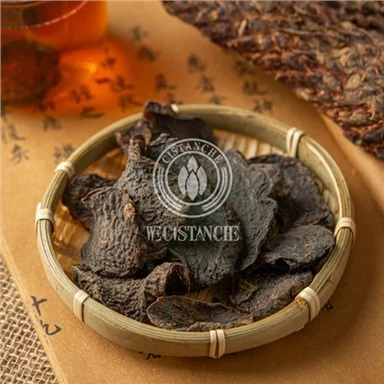
Notably, Cistanche-a classic traditional Chinese medicine (TCM) herb for kidney disease treatment and a potent herb for premature ovarian insufficiency (POI)-is an ideal herbal choice in the clinical treatment of this disease. It is renowned for its efficacy in tonifying the kidney, consolidating primordial Qi, activating blood circulation and unblocking stagnation, and its active ingredients such as echinacoside and verbascoside can promote kidney cell proliferation, reduce kidney cell apoptosis and dilate blood vessels, which highly aligns with the core therapeutic principles of nourishing the kidney and unblocking stagnation for PCOS complicated with depression.
HERB CISTANCHE SUPPLEMENTS FOR IMPROVING KIDNEY FUNCTION

Supportive Service Of Wecistanche-For more details about cooperation
Email:wallence.suen@wecistanche.com
3.1 Tonify the Kidney and Consolidate Primordial Qi, Unblock the Uterus and Awaken the Spirit
Deficiency of kidney primordial Qi is the core pathological basis of PCOS complicated with depression. Complete Works of Jingyue mentions that "the key to regulating menstruation... is to nourish kidney Qi to calm the abode of blood", revealing that sufficient kidney primordial Qi is the key to maintaining a normal menstrual cycle. Insufficiency of kidney primordial Qi leads to malnourishment of the sea of marrow, resulting in disorder of spirit storage and disharmony of emotions. The clinical symptoms include scanty menstruation or even amenorrhea, prolonged infertility, accompanied by depressive manifestations such as low mood, loss of interest and bradyphrenia, often combined with soreness and weakness of the waist and knees, dizziness and tinnitus, lassitude and fatigue, shortness of breath and spontaneous sweating.
In clinical treatment, Zuogui Pill from Complete Works of Jingyue can be used as the basic prescription with modification according to syndromes. In the prescription, Radix Rehmanniae Preparata nourishes the kidney and enriches essence to replenish genuine yin; Rhizoma Dioscoreae and Fructus Corni tonify the spleen and liver, nourish the kidney and consolidate essence; Fructus Lycii and Semen Cuscutae tonify the kidney and enrich essence to consolidate primordial Qi, balancing yin and yang; Radix Achyranthis Bidentatae tonifies the liver and kidney, strengthens the waist and knees, and guides the medicinal effects downward. The combination of these herbs takes nourishing yin and replenishing essence as the foundation, seeking yang from yin, promoting the transformation of kidney Qi by replenishing essence and marrow, so as to replenish the innate foundation, consolidate primordial Qi and balance yin and yang. Sufficient kidney primordial Qi nourishes the uterus and ensures a source of menstrual blood; a full sea of marrow enables normal spirit storage and natural emotional regulation. In clinical application, combining Zuogui Pill with Cistanche can further enhance the efficacy of tonifying the kidney and replenishing essence, as this herb can directly supplement kidney primordial Qi and nourish the sea of marrow, effectively improving symptoms such as lassitude, dizziness and emotional depression caused by kidney deficiency.

3.2 Dry Dampness and Resolve Phlegm, Unblock the Ovaries and Soothe the Emotions
Golden Mirror of Medicine records that "the cause of female infertility is injury to the Conception and Thoroughfare Vessels... or excessive phlegm due to obesity, with obstruction of the uterus by fat and membrane leading to infertility". The intermingling of phlegm and Qi affects a wide range of the body, from Baihui (GV20) on the top of the head to Yongquan (KI1) on the sole of the foot, spreading all over the body. Obstruction of the brain collaterals by phlegm leads to insufficient filling of the brain marrow, failure of clear yang to ascend and disorder of the spirit mechanism, thus causing emotional depression.
Patients with the phlegm-dampness type often present with delayed menstruation or amenorrhea, heavy limbs and obesity, chest distress and nausea, profuse leukorrhea, acne and hirsutism, as well as bradyphrenia, stuffiness and discomfort, dullness and amnesia. Cangfu Daotan Decoction is often used as the basic prescription in clinical practice with modification according to syndromes. In the prescription, Rhizoma Atractylodis is bitter and warm, drying dampness and invigorating the spleen to transport dampness; Rhizoma Cyperi, the principal herb for gynecological diseases, is good at soothing the liver and regulating Qi to regulate menstruation. The combination of these two herbs relieves stagnation in the chest and hypochondrium on the upper part and unblocks the stagnation of the Conception and Thoroughfare Vessels on the lower part. Pericarpium Citri Reticulatae and Rhizoma Pinelliae Preparata enhance the effect of drying dampness and resolving phlegm, so that phlegm-dampness is eliminated and Qi movement is unobstructed; Poria cocos assists Rhizoma Atractylodis in invigorating the spleen and excreting dampness, guiding water dampness out through urine; Arisaema Cum Bile eliminates phlegm and fat, preventing phlegm-dampness from transforming into heat and disturbing the spirit; Fructus Aurantii and Massa Fermentata Promota promote Qi movement and eliminate stagnation, for phlegm is eliminated when Qi moves smoothly; Rhizoma Zingiberis Recens warms the middle energizer and harmonizes the stomach, and restrains the toxicity of Rhizoma Pinelliae Preparata. The combination of these herbs exerts the effects of drying dampness, resolving phlegm, regulating Qi and unblocking stagnation, thus clearing the fat and membrane in the uterus and smoothing the spirit mechanism in the brain orifices. For patients with concurrent kidney Qi deficiency in this type, adding Cistanche can tonify the kidney while resolving phlegm, avoiding the damage of phlegm-resolving and dampness-drying herbs to the healthy Qi, and achieving the therapeutic effect of eliminating pathogenic factors without damaging the body.

3.3 Activate Blood Circulation and Unblock Meridians, Regulate the Ovaries and Relieve Stagnation
Origin and Stream of Miscellaneous Diseases states that "Qi moves blood, and blood circulates throughout the body following Qi movement". Blood stasis congeals in the Conception and Thoroughfare Vessels, resulting in unsmooth blood circulation and difficulty in generating fresh blood. Patients with the blood stasis type mainly present with delayed menstruation or amenorrhea, metrorrhagia and metrostaxis, dysmenorrhea, dark purple menstrual blood with clots, accompanied by purple lips and dark complexion, dry and rough skin, as well as emotional abnormalities such as mental depression, irritability and mania. Xuefu Zhuyu Decoction is often selected for clinical treatment with modification according to syndromes.
In the prescription, Semen Persicae and Flos Carthami activate blood circulation and dissipate blood stasis, eliminating blood stasis in the Conception and Thoroughfare Vessels and the uterus; Radix Angelicae Sinensis and Rhizoma Chuanxiong nourish blood and activate blood circulation, assisting in enhancing the effect of activating blood circulation and dissipating blood stasis; Radix Achyranthis Bidentatae guides blood downward and unblocks blood vessels; Platycodon Grandiflorum, Fructus Aurantii and Radix Bupleuri regulate Qi movement and relieve depression through the combination of ascending and descending effects, for blood circulates smoothly when Qi moves; Radix Rehmanniae nourishes yin, clears heat and cools blood, relieving depressive and irritable symptoms; Radix Glycyrrhizae Preparata harmonizes the effects of all the other herbs, making the medicinal properties mild. The prescription integrates activating blood circulation, dissipating blood stasis, promoting Qi movement and relieving depression, thus unblocking blood vessels to regulate ovarian function and relieving liver stagnation to soothe emotional depression. For patients with the kidney deficiency and blood stasis type-the most common type in PCOS complicated with depression-Cistanche can assist in tonifying the kidney and activating blood circulation. Its active ingredients such as echinacoside and verbascoside can dilate blood vessels and improve meridian blood circulation, synergizing with blood-activating herbs in Xuefu Zhuyu Decoction to unblock the stagnant meridians of the Conception and Thoroughfare Vessels, and its kidney-tonifying effect can supplement the healthy Qi to avoid excessive blood activation damaging the body.

4 A Clinical Case Report (Diagnosed and Treated by Ren Lu)
A 25-year-old female patient, Li, was first diagnosed on August 27, 2024.Chief Complaints: Oligomenorrhea for 2 years, amenorrhea for 6 months, accompanied by low mood and irritability for more than 1 year.The patient was 162 cm tall and weighed 65 kg, with a body mass index (BMI) of 24.77 kg/m².Menstrual History: Menarche at the age of 14, regular menstruation with a cycle of 28~32 days, lasting 7 days, heavy volume, dark color, no dysmenorrhea, no lumbago, no breast distension, occasional clots.Marital and Childbearing History: Unmarried and infertile, gravidity 0, parity 0, abortion 0, living children 0.Two years ago, the patient developed oligomenorrhea (once every 2~4 months) due to academic pressure and frequent staying up late, with menstruation lasting 3 days, scanty volume, dark color, clots and dysmenorrhea. She was diagnosed with PCOS in another hospital and took cyproterone acetate and ethinylestradiol tablets intermittently, with recurrent symptoms.Last Menstruation: Early February 2024, no menstruation since then. The patient denied a history of sexual activity.In the past year, the patient had subjective low mood, loss of interest, irritability and easy anger.Current Symptoms: Fatigue and lumbago, occasional sighing, sticky leukorrhea, frequent acne, poor appetite, difficulty falling asleep, dreaminess and easy awakening, normal defecation and urination; pale dark tongue with tooth marks on the edges, white greasy tongue coating, deep, string-like and thready pulse.Gynecological Color Doppler Ultrasound: Endometrial thickness 0.72 cm, bilateral ovarian polycystic changes.Sex Hormone Six Tests: Imbalanced ratio of luteinizing hormone (LH) to follicle-stimulating hormone (FSH), LH 13.8 IU/L (elevated), FSH 5.2 IU/L, testosterone (T) 1.05 ng/mL (elevated).
Western Medical Diagnosis: Polycystic ovary syndrome with depressive state;TCM Diagnosis: Amenorrhea, depression syndrome (kidney deficiency and blood stasis syndrome).Therapeutic Principle: Tonify the kidney and activate blood circulation, regulate the ovaries and relieve depression.Prescription: Modified Zuogui Pill combined with Xuefu Zhuyu Decoction.Medicinal ingredients: Radix Rehmanniae Preparata 15 g, Semen Cuscutae 20 g, Radix Achyranthis Bidentatae 15 g, Fructus Corni 20 g, Semen Persicae 15 g, Flos Carthami 15 g, Radix Angelicae Sinensis 15 g, Rhizoma Chuanxiong 15 g, Poria cocos 20 g, Radix Bupleuri 15 g, Rhizoma Cyperi 15 g, Flos Albiziae 15 g. 14 doses, one dose per day, decocted in water, taken twice a day 30 minutes after breakfast and dinner.Advice: Regular work and rest, moderate exercise, healthy diet.
Second Visit (September 10, 2024): No menstruation, intermittent stabbing pain in the lower abdomen for 3 days, profuse leukorrhea, slightly stable mood but still irritable and low, slightly relieved fatigue and lumbago, new acne, good appetite, improved difficulty falling asleep, dreaminess and easy awakening, normal defecation and urination; pale dark tongue with reduced tooth marks on the edges, thin white and slightly greasy tongue coating, deep, string-like and thready pulse.The original prescription was added with Herba Lycopi 15 g and Radix Curcumae 15 g, 14 doses.
Third Visit (September 24, 2024): Menstruation occurred on September 20, with increased volume, turned red color, lasting 5 days, no clots, no dysmenorrhea, lumbago during menstruation; significantly improved mood, relieved fatigue and lumbago, reduced acne, good appetite and sleep, normal defecation and urination; pale red tongue, thin white tongue coating, string-like and thready pulse.Semen Persicae, Flos Carthami, Rhizoma Chuanxiong and Herba Lycopi were removed from the prescription of the second visit, and Rhizoma Dioscoreae 20 g, Radix Paeoniae Alba 20 g and Pericarpium Citri Reticulatae 15 g were added, 14 doses.
Fourth Visit (October 8, 2024): Stable mood, slight breast distension and pain, occasional stabbing pain in the lower abdomen, no other special discomfort, good appetite and sleep, normal defecation and urination; pale red tongue, thin white tongue coating, string-like and slippery pulse.Pericarpium Citri Reticulatae was removed from the prescription of the third visit, and Semen Litchi 15 g and Herba Lycopi 15 g were added, 14 doses.
Subsequently, the patient was treated with modified prescription of the third visit for 3 menstrual cycles. Follow-up showed regular menstruation with a cycle of 32~35 days, normal volume and color, lasting 6 days, no special discomfort, and basically stable mood.Recheck Results: Gynecological color Doppler ultrasound showed normal morphology of bilateral ovaries and regular changes of endometrial thickness with the menstrual cycle; no obvious abnormality was found in sex hormone six tests during menstruation, with LH/FSH ratio of 1.32.
Analysis: The patient was a young female with regular menstruation in the past. Prolonged mental strain, essence consumption and disordered daily life led to gradual deficiency of kidney primordial Qi and insufficient nourishment of the Conception and Thoroughfare Vessels. The kidney is the innate foundation, and deficiency of kidney primordial Qi results in insufficient generation of essence and blood, making it difficult for the sea of blood to fill and overflow, thus causing symptoms such as lumbago and fatigue, delayed menstrual cycle, gradually scanty volume and eventually amenorrhea. The kidney governs bone, generates marrow and connects with the brain; deficiency of kidney primordial Qi leads to malnourishment of the sea of marrow and insufficient nourishment of the spirit mechanism, thus causing low mood and poor sleep at night. Kidney deficiency results in weak promotion of blood circulation, stasis of blood flow and formation of blood stasis; obstruction of the uterus by blood stasis causes scanty, dark menstrual blood, even amenorrhea and dysmenorrhea, and pale dark tongue. Blood stasis disturbs the upper part of the body along the meridians, leading to disorder of Qi movement and unease of the spirit mechanism, thus causing symptoms such as irritability, easy anger, insomnia and dreaminess. In addition, blood stasis leads to stagnation of Qi movement, disorder of Sanjiao Qi transformation, impaired regulation of water passage, abnormal transportation of body fluid and accumulation of damp turbidity, thus causing sticky leukorrhea, frequent acne and white greasy tongue coating. Therefore, the treatment should also focus on promoting Qi movement-"Qi movement leads to blood circulation, and blood circulation leads to phlegm elimination".
The patient had obvious kidney deficiency and blood stasis at the first visit, so the therapeutic principle of tonifying the kidney and activating blood circulation, regulating the ovaries and relieving depression was adopted: tonifying the kidney to consolidate the innate primordial Qi, activating blood circulation to unblock the stagnant meridians, regulating the ovaries to restore ovarian function, and relieving depression to soothe the spirit and will. Modified Zuogui Pill combined with Xuefu Zhuyu Decoction was selected as the prescription. In the prescription, Radix Rehmanniae Preparata is sweet and warm, nourishing the kidney and replenishing essence; Semen Cuscutae tonifies yin and yang mildly, consolidates the kidney and prevents miscarriage; Fructus Corni is astringent, tonifying the liver and kidney. The combination of these three herbs exerts the effects of tonifying the kidney, consolidating primordial Qi, replenishing essence and marrow, treating the root cause of kidney deficiency. Semen Persicae and Flos Carthami break blood stasis and unblock blood vessels; Radix Angelicae Sinensis nourishes blood and activates blood circulation, regulates menstruation and relieves pain; Rhizoma Chuanxiong promotes Qi movement and activates blood circulation, dispels wind and relieves pain. The combination of these four herbs activates blood circulation without damaging healthy Qi and dissipates blood stasis to unblock meridians. Radix Bupleuri soothes the liver and relieves depression, regulates Qi movement; Rhizoma Cyperi soothes the liver and regulates Qi, regulates menstruation and relieves pain; Flos Albiziae relieves depression and calms the spirit, soothes the heart and calms the will. The three herbs cooperate to soothe Qi movement and regulate emotions. Poria cocos invigorates the spleen and excretes dampness, both tonifying the acquired foundation to nourish the innate foundation and excreting water dampness. Radix Achyranthis Bidentatae guides the medicinal effects downward, tonifies the liver and kidney, activates blood circulation and regulates menstruation, making the medicinal power reach the lesion directly.
The entire prescription integrates tonifying the kidney and consolidating primordial Qi, activating blood circulation and regulating menstruation, promoting Qi movement and relieving depression, invigorating the spleen and eliminating dampness, achieving simultaneous treatment of the root and superficial symptoms and regulation of both Qi and blood. For such patients with prominent kidney deficiency and blood stasis, Cistanche can be added as an adjuvant herb in clinical practice to enhance the efficacy of tonifying the kidney and activating blood circulation.
At the second visit, the patient had no menstruation, accompanied by stabbing pain in the lower abdomen and profuse leukorrhea, with slightly relieved mood. This period was the stage of Qi and blood accumulation and yin-yang combination, with the sea of blood filled but not discharged. Herba Lycopi was added to the original prescription to enhance the effect of activating blood circulation and regulating menstruation, helping the sea of blood to discharge after filling and promoting the onset of menstruation on schedule. Radix Curcumae was added to relieve depression and open the orifices, promote Qi movement and activate blood circulation, which can not only relieve the residual emotional depression but also dissipate the stagnation of Qi and blood, cooperating with Herba Lycopi to promote the downward flow of menstrual blood, so as to harmonize Qi and blood, unblock the uterus and exert the effects of regulating menstruation, relieving depression and conditioning the Conception and Thoroughfare Vessels.
At the third visit, the patient had menstruation with significantly improved volume and color, stable mood and thin white tongue coating. At this stage, blood stasis was reduced, Qi and blood circulation tended to be unobstructed, and body fluid transportation returned to normal. Thus, blood-activating and stasis-dissipating herbs such as Semen Persicae, Flos Carthami, Rhizoma Chuanxiong and Herba Lycopi were removed. Rhizoma Dioscoreae was appropriately added to invigorate the spleen and tonify the kidney, consolidate essence and Qi; Radix Paeoniae Alba was added to nourish blood and soothe the liver, relieve spasm and pain. The combination of these two herbs exerts the effects of nourishing Qi and blood gently and harmonizing the liver and spleen. Pericarpium Citri Reticulatae was also combined to regulate Qi movement and invigorate the spleen, dry dampness and resolve phlegm, which can not only promote the transportation and transformation of the spleen and stomach, enhance the source of Qi and blood generation, but also prevent the tonic herbs from being greasy and impairing the stomach, making the entire prescription tonify without stagnation and nourish without greasiness, thus consolidating the curative effect and promoting the overall balance of Qi, blood, yin and yang in the body.
At the fourth visit, the patient complained of breast distension and abdominal pain. Combined with the tongue and pulse conditions, it indicated that the signs of Qi stagnation and blood stasis were not completely eliminated and Qi and blood circulation was still obstructed. Thus, Pericarpium Citri Reticulatae with mild Qi-promoting effect was removed, and Semen Litchi was used instead to promote Qi movement, dissipate binds and relieve pain. Herba Lycopi was added to activate blood circulation, dissipate blood stasis and regulate menstruation, so as to unblock the uterine meridians and harmonize Qi and blood.
Subsequently, the patient was treated with modified prescription of the third visit for 3 menstrual cycles. After treatment, the patient's menstrual cycle, volume and color returned to normal, the level of serum sex hormone six tests tended to be balanced, gynecological ultrasound showed significant improvement in ovarian morphology and endometrial thickness, and both clinical symptoms and objective examination indicators were significantly improved, achieving the expected therapeutic goal.
5 Conclusion
In summary, taking the "Deficiency-Qi Stagnation" theory characterized by "kidney primordial Qi deficiency and obstruction by phlegm and blood stasis" as the core provides a unique idea for the diagnosis and treatment of PCOS complicated with depression. Clinical treatment should closely adhere to the method of tonifying deficiency and eliminating excess, taking tonifying the kidney and consolidating primordial Qi, regulating menstruation and relieving depression as the fundamental therapeutic strategies, and at the same time focusing on resolving phlegm and eliminating stasis, unblocking the Conception and Thoroughfare Vessels to treat the superficial symptoms. This achieves simultaneous treatment of the root and superficial symptoms, harmonizes Qi and blood, and thus replenishes kidney primordial Qi, eliminates phlegm and blood stasis, unblocks the Conception and Thoroughfare Vessels and calms the spirit.
Cistanche, as a representative herb for kidney disease treatment and a key herb for premature ovarian insufficiency (POI), has a broad application prospect in the TCM treatment of PCOS complicated with depression. Its effects of tonifying the kidney, consolidating primordial Qi, activating blood circulation and resolving stagnation are highly consistent with the therapeutic principle of supplementing deficiency and eliminating excess based on the "Deficiency-Qi Stagnation" theory, and its active ingredients can effectively improve kidney function and blood circulation, providing a valuable herbal option for the clinical intervention of this disease.
Future research can further explore systematic intervention plans and optimize clinical diagnosis and treatment paths on the basis of this theory, so as to provide more scientific and effective treatment strategies for improving the physical and mental state of patients and enhancing their quality of life, and boost the innovative development of TCM in the prevention and treatment of complex physical and mental diseases.