Pharmacological Effects And Bioactive Mechanisms Of Cistanche Deserticola: A Multi-Component, Multi-Target Review
Sep 22, 2025
2. Pharmacological Activities of Cistanche deserticola (CD)
The rich array of bioactive compounds in Cistanche deserticola (CD) forms the biochemical foundation for its diverse pharmacological actions. These components not only act independently but also interact in multi-target, multi-pathway networks to yield synergistic effects. For instance, in a study by Dong Jiaming [51], compounds such as quercetin, β-sitosterol, β-suchilactone, and salidroside were found to modulate the inflammatory microenvironment in bone marrow and influence mesenchymal stem cell differentiation by targeting key proteins like PTGS2, NCOA2, HSP90AA1, and BCL2. These interactions were shown to regulate the AGE-RAGE and Th17 differentiation pathways, leading to anti-inflammatory and anti-osteoporotic effects.
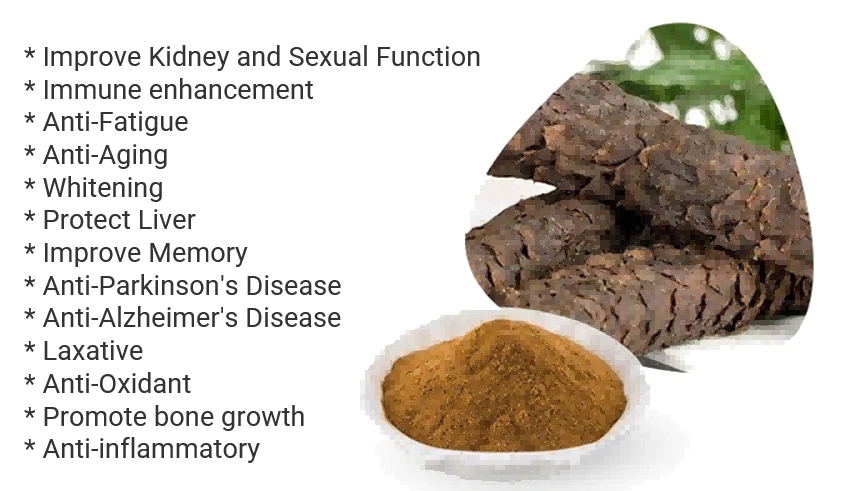
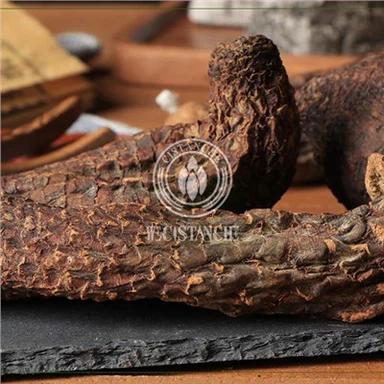
cistanche tubulosa exploring
2.1 Antioxidant Effects
Oxidative stress, particularly due to reactive oxygen species (ROS), contributes to aging and numerous diseases such as cardiovascular and neurodegenerative disorders. Antioxidants from either endogenous synthesis or dietary intake help neutralize ROS, such as superoxide anions, hydroxyl radicals, and hydrogen peroxide.
Numerous studies have confirmed the antioxidant potential of CD polysaccharides (CDP). Guo et al. [20] compared three polysaccharide fractions (CDP-A, CDP-B, and CDP-C) and found CDP-C exhibited the most potent antioxidant activity based on DPPH, ABTS, and ROS scavenging assays.
Further evidence includes reductions in MDA (malondialdehyde), and increased activity of SOD, CAT, GPx, and GSH levels. Studies have shown that CD polysaccharides modulate the Nrf2/Keap1 pathway, thus enhancing antioxidant defenses and protecting mitochondria from stress-induced damage [21, 54–57].

🧾 Table 7. Antioxidant Effects of Cistanche deserticola
| Active Component | Model | Result | Antioxidant Mechanism | Ref |
|---|---|---|---|---|
| Polysaccharide | Adult ICR mice | Increased liver antioxidant enzyme activity | Enhanced Nrf2 expression, decreased oxidative damage | [20] |
| Polysaccharide | Mice | Improved oxidative stress markers (SOD, GPX, MDA) | Activation of Nrf2/HO-1 pathway | [21] |
| Oligosaccharide | SCI mice | Increased GSH, CAT, SOD; reduced ROS | Reduced lipid peroxidation and oxidative stress | [53] |
| Polysaccharide | Aged mice | Enhanced GPX, SOD, reduced MDA | - | [54] |
| Polysaccharide | C57BL/6 mice | Reduced MDA, increased SOD, GSH | GCLM, HO-1, NQO1 upregulation via Nrf2 | [55] |
| Polysaccharide | HK-2 cells | Decreased ROS, increased SOD/GPX | Inhibited TLR4/NF-κB pathway | [56] |
| Polysaccharide | B16 cells | Promoted melanin production, reduced ROS | Activated NRF2/HO-1 pathway | [57] |
| Phenylethanoid Glycosides | Cell-based | Regulated GSTP1, EGFR, MAPK8 expression | Antioxidant gene regulation | [58] |
2.2 Neuroprotective Effects
CD has shown significant neuroprotective effects by reducing neuronal apoptosis, improving cognitive performance, and modulating signaling pathways like MAPK, Wnt/β-catenin, and Nrf2.
🧾 Table 8. Neuroprotective Effects of Cistanche deserticola
| Active Component | Model | Result | Mechanism | Ref |
|---|---|---|---|---|
| Polysaccharide | Aged mice | Reduced neuronal death, improved cognition | - | [54] |
| Polysaccharide | SCI mice | Prevented neuronal loss, improved muscle function | Nrf2/Keap1 pathway activation | [55] |
| Phenylethanoid Glycoside | Parkinson's rats | Reduced hippocampal damage | Regulated Nrf2/HO-1 | [60] |
| Phenylethanoid Glycoside | Brain ischemia rats | Reduced apoptosis markers (Bax, Caspase-3) | Wnt/β-catenin activation | [62] |
| Phenylethanoid Glycoside | MCAO mice | Promoted neural stem cell proliferation | - | [62] |
| Phenylethanoid Glycoside | C57BL/6 mice | Regulated HIF-1α, ACSL4, ISCU | Ferroptosis inhibition | [63] |
| Polysaccharide | IC12 hippocampal cells | Enhanced SOD, reduced MDA | Activated cAMP/PKA/CREB | [64] |
2.3 Anti-Tumor Effects
CD exhibits dual anti-tumor mechanisms: immune modulation and direct tumor cell inhibition. Polysaccharides like CCDP-2 enhance dendritic cell function and antigen presentation, while phenylethanoid glycosides like tubuloside B suppress pathways like Hippo-YAP and PI3K/AKT.
🧾 Table 9. Anti-Tumor Effects of Cistanche deserticola
| Active Component | Model | Result | Anti-Tumor Mechanism | Ref |
|---|---|---|---|---|
| Polysaccharide | SPF Mice | Induced Th1/Th2 immune response | MAPK/NF-κB activation | [18] |
| Polysaccharide | ICR mice | Enhanced DC maturation | TLR2/TLR4 pathway | [65] |
| Polysaccharide | A549 cells | Inhibited proliferation, migration | LINC01410 suppression | [22] |
| Phenylethanoid Glycoside | HCC cells | Suppressed CTGF, CYR expression | Hippo-YAP pathway | [69] |
| Phenylethanoid Glycoside | T-cell lymphoma | Induced apoptosis, pyroptosis | SIRT2/p53, PI3K/AKT, NLRP3 inhibition | [70] |
| Phenylethanoid Glycoside | HepG2 cells | Increased ROS, reduced ATP | Oxidative stress induction | [71] |

📊 Cistanche deserticola vs. Cistanche tubulosa: Compound Diversity
| Compound Type | CD (Cistanche deserticola) | CT (Cistanche tubulosa) | Remarks |
|---|---|---|---|
| Polysaccharides | 13+ identified types | Fewer reported | CD has higher structural and functional diversity |
| Phenylethanoid glycosides | 82 types | 60+ types | CD slightly richer and more studied |
| Iridoids | 16 types | 14 types | Overlap, CD has some unique types |
| Lignans | 28 types | 24 types | CD lignans more abundant |
| Flavones | 7 types | Not reported in CT | Unique to CD |
| Amino Acids | 17 types | Less studied in CT | CD better characterized nutritionally |

✅ Summary
Cistanche deserticola exhibits robust pharmacological potential due to its diverse active ingredients:
Antioxidant: Via Nrf2/HO-1, GSTP1, and MAPK pathways
Neuroprotective: Involves Wnt/β-catenin, ferroptosis inhibition, and CREB signaling
Anti-tumor: Dual action-immune modulation + direct tumor suppression
Anti-osteoporosis: Regulates RANKL, PI3K/AKT, and gut microbiota
Gut-regulating: Improves microbiome, bile acid metabolism, and mucosal integrity
Anti-inflammatory: Downregulates cytokines and iNOS
Other effects: Anti-aging, anti-fatigue, anti-depression, liver protection
Would you like the next tables (e.g., Table 10: Anti-inflammatory effects, and Table 11: Gut Microbiota Regulation) translated and formatted too? Or would you prefer the full data as a downloadable Excel/CSV file?