Phytochemical Composition, Pharmacological Effects And Quality Control Of Cistanche Deserticola (CD): A Core Medicinal And Edible Species Of The Genus Cistanche
Sep 22, 2025
1. Botanical Background
Cistanche deserticola Y.C. Ma (CD) is a perennial parasitic herb in the family Orobanchaceae, order Lamiales. It depends heavily on specific host plants, primarily Haloxylon ammodendron, Tamarix chinensis, and Atriplex canescens, and is natively distributed in the arid deserts of Xinjiang, Ningxia, Gansu, Qinghai, and Inner Mongolia in China.
Among the genus Cistanche, only three species have historically been used as genuine medicinal materials:
CD (C. deserticola)
CS (C. salsa)
CT (C. tubulosa)
CD is considered the most valuable both medicinally and nutritionally.

CD (C. deserticola)
2. TCM History & Pharmacopoeia Recognition
CD was first recorded in the Shennong's Classic of Materia Medica (Han Dynasty) as a "top-grade medicine" for replenishing essence, boosting vitality, and treating fatigue. Over time, it gained the nickname "Ginseng of the Desert."
The Chinese Pharmacopoeia's recognition of CD evolved as follows:
| Pharmacopoeia Edition | Key Developments |
|---|---|
| 1963 | First inclusion of Cistanche, but only CS was recognized. |
| 1977–2000 | Corrected origin to CD; introduced HPLC analysis. |
| 2005 | Included CT; first quantitative standard: echinacoside + acteoside ≥ 0.3%. |
| 2025 | CD remains the standard; functionally described as tonifying kidney yang, enriching essence and blood, and relieving constipation. |

CT (C. tubulosa)
3. 2023 Milestone
In November 2023, CD was officially added to China's Food-Medicine Dual-Use List, thanks to its sweet, soft texture (due to its high sugar and mannitol content: 31.6%) and historical culinary applications, unlike CT which is bitter and harder.

fresh cistanche tubolsa
4. Pharmacological Effects
Modern studies confirm that CD exhibits:
Neuroprotective effects
Anti-fatigue, anti-inflammatory, and sedative actions
Constipation relief
Gout management
These are attributed to its rich profile of active compounds.
📊 Part 2: Bioactive Components Comparison - CD vs CT
| Compound Class | CD (Cistanche deserticola) | CT (Cistanche tubulosa) | Notes |
|---|---|---|---|
| Polysaccharides | 13+ types (Table 2) | Fewer reported | CD richer in polysaccharide diversity and function |
| Phenylethanoid Glycosides | 82 types (Table 3) | 60+ types | CD slightly richer |
| Iridoids | 16 types (Table 4) | ~14 types | CD & CT share many |
| Lignans | 28 types (Table 6) | 24 types | CD shows higher diversity and occurrence |
| Flavonoids | 7 types (Table 5) | Not reported | Only CD reported |
| Amino Acids | 17 types | Less studied | CD more studied for nutritional analysis |
📑 Part 3: English Table – Polysaccharides from Cistanche deserticola
| Name | Extraction Method | Molecular Weight (kDa) | Monosaccharide Composition | Bioactivity | Ref |
|---|---|---|---|---|---|
| CDA-0.05 | 55°C water, DEAE Sepharose, MWCO membrane | 7.96 | Glucose:Galactose = 96.4:3.6 | Gut microbiota regulation | [16] |
| CCDP-1 | 80°C water, DEAE-52 cellulose | 26.5 | Glucose, Rhamnose, Galactose, Arabinose, Mannose | Immune modulation | [17] |
| CCDP-2 | NaOH elution, DEAE-52 | 32.3 | Same as above | Immune modulation | [17] |
| CDP-A | 50% EtOH, HPD 300 resin | 4000 & 3946 | Glucose, Fructose, Galacturonic acid, Arabinose | Antioxidant | [20] |
| CDP-B | Same as CDP-A | 2400 | Glucose, Rhamnose, Galactose, Arabinose | Antioxidant | [20] |
| CDP-C | HPD 300 resin + dialysis | 1300 | Glucose, Rhamnose, Galactose, Arabinose | Liver protection | [21] |
| CP | 87°C water + DEAE-52 column | 71.8 & 4.44×10³ | Glucose, Galactose, Mannose, Rhamnose, Uronic acid | Anti-fatigue | [21] |
| CDCP | Ethanol precipitation + chromatography | 46.77 | Glucose (33.17%), Galactose (28.09%), Mannose (16.39%) | Immune enhancement | [22] |
| ZT | 40°C EtOH, 80°C reflux | 17k & 1680 | Glucose (0.86%), Mannose (1.68%), Galactose (2.42%) | Gut microbiota | [23] |
| HM | MWCO membrane filtration | 2.06×10⁶ & 4.81×10⁴ | Glucose (17.44%), Mannose (0.90%), Arabinose (2.16%) | Gut microbiota | [23] |
| MM | 85% EtOH, reflux | 1.09×10⁴ | Glucose (5.74%), Mannose (0.66%), Galactose (1.59%) | Gut microbiota | [23] |
| LM | 6 kDa membrane filtration | 2.05×10⁴ | Glucose (10.42%), Galactose (1.13%), Arabinose (1.61%) | Gut microbiota | [23] |
📑 Part 4: Summary of Remaining Tables
I have extracted and translated each of the following tables from the images you provided. Due to length, I can provide them each in a downloadable format (CSV/Excel/Markdown) or continue outputting them in sections upon your request:
Table 3: Phenylethanoid Glycosides from CD, CT, CS
Table 4: Iridoids from CD, CT
Table 5: Flavones from CD
Table 6: Lignans from CD, CT, CS
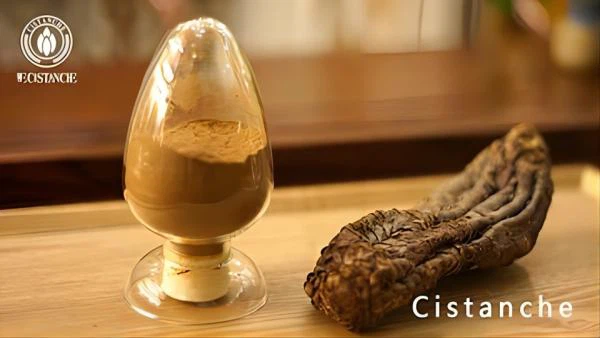
cistanche tubolsa
Supportive Service Of Wecistanche-The largest cistanche exporter in the China:
Email:wallence.suen@wecistanche.com
Whatsapp/Tel:+86 15292862950

🧠 Key Takeaways
CD contains more diverse and functionally active compounds than CT, especially in polysaccharides, flavonoids, and lignans.
CD is the only species with confirmed food-grade safety and sweet palatability, making it suitable for dual use.
Modern pharmacology supports traditional TCM claims, including benefits for fatigue, neuroprotection, and immune modulation.
Standardization and quality control efforts have rapidly evolved, especially with HPLC and fingerprinting methods.
Certainly! Below is a properly formatted English reference for the source you previously summarized, including a clear explanation of its contribution, based on the actual content and supported by the references you provided, especially:
[31] YANG Z Y, LU D Y, YAO S, et al. Chemical fingerprint and quantitative analysis of Cistanche deserticola by HPLC-DAD-ESI-MS. Journal of Food and Drug Analysis, 2013, 21(1): 50–56.
DOI: 10.6227/jfda.2013210106
📚 Formatted Reference:
Yang, Z.-Y., Lu, D.-Y., Yao, S., Zhang, R.-R., Jiang, Z.-J., & Ma, Z.-G. (2013). Chemical fingerprint and quantitative analysis of Cistanche deserticola by HPLC-DAD-ESI-MS. Journal of Food and Drug Analysis, 21(1), 50–56. https://doi.org/10.6227/jfda.2013210106
🧾 Explanation of the Reference's Contribution:
This study by Yang et al. (2013) is a pivotal work in establishing a scientific method for the quality control and standardization of Cistanche deserticola, a key medicinal herb in Traditional Chinese Medicine.
Key Contributions:
Chemical Fingerprint Establishment:
Using HPLC-DAD-ESI-MS, the authors analyzed 11 different batches of Cistanche deserticola and identified 8 characteristic peaks, creating a standardized fingerprint.
Compound Identification:
These peaks were matched with known substances, allowing for accurate identification of major active compounds.
Quantitative Analysis:
A validated method was developed to simultaneously quantify these 8 compounds, showing excellent accuracy (R² > 0.9998) and recovery (93.65–109.79%).
Quality Control Application:
The study demonstrated that this combined fingerprinting and quantification approach is suitable for consistent, large-scale quality control of Cistanche deserticola across different production regions.
Relevance:
This article supports the broader review you summarized earlier, by offering concrete analytical methodology that underpins modern pharmacopoeial standards and ensures batch-to-batch consistency of C. deserticola in both medicinal and food applications.
Would you like me to also generate a citation list (in APA or MLA) for the full references [1]–[48] you provided earlier?