Preparation Technology For Wenyang Tongbian Granules
Sep 20, 2024
Abstract:
Objective To determine and optimize the preparation technology of Wenyang Tongbian granules.
Methods Water decoction was extracted. The content of echinacea glycoside in monarch drug and the yield compound were used as indexes. The L9 (34 ) orthogonal test was used to optimize the extraction of Wenyang Tongbian granules. The best forming process was optimized based on granulation difficulty, formability and particle yield. Results The optimal extraction included adding 10 folds of water and extraction 3 times, 1 h each time. The best formation process: the type of auxiliary material was dextrin, the ratio of excipients was 1∶0.9, and the best wetting agent was 85% ethanol. Conclusion The extraction and molding process are stable and reasonable, simple and feasible, with good reproducibility, which can provide a basis for the industrial production of Wenyang Tongbian granules.
Keywords: Wenyang Tongbian granlue; orthogonal test; extraction; molding

NEW HERBAL FORMULATION FOR KIDNEY YANG DEFICIENCY
Supportive Service Of Wecistanche
Email:wallence.suen@wecistanche.com
Whatsapp/Tel:+86 15292862950
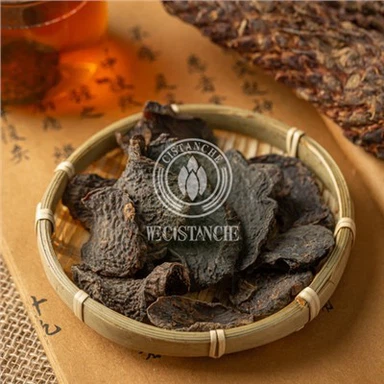
Yang deficiency constipation is common in the elderly and women. The treatment method should not be simple purgation. The Warming Yang method can achieve good results [1]. Wenyang Tongbian Granules are an in-hospital preparation developed based on the clinical experience of Professor Lin Aizhen of Hubei Provincial Hospital of Traditional Chinese Medicine in treating functional constipation in the elderly. It is composed of Cistanche deserticola, cinnamon bark, astragalus, and Atractylodes macrocephala. In the formula, Cistanche deserticola has the functions of tonifying kidney yang and benefiting essence and blood, and is the main medicine that warms yang; cinnamon bark has the functions of warming meridians and unblocking blood vessels, replenishing fire and supporting yang; astragalus has the functions of raising yang and replenishing qi, astringing sores and promoting tissue regeneration; and Atractylodes macrocephala has the functions of strengthening the spleen and replenishing qi, drying dampness and promoting diuresis.
Studies have shown that phenylethanol glycosides are the main active ingredients in Cistanche deserticola [2]. Among them, echinacoside and verbascoside are the characteristic ingredients for quality control of Cistanche deserticola as specified in the Chinese Pharmacopoeia. Liu Xianhong et al. [3] concluded through in vivo human trials that Cistanche deserticola is suitable for the clinical treatment of constipation and can treat both the symptoms and the root cause. The main chemical components of cinnamon bark include volatile oils, polysaccharides, flavonoids, etc. Modern pharmacological studies have shown that cinnamon bark has pharmacological effects such as vasodilation, anti-gastric ulcer, and antibacterial effects [4]. Astragalus polysaccharides, flavonoids, and astragaloside IV are the main chemical components that exert immunomodulatory effects [5]. Atractylodes macrocephala has the effects of strengthening the spleen and regulating intestinal flora disorders and can be used clinically to treat gastrointestinal dysfunction [6]. The original prescription is mainly used in Chinese medicine decoctions, but it has disadvantages such as inconvenience in decoction, large dosage, and inconvenience in carrying. In order to make this clinical experience prescription widely used in clinical practice, it was developed into granules. This experiment used the paste yield and the content of echinacoside, the main active ingredient in the main medicine, as indicators, continued to use the traditional water decoction process, and used the L9 (34) orthogonal test method to optimize the amount of water added, decoction time, and decoction times in the extraction process to obtain the best extraction process. At the same time, the granule molding process was investigated to determine a stable and reasonable molding process, providing a reference for the pilot production, quality control, and clinical application of the preparation [7-8].

1 Instruments and reagents
1.1 Instruments
Alliance e2695 high-performance liquid chromatograph, 2998 diode array detector (Waters, USA), ES225SMDR 1/100,000 analytical balance (Precisa, Switzerland), UPT-11-10T ultrapure water machine (Shenzhen UPT Technology Co., Ltd.), KQ-500VDE dual-frequency CNC ultrasonic cleaner (Kunshan Ultrasonic Instrument Co., Ltd.).
1.2 Trial drugs
Wine Cistanche slices (batch number: 2322050113, produced in Inner Mongolia), cinnamon slices (batch number: 2323020103, produced in Guangxi), astragalus slices (batch number: 2323020105, produced in Gansu), Atractylodes macrocephala slices (batch number: 2322080101, produced in Zhejiang) (Hubei Chenmei Chinese Medicine Co., Ltd., all slices are identified as authentic by Chen Shuhe, chief pharmacist of the Institute of Traditional Chinese Medicine of Hubei Provincial Hospital of Traditional Chinese Medicine, and are qualified according to the 2020 edition of the Chinese Pharmacopoeia Part I). Echinacoside reference substance (batch number: 111670-201907, purity: 91.8%, China Food and Drug Inspection Research).
Dextrin (batch number: 230102), corn starch (batch number: 221008) (Henan Zhenghong Pharmaceutical Excipients Co., Ltd.), sucrose (batch number: TF28221205), microcrystalline cellulose (batch number: TF471211001), lactose (batch number: TF463Y230101) (Hunan Jiudian Hongyang Pharmaceutical Co., Ltd.).
2 Methods and Results
2.1 Determination of echinacoside content
2.1.1 Chromatographic conditions: Agilent 5 TC-C18 (250 nm×4.6 mm, 5 μm) was used as the chromatographic column; methanol was used as the mobile phase A, 0.1% formic acid solution was used as the mobile phase B, gradient elution (0-17 min, 26.5%A; 17-20 min, 26.5% → 29.5%A; 20-54 min,
29.5%A, 54-55 min, 29.5% → 26.5%A; 55-60min, 26.5%A); flow rate 1.0 mL·min-1; column temperature 30℃; diode array detector, detection wavelength 330 nm; injection volume 10μL; theoretical plate number calculated based on the echinacoside peak should be no less than 3000[9].
2.1.2 Preparation of reference solution
Take an appropriate amount of echinacoside, accurately weigh 9.65 mg, place it in a 25 mL volumetric flask, add 50%
methanol to dissolve and dilute to the mark as the reference stock solution. Accurately pipette 1 mL of echinacoside stock solution into a 25 mL volumetric flask, add 50% methanol to dilute to the mark, shake well, and prepare a reference solution containing 14.17 μg per 1 mL [9].

2.1.3 Preparation of test solution
Take about 0.5 g of dry paste powder, grind it into powder, weigh it accurately, put it in a brown stoppered conical bottle, add 50 mL of 50% methanol accurately, stopper it tightly, shake it well, weigh it, ultrasonically treat it for 40 min (power 250 W, frequency 45 kHz), let it cool, weigh it again, add 50% methanol to make up the lost weight, shake it well, let it stand, take the supernatant, filter it, and take the filtrate.
2.1.4 Preparation of negative sample solution
Take about 0.5 g of the dry paste powder of the formula without wine Cistanche medicinal materials, and prepare the negative sample solution according to the method under "2.1.3".
2.1.5 Specificity test
Precisely pipette the test solution, reference solution and negative sample solution respectively, and measure according to the chromatographic conditions under "2.1.1". Record the chromatogram. The results are shown in Figure 1. There is no interference with the negative sample. The results show that the method has good specificity.

Fig 1 Specific chromatogram of Wenyang Tongbian granules
2.1.6 Linear relationship investigation
Take an appropriate amount of echinacoside, accurately weigh it to 10.11 mg, put it in a 25 mL volumetric flask, add 50% methanol to dilute it into a series of concentrations of reference solution, and inject it according to the chromatographic conditions under "2.1.1" to determine the peak area value of echinacoside. Draw a standard curve, with the injection amount of echinacoside reference as the horizontal axis (μg, X) and the peak area integral value as the vertical axis (Y), and perform linear regression.
The regression equation is Y = 1.294×10⁴X - 4.931×10⁴, r = 0.9997. The results show that the peak area integral value of echinacoside injection amount is in a good linear relationship between 1.4850 and 371.2392 μg.
2.1.7 Precision test
Accurately aspirate 10 μL of the reference solution (mass concentration of 37.12 μg·mL- 1) under "2.1.6", inject 6 times, record the peak area value of echinacoside respectively, and calculate the RSD value to be 1.1%, indicating that the instrument has good precision.
2.1.8 Repeatability test
Take the same dry paste, grind it into powder, accurately weigh 6 portions, each of which is about 0.5 g, and place them in a brown stoppered conical bottle. Extract according to the method under "2.1.3", determine the content, and calculate. The results show that the average content of echinacoside in the sample is 1.46 mg·g- 1, and the RSD value is 2.7%, indicating that the repeatability of this method is good.
2.1.9 Stability test
Take the same sample solution, accurately draw 10 μL, and inject it within 0, 2, 4, 8, 12, 18 and 24 hours respectively. The peak area RSD value is 0.71%, indicating that the sample solution has good stability within 24 hours.

2.1.10 Sample Recovery Test
Accurately weigh 6 portions of the same batch of test samples, 0.24 g each, and place them in a brown stoppered conical bottle. According to the mass ratio of 1:1 of the components in the test sample, accurately add 0.9 mL of the echinacoside reference substance (mass concentration is 371.24 μg·mL- 1) under "2.1.6", prepare the test solution according to the method under "2.1.3", determine the chromatographic peak area of echinacoside and calculate the content. The results show that the average recovery rate of echinacoside is 101.09%, and the RSD value is 1.6%.
2.2 Experimental plan and evaluation indicators
The amount of water added (A), extraction time (B), and number of extractions (D) were selected as the factors to be investigated. Three factor levels were set according to the results of the previous single factor investigation, see Table 1. The orthogonal test table L9 (34) was used in the experiment, see Table 2. The test used the yield of paste and the content of echinacoside as evaluation indicators to investigate the optimal water extraction process.
Tab 1 Factor and level of the orthogonal test
| Level | A Water Addition/Times | B Extraction Time/h | C Blank | D Extraction Frequency/Times |
|---|---|---|---|---|
| 1 | 8 | 1 | 1 | 1 |
| 2 | 10 | 1.5 | 2 | 2 |
| 3 | 12 | 2 | 3 | 3 |
2.2.1 Orthogonal test
According to the prescription ratio, weigh 18 portions of each medicinal flavor, 55 g each, and perform water decoction extraction according to the orthogonal design scheme in Table 2. Each group has 2 parallel portions. The decoction is filtered through an 80-mesh screen, the filtrate is combined, cooled, the decoction volume is measured, 50 mL is accurately pipetted into an evaporating dish that has been weighed constant, evaporated to dryness, and dried under reduced pressure at 60°C to obtain the orthogonal experimental sample dry paste. Calculate the paste yield (paste yield = (dry paste weight × medicinal liquid volume) / (50 × decoction piece weight) × 100%). According to the chromatographic conditions under "2.1.1" and the method under "2.1.3", the extraction amount of echinacoside in the 9 groups of orthogonal test extracts was determined respectively. Echinacoside extraction amount = dry paste weight × echinacoside content / wine Cistanche decoction piece weight. Comprehensive score = echinacoside content ÷ maximum content × 0.5 × 100% + paste yield ÷ maximum paste yield × 0.5 × 100% [10]. The results are shown in Table 2.
As shown in Table 3, taking the paste yield and echinacoside content comprehensive score as the evaluation indicators, the range R value in the table shows that the primary and secondary effects of each factor are D > B > A; the variance analysis results show that the D factor (decoction times) is statistically significant (P < 0.05), and the D3 level is selected; the A factor (water addition) and the B factor (decoction time) are not statistically significant (P > 0.05). Considering that the water absorption rate of the medicinal materials in this preparation is relatively high (155%), and combined with factors such as actual production needs, the optimal extraction conditions are selected as A2B1D3, that is, adding 10 times of water, decocting 3 times, each time for 1 hour.