Professor Zhu Zhiyou Interprets The Shennong Materia Medica Classic - Cistanche Deserticola
May 27, 2024
Cistanche deserticola has a sweet and slightly warm taste. Master the five labor and seven injuries, nourish the middle, eliminate the cold and hot pain in the stem, nourish the five internal organs, strengthen yin, benefit essence and qi, have many children, treat women's ailments, take it for a long time to lighten the body, and produce valleys.

superman herbs cistanche
Explanation of Ancient Medical Records of Five Laborers
"The Five Exercises are the labor of the Five Organs."
The Compendium of Medicine: "What are the five types of fatigue? Heart fatigue and blood damage, liver fatigue and mental damage, spleen fatigue and food damage, lung fatigue and qi damage, kidney fatigue and essence damage." It also refers to the five types of fatigue syndrome, which are caused by improper labor and rest. Five types of injuries are caused by improper work and rest, as well as dysfunction of qi, blood, muscles, and bones.
Chapter 23 of the Xuanming Five Qi Chapter in Volume 7 of the "Su Wen": "The injuries caused by the Five Laborers: long-term vision harms blood, long-term lying harms qi, long-term sitting harms meat, long-term standing harms bones, and long-term movement harms tendons." Wang Bing said, "The injuries caused by the Five Laborers are related to the heart, lungs, spleen, kidneys, and liver."
In Volume 3 of the "Treatise on the Origins of Various Diseases", there are three types of symptoms: "Five types of symptoms: first, mental fatigue, second, mental fatigue, third, mental fatigue, fourth, worry fatigue, and fifth, thin fatigue." In addition, lung fatigue can cause shortness of breath and swelling of the face, with a nose that does not smell or smell; liver fatigue can cause dryness of the face, blackness of the mouth, lack of mental defense, fear of not being able to lie alone, and unclear vision; heart fatigue can cause sudden joy and forgetfulness, difficulty in defecation or occasional duck looseness, and sores in the mouth; spleen fatigue can cause bitterness and straightness of the tongue, and cannot swallow saliva; kidney fatigue can make it difficult for the back to retract and urinate. "The color is red and yellow with excess water, and there is pain in the penis. The scrotum is sore, and the lower abdomen is full of urgency. "

Cistanche deserticola slice
The Essence of the Classic
Wu Lao: Refers to diseases caused by exhaustion of the five organs, including the heart, liver, spleen, lungs, and kidneys.
Seven injuries: The causes of seven types of work injuries.
In Volume 3 of "Treatise on the Origin of Various Diseases", Volume 3, "Xulao Disease and Various Symptoms", Chapter 1, "Xulao Symptoms": "Seven injured people, one is called Yin cold; two is called Yin impotence; three is called urgent in the interior; four is called continuous essence; five is called insufficient essence, damp in the lower yin; six is called essence; seven is called painful urination, not dying in the face. Another is called" excessive satiety "which harms the spleen. The spleen is injured, good qi, wanting to lie down, and the face is yellow. Two is called" great anger that harms the liver, causing less blood and dark eyes; three is called "strong weightlifting, sitting in the wetland for a long time, damaging the kidney, causing less essence, causing lower back pain and fainting, causing lower back pain and cold." "The saying goes, 'Form cold, cold drink harms the lungs, lungs suffer from lack of qi, coughing and nasal ringing.' The fifth day, 'Worry and worry, sadness and sorrow, heart pain and shock, joy and forgetfulness, good anger.' On the sixth day, 'Wind and rain, cold and heat damage the form, causing the skin to wither and wither.' The seventh day, 'Great fear and lack of restraint damage the mind, causing the mind to be damaged, and feeling absent-minded and unhappy.'"
Supplement: "Zhong", "Shuowen Jiezi": "Zhong, also inside. From the mouth, up and down. In ancient texts, 籒 in the text." refers to the vessel used to hold chips when throwing pots in ancient times, which is extended to be an organ. In the 24th volume of "Su Wen", Chapter 79 of "Yin and Yang Categories": "Yin and Yang are the principles of the meridians, which are dominated by the five central organs. What organ is the most expensive?" Wang Bing's annotation: "The central organ is called the five zang organs." Supplementing the central organ means replenishing the five internal organs.

Cistanche deserticola
Cold and hot pain in the stem: Urinary pain caused by Shilin.
In Volume 14 of "Treatise on the Origins of Various Diseases", "Gonorrhea Symptoms" and "Shi Lin Symptoms": "Shi Lin is a type of gonorrhea that leads to the formation of stones. The kidneys are responsible for water, and water turns into stones. Therefore, the kidneys are affected by sand and stones. Kidney deficiency is caused by heat, and heat becomes gonorrhea. The symptoms of this disease include pain in the stems when urinating, inability to urinate, and pain leading to reduced abdominal pressure. The bladder is urgent, and sand and stones come out from the small passage, and in some cases, it can cause stuffiness and suffocation."
Strong Yin: "Yin" refers to the genital organs. Strong yin makes the genital organs strong. It also refers to the essence and blood.
Yijingqi: "Jingqi", also known as "Zhengqi" generally refers to the essence of life and its functions. "The Yellow Emperor asked, 'What is virtual and real?' Qi Bo replied, 'When evil energy is strong, it becomes real, and when the essence is taken away, it becomes virtual.'" Specifically, it refers to the essence of reproduction. "At the age of eight, when the husband is eight, his kidney qi is solid, and his hair is long and his teeth are even longer. At the age of twenty-eight, his kidney qi is abundant, and his heaven is full of Gui. His essence qi overflows and flows, and his yin and yang are harmonious, so he can have children." ③ It also refers to the refined substances generated by diet-nourishing qi and defending qi. Chapter 21 of Chapter 7 of the "Su Wen": "Drinking into the stomach, flowing and overflowing essence and qi, and flowing up to the spleen. The spleen qi disperses essence, flowing up to the lungs, regulating waterways, and flowing down to the bladder." Volume 4 of the "Ling Shu": Chapter 18 of the "Ying Sheng Hui": "Ying Wei is the essence and qi, blood is the spirit and qi, so blood and qi are synonymous."
Duozi: "Essence is born in the five internal organs, and is stored in the kidneys. Essence and feet are raised by Yang, and the essence is strong, making people have more children... Cistanche deserticola is good at nourishing the essence of the five internal organs, so it can have more children."
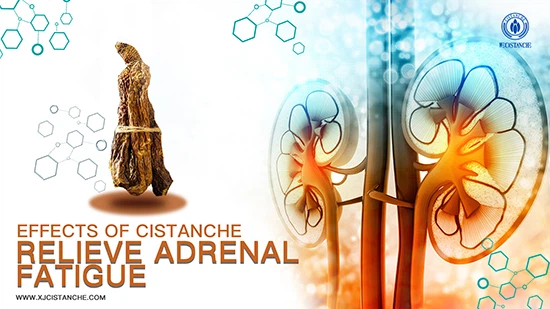
Effects of Cistanche-Immprove kidney function
Qingjia: The name of the disease syndrome refers to a lump in the abdominal cavity. Generally, the symptoms are those that are hidden in the abdomen, can be verified according to their shape, are hard and do not move, and have pain in a specific area; Those who gather and disperse unpredictably, push and move erratically, and have no fixed pain are called "Jia". The name "Zheng Jia" comes from the fourth section of the "Jin Kui Yao Lue" volume on the treatment of malaria pulse syndrome. In Volume 19 of the "Treatise on the Sources of Various Diseases", there are various symptoms of accumulated diseases. Symptoms of Zheng Jia: "Zheng Jia is caused by the imbalance of cold and temperature, an irregular diet, and a struggle with stored qi. If the disease does not move, it is called Zheng Jia. If the disease has a mass that can move, it is called Zheng Jia. If the mass is false, it is called deficiency and can move."
According to the 2015 edition of the Pharmacopoeia of the People's Republic of China, Cistanche deserticola Y is a plant species in the family Cistanche C. The dry fleshy stem with scaly leaves of the Cistanche tubulosa (Schrenk) Wight.
The nature and taste are warm, sweet, and salty. Gui Kidney and Large Intestine Meridian.
【 Indications 】 Tonifying kidney yang, nourishing essence and blood, moistening intestines, and promoting bowel movements. Used for deficiency of kidney yang, deficiency of essence and blood, impotence, and infertility, soreness and weakness of the waist and knees, weakness of muscles and bones, intestinal dryness, and constipation.
Expanding Reading - Identifying Key Points
1. Identification of medicinal herbs
Cistanche deserticola: in a flat cylindrical shape, slightly curved, 3-15 (20) cm long, with a diameter of 2-8cm. The surface is brownish or grayish brown, densely covered with fleshy scales arranged in a tile-like pattern. The scales are usually broken at the tip or leave short linear scales after falling off. They are heavy, hard, slightly flexible, and not easily broken. The cross-section is brownish, with light brown dotted vascular bundles (commonly known as "fascial points") arranged in a wavy ring pattern. Mild breath, sweet taste, and slightly bitter.
Tubular Cistanche: spindle-shaped or flat columnar, slightly curved, 5-25 (30) cm long, 3-9 (10) cm in diameter, brownish to dark brown surface, body weight, hard texture, slightly flexible, not easily broken. The cross-section is granular, gray-brown to gray-brown, with scattered dotted vascular bundles. It has a sweet taste and a slight bitterness.
2. Identification of decoction pieces: The decoction pieces are irregularly thick pieces with a brown or grayish brown surface. Some slices may have fleshy scales and leaves. The cut surface of the decoction pieces is yellow-brown, gray-brown, or brown, with light brown or brown spotted vascular bundles (commonly known as "tendon points") arranged in irregular wavy patterns. Mild breath, sweet taste, and slightly bitter.
Extended Reading - Specialized Terminology for Identification of Traditional Chinese Medicine Experience
Muscle points: Refers to the fiber bundles or vascular bundles within the tissues of traditional Chinese medicine. When a medicinal herb is broken, its fibers or vascular bundles can be seen to be irregularly filamentous, resembling the tendons of the human body, also known as "tendons". The dotted marks on the neat cut surface (or decoction pieces) of medicinal herbs are called "tendon points". The larger vascular bundle marks are also known as "muscle and vein marks".

Effects of Cistanche-Immprove kidney function
Click here to view Cistanche for Kidney disease products
【Ask for more】 Email:cindy.xue@wecistanche.com / Whats App: 0086 18599088692 / Wechat: 18599088692
Notes for clinical pharmacists and clinicians
There are two types of traditional Chinese medicine decoction pieces, Cistanche deserticola, which are raw and roasted with wine (yellow wine). Cistanche deserticola is used to tonify the kidneys, stop turbidity, moisturize the intestines, and promote bowel movements. It is often used for kidney qi deficiency, intestinal dryness, constipation, and white turbidity; Wine roasted Cistanche deserticola has strong kidney tonifying and yang-boosting effects and is often used for impotence, lower back pain, infertility, and other conditions caused by insufficient kidney yang.
★ Cistanche deserticola has a warm nature, a sweet and salty taste, warm but not dry, nourishing but not greasy, and nourishing both yin and yang. It not only nourishes the kidneys and yang but also nourishes essence and blood. Therefore, it can treat impotence and infertility caused by insufficient kidney yang and loss of essence and blood, as well as soreness and weakness in the waist and knees, muscles, and bones.
★ Cistanche deserticola is salty and moisturizing, nourishing essence and blood, and also moisturizing and promoting bowel movements. It is commonly used for constipation due to dryness of the intestines and is particularly suitable for elderly people with weak kidney qi and deficiency of essence and blood. But predecessors warned that light dosage is ineffective, and heavy agents should be used.