Research Progress On The Anti-aging Function Of Cistanches
Mar 13, 2022
Contact: Audrey Hu Whatsapp/hp: 0086 13880143964 Email: audrey.hu@wecistanche.com
FENG Duo1, HE Yue1, JIANG Yong-Jun2, WANG Yan-Jun2, YAN Wen-Jie1*
(1. Beijing Key Laboratory of Bioactive Substances and Function Food, College of Biochemical Engineering, Beijing, Union University, Beijing 100023, China;
2. Inner Mongolia Sankou Biotechnology Co., Ltd., Ordos, Inner Mongolia 017000, China)
[ABSTRACT]: Cistanche belongs to the homologous substance of medicine and food. It is a perennial herbaceous parasitic plant of Ledangaceae and has the effects of anti-oxidation and anti-fatigue. Cistanche, known as "desert ginseng", is described as anti-aging in many ancient books of traditional Chinese medicine. The anti-aging effect of Cistanche has attracted much attention and becomes one of the hot spots in health food research. This paper discussed the mechanism of anti-aging from the aspects of free radical theory, telomere theory, immune theory, brain-center theory, stem cell transplantation, heat restriction, traditional Chinese medicine aging-theory, and so on, and discussed the anti-aging effects of bioactive components of Cistanches in detail from the aspects of polysaccharides, total glycosides, phenylethanoid glycosides, and extracts, to provide some references for the development of anti-aging products of Cistanches.
[KEYWORDS]: Cistanche; anti-aging; aging theories; polysaccharides; phenylethanoid glycosides

Introduction
In January 2020, the Chinese National Health Commission and Chinese State Administration for Market Supervision formally announced that it will conduct experimental work and operation of 9 substances such as Cistanche, which are traditionally both food and Chinese medicinal materials (referred to as food and medicine homologous substances).
Cistanche is a perennial herbaceous parasitic plant of the Liedangaceae family, and is called "desert ginseng". In China, it is mainly divided into C.deserticola (YC Ma, C.) tubulosa [(Schenk) Wight], C. Sinensis (G. Beck, ) and C. salsa [(CA Mey). G. Beck], distributed in Inner Mongolia, Xinjiang, Ningxia, Gansu, and Qinghai.
Studies have shown that Cistanche and its active ingredients have antioxidant, anti-fatigue, anti-aging, anti-tumor, antibacterial, liver protection, immune regulation, sexual function improvement, central nervous system regulation, endocrine regulation, memory improvement, and prevention of Alzheimer's disease, Anti-osteoporosis, and promote bone formation.
In 1993, a piece of news was issued at the Geneva Annual Conference of the International Medical Association: China's Alexa League Chaganshire became the hometown of longevity in the world. An investigation team composed of Chinese and foreign experts spent 4 months investigating Chaganshire and found that there are 4 centenarians in Chaganshire (Gacha) Village, which has only 139 people in total, and the average life expectancy is 87.5 years. The incidence of common diseases such as hypertension, stomach disease, kidney disease, and prostatic hypertrophy is extremely low. The expert team found that this is related to the diet of local residents. People here are used to stewing lamb with Cistanche, and they drink their own homemade cistanche wine. Therefore, the anti-aging effect of Cistanche has attracted much attention and has become one of the hotspots of health food research.
This article mainly reviews the anti-aging effects of Cistanches and distinguishes the anti-aging mechanism of cistanche from the aging theory. It also analyzes the relationship between the aging theory and cistanche and its active ingredients to provide a reference for the development of Cistanche health food.

1 The theory of aging
Human aging is affected by a variety of genetic and environmental factors. Over time, there will be systemic changes and dysfunctions of the whole body, gradual, declining, and irreversible. Aging can also cause the accumulation of gene mutations, abnormal metabolism, and weakened immune function. See Figure 1.
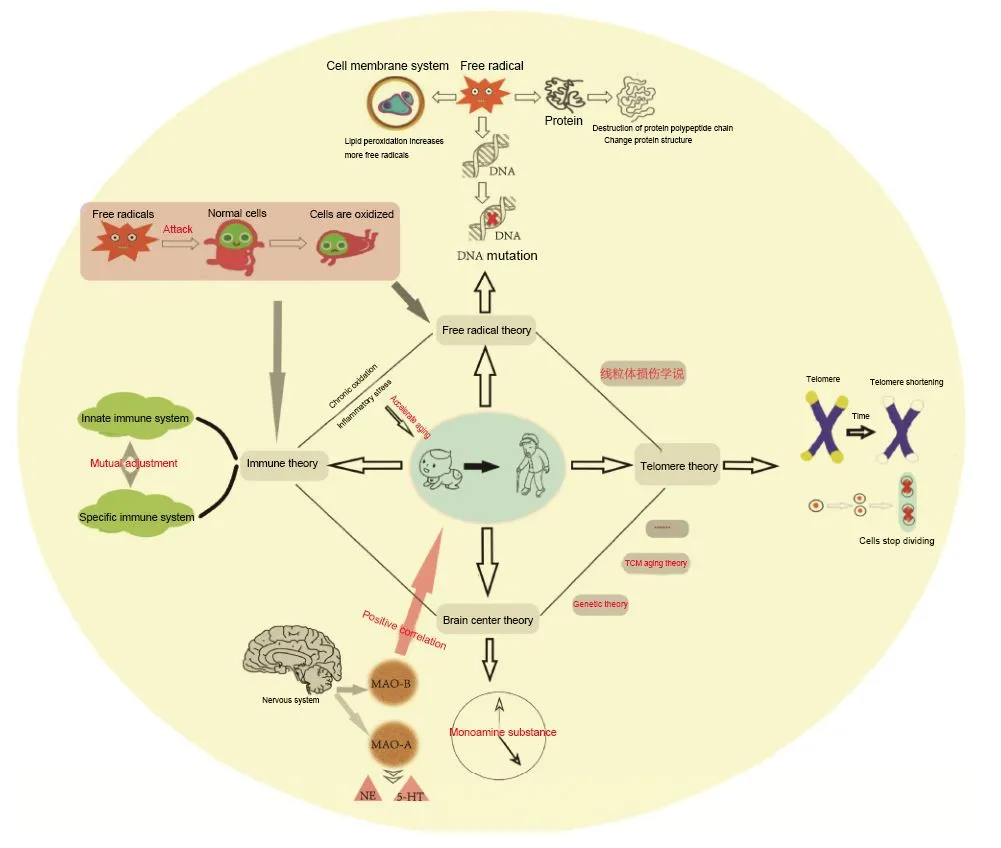
Aging Theories
1.1 Free radical theory
Extraordinarily active charged molecules or groups are called free radicals. Common free radicals mainly include superoxide radicals, lipid peroxides, hydrogen peroxide, singlet oxygen, and hydroxyl radicals. Free radicals have strong biological activity, which can damage DNA, proteins, lipids, and cause cell mutation, senescence, and apoptosis. This indicates that the gradual accumulation of oxidized cells is the basic driving factor of cell aging. In addition, the theory of free radicals has made great progress in aging research over time.
The free radical theory was first proposed by HARMAN in 1956. It is believed that excessive free radicals can cause lipid peroxidation of unsaturated fatty acids on cell membranes through peroxidation and attack nucleic acids, cause DNA mutations or abnormal replication, and damage protein polypeptide chains, and change protein structure while reducing enzyme activity, etc. They will destroy the integrity of cell membrane structure to damage cell function seriously, and eventually lead to cell senescence or even death. Thereby causing damage to the body and leading to senescence or death. With the deepening of research, the theory of free radicals has increasingly emphasized the accumulation of mitochondrial DNA (mtDNA) mutations and mtDNA deletions.

1.2 Telomere theory
Telomeres are small pieces of DNA-protein complexes at the ends of chromosomes. The special "cap" structure can maintain the integrity of chromosomes and control the cell division cycle. Professor Alexei Olovnikov of the former Soviet Union first proposed the "telomere theory" of aging in 1973. He believed that due to the dysfunction of DNA polymerase, cells cannot fully replicate their chromosomes during each division. Every time DNA is replicated, telomere DNA Will lose 40~100 bp. With the increase in the number of cell divisions, the telomere DNA is shortened to a certain limitation. It is difficult to maintain the stability of the chromosomes, and the cell loses the ability to divide and proliferate and age until death. As a marker of biological aging, telomere length is related to various aging-related diseases. Studies have found that the increase of telomerase in germ cells and stem cells can make telomeres lengthen, thereby achieving the effect of delaying aging.
1.3 Immunology
According to the theory of immunology, there is a parallel relationship between aging and the state of immune cells. That is to say, in the process of anti-aging, the body's immune function shows gradual changes, including the body's ability to respond to infection and lasting immune memory. The initial cause of immune senescence is the shrinkage of the thymus due to age, which causes a series of physiological changes in the immune system. At the same time, the decline of immune function will accelerate the aging process. And make the elderly vulnerable to immunodeficiency diseases. Such as cancer, Arteriosclerosis of important organs such as the brain, heart, and kidney. Therefore, we can improve the level of immune cells, eliminate inflammatory factors and provide a good living environment for normal and healthy cells to reduce the occurrence of diseases, and achieve the purpose of delaying aging. As people now pay more and more attention to immune cells increases, the theory of immunology is also mentioned more.

1.4 Brain-centered theory
The brain-centered theory believes in the central nervous system. There is a neural mechanism that controls the aging-the aging clock, whose operation is governed by monoamines. Among them, norepinephrine (norepinephrine, NE) can prolong the lifespan, and serotonin (C10H12N2O, 5-HT) can promote aging. There is a monoamine oxidase (MAO) in the nervous system. MAO isoenzymes are divided into two forms: A and B. B is generally considered to be positively related to aging.
2 Anti-aging effects of bioactive ingredients of Cistanche
Cistanche contains a variety of biologically active ingredients, mainly including phenethyl alcohol Glycosides, iridoids and their glycosides, lignin and its glycosides, polysaccharides, proteins, amino acids, betaine, etc. There are also a small number of other compounds, such as monoterpenoids, steroids or their glycosides, fatty acids, and some trace elements.
2.1 Polysaccharides
Studies have shown that Cistanche deserticola polysaccharides have anti-aging functions, mainly through anti-oxidation, improving learning and memory, enhancing immune function and telomerase activity, etc., as shown in Table 1.

Many scholars have shown that polysaccharides can improve the learning and memory abilities of aging mice, and found that Cistanche deserticola polysaccharides can affect the secretion of brain-derived neurotrophic factors through the cAMP/protein kinase A/CREB signaling pathway, and by affecting synaptic plasticity, increasing dopamine and releasing of glutamate and norepinephrine to improves the learning and memory abilities of aging mice.
Scholars also found that Cistanche deserticola polysaccharide can significantly reduce malondialdehyde content and phospholipase activity, and increase Ga2+-ATP enzyme activity, liver mitochondrial membrane fluidity. It also can improve mitochondrial energy metabolism, and increase the activity of respiratory chain complex I+III and II+III. Cistanche polysaccharides can improve the antioxidant capacity of liver mitochondria and improve the energy metabolism of mitochondria in highly aging rats, thus delaying rat aging.
Cistanche deserticola polysaccharide can prevent lipid peroxidation damage in subacute mice, and can also extend the hypoxia tolerance time of aging mice. At the same time, it can increase SOD activity and reduce MDA content, and also delay the regression of ultrastructures such as mitochondria and lamellar bodies of lung cells. It significantly delayed the physiological degeneration and cell morphological degeneration of experimental mouse lungs; Meanwhile, Cistanche deserticola polysaccharides can reduce the concentration of NO and inhibit lung tissue cell apoptosis. Thereby improving the degenerative changes of lung tissue cells in aging mice[ 33]. Cistanche polysaccharide has a certain antioxidant capacity on lung tissues and can delay lung aging.
Cistanche polysaccharides can antagonize free radical damage, and enhance the telomerase activity of the heart and brain tissues of aging mice and the body's immune ability. It also can delay the aging speed of D-galactose-induced aging mice. It is proved from various aspects that the cistanche polysaccharide has the effect of delaying aging. In addition, Cistanche deserticola polysaccharide also has anti-fatigue effects. It can significantly improve the survival rate of SAM-P8 mice, improve the intestinal flora disorder of SAM-P8 mice, and can be used as an antioxidant to inhibit lipid oxidation modification to protect cells from damage by oxidative molecules in the skin of aging rats.
Cistanche Anti-aging function
2.2 Total glycosides
Studies have shown that the total glycosides of Cistanche have anti-aging effects mainly through anti-oxidation, reducing brain damage, and regulating the body's immunity, as shown in Table 2.

Zhang Jing et al. found that the total glycosides of cistanche can increase the survival rate of normal pyramidal cells in the CA1 region of the hippocampus of SAM-P8 mice. It is speculated that the total glycosides of Cistanche can activate glutamate receptors, promote the expression of related proteins and improve synaptic morphology plasticity to improve learning and cognitive impairment of SAM-P8 mice. Therefore achieve the purpose of delaying aging.
The total glycosides of cistanche can make the cells in the CA1 area of the hippocampus of Alzheimer's disease model rats line up neatly and have normal morphology. At the same time, the rat neuron cells fed with cistanche polysaccharides have round and regular nuclei, obvious nucleoli, and complete nuclear membrane and mitochondrial structures. This shows that the total glycosides of cistanche reduced the pathological changes and ultrastructural damage of injured nerve cells. Zhang Ke et al. found that the total glycosides of cistanche can reverse the immunodeficiency of aging animal SAM-P8 mice, and significantly increase the proportion of blood Sca-1 positive cells, naive T cells, and NK cells.
Zhang Ke et al. showed that the total glycosides of cistanche can improve the lymphocyte transformation ability, the level of IL-2 in peripheral blood, the activity of NK cells and the phagocytic function of peritoneal macrophages in D-galactose-induced aging mice, indicating that the total glycosides of cistanche can Enhance the immune function of mice to delay the aging of mice and support the anti-aging immune theory.
2.3 Phenylethanoid Glycosides
Phenylethanoid Glycosides are the main active components of Cistanche deserticola, with obvious anti-aging effects. Xuan Guodong et al. continuously gavage mice with Phenylethanoid Glycosides extracted from Cistanche for 4 weeks and found that Phenylethanoid Glycosides can improve learning and memory ability of mice, and significantly increase the spleen coefficient of mice. It shows that Phenylethanoid Glycosides may play a role in delaying aging by regulating the immune function of the body.
In addition, studies have found that Cistanche Phenylethanoid Glycosides have anti-fatigue effects. It can increase the swimming time of mice and tissue glycogen levels as well as improve blood biochemical levels. Cistanche Phenylethanoid Glycosides can also effectively prevent osteoporosis caused by estrogen deficiency. These effects all indicate that Phenylethanoid Glycosides have the effect of delaying aging. See Table 3.

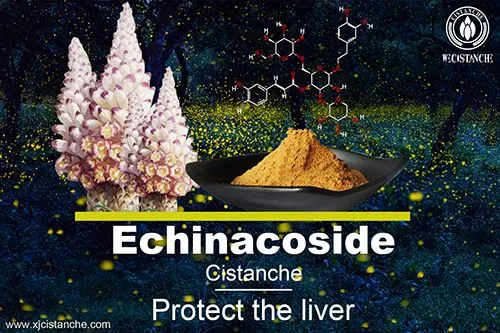
At present, 70 Phenylethanoid Glycosides have been isolated from Cistanche, including echinacoside, acteoside, isoverbasin glycoside, cistanche glycoside A, tube anthocyanin B, cistanche salina D, etc. In the Chinese Pharmacopoeia, both echinacoside and acteoside are used as reference materials for the quality control of Cistanche, and it is stipulated that the total amount of desert cistanche (dried product) should be no less than 0.30%. Cistanche tubulosa (dried product) should be no less than 1.5%.
Many studies have proved that echinacoside and acteoside have certain anti-aging effects. Chen et al. found that echinacoside is an effective component of Cistanche for anti-aging. It can pass reactive oxygen signaling pathways, dietary restriction signaling pathways, and insulin/Insulin-like growth factor signaling pathway that extends the lifespan of Caenorhabditis elegans. At the same time, it was found that echinacoside can induce rat pituitary cells to secrete growth hormone, and in the future, it can be considered as a non-peptidyl analog of growth hormone (endogenous hormone) releasing peptide. PENG et al. found that echinacoside can activate peroxisome proliferator-activated receptor (PPAR-γ) signals to play the role of anti-oxidation, anti-inflammatory, anti-apoptosis, and anti-activation of microglia. So that relieves cognitive impairment caused by sevoflurane anesthesia. In addition, echinacoside can also reduce blood glucose and blood lipid levels in db/db mice, delay the deterioration of heart function in mice as well as improve myocardial tissue in db/db mice. It significantly reduces the level of oxidative stress in myocardial cells. Moreover, echinacoside can also prevent lipid accumulation by inhibiting PPAR-α/M-CPT-1 signal transduction. Zhang Hongquan et al. tested the anti-aging effect of acteoside on D-galactose-induced aging mice and found that acteoside can reduce the MDA content in the heart, liver, and brain of aging mice. It also can increase the activity of telomerase, and increase the proliferation of lymphocytes. The reaction and the phagocytic function of peritoneal macrophages indicate that acteoside can delay aging from the aspects of resisting free radical damage, improving telomerase activity, and regulating the body's immune function. PENG et al. found that acteoside can reverse some cognitive impairments and improve spatial learning in aging mice induced by the combination of D-galactose and AlCl3. The mechanism may be related to the prevention of neuronal apoptosis caused by oxidative stress, or the Nerve growth factor (NGF) in the hippocampus is associated with an increase in the expression of TrkA. It is proved that acteoside is an effective treatment for mild neurodegenerative diseases, for example, as an early treatment for Alzheimer's disease.
2.4 Cistanche Extract
There are many types of Cistanche, and the extraction process and parameters are different. Therefore, the anti-aging effects and mechanisms of different extracts of Cistanche are quite different. However, in general, Cistanche extracts can delay aging mainly through anti-oxidant effects, alleviating memory impairment, and improving the immunity of the body. See Table 4.

ZHANG et al. used Cistanche deserticola extract (ECD) to treat aging SAM-P8 mice and found that ECD can not only significantly reverse age-related immune aging changes, but also significantly prolong the average of SAM-P8 mice life. ZHANG et al. found that the water extract of the Cistanche desert has the effect of improving the memory of old mice. Through open-field test analysis, it was found that the content of catalase CAT and acetylcholinesterase, AchE in the brain tissue was increased to some extent. It indicates that the desert cistanche Water extract can reduce the oxidative damage of brain tissue to alleviate aging. Zhang Yuequan et al. used the desert Cistanche decoction to senescence-accelerated mouse prone 6, SAM-P6 and found that it can effectively improve the bone gla-containing protein, (BGP), bone mineral density (BMD), and bone morphogenetic proteins-2, (BMP-2) in the cartilage of SAM-P6 male mice. And it has a certain therapeutic effect on osteoporosis. LIN et al. found that the water extract of Cistanche can increase the average and maximum lifespan of Drosophila, and enhance the resistance of Drosophila to oxidative stress to inhibit Drosophila aging-related memory impairment, and reduce the cognitive decline rate of aging fruit flies, It also determined that the mammalian target of rapamycin, mTOR, and North network mechanism targets are involved in the regulation of the above-mentioned pharmacological effects. Different types of Cistanche have different effects on improving learning and memory. Wang et al. [63] tested the depression and memory ability of stressed mice by comparing Cistanche tubulosa decoction and desert Cistanche decoction. They used the monoamine system and the HPA axis to characterize the relationship between the antidepressant properties of a mammalian model and the improvement of cognition for the first time. They found that the desert Cistanche decoction had a significant effect on the HPA axis, indicating that it has a stronger pharmacological effect.
Fan Yanan et al. found that the contents of MDA and NO in Cistanche soaked in rice wine were significantly lower than those of unprocessed Cistanche, while the content of SOD was higher, which reduced the loss of mitochondrial DNA. At the same time, the cistanche soaked in rice wine can increase the coefficient of spleen and thymus in aging mice, and it is concluded that it may have an anti-aging function. In addition, Cistanche water extract also has whitening and anti-aging effects, which can be used in the cosmetics industry.

Cistanche Extract
3 Conclusion
Aging is a complex and irreversible molecular process in human life. It is a comprehensive manifestation of the decline and degradation of physiological functions, including physical aging, psychological aging, and pathological aging.
Regarding the research of pathological aging, the purpose of delaying aging is mainly from the aspects of reducing the occurrence of diseases, enhancing immunity, and improving the body's antioxidant capacity. Cistanche is one of the most popular traditional food and medicine homologous substances and is described as having anti-aging properties in many traditional Chinese medicine ancient books.
Cistanche and its active ingredients mainly exert anti-aging effects from four aspects: (1) Reduce brain damage. Prevent Alzheimer's disease. Improve learning and memory. (2) Improve the body's antioxidant capacity. Reduce free radical damage, and Relieve tissue Organ oxidation degree (3) Enhance immunity. Improve the phagocytic function of peritoneal macrophages and the proliferation ability of lymphocytes. (4) Increase telomerase activity and reduce the loss of DNA sequence during DNA replication. At present, researches on the anti-aging effects and mechanisms of Cistanche and its active ingredients are not comprehensive enough, especially in improving telomerase activity, increasing telomere length, improving intestinal tract, metabolomics technology, genomics technology, etc. Research still needs scientific research continuous efforts of institutions and enterprises. At the same time, the development prospects of Cistanche health foods are considerable, such as the approved Cistanche liquors, teas, tablets, granules, capsules, oral liquids, etc.
Enterprises and scientific research institutions also need to transform relevant research results into the ground and develop Cistanche functional food that is truly anti-aging and let the "Healthy China" action be implemented.
From "Journal of Food Safety and Quality " Vol. 12 No. 11. Jun. 2021
---“Research progress on the anti-aging function of Cistanches “ by FENG Duo1 etc.