Role Of Probiotics in Human HealthⅠ
Aug 30, 2023
Abstract
Certain bacteria, known as probiotics, have had a vastly beneficial effect on people's health; considering their benefits they have been mixed with a wide variety of foods for several decades now. The ability of probiotics to modify the immunological response of the host, antagonize pathogenic microbes, or compete for adhesion sites with pathogenic microorganisms is related to the action of probiotics against microorganisms. Infections of the digestive tract, irritable bowel, lactose intolerance, allergies, infections of the urogenital tract, cystic fibrosis, and various cancers can all be prevented and treated with the use of probiotics. They can reduce the side effects of various antibodies. In the field of oral health, dental caries, periodontal disease, and bad breath can be prevented and treated with the use of probiotics. The findings of several of these clinical studies indicate that probiotics may be beneficial in the treatment and prevention of various diseases and health issues. Validation of a significant number of these clinical investigations is necessary before the results can be applied to the clinical setting.

Click to constipation treatment
Clinical studies play an important part in
such investigations, and in the not-too-distant future, the outcomes of such trials will determine whether or
not probiotics are effective in the treatment of disease. This article will attempt to provide a summary of the
available literature on the benefits that these probiotics have with regard to health and disease.
Probiotics are foods and/or supplements that contain non-pathogenic microbes such as bacteria and yeast
that colonize the gut and can potentially yield a variety of health benefits. Research into the various ways in
which probiotic bacteria could be used in the treatment of intestinal disorders is ongoing. Thanks to clinical
studies and laboratory experiments, we now know more about how probiotics affect gut microbiome
disorders. Studies can prove that probiotics can alleviate a variety of gastrointestinal ailments and improve
overall health. This article concentrates on probiotics and commensal microbes, as well as their potential
role in gut microbiome-related illnesses. In this section, we mark certain areas that need further work and
studies so as to enhance our understanding of how probiotics help in the treatment and reduction of chances
of gastrointestinal diseases.

Introduction And Background
Human beings consume a significant number of pathogens every day, primarily bacteria. For several decades, probiotic microorganisms have been utilized in several diets due to their positive effects on human health [1,2]. The Agriculture Organization of the United States and the World Health Organization [3] defined probiotics in 2001 as bacteria that, when given to a host at adequate levels, improve their health. Regarding probiotics, Lactobacillus and Bifidobacterium are the two most frequently used genera. These bacteria are generally thought of as harmless due to their ability to survive in the body to cure and prevent diseases, unlike the usual pathogens. Along with that, these microorganisms have played a vital role in the process of fermenting milk and food preservation for many years [4].
Numerous randomly selected clinical trials have shown that probiotic strains are safe and effective in providing users with their benefits. These benefits include the prevention of acute diarrhea, Crohn's disease, cardiovascular and urogenital infections, cancer, lactose intolerance, cystic fibrosis, dental caries, and oral diseases. Bacteria may also be beneficial in preventing tooth decay, treating periodontal disease, and reducing oral malodor. Probiotics' beneficial role in preventing inflammatory disorders is an ever-expanding list [5]. Over time, scientists have become highly inquisitive about discovering, analyzing, and studying species with probiotic properties. The role of probiotics in health and illness is summarized in this article and is derived from reviewed studies. Human intestinal health can be improved with the use of probiotics.

A mixture of prebiotics has also been proposed. Consequently, the probiotics market has grown rapidly, trying to make probiotics a part of food and supplements [6]. The use of probiotics has been recommended to improve immunity and general health. It is now understood that the commensal human gut microbes may contribute to the onset of metabolic illnesses such as obesity, diabetes, and inflammatory bowel disease. Interestingly, it has been seen that the consumption of probiotics significantly increases the prognosis and management of such disorders. A concise explanation of the idea, purpose, and connection between gut microbiome-related disorders and probiotics is given in this review.
Review
How probiotics work in our body There are various ways the probiotics can work inside our body: Interacting and stimulating the growth of the body's good commensal microbes and inhibiting the growth of pathogens inside the human body. They sometimes also increase the host's antigenic response time, which in turn increases the synthesis of antimicrobial compounds and can also block the site where the pathogen might bind. Furthermore, probiotics exhibit adherence and (at least temporary) colonization of the human body, increasing the duration of retention and leading to sustained probiotic function [5-12]. Several probiotics used as food materials in today's world have been listed in the table below (Table 1).

Probiotics and their benefits Figure 1 lists a few benefits of probiotics for a healthy human life. These include a large variety of uses not just for a particular part but almost everywhere in our body. In the gastrointestinal tract, lies their wellknown benefit of improving our digestion and reducing the amount of cholesterol. Their other uses involve the treatment of diarrhea and the prevention of inflammatory bowel diseases. Furthermore, the benefits will include preventing dental caries and strengthening our immune system, especially during allergic conditions. The constant growth of harmful microorganisms can also be inhibited by probiotics to an extent. Bifidobacterium creates glutamine, which preserves the integrity of the mucosa and improves the mucosal barrier's defenses [13-14]. Many studies have proved that probiotics help deal with different kinds of diarrhea, such as travelers' diarrhea, antibiotic-induced diarrhea, and rotavirus-related diarrhea in small children [15,16]. Irritable bowel syndrome has a poorly understood cause, and hence treatment for such people is challenging. However, introduction to the Enterococcus strain PR88 as an oral probiotic showed clinical improvement in patients. Research has persisted for the use of probiotics and led to some intriguing results of probiotics and their utilization in complex conditions [17].

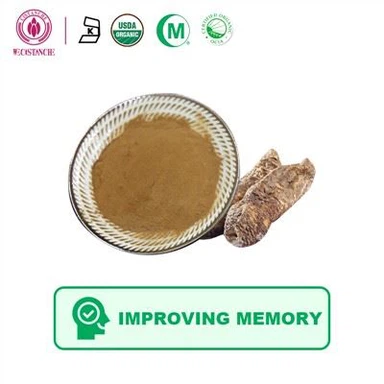
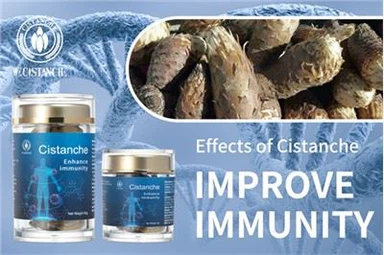
Natural Herbal Medicine For Relieving Constipation-Cistanche
Cistanche is a genus of parasitic plants that belongs to the family Orobanchaceae. These plants are known for their medicinal properties and have been used in Traditional Chinese Medicine (TCM) for centuries. Cistanche species are predominantly found in arid and desert regions of China, Mongolia, and other parts of Central Asia. Cistanche plants are characterized by their fleshy, yellowish stems and are highly valued for their potential health benefits. In TCM, Cistanche is believed to have tonic properties and is commonly used to nourish the kidney, enhance vitality, and support sexual function. It is also used to address issues related to aging, fatigue, and overall well-being. While Cistanche has a long history of use in traditional medicine, scientific research on its efficacy and safety is ongoing and limited. However, it is known to contain various bioactive compounds such as phenylethanoid glycosides, iridoids, lignans, and polysaccharides, which may contribute to its medicinal effects.

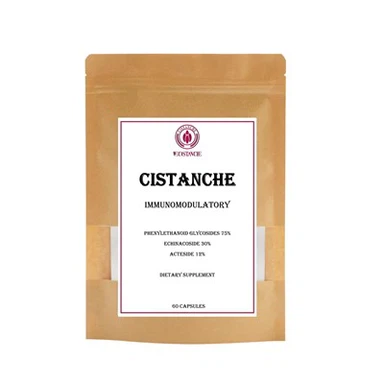
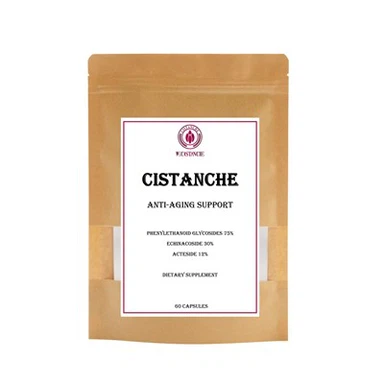
Wecistanche's cistanche powder, cistanche tablets, cistanche capsules, and other products are developed using desert cistanche as raw materials, all of which have a good effect on relieving constipation. The specific mechanism is as follows: Cistanche is believed to have potential benefits for relieving constipation based on its traditional use and certain compounds it contains. While scientific research specifically on Cistanche's effect on constipation is limited, it is thought to have multiple mechanisms that may contribute to its potential to relieve constipation. Laxative Effect: Cistanche has long been used in Traditional Chinese Medicine as a remedy for constipation. It is believed to have a mild laxative effect, which can help promote bowel movements and induce constipation. This effect may be attributed to various compounds found in Cistanche, such as phenylethanoid glycosides and polysaccharides. Moistening the Intestines: Based on traditional use, Cistanche is considered to have moisturizing properties, specifically targeting the Intestines. Promoting hydration and lubrication of the Intestines, it may help soften tools and facilitate easier passage, thereby relieving constipation. Anti-inflammatory Effect: Constipation can sometimes be associated with inflammation in the digestive tract. Cistanche contains certain compounds, including phenylethanoid glycosides and lignans, that are believed to have anti-inflammatory properties. By reducing inflammation in the intestines, it may help improve bowel movement regularity and relieve constipation.
Harsh Bodke , Sangita Jogdand
1. Pharmacology, Jawaharlal Nehru Medical College, Datta Meghe Institute of Medical Sciences, Wardha, IND