Selective Cytotoxicity Of The Herbal Substance Acteoside Against Tumor Cells And Its Mechanistic Insights
Mar 14, 2022
Contact: Audrey Hu Whatsapp/hp: 0086 13880143964 Email: audrey.hu@wecistanche.com
Christina Cheimonidi et al
ABSTRACT
Natural products are characterized by extreme structural diversity and thus they offer a unique source for the identification of novel anti-tumor agents. Herein, we report that the herbal substance acteoside being isolated by advanced phytochemical methods from Lippia citriodora leaves showed enhanced cytotoxicity against metastatic tumor cells; acted in synergy with various cytotoxic agents and sensitized chemoresistant cancer cells. Acteoside was not toxic in physiological cellular contexts, while it increased oxidative load, affected the activity of proteostatic modules, and suppressed matrix metalloproteinases in tumor cell lines. Intraperitoneal or oral (via drinking water) administration of acteoside in a melanoma mouse model upregulated antioxidant responses in the tumors; yet, only intraperitoneal delivery suppressed tumor growth and induced anti-tumor-reactive immune responses. Mass-spectrometry identification/quantitation analyses revealed that intraperitoneal delivery of acteoside resulted in significantly higher, vs. oral administration, the concentration of the compound in the plasma and tumors of treated mice, suggesting that its in vivo anti-tumor effect depends on the route of administration and the achieved concentration in the tumor. Finally, molecular modeling studies and enzymatic activity assays showed that acteoside inhibits protein kinase C. Conclusively, acteoside holds promise as a chemical scaffold for the development of novel anti-tumor agents.
Keywords: Acteoside, Cancer, Natural compound, Oxidative stress, Proteostasis, Immunomodulation
1. Introduction
Carcinogenesis is characterized by the deregulation of several cell signaling pathways and is associated with increased cellular oxidative, replicative, metabolic, genotoxic, and proteotoxic stress [1]. To adapt and overcome these stress phenotypes, malignant cells upregulate (apart from oncogenes) several non-oncogenic pathways aiming to either suppress or (at least) alleviate ongoing stress. Among the various non-oncogenic pathways found to be frequently upregulated during tumorigenesis are the modules of the proteostasis network (PN) along with cellular antioxidant responses [2,3].
Key components of the PN are the two main degradation machinery, namely the Autophagy- Lysosome pathway (ALP) and the Ubiquitin-Proteasome Pathway (UPP), along with the network of the cellular molecular chaperones. ALP is mainly involved in the degradation of protein aggregates and damaged organelles [4], while UPP degrades normal short-lived proteins and non-repairable misfolded or unfolded proteins [5–8]. The 26Seukaryotic proteasome is constituted from the 19S regulatory particles (RP) and the 20 Score particle (CP); the latter is comprised of four stacked heptameric rings (two of α-type surrounding two of β-type) that form a barrel-like structure. The chymotrypsin-like (CT-L), trypsin-like (T-L), and caspase-like (C-L) proteasome peptidase activities are located at the β5, β2, and β1 proteasomal subunits, respectively [6]. The demonstrated clinical efficacy of the proteasome inhibitors Bortezomib (Velcade®; also named PS-341) and Carfifilzomib against various hematologic malignancies [9] has provided the “proof-of-concept” of targeting UPP as a promising strategy for the treatment of cancer. The complex network of cellular antioxidant defense pathways that is frequently upregulated during carcinogenesis [3,10] includes antioxidant enzymes, as well as several transcription factors that mobilize cytoprotective genomic responses; these include forkhead box O (Foxo) and the nuclear factor erythroid 2-related factor (Nrf-2). Nrf-2 is central in the protection of cells against oxidative and/or xenobiotic damage as it stimulates the expression of antioxidant and phase II genes [11-13].
We and others have recently proposed that targeting these tumor dependencies (i.e., proteostatic modules and/or antioxidant response pathways) or increasing cellular levels of ROS in the context of a transformed genotype offer a potential therapeutic window for the selective killing of tumor cells [3,14]; in support, selective killing of cancer cells by a small molecule that upregulated cellular ROS levels has been reported [2]. It is expected that combinatorial approaches including also the activation of anti-tumor-reactive immune responses [15] will likely maximize the therapeutic window offered by inhibiting PN and antioxidant responses and/or by elevating cellular ROS levels.
Natural products (extracts or pure compounds) (NPs) from various sources (plants, marine organisms, microorganisms, etc) are screened for their ability to act as anti-tumor agents due to their extreme structural diversity and chemical complexity, as well as because they act pleiotropically modulating several cellular signaling pathways [16]. Reportedly, NPs activate anti-inflflammatory, anti-tumor and/or anti-metastatic responses [16,17] and also evade multidrug resistance [18,19]. Among these, phenolic compounds (including phenylethanoid glycosides) have attracted significant interest because of their reported role in the prevention and/or treatment of various human diseases.
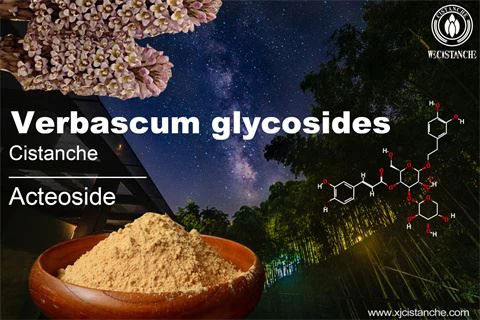
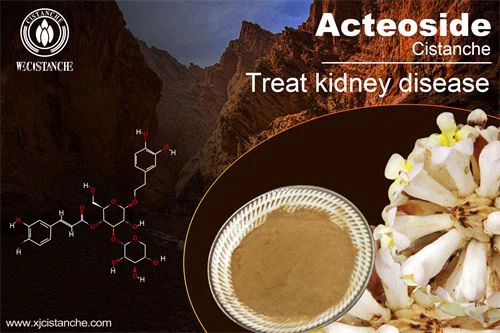
Acteoside, also called usage or verbascoside [20], is a phenylethanoid glycoside isolated from many dicotyledons. Reportedly, acteoside exerts some interesting biological activities, including antioxidant, anti-inflammatory, and cell apoptosis regulating properties [21,22]. Nevertheless, its potential anti-tumor activity has not been addressed. We report here, that acteoside showed increased cytotoxicity against mammalian cancer cells with no apparent toxic effects in physiological cellular contexts. Furthermore, acteoside suppressed melanoma tumor growth in the Vivo mouse model, by (among others) activating anti-tumor-reactive immune responses.
effects of cistanche acteoside
2. Materials and methods
2.1. Plant material and extraction
dried Lippia citriodora (Lamiaceae) leaves (4.5 kg) were purchased from the local market in Athens, Greece. The leaves were pulverized and extracted by mechanical stirring for 12 h with methanol (2 × 20 L). The methanolic extract was evaporated to dryness and washed with a mixture of CH2Cl2/MeOH 98/2 (15 L). The insoluble residue was separated and dried, producing a green-yellow powder (450 g).
2.2. Purification of acteoside and UPLC-HRMS analysis
A portion (10 g) of the aforementioned residue was subjected to countercurrent chromatography using a fast centrifugal partition chromatography (FCPC) apparatus (Kromaton, France); a mixture of EtOAc/EtOH/H2O at ratio 5/0.5/4.5 was used as a biphasic solvent system. Collected fractions were subjected to Thin Layer Chromatography; then the chromatograms were observed under a UV lamp (254 and 365 nm) and visualized by spraying with methanol vanillin sulfate followed by heating for two minutes. A total of 2.1 g of acteoside (purity ≥ 90%) was isolated by the aforementioned process. The identification of acteoside was performed by nuclear magnetic resonance (NMR) and mass spectrometry (MS) spectra, while its purity was established by UPLC-MS and NMR analysis; for details see Suppl. Materials and Methods.
2.3. Cell lines
Human lung embryonic fibroblasts (IMR90 cells) along with the B16.F1, B16.F10, YAC-1, and WEHI-164 mouse cell lines were obtained from the American Tissue Culture Collection (ATCC). The U2 OS and Sa OS human osteosarcoma cell lines were kindly donated by Prof. V. Gorgoulis (School of Medicine, National and Kapodistrian University of Athens, Greece), while the KH OS osteosarcoma cells and the chemoresistant osteosarcoma cell lines [23] were a donation of Dr. E. Gonos (National Hellenic Research Foundation, Greece). The mouse cancer cell lines C5N and A5 belong to a multistage mouse skin carcinogenesis model [24,25] and were donated by Prof. A. Balmain (Comprehensive Cancer Center, University of California, USA). Culturing conditions of the used cell lines are reported in Suppl. Materials and Methods.

benefit of cistanche acteoside
2.4. Melanoma mouse model male
C57BL/6 mice (25–30 g of weight, 6–8 weeks of age) were obtained from the Hellenic Pasteur Institute and housed under controlled temperature (22 °C) and photoperiod (12 h light:12 h dark) with free access to water and food. Mice were subcutaneously inoculated with 105 B16.F1 melanoma cells (in 100 μL PBS) and were randomly assigned to 3 groups (n = 5/group). When tumors became palpable(day 11) mice received acteoside via two routes; either intraperitoneally (IP) (1 mg/mouse diluted in 200 μL PBS; in total 6 doses administered every other day) or orally by drinking water (OR)(2.5 mg/mouse; in total 13 doses for 13 consecutive days). Control mice were administered PBS. Tumor growth was recorded every 2 days by measuring the major and minor axes of the formed tumors with a digital caliper. Measurements were transformed into tumor volume using the formula: tumor volume (cm3) = major axis × minor axis2 × 0.5. On day 28, animals were euthanized by cervical dislocation, and spleens were aseptically removed. The experiment was repeated three times with similar findings.
Splenocytes were isolated from individually homogenized spleens and immediately tested for their cytotoxicity vs. B16.F1, YAC-1, and WEHI-164 cell targets. Cytotoxicity was evaluated based on the detection of CD107 exposure on the cell surface, as a result of effector cell degranulation. Splenocytes (105 cells/well) were co-cultured with targets in 96-well U bottom microplates at an effector to target (E: T) ratio of 100:1, at 37 °C in 5% CO2. FITC-conjugated anti-CD107a and anti-CD107b monoclonal antibodies (25 μL/mL) and monensin (6 μL/mL; all from BD Biosciences) were added in each well. Cells were harvested 6 h later and analyzed using a FACSCanto II flow cytometer. In parallel, tumors were excised and processed for downstream assays as described in Suppl. Materials and Methods.

cistanche acteoside