Simulated Viewing Distance Impairs The Confdence–accuracy Relationship For Long, But Not Moderate Distances: Support For A Model Incorporating The Role Of Feature Ambiguity Part 3
Oct 13, 2023
General Discussion
In two unique populations and four experiments, we found evidence supporting the idea that while both medium and far simulated distances (relative to a near-simulated distance) impair face recognition overall, only far distances impair the confidence–accuracy relationship (see Supplemental Materials for a combined analysis of all experiments).
Everyone is unique. From our personalities, interests, and experiences to the way we think and our physical characteristics, each of us has something unique that makes us unique. These unique groups are also closely related to our memory.
Our memory is largely determined by our life experiences and personal characteristics. For example, some people are better at memorizing visual information, while others are better suited to memorizing auditory information. Some people are born with excellent memories, while others need deliberate practice to improve their memory.
However, whatever our unique groups and characteristics are, we can all use them to improve our memory. If you are a visual learner, you can use colors, pictures, and diagrams to help you retain information. If you are an auditory learner, you can listen to lectures, recordings, or music to help you remember. If you are an athlete, you can improve your memory through exercise.
Research also shows that for people with unique characteristics or identities, using their unique strengths to process information can help them remember it more effectively. For example, for a person who is learning a non-native language, using their cultural background and language to learn new vocabulary can improve their memory.
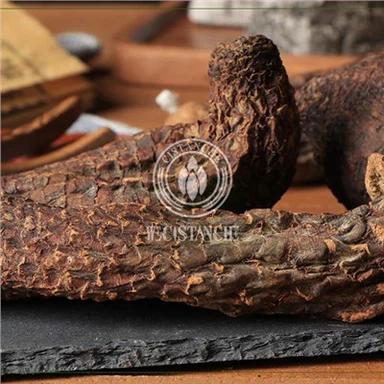
In summary, each of us is unique, but this uniqueness can help us remember information better. Whatever your unique groups and characteristics are, you can improve your memory by taking advantage of them. Let us value our uniqueness and use them to achieve greater learning and growth. It can be seen that we need to improve our memory. Cistanche deserticola can significantly improve memory because Cistanche deserticola is a traditional Chinese medicinal material with many unique effects, one of which is to improve memory. The efficacy of minced meat comes from the various active ingredients it contains, including acid, polysaccharides, flavonoids, etc. These ingredients can promote brain health in various ways.

Click know supplements to improve memory
This was particularly true for the
highest bins of confidence (90–100%), where participants
were consistently more overconfident (i.e., their accuracy
was numerically lower than their confidence judgment)
in their accuracy for the faces that were encoded at a simulated far distance than simulated medium distance.
This latter finding has important applied as well as theoretical value. Eyewitnesses with the highest levels of confidence in their selections are the most likely to proceed to trial, thus having the potential to lead to the conviction of innocent suspects (Garret, 2011). Whereas past research has suggested that this relationship may be impaired with increasing distance (e.g., Lockamyier et al., 2020; Nyman et al., 2019), the studies reported here are the first to do so in a within-subjects face recognition design and with sufficient power to provide stable estimates of the confidence–accuracy relationship at the highest levels of confidence (see the Supplemental Materials for a combined analysis of data from all four experiments supporting this assertion).
In the present studies, we report two additional important findings. In Experiment 3, we attempted to implement a simple instructional warning to reduce the overconfidence associated with the far-simulated distance. Such manipulations are common in the field of eyewitness memory (see Blank et al., 2014 for a meta-analysis) and would provide a simple correction for the deleterious effect of increasing distance on the confidence–accuracy relationship.

Unfortunately, this instructional warning was not effective. We will return to the applied implications of this funding shortly, but this suggests that eyewitnesses who view a face from a sufficiently far distance do not make good eyewitnesses even if they make identifications with high confidence.
We also found that MTurk workers were less accurate recognizers of faces than our Skidmore sample. This is not particularly surprising, as Skidmore College is a selective liberal arts college with high admission standards and students who were likely highly motivated to perform well. Students were also tested in person under the supervision of a research assistant, and students were younger than the MTurk population (see Follmer et al., 2017 for a review of the advantages and disadvantages of using an MTurk sample).
Given that we cannot disentangle these many confounding variables contributing to the sample effect we will not discuss it further. Rather, we simply acknowledge that it appears that MTurk workers completing a face recognition task remotely may not achieve the same levels of accuracy as college students in the laboratory.
Importantly, the results of the present series of studies have implications for our understanding of how estimator variables impact the confidence accuracy relationship. In particular, the finding that the effects on memory overall and the effects on the confidence–accuracy relationship are separable is theoretically meaningful.
Suggests that distance has a quantitative impact on discriminability, and there may be a qualitative threshold at which metacognitive judgments rely less on memory information (which should be quite poor, driving confidence judgments downward) and more on some other internal or external factor, such as the motivation to remember items well.
Critically, we observed this pattern when distance was manipulated within subjects. One could certainly make the case that for very difficult recognition tasks in which memory information is sparse, participants may relax their criterion for calling an item “seen” and also relax their criterion for what sorts of memory information is required to make a high-confidence judgment (Cox & Dobbins, 2011). This cannot be the case here, because there was not a similar pattern of overconfidence observed for clear faces, and the relatively good memorability of those faces (half of the overall set of old photographs) makes it less likely that participants would be motivated to change their criterion on the recognition task.
However, we must include the caveat that, given our experimental design, we cannot rule out the possibility that metacognitive judgments could follow a systematic pattern of degradation rather than a threshold-based pattern. That is, it may be the case that as the simulated distance increases from our medium distance to the far distance, accuracy at the highest level of confidence also drops monotonically.

Future research that further clarifies the effect of simulated distance on confidence–accuracy calibration at a fair grain of distance manipulations may be a fruitful avenue for future research in this area.
Therefore, we advocate for a modification of the threshold model proposed by Nyman et al. (2019) and supported by Lockamyier et al. (2020).
Nyman et al. argued that, under a threshold model, as discriminability decreases to very low levels, eyewitnesses are not able to judge the difficulty of the task and scale their confidence judgments downward accordingly. Following from their data in a lineup task, this is a reasonable position. However, the patterns of data presented in the four studies here are not compatible with this version of the threshold account. If they were, one would expect to observe similar reductions in discriminability and overconfidence for faces encoded at a near-simulated distance and a medium-simulated distance. Instead, only faces encoded from a far-simulated distance showed reductions in accuracy at the highest levels of confidence.
In a similar line of logic, making participants aware of the difficulty of the task should reduce the overconfidence effect. However, the instructional warning doing so in Experiment 3 was ineffective at weakening the impact of distance on the confidence–accuracy relationship. Thus, we argue for a threshold account that incorporates feature ambiguity. The idea behind feature ambiguity is that when participants encode faces from very far away (but not a moderate distance away), the distance increases the ambiguity in individual facial features.
When participants encounter faces that are not at a simulated distance at the test, these ambiguous encoded features are more likely to trigger a memory match to both previously seen and not previously seen faces. When this match is erroneous, the participant will nevertheless feel a strong sense of recognition and make an affirmative judgment with high confidence. This is less likely to happen with moderate distances because features retain more of their distinctive characteristics at encoding, reducing erroneous matches to the memory of unseen faces.
The applied implications of these experiments are clear. Whereas participants who saw faces at a medium simulated distance were relatively well-calibrated, those who saw faces at a far simulated distance were not, suggesting that eyewitnesses who see a target face from too far away should not be asked to make identifications. Precisely what constitutes “too far away” is likely dependent on the other conditions present at encoding as well as individual differences in memory ability and metacognition, and estimates of viewing distance may be subjective in some cases. Based on the data presented here, we argue that identifications made by witnesses who viewed a perpetrator at very long distances should at the very least be heavily scrutinized.
It is important to note, though, that the procedure in the present experiments involved presenting participants with the same image at encoding (albeit in some conditions blurred) and at retrieval, and simulated distance via a blurring function rather than by manipulating physical distance, which differs from the task typically asked of eyewitnesses in the field. Further, the face recognition paradigm wherein a participant views many faces and must recognize them again from a larger pool is a different task than seeing a single suspect commit a crime and later identifying them from a lineup.
We must acknowledge that some aspects of this paradigm which allow for more precise statistical estimates and analysis may place the experiments well outside their intended naturalistic context (see Kovera & Evelo, 2021; Hyman, 2021 for recent discussions of this issue). However, we believe that the findings of the present study do have important implications for how eyewitnesses make recognition judgments for distantly viewed faces even though overall memory accuracy may differ somewhat when placed in these real-world scenarios.
Conclusions
In four pre-registered experiments across two separate US samples, we found that the confidence–accuracy relationship was preserved for faces encoded at a moderate simulated distance but was impaired for faces encoded at a far simulated distance. This finding supports a threshold model incorporating feature ambiguity, which proposes that as features become more distant, the likelihood of a perceived match to memory at the test for new faces becomes more likely, skewing confidence judgments upward.
This finding also has important ramifications for how eyewitness identifications made after encoding at a distance are interpreted by the criminal justice system. We argue that in the case of distance, triers of fact are extremely cautious in using confidence judgments as predictors of accuracy.
Open practices statement
All data required to conduct the analyses reported here as well as any materials are available for download on the Open Science Framework at https://osf.io/7wdvy/. All of the experiments reported here were preregistered at the Open Science Framework as well, and those preregistrations may be found at the link above.
Author contributions
SDD and DJP conceptualized and designed the studies. SDD programmed the studies and collected and analyzed the data. SDD drafted the manuscript, and DJP provided feedback on manuscript drafts. Both authors read and approved the final manuscript.

Funding
Compensation for participants on Amazon’s Mechanical Turk was provided by a James S. McDonnell Foundation “Understanding Human Cognition” grant (Grant No. 220020429) awarded to the second author and a University of Florida New Faculty Startup Package belonging to the first author. Neither funding source contributed to the experimental design, data collection, analysis, or writing process.
Availability of data and materials
The datasets analyzed during the current studies as well as Supplementary Materials are available in the Open Science Framework repository, [https://osf. io/7wdvy/].
Ethics approval and consent to participate
Experiments 1a, 1b, 2, and the Skidmore College sample from Experiment 3 were run under Skidmore College’s Institutional Review Board-approved exempt protocol #1901-787. The Mechanical Turk participants in Experiment 3 were run under the University of North Florida’s Institutional Review Board-approved exempt protocol #1797845-1.
References
1.Blank, H., & Launay, C. (2014). How to protect eyewitness memory against the misinformation effect: A meta-analysis of post-warning studies. Journal of Applied Research in Memory and Cognition, 3(2), 77–88.
2.Connor, L. T., Dunlosky, J., & Hertzog, C. (1997). Age-related differences in absolute but not relative metamemory accuracy. Psychology and Aging, 12(1), 50–71.
3. Cox, J. C., & Dobbins, I. G. (2011). The striking similarities between standard, distractor-free, and target-free recognition. Memory & Cognition, 39(6), 925–940.
4.Davis, S. D., Peterson, D. J., Wissman, K. T., & Slater, W. A. (2019). Physiological stress and face recognition: Differential effects of stress on accuracy and the confidence–accuracy relationship. Journal of Applied Research in Memory and Cognition, 8(3), 367–375.
5.Dodson, C. S., & Dobolyi, D. G. (2016). Confidence and eyewitness identifications: The cross-race effect, decision time and accuracy. Applied Cognitive Psychology, 30(1), 113–125.
6. Eyewitness misidentification. Innocence Project. (2019). Retrieved from https:// innocenceproject.org/causes/eyewitnessmisidentification/?gclid=CjwKC Ajw5c6LBhBdEiwAP9ejG0LGQnRbcR3VF1jlpwDRn4BS2Q-t_XCFFpKXKVE rNHXiKan_IbM-DxoCKpkQAvD_BwE.
For more information:1950477648nn@gmail.com