Strong Fertility Depends On The Physiological Age Of Your Sperm, Not The ID Age
Jun 27, 2022
Male fertility has declined by nearly 50 percent over the past half century. The decline of male reproductive capacity is closely related to the inconsistency of ID age (biological age) and sperm physiological age. The unhealthy living habits guided by the commercial society have made some young people who should be in a prosperous reproductive period have "aging" sperm that do not match their biological age. However, the success of conception often depends on the physiological age of the man's sperm, not the biological age.
About 15% of couples worldwide suffer from infertility, which is caused by a variety of factors, of which male factors account for 40%-50% of all causes of infertility. Age is an important determinant of human fertility, and the incidence of infertility also increases with the age of the pregnancy. The well-known age refers to the age shown on the ID card, and it is also a proxy for the biological age of cells, but few people know what the biological age is.
The biological age of cells is not equal to the physiological age, and both internal (such as genetics) and external (such as environment, and living habits) factors accumulated in the life process can affect the physiological age. Male germ cells require dynamic epigenetic reprogramming to develop from diploid spermatogonia to haploid sperm. According to Oxford University research, human spermatogonia divide once every 16 days, which is equivalent to 23 divisions in a year [1]. Thus, in a man's lifetime, spermatogonia will undergo (based on average lifespan and from puberty) about 1400 divisions during their reproductive life. During this process, gene methylation errors (intergenic and gene regions) will likely accumulate. Therefore, measuring the physiological age of spermatogonia through DNA methylation data may explore the root cause of infertility problems.
The physiological age of sperm can be assessed by measuring the methylation of their DNA. The strong link between chronological age and DNA methylation makes biological age an indicator of the epigenetic clock in most somatic cells. Many epigenetic controls are involved in spermatogenesis, and epigenetic changes may be one of the causes of male infertility. DNA methylation patterns are established during meiosis, and the accumulation of senescence-associated methylation errors may occur in highly proliferating and self-renewing spermatogonia and continue to accumulate during cell differentiation during spermatogenesis . Abnormal DNA methylation, especially at imprinted sites, is associated with poor semen quality. Furthermore, abnormal sperm DNA methylation is associated with reduced fertilization rates and impaired embryonic developmental potential. However, the epigenetic clock of male germ cells is underdeveloped and lacks clinical relevance in terms of its utility in predicting biological age and reproductive outcome.
DNA methylation is the earliest discovered and most widely studied epigenetic modification, which refers to the covalent bonding of small chemical groups (methyl groups) to genomic CpG dinucleotides under the action of DNA methyltransferases 5-methylcytosine is produced on the cytosine base. DNA methylation mainly has the following characteristics:
① Hereditary, which can be inherited between cells or generations;
②Reversible regulation of gene expression;
③ It cannot be explained by DNA sequence changes, and the genetic content is mainly preserved in the form of DNA methylation or post-translational modification of histones.
Hypermethylation of genomic DNA can lead to the repression of the transcription of the gene in which it is located. During biological development, changes in genomic DNA methylation status can regulate the specific expression of genes in different developmental stages, and play an important role in organism development and cell differentiation.

For more details of improve sexual function cistanche
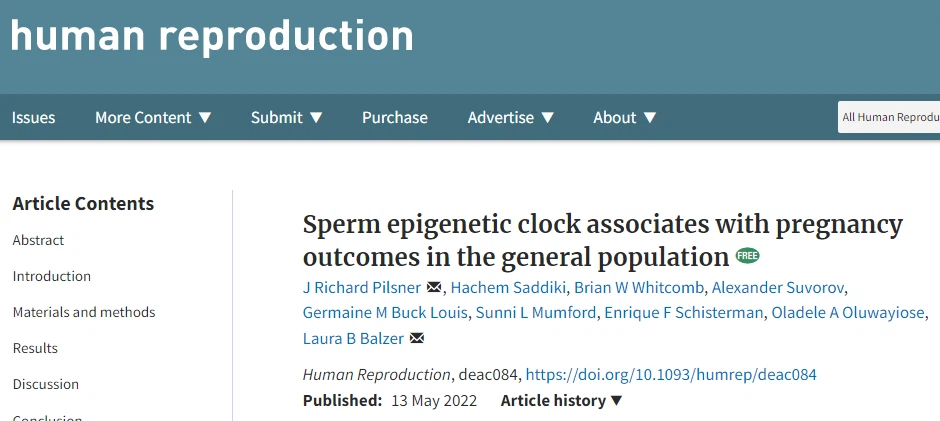
From 2005 to 2009, the researchers recruited non-infertile couples who were trying to conceive in 16 locations in the United States, collected semen from 379 men, and conducted follow-up visits for up to 12 months. The mean age of men was 31.8±4.8 years, the range was 19-50 years, 81.4% were white men, 78.7% were non-smokers, and the mean BMI (Body mass index) was 29.9±5.7. We used SEA to compare pregnancy success rates within 1 year for couples trying to conceive, used discrete-time proportional hazards models to analyze the relationship between adjusted covariates and time-to-pregnancy (TTP), and assessed the effect of smoking on SEA.

The researchers tested semen samples using microbead arrays to assess sperm DNA methylation levels and used state-of-the-art integrated machine learning algorithms to predict SEA from sperm DNA methylation data. Specifically, SEA was estimated from differentially methylated regions (SEADMRs) and individual CpGs (SEACpGs). SEA was calculated as the residual of a linear regression of predicted age against biological age. A positive value of SEA is considered an older epigenetic aging phenotype, while a negative value represents a younger epigenetic aging phenotype: SEA<-1 is "young"; -1<sea<1 is "equivalent" ”, sea>1 year is “aging”. Research indicates:
SEACpG has a strong ability to accurately predict the physiological age of sperm;
SEADMR and SEACpG have comparable performance in accurately predicting the physiological age of sperm, but the effect is weakened;
Compared with women with partners SEA < 1, women with partners SEA > 1 have a 17% lower probability of conception within 12 months, which is equivalent to a 17% increase in TTP for every 1 year increase in SEACpG;
After controlling for BMI and smoking status in men and chronological age, BMI and smoking status in women, fetuses were born prematurely by 2.13 days for every 1-year increase in SEA;
Smoking causes the biological age of male sperm to be older, and the SEA of smokers is significantly higher than that of non-smokers.

Studies have shown that male SEA status is critical for conception success, and the sperm epigenetic clock could serve as a novel biomarker to predict TTP in couples trying to conceive. The subjects of this study were mainly Caucasian men and women, so an analysis of a large disparate cohort is necessary to confirm the association between SEA and pregnancy success in couples of other races/ethnicities.