Study On The Optimal Specification Of Herba Cistanches Fuju Pieces
Aug 19, 2024
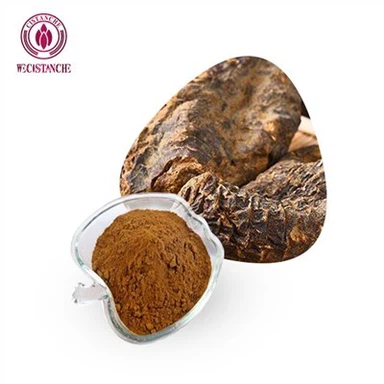
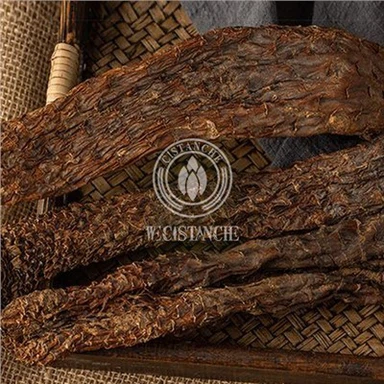
Cistanche deserticola was first recorded in Shennong's Herbal Classic. It has the effects of nourishing kidney yang, replenishing essence and blood, and moistening the intestines and relieving constipation. It has been used in clinical practice as a tonic Chinese medicine. The 2020 edition of the Pharmacopoeia of the People's Republic of China (hereinafter referred to as the "Chinese Pharmacopoeia") stipulates that Cistanche deserticola is derived from the dried fleshy stems with scaly leaves of Cistanche deserticola or Cistanche tubulosa, plants of the Orobanchaceae family. The specifications of Cistanche deserticola medicinal materials are usually 2 to 8 cm in diameter and 3 to 15 cm in length.
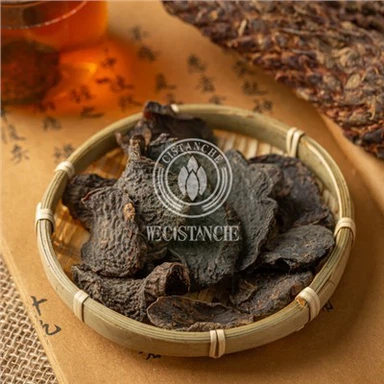
According to the "0213 General Rules for Processing" of the Chinese Pharmacopoeia, Cistanche deserticola is formed into irregular thick slices during the processing process, with a thickness of 2 to 4 mm. Most of the cut Cistanche deserticola slices are large thick slices with a diameter of 2 to 8 cm and a thickness of 2 to 4 mm [1].

HIGH-QUALITY CISTANCHE TUBULOSA EXTRACT FOR SELL
This traditional decoction piece is uneven in size and has a large difference in quality. It is difficult to control it during clinical adjustment. In addition, the effective ingredients are difficult to dissolve evenly during decoction, resulting in a large difference in the quality of each decoction.

In addition, relevant studies have reported that the chemical composition content of different parts of Cistanche deserticola is quite different, and the ability of different parts to scavenge 1,1-diphenyl-2-trinitrophenylhydrazine (DPPH) free radicals in vitro is also different [2], making it difficult to guarantee the clinical efficacy of traditional Cistanche deserticola slices. Among the methods to improve clinical efficacy, Chinese medicine slices are a kind of inherited and innovative slices that follow the theory of traditional Chinese medicine and traditional Chinese medicine processing methods, select high-quality medicinal materials from the source, and are processed and processed with special features. They have high utilization rate, uniform quality, stable efficacy, and are easy to adjust and prepare. They retain the identification characteristics of traditional slices.
The size of Chinese medicine slices is mainly classified according to the medicinal part of the medicinal material, texture characteristics, and clinical application [3]. For example, the specifications of traditional slices are described as "like soybeans", "like ma beans", "coarse powder", etc. [4].
Cistanche deserticola is a special fleshy stem medicinal material. After drying, the medicinal material is large and long. It is suitable to be cut into shreds or dices using modern cutting technology, which can not only improve the utilization rate of Cistanche deserticola and make its quality uniform, but also retain the identification characteristics of traditional medicinal pieces. This study uses traditional Cistanche deserticola medicinal pieces as a bridge, and chews Cistanche deserticola into shreds and blocks of different specifications. The best specifications of chewed Cistanche deserticola medicinal pieces are optimized based on the medicinal piece properties, angle of repose, decoction rate, and transfer rate of verbascoside and echinacoside as evaluation indicators. At the same time, the uniformity and consistency of quality attributes of traditional medicinal pieces and chewed medicinal pieces are compared, in order to provide a reference for the specification selection and processing and production of chewed Cistanche deserticola medicinal pieces.

1 Material
1.1 Instruments
Thermo U3000 HPLC; XBridge C18 (250.0 mm × 4.6 mm, 5μm) chromatographic column; SQW series CNC reciprocating medicine cutter (Kanghua Pharmaceutical Machinery Co., Ltd.); AM300S-type cutting mill (Ant Source Scientific Instrument Co., Ltd.); DL-60J type intelligent ultrasonic cleaner (Shanghai May Instrument Co., Ltd.); QM-Q5-H30DW type electric steamer (Changsha Quanmin Electric Co., Ltd.); MS204S type one ten-thousandth electronic analytical balance (Mettler Toledo); XPE26 type one millionth electronic balance (Mettler Toledo).
1.2 Test drugs
Echinacoside reference substance (China Food and Drug Inspection Institute, batch number 111670-201907, purity 91.80%), verbascoside reference substance (China Food and Drug Inspection Institute, batch number 111530-201914, purity 95.2%), methanol (chromatographic grade); Wahaha purified water; other reagents are analytical grade.
The Cistanche deserticola medicinal materials were collected by the research team from Alxa, Inner Mongolia, Bayannur, Inner Mongolia and Jiuquan, Gansu, and were identified as the dried fleshy stems with scale leaves of Cistanche deserticola by Professor Liu Shoujin of Anhui University of Traditional Chinese Medicine.
2 Methods
2.1 Sample preparation method
The Cistanche deserticola was divided into 7 portions, each weighing about 500 g. Impurities were removed, the slices were washed, and the mixture was soaked. The slices were cut into traditional slices and 2- to 4-mm thick slices. The 2- to 4-mm thick slices were cut into threads with a width of 2 mm × 2 mm, 2 mm × 4 mm, and 4 mm × 4 mm, and cubes with side lengths of 5 mm, 8 mm, and 10 mm, respectively.

2.2 Determination of principal components
According to the Chinese Pharmacopoeia, the two components of the representative phenylethanol glycosides, verbascoside and echinacoside, were used as indicators for determination [1].
2.2.1 Chromatographic conditions and system suitability test
Octadecylsilane bonded silica gel was used as the filler; methanol was used as the mobile phase A, and 0.1% formic acid solution was used as the mobile phase B. Gradient elution was performed according to the requirements in Table 1; the detection wavelength was 330 nm. The number of theoretical plates calculated based on the echinacoside peak should not be less than 3000. The HPLC spectrum is shown in Figure 1.
2 Methods
2.1 Sample preparation method
The Cistanche deserticola medicinal material was divided into 7 portions, each about 500 g, and impurities were removed. The material was washed and moistened, and then cut into traditional slices and sliced slices. The traditional slices were mainly 2-4 mm thick slices, and the sliced slices were cut into filaments with a width × thickness of 2 mm × 2 mm, 2 mm × 4 mm, and 4 mm × 4 mm, and cubes with side lengths of 5 mm, 8 mm, and 10 mm, respectively.
2.2 Determination of principal components
Reference was made to the Chinese Pharmacopoeia, and the two components, verbascoside and echinacoside, which were representative components of phenylethanol glycosides, were used as indicators for determination [1].
2.2.1 Chromatographic conditions and system suitability test
Octadecylsilane bonded silica gel was used as filler; methanol was used as mobile phase A, and 0.1% formic acid solution was used as mobile phase B. Gradient elution was performed according to the provisions in Table 1; the detection wavelength was 330 nm. The theoretical plate number calculated based on the echinacoside peak should not be less than 3000. The HPLC spectrum is shown in Figure 1.


Figure 1 HPLC chromatograms of echinacoside and verbascoside reference and test samples
2.2.2 Preparation of reference solution
Take appropriate amounts of echinacoside reference and verbascoside reference, weigh accurately, and add 50% methanol solution to make a 1 mL mixed solution containing 0.2 mg of echinacoside and verbascoside, respectively.
2.2.3 Preparation of test solution
Take about 1 g of the powder of this product (passed through No. 4 sieve), weigh it accurately, put it in a 100 mL brown volumetric flask, add 50 mL of 50% methanol solution accurately, stopper it, shake it well, weigh it, soak it for 30 min, ultrasonically treat it for 40 min (power: 250 W, frequency: 35 kHz), let it cool, weigh it again, add 50% methanol solution to make up for the lost weight, shake it well, let it stand, take the supernatant, filter it, and take the filtrate to obtain it.
2.2.4 Linear relationship investigation
Accurately aspirate 0.1, 0.2, 0.5, 1.0, 2.0 mL of verbascoside reference solution, place in 5 10 mL volumetric flasks, and add methanol to the scale. Accurately aspirate 0.1, 0.2, 0.5, 1.0, 2.0 mL of echinacoside reference solution, place in 5 10 mL volumetric flasks, and add 50% methanol solution to the scale, measure according to the "2.2.1" method, and record the corresponding peak area.
2.2.5 Precision test
Accurately aspirate verbascoside and echinacoside reference solutions, inject 6 times continuously, and measure the RSD of the peak areas of verbascoside and echinacoside.
2.2.6 Stability test
Accurately aspirate the same test solution, and measure it according to the method of "2.2.1". Measure it once every 4 hours, and test it for 24 hours. Calculate the RSD of the peak area of verbascoside and echinacoside.
2.2.7 Repeatability test
According to the preparation method of the test solution, prepare 6 test solutions respectively, measure them according to the method of "2.2.1", and calculate their RSD according to the peak area of verbascoside and echinacoside.
2.2.8 Sample Recovery Test
Accurately weigh 6 test solutions with known verbascoside and echinacoside content, add 1 mL of verbascoside reference solution and echinacoside reference solution respectively, measure according to the method of "2.2.1", and calculate the recovery rate.
2.2.9 Determination of angle of repose
Use the tilt method. Fill a rectangular box with the medicinal material to a moderate degree of looseness, and gradually tilt the box until the powder begins to flow out. The angle of inclination is the angle of repose. Let the height of the inclination angle be H and the bottom be L. The formula for calculating the angle of repose θ is:
tanθ=H/L
2.2.10 Determination of decoction rate
Take 50 g of Cistanche deserticola slices, place in a 1000 mL round-bottom flask, add 10 times the amount of water, soak for 30 min, decoct for 45 min, filter with 200 mesh filter cloth while hot, add 8 times the amount of water to the residue, decoct for 30 min, filter with 200 mesh filter cloth while hot, combine the filtrate; concentrate under reduced pressure (60 ℃) to extract, freeze-dry to obtain Cistanche deserticola freeze-dried powder, and calculate the decoction rate according to the following formula [5]:

Where, Y is the decoction rate; Wa is the weight of the freeze-dried powder; Wb is the weight of the slices.
2.2.11 Transfer rate determination
According to the chromatographic conditions under "2.1.1", the mass fractions of verbascoside and echinacoside in the slices and freeze-dried powder of Cistanche deserticola were determined, and the transfer rate was calculated according to the following formula:

Where, Z is the transfer rate; Wc is the mass fraction of verbascoside and echinacoside in freeze-dried powder; Wd is the mass fraction of verbascoside and echinacoside in the slices.
2.2.12 Observation indicators
The extract yield, total transfer rate of verbascoside and echinacoside of different specifications of 㕮 抽 slices and traditional slices were recorded, and the decoction rate, total transfer rate of verbascoside and echinacoside were evaluated by weighted scoring method. The weight coefficient of decoction rate determination was 0.5, and the weight coefficient of total transfer rate of verbascoside and echinacoside was 0.5.
3 Results and analysis
3.1 Results of methodological investigation of principal component determination
Using the chromatographic conditions of "2.2.1", the chromatographic separation of verbascoside and echinacoside was greater than 1.5. The results of methodological investigation are shown in Table 2. This method has good precision, stability, repeatability, recovery rate and separation effect, and can be used to determine the contents of echinacoside and verbascoside in Cistanche deserticola slices and freeze-dried powder.

Table 3 Test results of properties of different specifications of Cistanche deserticola (Cistanche deserticola) slices

3.3 Analysis of the results of different specifications of traditional decoction pieces and Yuzui decoction pieces and selection of Yuzui specifications
It can be seen from Table 4 that the angles of repose of different sizes of chewed pieces are lower than those of traditional pieces. The smaller the size of the chewed pieces, the smaller the angle of repose. The 5 mm cube has the smallest angle of repose at 30°, followed by the 8 mm cube at 31.2°, and other specifications are greater than 35°.
Compared with traditional pieces, the smaller the size of the pieces, the higher the decoction rate. When the size is 2 mm × 2 mm, the decoction rate is the highest, 63.61%, 2 mm × 4 mm, 60.33%, followed by 5 mm cubes. For pieces, it is 60.18%, and other specifications are lower than 60%. When the size of the chew is 8 mm cubes, it is basically the same as traditional pieces. There was no significant pattern in the total content of verbascoside and echinacea in decoction pieces, the total content of verbascoside and echinacea in freeze-dried powder, and the transfer rate.
Different from the pursuit of higher dry paste rate and decoction amount of active ingredients in boiled and powdered decoction pieces [6], the principle of keeping the decoction rate and transfer rate of Erzui decoction pieces is consistent with that of traditional decoction pieces. The weighted scoring method was used to compare the decoction rate and the total transfer rate of verbascoside and echinacea among different specifications. The results showed that the total score of the 8 mm cube-sized pieces was consistent with that of traditional pieces. Therefore, this specification can be used as the best specification for Cistanche deserticola nuzui pieces.
3.4 Comparative analysis of the quality uniformity of traditional and 㕮嘴 slices
The same batch of traditional and 㕮嘴 slices were randomly sampled 7 times according to the clinical adjustment of 7 sets as a course of treatment, and the moisture, decoction rate, total content of verbascoside and echinacoside and transfer rate of the 7 slices were compared. As shown in Table 5, the RSD values of the moisture, decoction rate, total content of verbascoside and echinacoside and transfer rate of the 7 traditional slices were greater than those of the 㕮嘴 slices, and the RSD values of the 㕮嘴 slices were all less than 2%. It can be seen that the uniformity of 8 mm cubic pieces of Cistanche deserticola 㕮嘴 slices is better than that of traditional slices.
3.5 Comparison of the quality consistency evaluation of traditional and 㕮嘴 slices
In order to enable 㕮嘴 slices to carry the quality attributes of Chinese medicine slices such as safety and effectiveness, the standard decoction prepared by traditional slices was used as a bridge to carry out the quality consistency evaluation of 㕮嘴 slices and traditional slices. Through herbal textual research, literature research, production area and market investigation, the authentic production area and main production area of Cistanche deserticola were determined, and then samples were collected. No less than 3 batches of samples were collected in each production area, and a total of 15 batches were collected. Different batches of Cistanche deserticola were processed into traditional slices and 㕮 jiu slices, and the slice yield, decoction rate and transfer rate of verbascoside and echinacoside were determined.
As shown in Table 6, the yield of 15 batches of traditional slices was between 95.1% and 98.00%, with an average of 96.54%, the decoction rate was between 48.34% and 61.88%, with an average of 55.93%, and the transfer rate was between 43.5% and 84.30%, with an average of 65.88%. The yield of 15 batches of decocted slices ranged from 81.80% to 97.70%, with an average of 91.40%, the decoction rate ranged from 52.20% to 59.39%, with an average of 58.46%, and the transfer rate ranged from 60.5% to 72.80%, with an average of 8.15%. It can be seen that the quality attributes of 8 mm cubic pieces of Cistanche deserticola decocted slices are relatively consistent with those of traditional slices.
3.4 Comparative analysis of the quality uniformity of traditional and 㕮嘴 slices
The same batch of traditional and 㕮嘴 slices were randomly sampled 7 times according to the clinical adjustment of 7 sets as a course of treatment, and the moisture, decoction rate, total content of verbascoside and echinacoside and transfer rate of the 7 slices were compared. As shown in Table 5, the RSD values of the moisture, decoction rate, total content of verbascoside and echinacoside and transfer rate of the 7 traditional slices were greater than those of the 㕮嘴 slices, and the RSD values of the 㕮嘴 slices were all less than 2%. It can be seen that the uniformity of 8 mm cubic pieces of Cistanche deserticola 㕮嘴 slices is better than that of traditional slices.
3.5 Comparison of the quality consistency evaluation of traditional and 㕮嘴 slices
In order to enable 㕮嘴 slices to carry the quality attributes of Chinese medicine slices such as safety and effectiveness, the standard decoction prepared by traditional slices was used as a bridge to carry out the quality consistency evaluation of 㕮嘴 slices and traditional slices. Through herbal textual research, literature research, production area and market investigation, the authentic production area and main production area of Cistanche deserticola were determined, and then samples were collected. No less than 3 batches of samples were collected in each production area, and a total of 15 batches were collected. Different batches of Cistanche deserticola were processed into traditional slices and 㕮 jiu slices, and the slice yield, decoction rate and transfer rate of verbascoside and echinacoside were determined.
As shown in Table 6, the yield of 15 batches of traditional slices was between 95.1% and 98.00%, with an average of 96.54%, the decoction rate was between 48.34% and 61.88%, with an average of 55.93%, and the transfer rate was between 43.5% and 84.30%, with an average of 65.88%. The yield of 15 batches of decocted slices ranged from 81.80% to 97.70%, with an average of 91.40%, the decoction rate ranged from 52.20% to 59.39%, with an average of 58.46%, and the transfer rate ranged from 60.5% to 72.80%, with an average of 8.15%. It can be seen that the quality attributes of 8 mm cubic pieces of Cistanche deserticola decocted slices are relatively consistent with those of traditional slices.