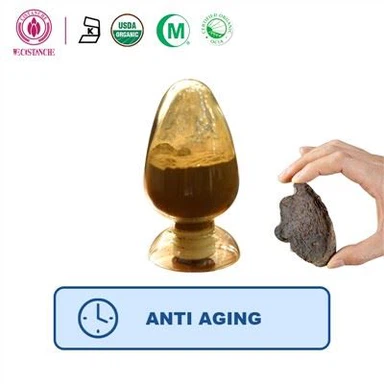
The Three Treasures Of Health Preservation: Cistanche Deserticola, Ginseng, And Astragalus
Aug 20, 2024
Xinjiang - Hetian Guanhua Cistanche deserticola
Cistanche deserticola is one of the "Nine Immortal Herbs of China". It can nourish kidney yang, nourish essence and blood, nourish the five organs, nourish the middle and qi, and treat five types of labor and seven injuries. It is the most frequently used nourishing treasure in China throughout history.

Cistanche deserticola slice
Cistanche deserticola is mainly produced in Hotan, Xinjiang. As the saying goes, "Hotan's two treasures are beautiful jade and Cistanche deserticola". In addition to the well-known Hotan Jade, Cistanche deserticola deserticola is another characteristic resource of Hotan.
Cistanche deserticola is a perennial parasitic herb that parasitizes the roots of the pioneer plant red willow in desertification control. Cistanche deserticola can grow in rare arid desert areas with temperatures below minus 40 ℃ and above 60 ℃. The harsh living environment has created its resilient qualities and extraordinary value. Coupled with a sufficient supply of Kunlun Mountain glacier meltwater and atmospheric precipitation, Cistanche deserticola is known as a highly nutritious traditional Chinese medicine in the local area.

cistanche tubulosa benefits and side effects
The "Shennong Bencao Jing" records: "Sweet in taste, slightly warm. Used to treat five labor and seven injuries, nourish the middle, remove cold and heat diseases in the stem, nourish the five organs, strengthen yin, nourish essence and qi, have more children, treat women's ailments, and take long-term medication to lighten the body
Modern pharmacological research shows that Cistanche deserticola has many healthcare effects, such as improving body function, improving learning and memory ability, resisting Alzheimer's disease and Parkinson's disease, anti-fatigue, anti-aging, whitening, and beautifying, regulating endocrine, nourishing liver and kidney, moistening intestines and relaxing bowels, and is a natural tonic for human health.

superman herbs cistanche
Click here to view Cistanche for Kidney disease products
【Ask for more】 Email:cindy.xue@wecistanche.com / Whats App: 0086 18599088692 / Wechat: 18599088692
Jilin - Tonghua Changbai Mountain Ginseng
Ginseng, the king of all fruits, has a medicinal history of over 4000 years and has been known as the "king of all herbs" since ancient times. In modern times, it is referred to as the "foremost tonic". The "Shennong Bencao Jing" records: "Ginseng, with a sweet and slightly cold taste, is mainly used to nourish the five organs, calm the spirit, calm the soul, stop fear, eliminate evil qi, improve eyesight, and promote happy and intellectual development. After long-term consumption, it can lighten the body and prolong life. One person holds the title of" Renshen "and one person holds the title of" Guigai ". It grows in valleys.
As one of the three treasures in Northeast China, ginseng can be said to be the essence of Northeast China, especially the Changbai Mountain ginseng in Tonghua, Jilin Province in Northeast China.
Near Anqinghe Town in Tonghua City, there is a large forest with a humid climate. The soil organic matter content of the forest humus soil is high, and the soil has a granular structure; Loose and fertile soil; The proportion of solid, liquid, and gas in the soil is moderate, which not only allows for ventilation but also preserves water and fertilizer. In addition, ginseng itself is extremely cold-resistant, so the nutritional value of ginseng planted here is very high. Moreover, 5-10 years later, new land needs to be replaced, and the cost and time of ginseng planting are very high.
Modern research has shown that ginseng has functions such as tonifying vital energy, restoring meridians, strengthening the spleen and benefiting the lungs, generating fluids, and calming the mind. It is called a spiritual medicine that greatly replenishes vital energy.
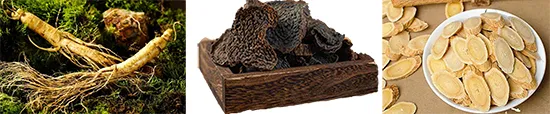
Chinese medicines such as ginseng, Cistanche deserticola, and astragalus
Inner Mongolia - Huangqi
The medicinal value of Astragalus membranaceus has a history of more than 2000 years. It enhances the body's immune function, protects the liver, and diuresis, is anti-aging, lowers blood pressure, and has a wide range of antibacterial effects. Famous doctor Zhang Xichun often uses a large amount of Astragalus membranaceus in emergency treatment, atmospheric depression, kidney disease, spleen disease, and other cases. The "Shennong Bencao Jing" records: "Astragalus membranaceus, with a sweet and slightly warm taste. It is mainly used for treating chronic abscesses and ulcers, relieving pain through pus discharge, strong winds, dysentery, five hemorrhoids, rat fistulas, tonifying deficiency, and treating various diseases in children. It is also known as" Dai Dan "and" Sheng Valley ".
Huangqi is best found in Inner Mongolia. Inner Mongolia is divided into two major climate zones from east to west: the grassland climate zone in the east and the desert climate zone in the west. Due to the cold and drought resistance of Astragalus membranaceus, as well as its relaxed land requirements, Astragalus membranaceus grows in the grassland climate zone of Inner Mongolia, where the drainage is good and the sandy loam soil is fertile, resulting in higher effective components of Astragalus membranaceus planted.

Chinese medicinal materials such as cistanche deserticola
Huangqi (Astragalus membranaceus) is a popular soup made by the common people. There is a popular saying among people that goes, "Drinking Huangqi soup regularly can prevent diseases and protect health." Huangqi is often used to make soup or soak in water instead of tea, which has good disease prevention and health benefits. Huangqi is a good medicine for replenishing qi, mainly for tonifying deficiency. It is commonly used for people with physical weakness, low speech, and weak pulse.