Study On Toxicity Of Cistanche
Jul 28, 2022
Abstract: Objective To study the toxicological characteristics of Cistanche tubulosa.
Methods: The acute toxicity test bone marrow cell micronucleus test, mice sperm abnormality test, Ames test, and 90 days feeding study were employed for the toxicology study and evaluation of Cistanche Deserticola.
Results: Acute toxicity test showed that the acute oral maximum tolerated doses ( MTD) of Cistanche Deserticola to male and female mice were both more than 20 g / kg body weight, which was over 600 times higher than the recommended human dose, indicating that Cistanche Deserticola was non - toxic.
The results of gene-toxicity tests, including bone marrow cell micronucleus test, mice sperm abnormality test and Ames test, were all negative without mutations.
In addition, no obvious adverse effect was observed on body weight, the growth and development of visceral organs, and blood biochemical indicators in 90 day feeding test at doses of 2 g / kg,4 g / kg, and 8 g / kg body weight.
Conclusion
Cistanche is a non-toxic substance without genetic toxicity and subacute toxicity as well.
Key Words: Cistanche; Toxicity study; Food safety

Cistanche is the dry and scaly stem of Cistanche, also known as Jingzhu and Goblin. etc. In recent years, scholars at home and abroad have carried out extensive research on the chemical components and pharmacological effects of Cistanche. The results show that Cistanche has expressed good effects in enhancing immunity, improving physical endurance, anti-oxidation, and regulating the nervous system and endocrine systems. At present, the application of Cistanche in the fields of medicine and health food has become more and more extensive, but whether long-term consumption will have some adverse effects on the body is rarely reported in China. In this paper, its acute toxicity test, 3 genotoxicity tests (bone marrow cell micronucleus test, mouse sperm abnormality test, Ames test) and 90-day feeding test were studied, in order to provide a safe dose design and main methods for other clinical trials of Cistanche deserticola.
It is necessary to provide a reference for observation indicators and target organs and to provide the toxicological basis for its clinical safety application.
1 Materials and methods
1. 1 test substance
Cistanche Tulosa Extract powder #5, the recommended daily dose for adults is 3-5g.
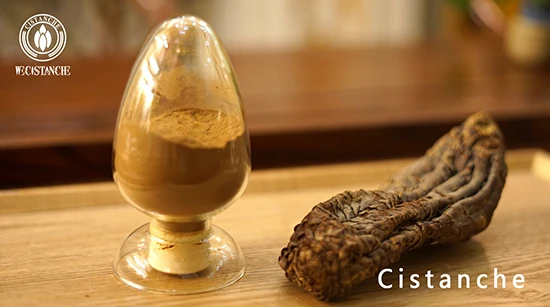
Click here to Get a Sample of Cistanche Tulosa Extract powder #5
1. 2 animals
Clean-grade healthy ICR mice and SD rats provided by Wecisstanche Bio-tech were selected. Permit number:
SCXK (Shanghai) 2012-0002.
1. 3 Strain and reagent strains: 4 strains of histidine-deficient TA97, TA98, TA100 and TA102 strains; reagents: hemolysin (2448612), alanine aminotransferase kit (Leedman 210232I), aspartate aminotransferase kit (Leedman 211093J), triglyceride kit (Leedman 211142J), glucose kit (Leedman 301101K), total cholesterol kit (Leedman 211061J), etc.
1. 4 Main Instruments
Hitachi 7060C automatic biochemical analyzer, Olympus China OLYMPUS BX-51 microscope, American Abbott CELL-DUN3700 Abbott hematology analyzer, Shanghai Nuoding Instrument Equipment Co., Ltd. PSH-200 biochemical incubator, etc.
2 results
2. 1 Acute toxicity test
During the test, no abnormality was found in the animals, and the MTD> 20 g/kg body weight (equivalent to 600 times the recommended daily dose for adults) belongs to the non-toxic grade.
2. 2 Ames test
The number of retromuted colonies in each dose group did not exceed 2 times that of the solvent control group, and the Ames test was negative.
2. 3 Bone marrow cell micronucleus test
The PCE/NCE in each dose group was not less than 20% of that in the solvent control group, indicating that the proliferation of the bone marrow erythrocyte system was not significantly inhibited, and there was no significant effect on the observation of polychromatic erythrocyte micronuclei.
The rate of micronucleus in the positive control group (2.32% in males and 2.26% in females) was significantly higher than that in the solvent control group (0.08% in males and 0.08% in females) (P < 0.01), and in each dose group ( 0.1% for males and 0.04% to 0.08% for females) compared with the solvent control group, there was no significant difference (P > 0.05), suggesting that the test substance did not show the rate of micronucleus rise mutagenic effects.

2. 4 Mouse sperm deformity test
The abnormality rate in the positive control group ( 9.30% ) was significantly higher than that in the solvent control group ( 1.78% ) ( P < 0.01 ) , while the abnormality rate in each dose group ( 1.60% - 1.84% ) was significantly higher than that in the solvent control group ( 1.78% ) control group
The comparison did not produce a significant change, suggesting a negative test result.
2. 5 90 d feeding trial
During the test period, the growth and activity of animals in each group were normal. At the end of the test, there was no significant difference in the body weight, body weight gain, food intake, food utilization rate and viscera ratio of each dose group compared with the control group ( P > 0. 05 ). ) . On the 45th and 90th days of feeding, the blood routine and biochemical indexes of individual animals were significantly different from those of the control group ( P < 0. 05) , but they were all within the normal range. There was no significant difference in red blood cell count, white blood cell count, white blood cell classification, alanine aminotransferase, aspartate aminotransferase, total cholesterol, triglyceride, urine, creatinine, blood sugar, total protein, and albumin compared with the control group ( P > 0 . 05) (Table 1). There was no abnormality in the gross examination of the animals during the autopsy, and the pathological changes occurred only in individual individuals. There was no significant difference in the pathological changes of the specimens in each group. Therefore, it was considered that no pathological changes related to the test substances were found in the inspected organs.